by COWBERRY

8 minute read
10 benefits of kangni (foxtail millet) and its side effects

Kangni benefits rest on what the sources actually record: foxtail millet is a gluten-free grain with protein, fibre, polyphenols and a small carbon footprint, though IFCT 2017 and USDA print no composition table for it. Each of the ten below carries its source; after them come the side effects, the daily amount and how to eat it. The foxtail millet hub covers names, storage and cooking.
Kangni benefits: what the sources support
Ten kangni benefits, each with the source behind it.
- Gluten-free grain. The ICAR-IIMR bulletin counts millet among the gluten-free grains, in a list that also carries rice, corn, sorghum, amaranth, buckwheat, quinoa and wild rice (Thompson 2009). Kangni is a workable grain for people who leave out wheat, barley and rye.
- Protein. A 2023 review of minor millets records protein in these grains at 7 to 13 per cent, and the ICAR-IIMR bulletin notes that millets contain fewer cross-linked prolamins than sorghum, which may be an additional factor in the higher digestibility of millet proteins.
- Fibre. The same review puts minor millet fibre at 2 to 7 per cent, and the ICMR-NIN Dietary Guidelines describe fibre as delaying and retarding the absorption of carbohydrates and fats, which raises the satiety value.
- Micronutrients. The 2023 review names iron, calcium, phosphorus and magnesium among the micronutrients these small grains supply.
- Polyphenols and antioxidants. The bulletin records polyphenolics and tocopherol in foxtail millet, and laboratory findings only: aqueous extracts of the grain showed anti-hyperglycemic activity (Sireesha et al. 2011), and defatted foxtail millet protein hydrolysates exhibited antioxidant potency (Mohamed et al. 2012).
- Regular digestion. The bulletin lists constipation, excess gas and bloating among the complaints the fibre in millets helps eliminate, with cramping alongside them.
- Blood-sugar context. In the 2021 meta-analysis in Frontiers in Nutrition, foxtail millet landed in the low mean GI set; that review's long-term findings sit in the blood-sugar section below.
- Iron status. A 2021 meta-analysis found regular millet intake raised haemoglobin by 13.2 per cent in anaemic people, against 2.7 per cent on regular diets, with the caveat that the grains studied were finger millet, pearl millet, teff and sorghum, or mixtures — foxtail millet is not named among them.
- A low-input crop. The 2021 diabetes review notes millets' low carbon footprint and their ability to survive in high temperatures with minimal water, and the bulletin describes foxtail millet as fairly tolerant of drought, its early maturity letting the crop escape some dry spells.
- The less processed, the better. In the 2021 review, minimally processed millets were 30 per cent more effective in lowering the GI of a meal than milled rice and refined wheat, which points toward whole, unpolished kangni.
The nutrition behind the kangni benefits
Most of the numbers above rest on two frames, and neither is foxtail millet's own row. Per 100 g of raw grain, the ICMR-NIN Dietary Guidelines average for millets as a group works out to 330 kcal, 9.9 g protein, 2.7 g fat, 65 g carbohydrate and 7 g dietary fibre. In percentages, a minor-millets review that the Journal of the Science of Food and Agriculture published in 2023 reads the same way: protein 7 to 13, carbohydrate 60 to 70, fat 1.5 to 5 and fibre 2 to 7, with iron, calcium, phosphorus and magnesium among the micronutrients.
What the standard tables do not carry is a per-100 g row for foxtail millet itself. IFCT 2017 by ICMR-NIN has no Setaria italica entry, since its A017 varagu is kodo millet, and the USDA FoodData Central row called “Millet, raw” is proso millet, a different grain. The figures above are group figures, useful for planning but not kangni's own numbers. The one grain you can set beside kangni with a full published row is quinoa; that side-by-side is on foxtail millet vs quinoa.
Kangni and blood sugar: two studies, two answers
The only measured GI for foxtail millet is 89, from a single Indian test of unpolished grain, plain cooked, published in 2020 by the Madras Diabetes Research Foundation (12 healthy volunteers). On the University of Sydney scale, a score at 55 or below counts as low GI and one at 70 or above as high, which puts 89 in the high band.
Against that single test stands a 2021 systematic review and meta-analysis, which places foxtail millet in the low mean GI group, under 55. The review's mean GI for millets works out to 52.7; milled rice sits at 71.7 and refined wheat at 74.2 in the same analysis — the millet mean runs about 36 per cent lower. In people with diabetes, millet as a long-term habit lowered fasting blood glucose by 12 per cent and post-prandial glucose by 15 per cent (p below 0.01); among pre-diabetics, HbA1c came down from 6.65 to 5.67 per cent.
The two findings differ in what they measured: the 89 is one test of unpolished grain in twelve volunteers, while the review pooled studies across many millets and forms. The Chennai study adds a market warning of its own: most samples sold in the 100 stores it surveyed were highly polished, and the labels were misleading, with no scientific backing for their claims. Unpolished grain was what the GI test used; polished grain was what most samples in the survey were.
What does that leave for someone managing blood sugar? Kangni is not a free pass, and this page cannot settle a plan: if diabetes runs your meals, talk to your doctor or dietitian before building a blood-sugar plan around it.
Foxtail millet side effects and who should limit it
Kangni is an ordinary grain for most people, and the documented worries concern what the market sells rather than the grain itself.
- Polished grain sold as healthy. The 2020 Chennai study found 48 brands of minor millets across those 100 stores, most samples highly polished under a stereo-zoom microscope, and pack labels that were misleading with no scientific backing. In the same study, 12 of 20 homemakers did not know millets can be polished like rice, and the authors add that putting millets in the place of white rice may offer little, once the glycaemic property is considered.
- A sudden jump in fibre can unsettle the stomach. If your meals have been low in fibre, moving several meals a day to millet can leave you gassy or bloated while the gut adjusts. Starting with one meal and building up slowly is the gentler way.
- No published numbers to count. With no composition table for foxtail millet in IFCT 2017 or USDA, anyone counting calories, protein or carbohydrate to the gram has nothing kangni-specific to count against. Work from the group figures above, or pick a grain with a published row.
If you eat to a prescribed medical diet, talk to your doctor or dietitian before kangni becomes your main grain.
How much kangni per day and how to eat it
The ICMR-NIN Dietary Guidelines put 250 g of cereals and millets, weighed raw, on their 2000 kcal reference plate, and ask that 20 to 30 per cent of an adult's cereals come from millets. In kangni terms that works out to 50 to 75 g of millet a day. A katori of cooked kangni is made from about 40 g of raw millet, so the daily share is a little over one katori to nearly two, spread across the meals.
Eat it the way you eat rice: rinse, soak and cook the grain until soft, then serve it with dal, sambar or a sabzi. The one published recipe in this set is foxtail millet khichdi, a 30-minute soak, then a pressure cook on high to the first whistle, then 8 minutes on a low flame and about 10 minutes of natural release, for four bowls. Whatever your state calls it, navane, korralu or tenai, the grain list is on foxtail millet in Kannada. Storage, buying and the full grain story live on the foxtail millet hub.
FAQs
Is kangni good for diabetes?
There is no clean yes or no. The one measured GI for foxtail millet, 89 from a single Indian test of unpolished grain, sits in the high band, while the 2021 meta-analysis puts foxtail millet in the low mean GI group, under 55. With two findings pointing different ways, count kangni as you would rice, watch portions, and ask your doctor or dietitian before planning meals around it.
Does foxtail millet have protein?
Yes. The ICAR-IIMR bulletin counts millets as a good source of protein, micronutrients and phytochemicals, and a 2023 review puts protein in minor millets at 7 to 13 per cent of the grain. What does not exist is a per-100 g protein value for foxtail millet itself in IFCT 2017 or USDA, so this page quotes the group range rather than a grain-specific figure.
Does foxtail millet cause gas?
The ICAR-IIMR bulletin lists constipation, excess gas and bloating among the complaints the fibre in millets helps eliminate, a statement about millets in general rather than a test of kangni. The everyday catch is sudden change: moving from low-fibre meals to millet at several meals can leave you gassy while the gut adjusts, so ease in one meal at a time.
Is foxtail millet good for health?
Yes, as an everyday whole grain inside a balanced diet. It is naturally gluten-free, the 2021 meta-analysis places it among the millets with a low mean GI, and the crop grows with little water. Its catch is paperwork: IFCT 2017 and USDA publish no per-100 g table for it, so judge it on group figures and how your plate feels.
Which foxtail millet is good?
The unpolished grain. Unpolished foxtail millet, plain cooked, is the form the only GI test used, and the 2020 Chennai study behind it found most market samples highly polished, with labels that were misleading and had no scientific backing. So buy grain sold as unpolished, and read pack claims with that study's caution.
What is kangni?
Kangni is foxtail millet, Setaria italica, the small grain called navane in Kannada, korralu in Telugu and tenai in Tamil, and also called Italian millet. ICAR-IIMR counts it among the eight millet species commonly cultivated under rain-fed conditions in India, and it cooks the way rice does.
References
- Indian Food Composition Tables (IFCT) 2017, ICMR-National Institute of Nutrition
- Dietary Guidelines for Indians, ICMR-National Institute of Nutrition
- University of Sydney glycemic index database (GI search)
- University of Sydney: about the glycemic index
- USDA FoodData Central
- Nutritional and health benefits of millets, ICAR-Indian Institute of Millets Research (PDF)
- ICAR-Indian Institute of Millets Research: millets information and vernacular names
- Anitha S et al. A systematic review and meta-analysis of the potential of millets for managing and reducing the risk of developing diabetes mellitus. Front Nutr, 2021
- Anitha S et al. Millets can have a major impact on improving iron status, hemoglobin level and reducing iron deficiency anaemia: a systematic review and meta-analysis. Front Nutr, 2021
- Kaur B, Singh A, Suri S, et al. Minor millets: a review on nutritional composition, starch extraction/modification, product formulation, and health benefits. J Sci Food Agric, 2023
- Malavika M, Shobana S, Vijayalakshmi P, et al. Assessment of quality of minor millets available in the south Indian market & glycaemic index of cooked unpolished little & foxtail millet. Indian J Med Res, 2020
Keep reading
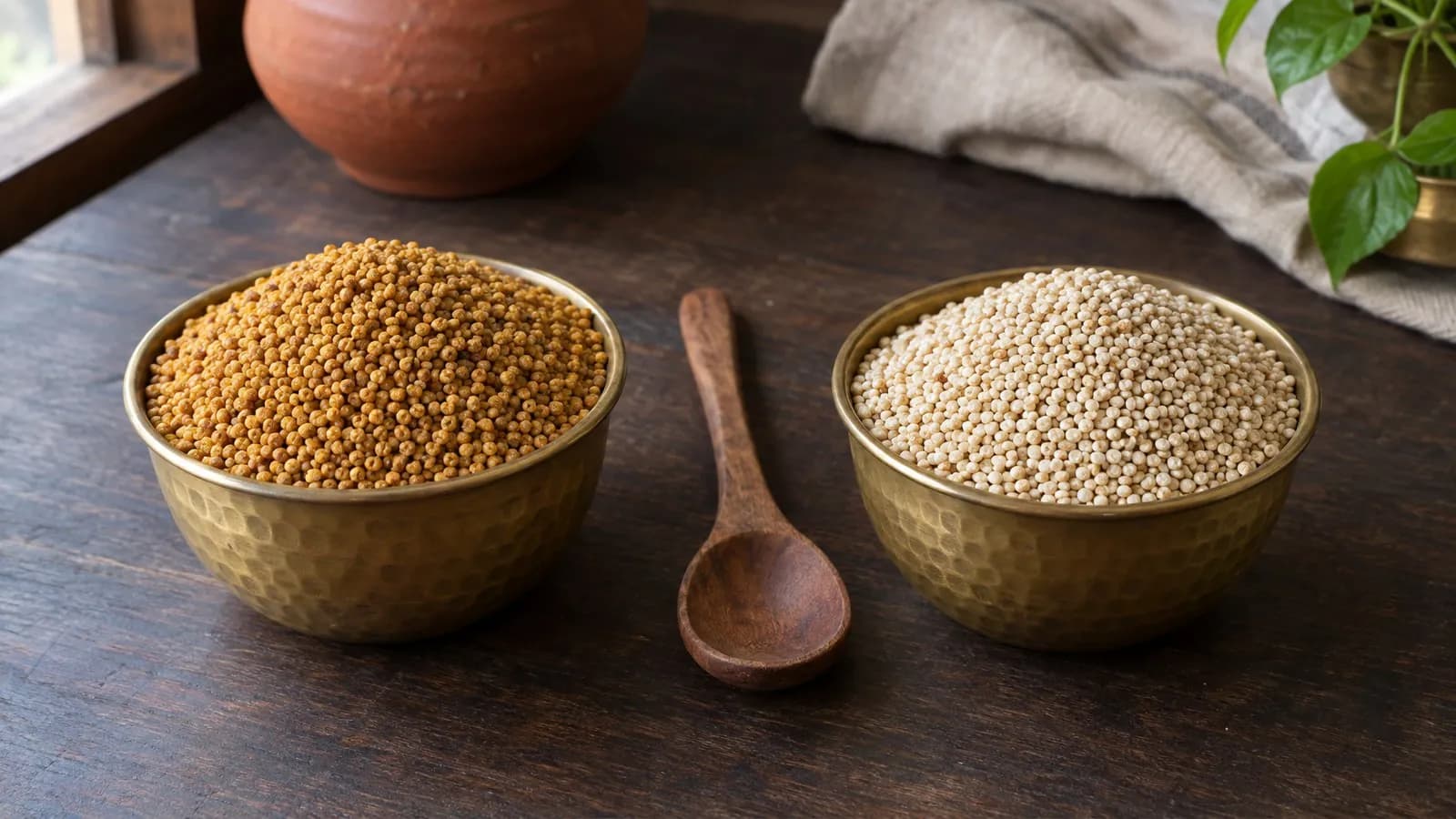
Foxtail millet vs quinoa: nutrition, taste and which to choose
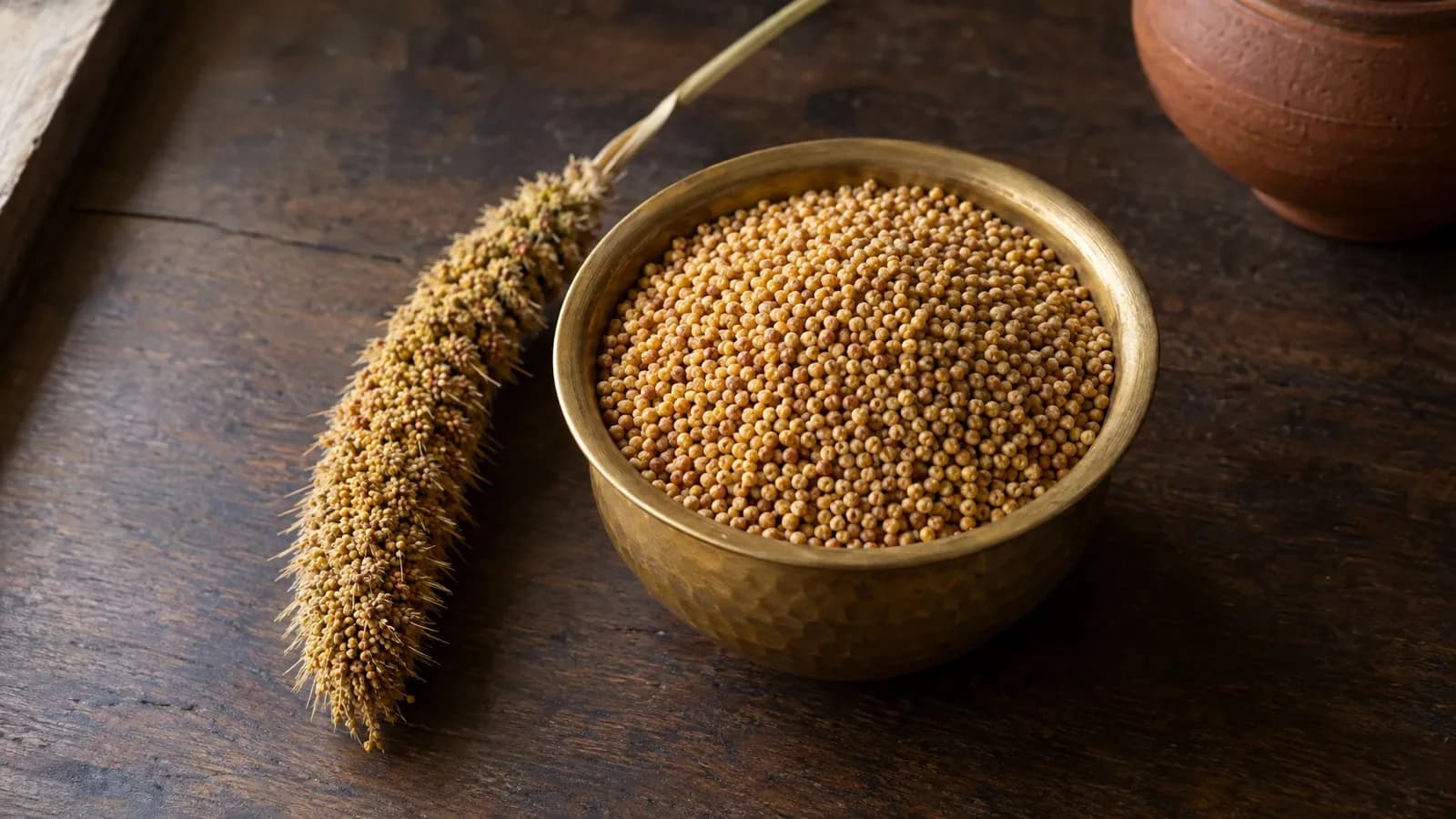
Foxtail millet in Kannada, Hindi, Tamil and other Indian names
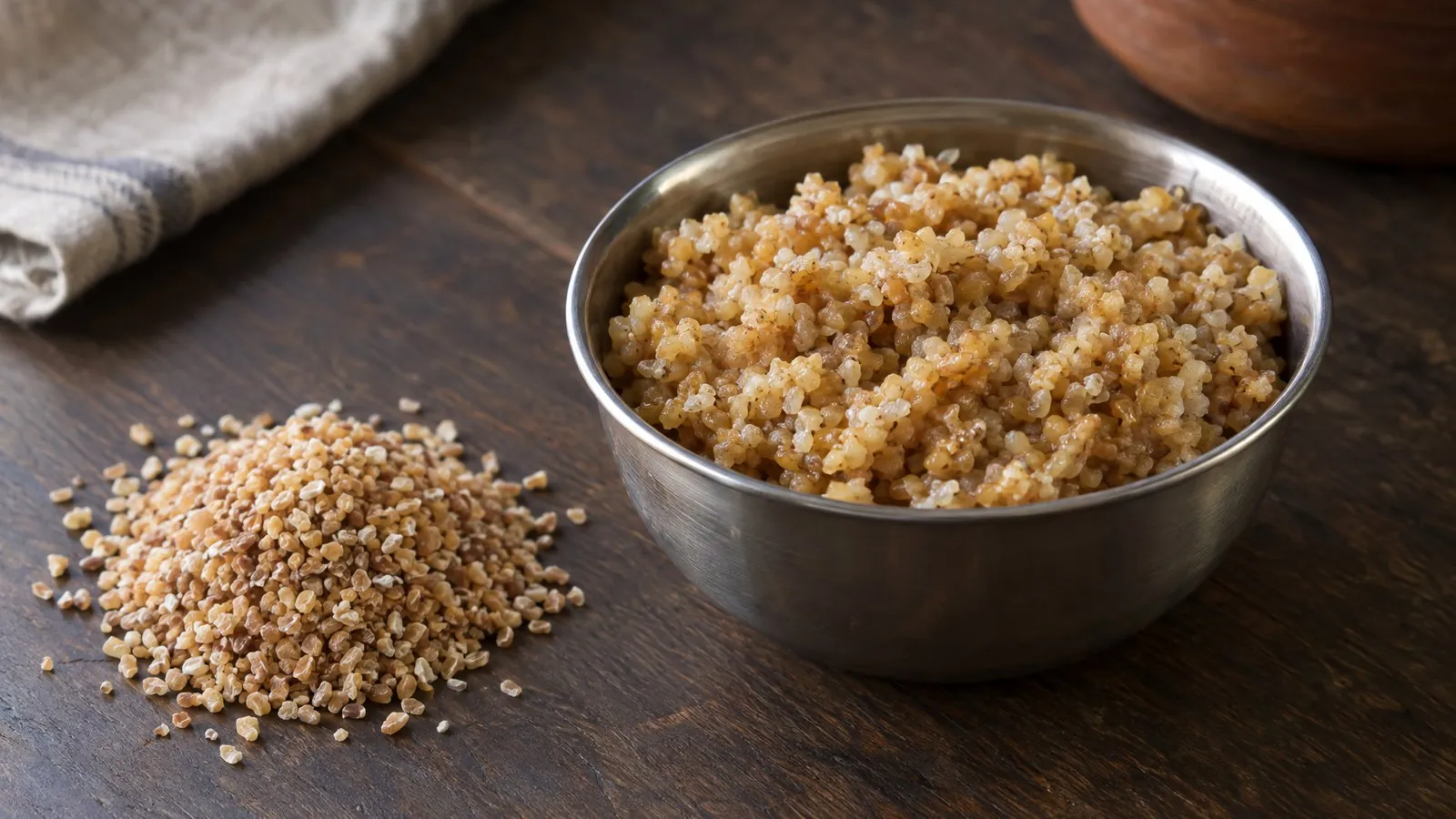
Dalia protein and nutrition per 100g: calories, carbs and GI