by COWBERRY

8 minute read
Ghee benefits for skin: 7 ways to use it on face, lips and dry skin

The ghee benefits for skin that hold up are simple: ghee is pure fat, so a thin layer softens dry skin, chapped lips and cracked heels by slowing water loss. The evidence behind it is traditional and small, not large trials, and no source we cite shows that eating bilona ghee changes skin. Here is how to use it, and when not to.
Benefits of applying ghee on face and skin: the short answer
Ghee is 100 g of fat per 100 g in the USDA FoodData Central entry, which also shows 0 g protein and 0 g carbohydrate. On skin that makes it an occlusive moisturiser: a thin film of fat sits on the surface, slows the loss of water and leaves dry, flaky skin feeling softer. That is a simple physical effect, and any plain oil or butter has it too.
Where it is useful: dry cheeks in winter, chapped lips, cracked heels, rough elbows and ragged cuticles.
Where it is not: no source we cite shows that ghee lightens skin tone, removes wrinkles or clears pimples, so this page makes none of those claims. On oily or acne-prone skin it can make things worse.
Eating ghee is a separate matter. Ghee on dal or in a besan laddu is food, at 45 kcal a level 5 g teaspoon. Skin reflects the whole diet, sleep and sun exposure, so count the ghee you eat as cooking fat, as explained under ghee benefits.
What the sources say: Ayurveda and modern science
In Ayurveda ghee is called ghrita. The 2024 review by Kataria and Singh (Journal of Ayurveda and Integrative Medicine) went through eleven major Ayurvedic texts and counted 774 mentions of ghee in the context of health benefits, the highest among milk products, which it grouped into 15 benefit clusters. The texts also describe different types of ghee by the source of the milk, the method of making, maturation and physical phase.
The same review then looked at modern papers on ghee published between 1990 and 2023. Two points from it matter here. First, the authors call modern research on ghee's benefits limited. Second, the two bodies of work look at different things: recent research has focused mainly on cardiovascular health, wounds and skin health, while Ayurveda gives more weight to cognitive benefits, digestion and nourishment. The abstract reports no measured effect of ghee on skin, so this page quotes none.
Read plainly, that leaves three things: long traditional use, a simple physical reason why ghee softens dry skin (it is fat, and fat slows water loss), and limited modern evidence. So it is reasonable to use ghee as a home moisturiser, and not reasonable to expect it to change a skin condition.
Ghee uses for skin: 7 ways to apply it
Start with a patch test. Rub a little ghee on the inside of your forearm, leave it overnight and watch the spot for a day. If there is no redness, itching or bumps, go ahead. Use fresh ghee, take it out with a clean, dry spoon, warm a pea-sized amount between your fingers and spread it thin; a thick layer only stains the pillow.
1. Overnight on a dry face
After washing your face at night, press a rice-grain amount over dry cheeks and forehead while the skin is still slightly damp. Blot with a tissue after 20 minutes if it feels heavy.
2. Ghee for lips
Dab a little on chapped lips at bedtime and after meals in dry weather. It works as a plain lip balm.
3. Cracked heels
Soak your feet in warm water for ten minutes, dry them, rub ghee into the heels and sleep in cotton socks.
4. Elbows, knees and knuckles
Massage a thin layer into rough patches after a bath, when the skin is warm.
5. Cuticles and hands
Work a drop into dry cuticles and the backs of the hands after washing dishes.
6. Before a winter bath
Rub a thin layer on dry arms and legs 15 minutes before a warm bath, then wash with a mild soap.
7. In a besan ubtan
Mix two teaspoons of besan, a pinch of turmeric, a little milk and half a teaspoon of ghee, leave it on for ten minutes and rinse. The ghee keeps the pack from drying the skin. It cleans and softens; it does not change skin colour.
Side effects of ghee on face: what to avoid
Ghee is a heavy fat, and the usual problems come from using it on the wrong skin or in the wrong weather.
- Oily or acne-prone skin: a film of fat can block pores and bring on more pimples. Keep ghee off the face; use it on lips and heels only.
- Broken or inflamed skin: do not put kitchen fats on open cuts, fresh burns, weeping rashes or infected skin. See a doctor.
- Milk allergy: ghee is made from milk. If you are allergic to milk, skip ghee or ask your doctor first.
- Heat and humidity: in summer and the monsoon a layer of fat traps sweat and dust. Use it at night, thinly, or wait for winter.
- Sun: ghee is not a sunscreen. Wash it off in the morning and do not apply it before going out.
- Eyes: keep it on the skin around the eyes, never in them.
- Old or impure ghee: ghee that smells sour or soapy has turned rancid and can irritate the skin. Ghee cut with vanaspati or other fats is no better, and no home test finds them; see how to check ghee purity.
- Whitening mixes: skip recipes that add lemon juice, baking soda or toothpaste to ghee. They sting and dry the skin.
Stop at the first sign of redness, itching or new bumps.
Better and worse options: which ghee, and what else works
Cow or buffalo: cow ghee is often described as the softer of the two and buffalo ghee as firmer and whiter; a softer ghee spreads thin more easily. No source we cite ranks one above the other for skin; the differences are set out in cow ghee vs buffalo ghee.
Bilona or cream ghee: no study we could cite compares them on skin. What matters is that the ghee is fresh, plain and unsalted, with nothing added. How bilona ghee is made from curd is explained in the A2 cow ghee guide, and the other kinds in types of ghee.
Lighter choices: for the face, a fragrance-free moisturiser from the chemist is lighter and is made for skin. For body massage, a plain oil such as sesame or coconut oil does the same job.
Worse choices: salted butter, flavoured or spiced ghee, ghee that has been used for frying, and any ghee kept with a wet spoon in the jar.
Talk to your doctor or dietitian
Dry skin that cracks and bleeds, itches for weeks, or comes with a rash, scaling or oozing is a medical question, not a kitchen one. So are acne, eczema, psoriasis and fungal infections. See a dermatologist and tell them what you have been applying, ghee included.
If you are thinking of eating more ghee for your skin, remember that it gives 900 kcal per 100 g and that India's dietary guidelines (ICMR-NIN) list ghee, with butter, as a saturated fat to limit; the numbers are on is ghee good for cholesterol. For anything beyond ordinary winter dryness, talk to your doctor or dietitian first, and do not rely on ghee alone.
FAQs
Is ghee good for lips?
Yes, as a plain lip balm. Ghee is pure fat, so a thin layer seals moisture into dry, chapped lips; use it at bedtime and after meals in cold or dry weather. If your lips stay cracked or sore despite this, a doctor should look at them.
Does ghee make lips pink?
No. Ghee does not change the natural colour of lips, and no source we cite says it does. It softens dry, flaky skin, and smooth, moisturised lips look fresher than chapped ones, which is what people notice. Lips darkened by smoking, sun or a medical cause need a doctor's advice.
How to use ghee for skin whitening?
You cannot use ghee for skin whitening, because ghee does not lighten skin. Skin colour comes from melanin, which a moisturiser does not alter, and no source we cite shows otherwise. What ghee does is soften dry skin, so a dull, flaky face can look fresher. Avoid mixes with lemon juice or baking soda, which irritate.
Can we apply ghee on face daily?
On dry skin, yes: a rice-grain amount at night, spread thin, after a patch test. On oily, combination or acne-prone skin, no, because a heavy fat can block pores. In hot, humid months use it less often or only on lips and heels, and stop if you see redness or new bumps.
Does eating ghee make skin glow?
Not on its own. No source we cite shows that eating ghee changes the skin. A level teaspoon of ghee, taken as 5 g, adds 45 kcal and 5 g of fat to a meal; skin depends on the whole diet, sleep and sun protection. Eat ghee in small amounts for taste, not as skincare.
Which ghee is good for skin, cow or buffalo?
Either can be used, and no study we could cite compares the two on skin. Cow ghee is often described as softer, so it spreads thin more easily. Freshness and purity matter more than the animal. Use plain, unsalted ghee from a clean, dry jar, and do a patch test before the first use.
References
- Kataria D, Singh G. Health benefits of ghee: review of Ayurveda and modern science perspectives. J Ayurveda Integr Med, 2024
- USDA FoodData Central (SR Legacy): Butter, Clarified butter (ghee), FDC ID 171314
- Indian Food Composition Tables (IFCT) 2017, ICMR-National Institute of Nutrition
- Dietary Guidelines for Indians, ICMR-National Institute of Nutrition
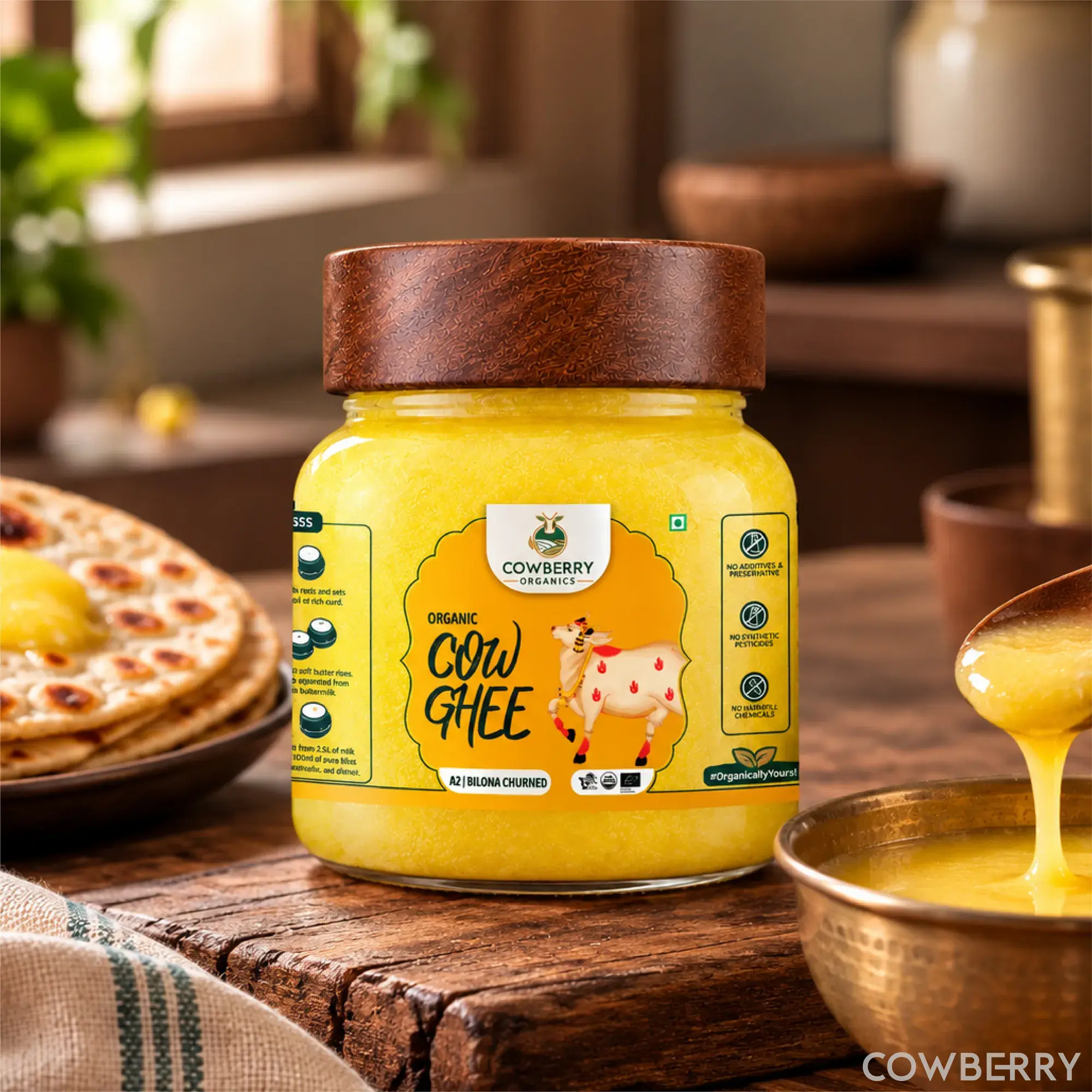
Shop this article
Keep reading
Cold pressed oil benefits: why they survive processing better
Mustard oil vs refined oil: nutrition, cooking and which to choose
Mustard oil omega 3: nutrition, calories and fat per 100g