
Besan ke laddu
Preparation Time
30 minutes
Cooking Time
30 minutes
Difficulty Level
moderate
Meal Type
Dessert
Serves 12
Key Ingredients
- Besan, coarse (ladoo besan) or regular
About This Recipe
Besan ke laddu are a North Indian festival sweet: made for Diwali, packed into steel dabbas for travelling relatives, and offered as prasad because they need nothing perishable. Besan is milled from chana dal, and the whole recipe is a lesson in roasting it. Raw besan tastes bitter and chalky; roasted properly in ghee it turns nutty, sweet-smelling and the colour of light caramel. That change takes 20 to 25 minutes on a low flame; a higher flame browns the flour on the outside and leaves the raw taste in.
Coarse ladoo besan gives the grainy, melt-slowly texture of a halwai laddu; regular besan works just as well if you roast two tablespoons of fine sooji with it for grain. What tells you it is done is the flow: the mixture starts as a stiff, dry lump, then loosens, and finally runs off the spatula in a thick ribbon while the kitchen smells of roasted gram. The sweetener goes in after the mixture cools to warm, never into hot besan: hot ghee melts sugar or jaggery, and a melted mixture will not bind into laddus.
Laddus that will not bind usually mean too little ghee, sweetener added while the besan was hot, or a mixture that went cold before rolling; laddus that turn hard mean over-roasting or too much sugar. Jaggery powder gives a darker, slightly earthy laddu; powdered sugar the classic pale one. Use a good bilona ghee: its aroma is most of the flavour here.
Ingredient List
Serving Size:
1x
2x
3x
Laddu
- Besan, coarse (ladoo besan) or regular — 2 cups
- Ghee (1/2 cup plus 2 tbsp) — 10 tbsp
- Jaggery powder (about 1 cup), or 120 g powdered sugar — 150 g

- Cardamom Powder — 1/2 tsp
- Cashews or almonds, chopped — 2 tbsp
- Fine sooji (only with regular besan, for grain) — 2 tbsp
To finish
- Pistachio slivers (optional) — 1 tbsp
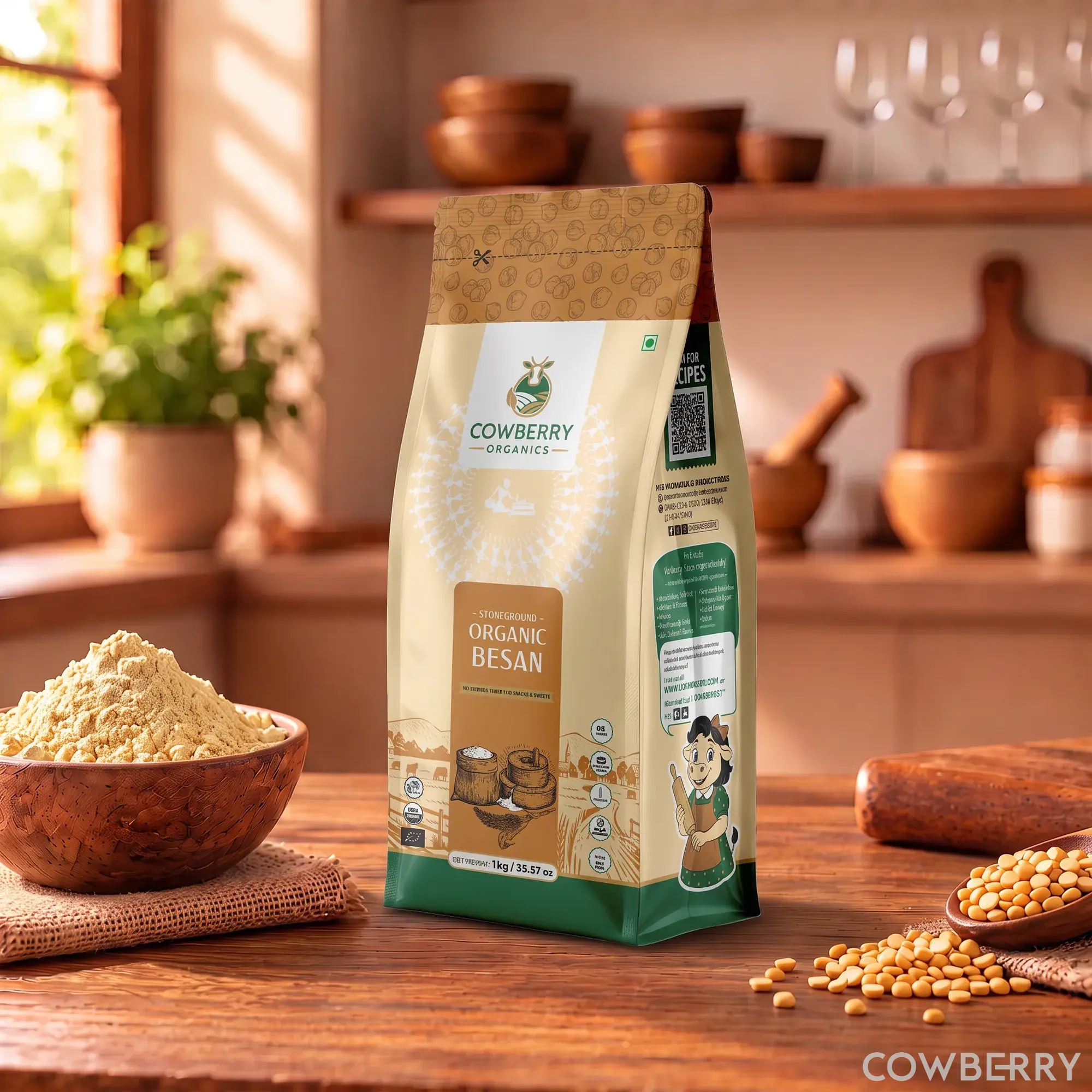
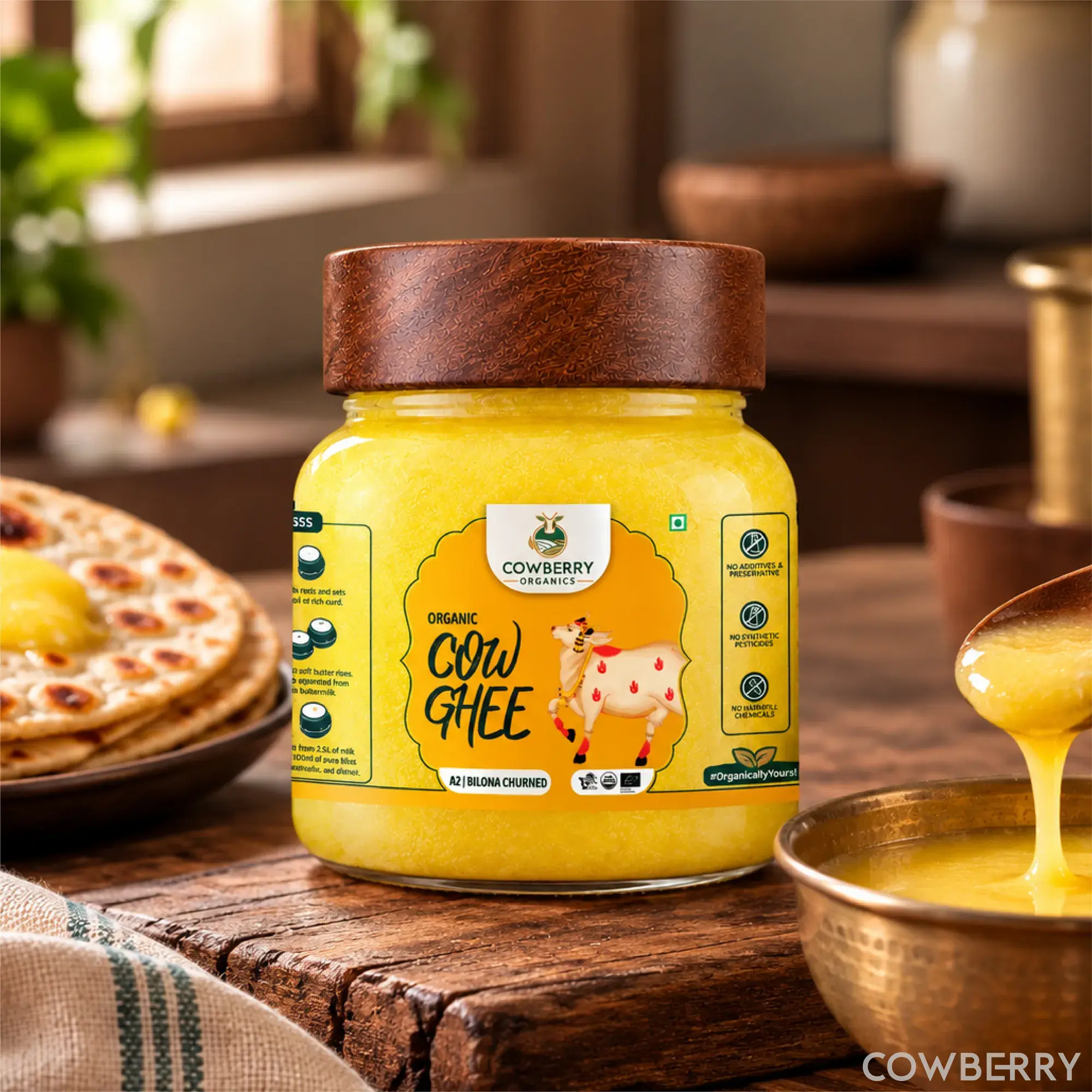
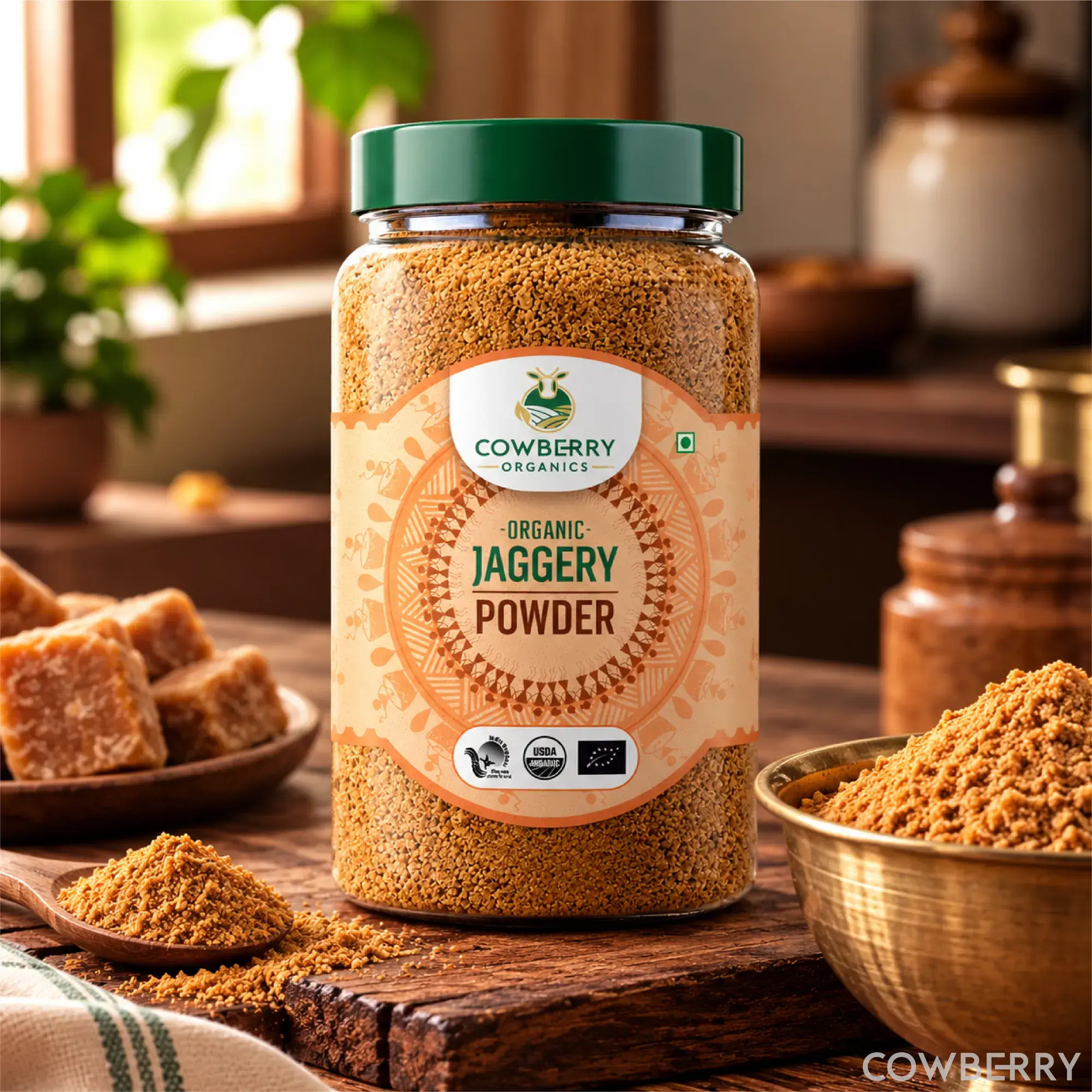
Skip The Store !
Get all you need for the recipe in just a few clicks
Serving Suggestions
Serve besan ke laddu at room temperature, one per person, with a cup of tea or as the sweet on a Diwali plate beside til ke laddu and namkeen. They travel well and need no fridge, which is why they go into gift boxes and tiffins. For a child's snack, roll them smaller, about the size of a walnut. A laddu that crumbles is still good spooned over warm milk as a quick besan halwa.
Tips for Cooking Besan ke laddu
Keep the flame low for the whole roast and stir without stopping; besan catches at the bottom within a minute if you walk away. Judge doneness by smell and flow, not the clock: it should smell nutty and run off the spatula in a thick ribbon. Cool the mixture until it is just warm to the touch before adding the sweetener, and roll while it is still warm, pressing firmly. If it stays crumbly, add a spoon of warm ghee.

Chef’s Note
The besan decides the laddu. It should smell sweet and nutty straight from the pack, never musty or bitter; stale flour stays bitter however long you roast it. One laddu from this batch is about 234 kcal with 4.7 g of protein, nearly all of it from the besan. Size is the portion here: this quantity makes twelve laddus, each about the size of a lime, and one is enough.
Per serving (approx.): 234 kcal, protein 4.7 g, carbs 22 g, fat 14 g, fibre 2.2 g. Computed from IFCT 2017 / USDA values for the listed quantities. Measures: 1 cup = 240 ml, 1 tbsp = 15 ml, 1 tsp = 5 ml.
Happy Cooking !!
!!
ByCOWBERRY
Jul 04, 2026
Recipes You’ll Love
More everyday cooking with COWBERRY organics, from the same kitchen.

Preparation Time
10 Min
Cooking Time
30 Min
Difficulty Level
moderate

Preparation Time
5 Min
Cooking Time
27 Min
Difficulty Level
moderate

Preparation Time
12 Min
Cooking Time
28 Min
Difficulty Level
moderate