by COWBERRY

10 minute read
Cold pressed oil benefits: why they survive processing better

Cold pressed oil benefits sit in what the press leaves in the bottle: antioxidants, phytonutrients and the seed's own flavour, because the oil is pressed mechanically without heat, as the ICMR-NIN Dietary Guidelines define kachi ghani oil. The calories do not change; only the minor components do. Then the side effects, a day's amount and the recipes that use it.
Is cold pressed oil good? The benefits, one by one
Antioxidants and phytonutrients stay in the oil
The ICMR-NIN Dietary Guidelines define cold-pressed oil, kachi ghani tel, as oil obtained by mechanical procedures, expeller pressing, without the application of heat. The same text states the benefit one line on: since pressing leaves the nature of the oil unaltered, the oil's antioxidants and phytonutrients survive. The chapter adds that dietary fats carry minor components, tocopherols, tocotrienols and sterols, mostly antioxidants, which keep fats from turning rancid.
The flavour of the seed stays in the bottle
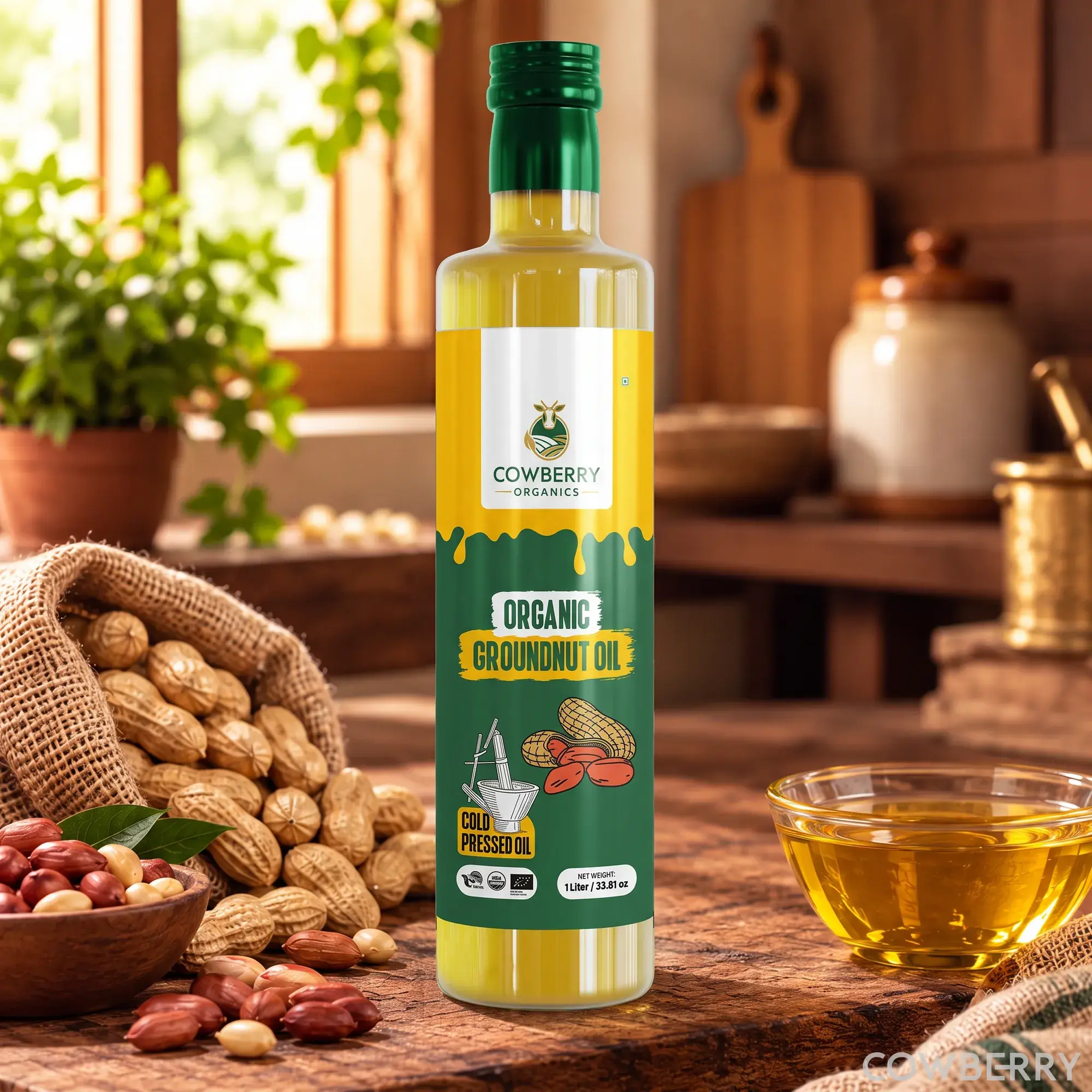
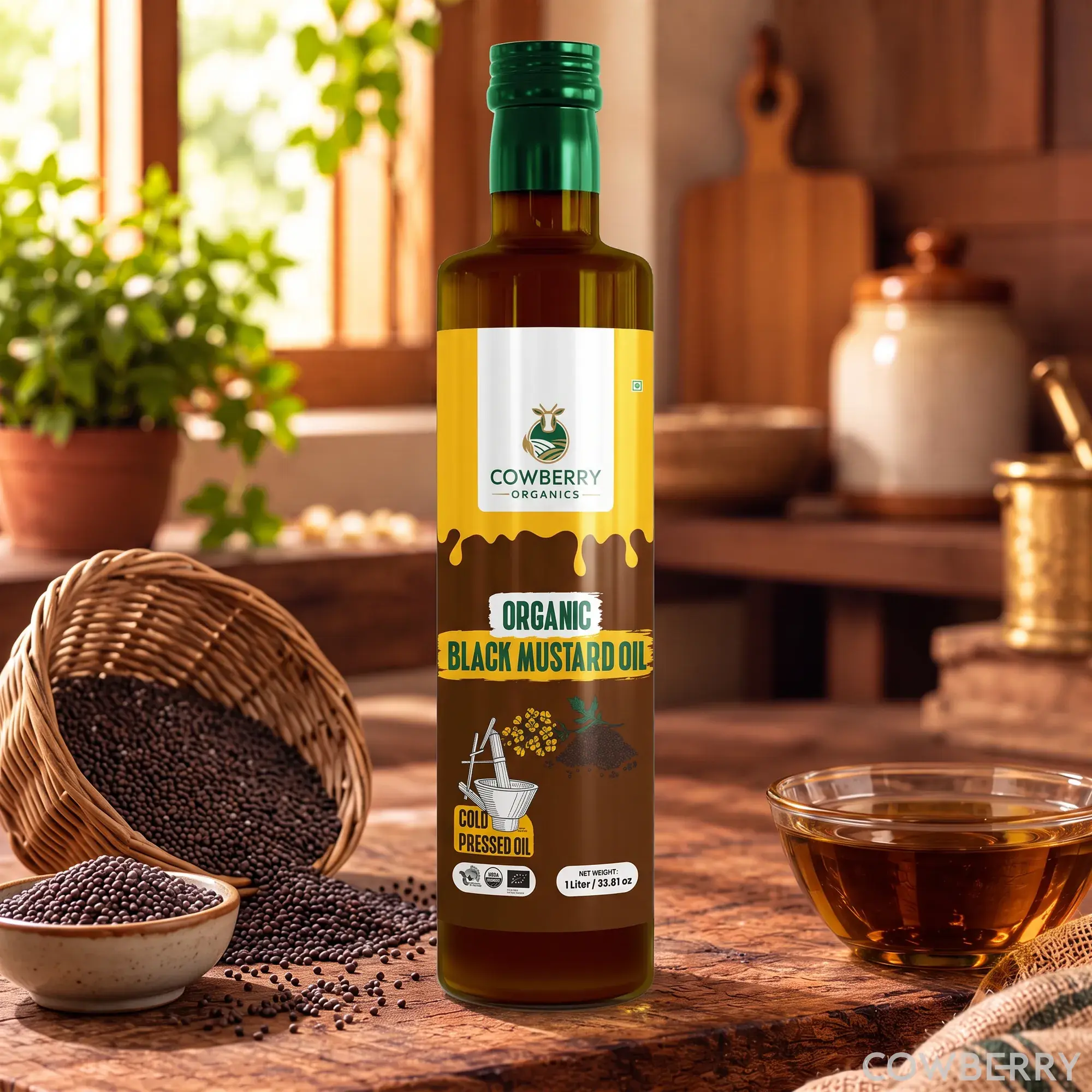
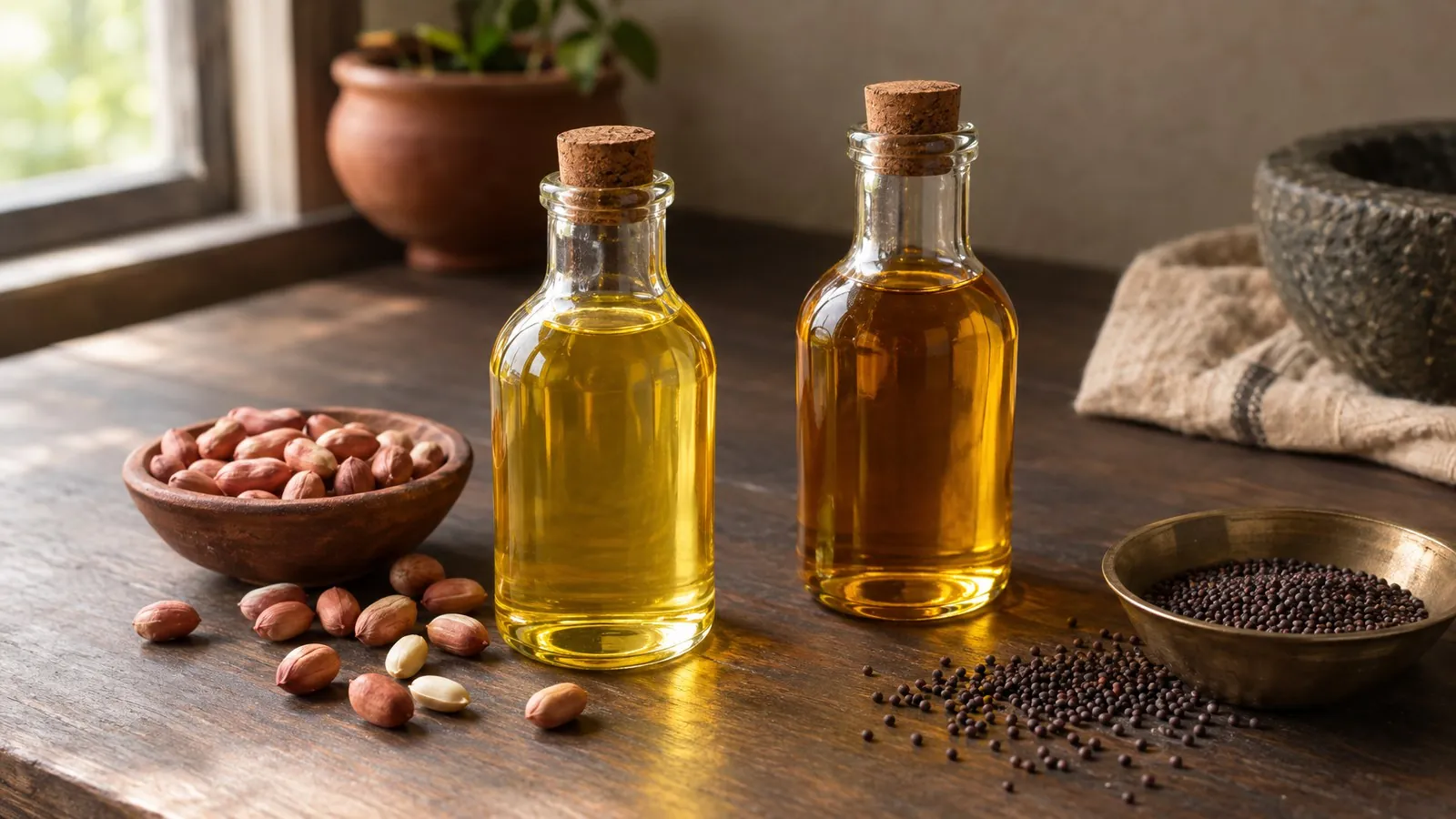
ICMR-NIN notes that the natural flavour of fats and oils comes largely from these minor components. Cold pressing keeps them in the oil, and COWBERRY's product facts show the result: its mustard oil is strongly pungent, and its groundnut oil is nutty with a rich golden colour.
No heat in the press, and no chemicals
Expeller pressing without heat is the entire method, and it runs none of the chemical steps that refining applies to crude oil. The guidelines note that refining strips crude oil of its undesirable compounds and, on the way, adds several additives including preservatives; a cold-pressed oil skips that whole pass, and COWBERRY presses both of its oils without heat or chemicals.
The calories do not move
None of the above changes what an oil is: pure fat. The USDA FoodData Central entries for mustard oil and groundnut oil both read 884 kcal and 100 g of fat per 100 g, with 0 g of protein and 0 g of carbohydrate, and IFCT 2017 prints these two oils only in its fatty-acid tables. A cold-pressed bottle is not a lower-calorie choice; its edge is in the components above, not in the energy.
Groundnut oil's profile, on the record
For groundnut oil the seed adds its own line: a 2014 review of peanut oil in Critical Reviews in Food Science and Nutrition calls the fatty acid and antioxidant profile well balanced, and connects the oil's organoleptic properties to cardioprotective and anti-inflammatory effects reported in that literature; the paper itself reviews published work rather than running a trial of its own. COWBERRY's cold-pressed groundnut oil starts from groundnuts grown in Saurashtra and Andhra Pradesh, sun-dried and then pressed.
Why is cold pressed oil better? What survives, what is stripped
Why cold pressed oil is better needs a ledger, and the guidelines supply it. What survives the press, and what a refining pass strips, side by side:
| What travels with the fat | Cold-pressed oil | Refined oil |
|---|---|---|
| Antioxidants and phytonutrients | Preserved | Small amounts removed |
| Odour | Not removed by pressing | Removed |
| Undesirable compounds of crude oil | May remain | Removed |
| Additives | None added in pressing | Several, including preservatives |
| Fatty acids | Not altered by pressing | Not altered |
| Energy per 100 g | 884 kcal | 884 kcal |
The same chapter states the honest half of the bargain: cold-pressed oils, like crude oil, can still contain undesirable compounds, because nothing has been taken out. Better, then, means better on flavour and on the minor components, not automatically purer; the seed and the care at the press decide the rest.
A 2023 study in the journal Foods pressed 200 g of each of six oilseeds and weighed what each yielded; the six were sesame, pumpkin, flax, milk thistle, hemp and cumin. Sesame led the oil yield and cumin came last, sediment left in the oil fell as the oil was stored longer, and the quality parameters differed significantly between the six seeds, the iodine value excepted. Mustard and groundnut were not among the six, so the numbers say nothing about these two oils; what the study does show is what a press run gives beside the oil: seedcake and sediment, the sediment thinning out as the oil is stored.
For the step-by-step process comparison, open cold pressed oil vs refined oil.
Cold pressed sunflower oil benefits: what transfers to any seed
Cold pressed sunflower oil benefits come from the same press, not from a different rulebook: whatever the seed, no heat is applied and the minor components stay in the oil. For sunflower oil itself, no per-100 g figure is quoted on this site, since the nutrition tables on this site cover only mustard oil and groundnut oil. The ICMR-NIN guidelines do carry sunflower in their chart of twelve cooking fats drawn from IFCT 2017 data, and the Journal of Clinical Lipidology's 2022 review puts sunflower oil on the list that replaces saturated fat. How sunflower and soybean bottles compare is on sunflower oil vs soybean oil.
Is cold pressed oil good for cooking? Smoke point and frying
For everyday cooking, yes, and in moderation. Each of COWBERRY's two cold-pressed oils carries a high smoke point in the product facts, which put deep frying and sauteing among their uses; the facts print no temperature, so none is quoted here. The guidelines' own preference is for methods that need less fat, such as sauteing, steaming, grilling, boiling or baking, with frying as the occasional one.
When a fry happens, the reheating rules matter more than the press. Used frying oil, filtered, may finish a curry but must never fry a second time, and the guidelines want it used up within a day or two. Past that, FSSAI marks the discard point at 25 percent total polar compounds, alongside its warning signs: smoke gone blue-grey, tough foam, a dark murky look or changed consistency. Repeated heating is the bigger concern. Ganesan and colleagues, reviewing the literature in 2019, link repeatedly heated oil to polycyclic aromatic hydrocarbons, some reported as carcinogenic, and report large consumption of it associated with lung, colorectal, breast and prostate cancers, among other malignancies.
Side effects of cold pressed oil: who should limit it
Cold-pressed oil is still oil, and its side effects are what an unrefined bottle keeps plus what any fat gives in excess.
- The calories are unchanged. At 884 kcal per 100 g, a cold-pressed bottle is as energy-dense as a refined one: 44 kcal in a level teaspoon and 133 kcal in a tablespoon. The press buys no one a bigger pour.
- Undesirable compounds can remain. The guidelines note that cold-pressed oils, like crude oil, can carry what refining exists to remove: gums, waxes, pesticide residues, aflatoxins, allergens; the seed and the seller therefore decide more than the label word.
- Mustard oil carries erucic acid. On mustard oil the record is longer. The 2022 Journal of Clinical Lipidology review calls the oil low in saturated fat and popular in South Asia, notes that the Lipid Association of India recommends it as heart-healthy, and puts erucic acid at a large proportion of the oil; the rodent finding of myocardial lipidosis is what drove the US FDA's cooking ban, while Australia, New Zealand and the European Union reply with upper limits instead, and the authors ask the FDA to review the safety limits afresh. That "low in saturated fat" is the review's wording, not a label claim: FSSAI's claims rules set the line for a liquid at 0.75 g of saturated fat per 100 ml, and COWBERRY's pack prints 11.98 g per 100 g. The oil's omega-3 side is on the record too, with 0.7 g of mustard/rapeseed oil furnishing 100 mg of n-3 PUFA in the guidelines' table. The mustard oil hub carries the whole story of this seed.
- A peanut allergy and groundnut oil. Allergens sit among the compounds an unrefined oil can keep, so anyone with a peanut allergy should check with a doctor or dietitian before using cold-pressed groundnut oil; the groundnut oil hub covers the oil itself.
- Sediment can show up. The 2023 press study measured sediment in freshly pressed oil and found it lessened as the oil was stored.
For anyone managing cholesterol or heart disease, the saturated fat and swap logic sits on low cholesterol oil, and the oil you cook with is a decision for your doctor or dietitian.
How much cold pressed oil per day
The amount is the same as for any cooking oil. ICMR-NIN's day's allowance of visible fat, cooking oil, ghee and butter combined, runs 20 to 50 g (4 to 10 teaspoons) a person; the needs of the day set where you sit in that band, with 27 to 30 g enough on a 2000 kcal diet. The sedentary figures are 20 g for women and 30 g for men.
In spoon terms the arithmetic is quick: a level teaspoon of oil weighs 5 g and carries 44 kcal, a tablespoon 15 g and 133 kcal. A tablespoon in a tadka plus a teaspoon to finish a sabzi is 20 g, already the whole allowance of a sedentary woman, so a cold-pressed kitchen counts spoons like any other.
Ghee and butter share the same budget: a teaspoon or two daily, or skip them if possible, the guidelines add. Between meals, keep the bottle shut somewhere cool and dark, away from sunlight, as COWBERRY's product facts advise.
How to eat it: recipes that let the oil lead
The point of a cold-pressed oil is that it can be tasted. Recipes on this site put the two oils to work:
- Mango pickle: built on mustard oil, which carries the pickle's sharp, pungent character.
- Poha tikki: groundnut oil shallow-fries the cutlets, its nuttiness in the crust.
- Masoor dal dosa: groundnut oil again, for a crisp edge on the dosa.
- Kachori and falafel: fried snacks where a high-smoke-point oil does the work.
For the other end of the shelf, what refining removes and adds and when a refined bottle is the right one, see is refined oil good for health; the kachi ghani name and the press behind it are explained on kachi ghani meaning.
FAQs
Is cold pressed oil good?
Yes, in moderate amounts and for the right reasons: pressing without heat keeps the oil's antioxidants, phytonutrients and the seed's flavour, as the ICMR-NIN guidelines note, while the calories stay exactly the same as in a refined bottle of the same oil. It is pure fat at 884 kcal per 100 g, so good means a measured pour, from seed and a seller you trust.
Why is cold pressed oil better?
On flavour and on what survives the press, but not on calories. Pressing without heat leaves the oil's antioxidants, phytonutrients and seed taste in the bottle, the ICMR-NIN guidelines note, and refining strips small amounts of the minor components behind that flavour while adding preservatives. The catch is the other side of less processing: an unrefined bottle can carry crude oil's unwanted compounds, which puts the choice back on the seed and the seller.
Is cold pressed oil good for cooking?
Yes, for the pan as well as the bottle. The product facts for COWBERRY's two cold-pressed oils name deep frying and sauteing among their uses and mark the smoke point of each as high, without a temperature, so none is quoted here. For everyday meals the guidelines point to gentler methods and ask that frying oil be filtered and kept for curries, never fried in again, and used within a day or two.
What is cold pressed mustard oil?
Mustard seed pressed in a cold expeller and bottled without refining, what the ICMR-NIN guidelines call kachi ghani tel when mustard is the seed; the press applies no heat, so antioxidants and phytonutrients survive. COWBERRY presses its own mustard oil slowly and without heat or chemicals, the seed coming from Rajasthan and Bengal.
Difference between cold pressed and refined oil?
One is pressed, the other is cleaned. A cold-pressed oil leaves the expeller without heat, so its flavour, antioxidants and the compounds of crude oil all stay; a refined oil is put through chemical refining, which removes those compounds and the odour, stretches shelf life and adds preservatives. Both bottles match on fatty acids and on energy: 884 kcal per 100 g, whether mustard oil or groundnut oil.
Is refined oil good for health?
In moderation, yes, and mostly because of what the refinery does: it strips crude oil of the things that make it unfit to eat and spares the fatty acids. What a refined bottle gives up is the odour and a little of the minor components, and it takes on preservatives; a cold-pressed bottle keeps all of those. The full weighing is on is refined oil good for health.
References
- Indian Food Composition Tables (IFCT) 2017, ICMR-National Institute of Nutrition
- Dietary Guidelines for Indians, ICMR-National Institute of Nutrition
- Poddar KH, Sikand G, Kalra D et al. Mustard oil and cardiovascular health: why the controversy? J Clin Lipidol, 2022
- Akhtar S, Khalid N, Ahmed I et al. Physicochemical characteristics, functional properties, and nutritional benefits of peanut oil: a review. Crit Rev Food Sci Nutr, 2014
- Kabutey A, Herak D, Mizera C et al. Assessment of quality and efficiency of cold-pressed oil from selected oilseeds. Foods, 2023
- USDA FoodData Central (SR Legacy): Oil, peanut, salad or cooking, FDC ID 171410
- USDA FoodData Central (SR Legacy): Oil, mustard, FDC ID 172337
- Ganesan K, Sukalingam K, Xu B. Impact of consumption of repeatedly heated cooking oils on the incidence of various cancers- A critical review. Crit Rev Food Sci Nutr, 2019
- FSSAI Guidance Note No. 06/2018: Handling and disposal of used cooking oil (RUCO), including the 25% total polar compounds limit
- FSSAI Food Safety and Standards (Advertising and Claims) Regulations 2018, compendium (PDF)
Shop this article
Keep reading
Mustard oil vs refined oil: nutrition, cooking and which to choose
Mustard oil omega 3: nutrition, calories and fat per 100g
Low cholesterol oil: which cooking oils to choose and avoid