by COWBERRY

7 minute read
Cinnamon tea: benefits and how to make dalchini tea at home

Cinnamon tea is warm water simmered with a small piece of dalchini: a flavoured drink, not a medicine. What the spice adds to a cup is honest and small - a pinch of powder carries about 0.7 kcal, 0.2 g of carbohydrate and 3 mg of calcium. This page gives the evidence reading, the recipe and the coumarin line; the spice itself lives on the cinnamon powder guide.
Cinnamon tea benefits: what a cup actually carries
A cup of cinnamon tea is almost entirely water. One level teaspoon of ground cinnamon weighs 2.6 g in the USDA FoodData Central record, and the amount in a cup is far smaller: a pinch, taken as an eighth of a level teaspoon, is about 0.3 g. That pinch carries about 0.7 kcal, 0.2 g of carbohydrate (most of it the 0.2 g of fibre) and 3 mg of calcium, worked out from the same record's 247 kcal, 80.6 g of carbohydrate, 53.1 g of fibre and 1000 mg of calcium per 100 g. A small piece of stick steeped and removed has no weight on record, so no arithmetic is possible for it; the cup takes the bark's warm sweet-spicy aroma, which is the whole point of the drink. The per-100 g table lives on the cinnamon nutrition per 100g page.
That is the honest shape of cinnamon tea benefits: aroma and warmth, plus a pinch-sized top-up of the spice's nutrients. A 2014 review covering culinary herbs and spices supplies the wider reason: a plate receives only a tiny amount of spice, folded into a whole dish, so its true health benefit stays unclear. For tea, the flavour is the benefit on record; everything else is a stretch.
What cinnamon tea is not shown to do
The three claims that ride on dalchini tea are blood sugar, weight loss and cholesterol, and none of them is backed by human evidence. Blood sugar has the fullest record, and it reads negative: in 2012, a Cochrane review pulled together ten trials, with 577 people with diabetes, in which cinnamon, mostly cassia, was given at a mean of 2 g daily for 4 to 16 weeks; against the control groups, no statistically significant difference showed up in HbA1c, serum insulin or glucose after meals. The fasting-glucose result was inconclusive, and the reviewers judged the evidence insufficient. A cup of tea holds a pinch, far below those trial amounts, and the trials themselves found no clear benefit. For weight loss, no human trial on record tests cinnamon tea, so no weight-loss claim is made; for cholesterol, the reviews are silent, so no cholesterol claim is made either. See is dalchini good for diabetes for the diabetes detail.
Cinnamon tea recipe: how to make dalchini tea at home
One cup, one spice, eight to ten minutes. This plain version is what the numbers above are based on; the additions below change the flavour, not the arithmetic.
Ingredients for one cup
- 240 ml of water (one cup)
- 1 small piece of cinnamon stick, about 3 cm, or a pinch of ground cinnamon (about 0.3 g)
- Optional: 1 teaspoon of honey or jaggery, or a squeeze of lemon
Method
- Boil the water. Pour the 240 ml into a small pan and bring it to a rolling boil over a medium flame, about 2 minutes.
- Add the spice. Drop in the stick piece, or stir in the pinch of powder, and lower the flame.
- Simmer. Keep it on a low flame for 5 minutes with the stick, or 2 minutes with the powder, until the water smells clearly sweet-spicy and usually takes a pale amber tint.
- Rest. Take the pan off the flame and let it sit for 1 minute so the flavour settles.
- Strain and serve. Lift out the stick, or pour through a small strainer to catch the powder, into a cup. Stir in the honey or jaggery while the cup is hot if you want it sweet, or add a squeeze of lemon; drink it warm.
The stick comes out before serving; the powder stays in unless you strain it. How much cinnamon belongs in each kind of dish is on the cinnamon how to use page.
How much cinnamon tea per day: the coumarin line
Nothing on record sets a daily amount for the spice, and none is set; a cup uses a pinch or a small piece either way. The figure that matters is about safety, not seasoning: coumarin, the compound behind the cinnamon caution, carries a tolerable daily intake of 0.1 mg per kilogram of body weight each day, a value a 2010 toxicology review arrived at from human data; the same review names cassia cinnamon the main dietary source, and it is heavy consumers of cassia who may reach that daily limit. The review gives no per-gram coumarin figure for any product, so a cup of tea cannot be placed on that scale; the concern attaches to heavy, daily cassia use, rather than a pinch in a cup. The ground cinnamon in the USDA record is cassia, so the type question is real; how the two barks differ is on cinnamon vs cassia.
If you are thinking of large daily amounts or a cinnamon supplement, that is the moment to talk to your doctor or dietitian, and if you live with diabetes, keep your medicines as prescribed and settle any daily routine with your doctor first.
Variations: milk, black tea, honey and jaggery
- With milk. Use 120 ml of milk and 120 ml of water in the same pan and simmer gently so the milk does not boil over.
- With black tea leaves. Add half a teaspoon of tea leaves with the spice and simmer for 2 to 3 minutes, then strain; the cinnamon adds aroma on top of the tea's own.
- Honey or jaggery. A teaspoon of honey sweetens one cup; jaggery powder works the same way, dissolved while the cup is hot.
- Lemon. A squeeze of lemon at the end, once the cup has cooled a little, brightens the spice.
The cinnamon how to make powder page grinds sticks at home for the powder route, and the water version of the same idea is cinnamon water benefits. Names, nutrition and buying are on the cinnamon powder guide.
FAQs
Is cinnamon good for health?
For flavour, yes; as a medicine, the human evidence does not carry it. A cup of the tea is water plus a pinch of spice: about 0.7 kcal, 0.2 g of carbohydrate and 3 mg of calcium. A 2014 review notes that spices are eaten in such small quantities that their true health benefit is unclear. The full reading is on cinnamon benefits.
Does cinnamon reduce blood sugar?
Not in the pooled human evidence on record. In ten trials, 577 people with diabetes took cinnamon at a mean of 2 g daily across 4 to 16 weeks, and the 2012 Cochrane review that pooled them found no statistically significant difference against control for HbA1c, insulin or post-meal glucose; its verdict on the evidence was insufficient. A cup is a pinch, not a trial dose. The full reading lives on is dalchini good for diabetes.
How to make cinnamon tea at home?
Boil 240 ml of water, add a small piece of cinnamon stick (about 3 cm) or a pinch of ground cinnamon, and simmer on low for 5 minutes with the stick or 2 minutes with the powder. Take the pan off the flame, let it rest a minute, then strain into a cup and drink it warm. Honey, jaggery or lemon are optional.
How much cinnamon tea per day?
No daily amount is on record for the spice, so none is given; a cup uses a pinch of powder or a small piece of stick. The coumarin tolerable daily intake stands at 0.1 mg for every kilogram of body weight per day, and the 2010 review behind that reading points to heavy consumers of cassia cinnamon, not a pinch in a cup. For large daily amounts or a supplement, ask your doctor or dietitian first.
Does cinnamon help in weight loss?
No human study on record shows that, so no weight-loss claim is made for the tea. The 2014 review's reason applies here too: the amounts that actually reach a plate are tiny and folded into other foods, which leaves any true health benefit unproven. A cup of the tea adds about 0.7 kcal from the spice; it is a drink, not a weight-loss measure.
Can I drink cinnamon tea at night?
Yes; the cup is warm water flavoured with a pinch of spice, and nothing on record ties it to a time of day. The spice adds about 0.7 kcal and 0.2 g of carbohydrate, so it does not load the evening. If a warm cup before bed is your habit, keep it; if it sends you to the bathroom, drink it earlier.
References
- USDA FoodData Central
- Leach MJ, Kumar S. Cinnamon for diabetes mellitus. Cochrane Database Syst Rev, 2012
- Abraham K, Wohrlin F, Lindtner O et al. Toxicology and risk assessment of coumarin: focus on human data. Mol Nutr Food Res, 2010
- Opara EI, Chohan M. Culinary herbs and spices: their bioactive properties, the contribution of polyphenols and the challenges in deducing their true health benefits. Int J Mol Sci, 2014
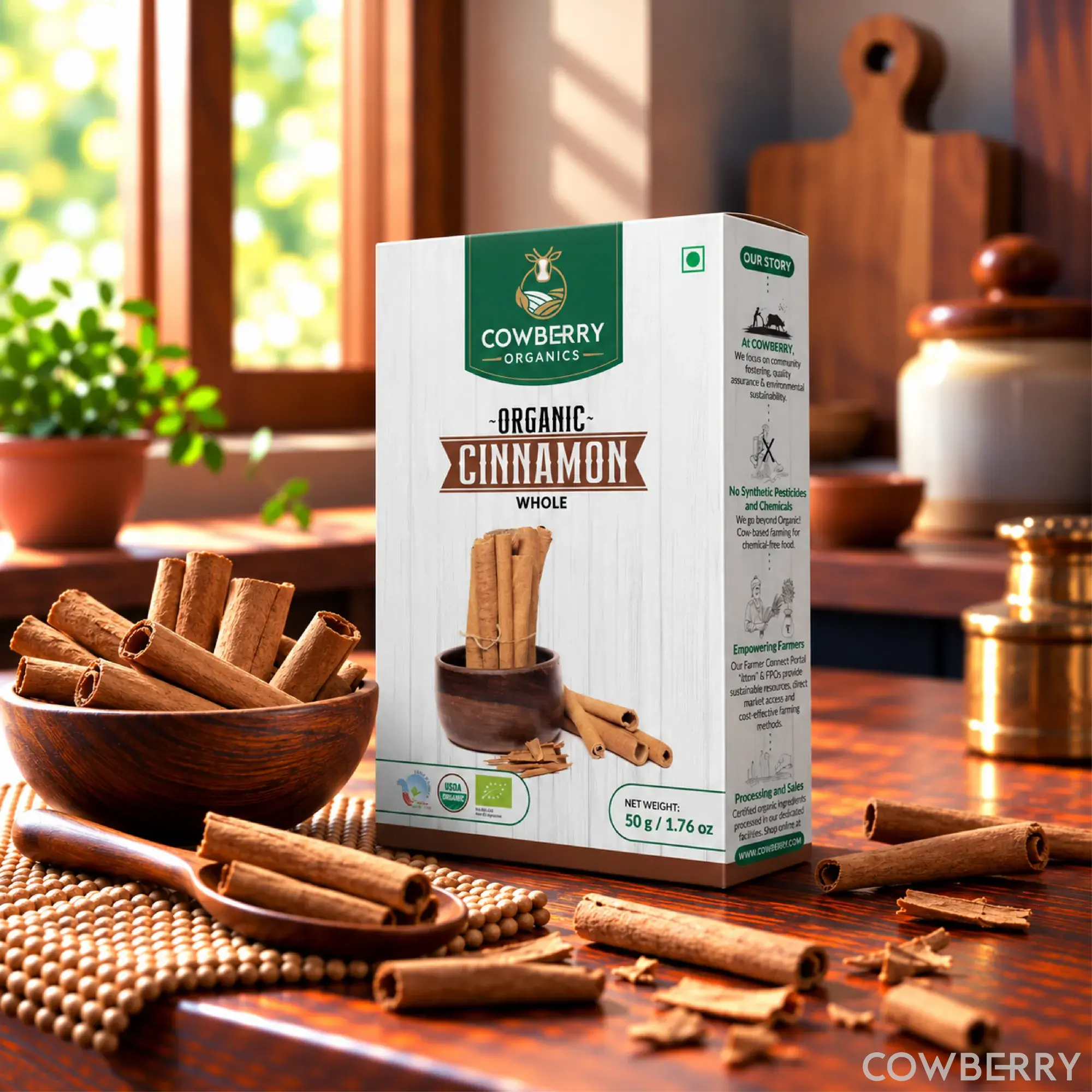
Shop this article
Keep reading
Coriander water benefits: what dhania water actually does
Peanuts in Hindi (moongfali): groundnut names in Indian languages
Coriander vs cilantro: are they the same herb?