by COWBERRY

6 minute read
Coriander vs cilantro: are they the same herb?

Coriander vs cilantro: they are the same plant, and the difference is the word. In India and the UK the whole plant is coriander, seeds and leaves both; in American English, cilantro means the fresh leaves and stems, while coriander usually means the seed. The coriander seeds hub covers the spice; this page settles the names for good.
Coriander vs cilantro: the verdict in three lines
One: the two words name one plant, Coriandrum sativum. Two: the split is regional English, not botany. Three: in Indian and British recipes, coriander covers everything; in American recipes, cilantro means the fresh leaf and coriander usually means the seed or the ground spice. Once you know which English is being spoken, the confusion ends. A 2015 review in Fitoterapia covers the essential oils of both the seed and the herb, which is exactly the dual identity the two names describe.
Side by side: what each word means
The naming split in one table:
| Word | What it usually means | Where it is used |
|---|---|---|
| Coriander | The whole plant; on its own, often the seeds or the powder | India, the UK and beyond |
| Cilantro | The fresh leaves and stems | American recipes, shops and menus |
| Dhania | Hindi for coriander, leaves or seeds | India and Indian recipes abroad |
Two cautions keep the table honest. American cooks say coriander when they mean the dried seed and cilantro when they mean the leaf, so a recipe that lists both wants both. And dhania is not a third plant; it is Hindi for the same one, which is why dhania and coriander same is answered with one word: yes.
Nutrition: the seed numbers behind both names
Since the two words are one plant, the nutrition question is really about which part you are holding. Per 100 g, coriander seeds give 269 kcal, 10.7 g of protein and 44.8 g of fibre (IFCT 2017); the USDA record for the ground spice prints 298 kcal, 12.4 g of protein and 41.9 g of fibre, plus 21 mg of vitamin C per 100 g. Cooked by the teaspoon, those numbers shrink: a 5 g teaspoon of powder is about 15 kcal with 2.1 g of fibre, and a 5 g teaspoon of seeds about 13 kcal with 2.2 g of fibre.
Fresh leaves are the part the word cilantro points to; the Dietary Guidelines for Indians list coriander leaves among the leafy greens, and the two tables on this page are for the seeds and the powder only, since leaves are eaten by the handful for their flavour. No glycemic index value is published for either seed form.
| Nutrient | Coriander seeds | Coriander powder |
|---|---|---|
| Energy (kcal) | 269 | 298 |
| Protein (g) | 11 | 12 |
| Fat (g) | 17 | 18 |
| Carbohydrates (g) | 13 | 55 |
| Dietary fibre (g) | 45 | 42 |
| Iron (mg) | 18 | 16 |
| Calcium (mg) | 718 | 709 |
| Magnesium (mg) | 343 | 330 |
| Potassium (mg) | 1473 | 1270 |
| Sodium (mg) | 34 | 35 |
| Zinc (mg) | 3.9 | 4.7 |
| Folate (mcg) | 22 | 0 |
| Vitamin C (mg) | — | 21 |
Per 100 g raw, edible portion. Composition: IFCT 2017 (ICMR-NIN); USDA FoodData Central (SR Legacy), FDC ID 170922, NDB 2013. — means not reported. These are average values for the food; the label on a pack gives the values for that product.
Coriander vs cilantro leaves: taste and cooking
The leaf and the seed cook nothing like each other, whatever you call them. Fresh leaves are added at the end: scattered over a dal, blended raw into a chutney, or pounded into a rasam at the finish. Heat dulls them, so they go in last or not at all. The seeds like heat: they are tempered in hot oil, dry-roasted before grinding, and ground into blends such as sambar powder, where they give the warm, citrusy base note. If an American recipe says cilantro, it wants the leaf; if it says coriander, check whether it means seed or powder.
Cost and where each fits
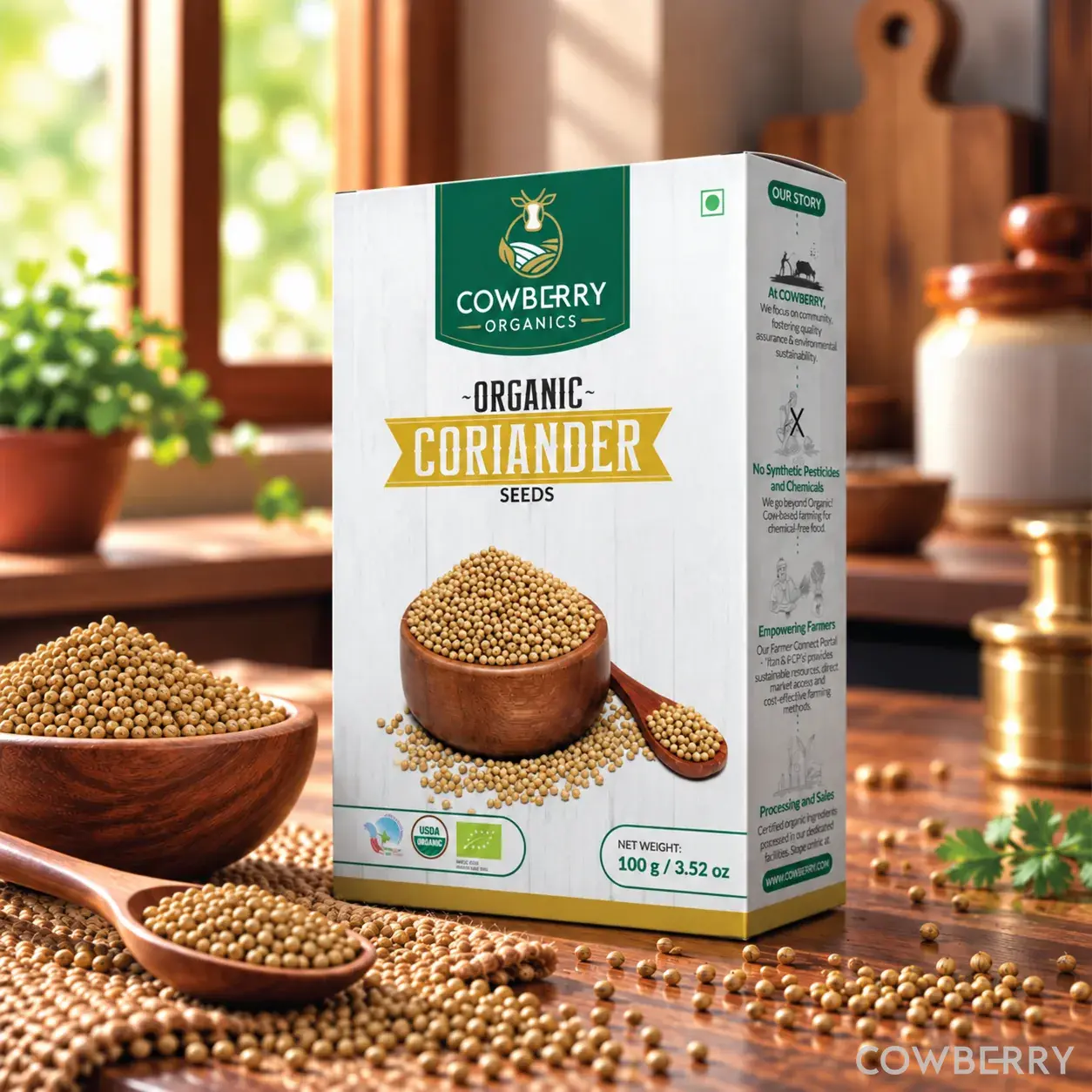
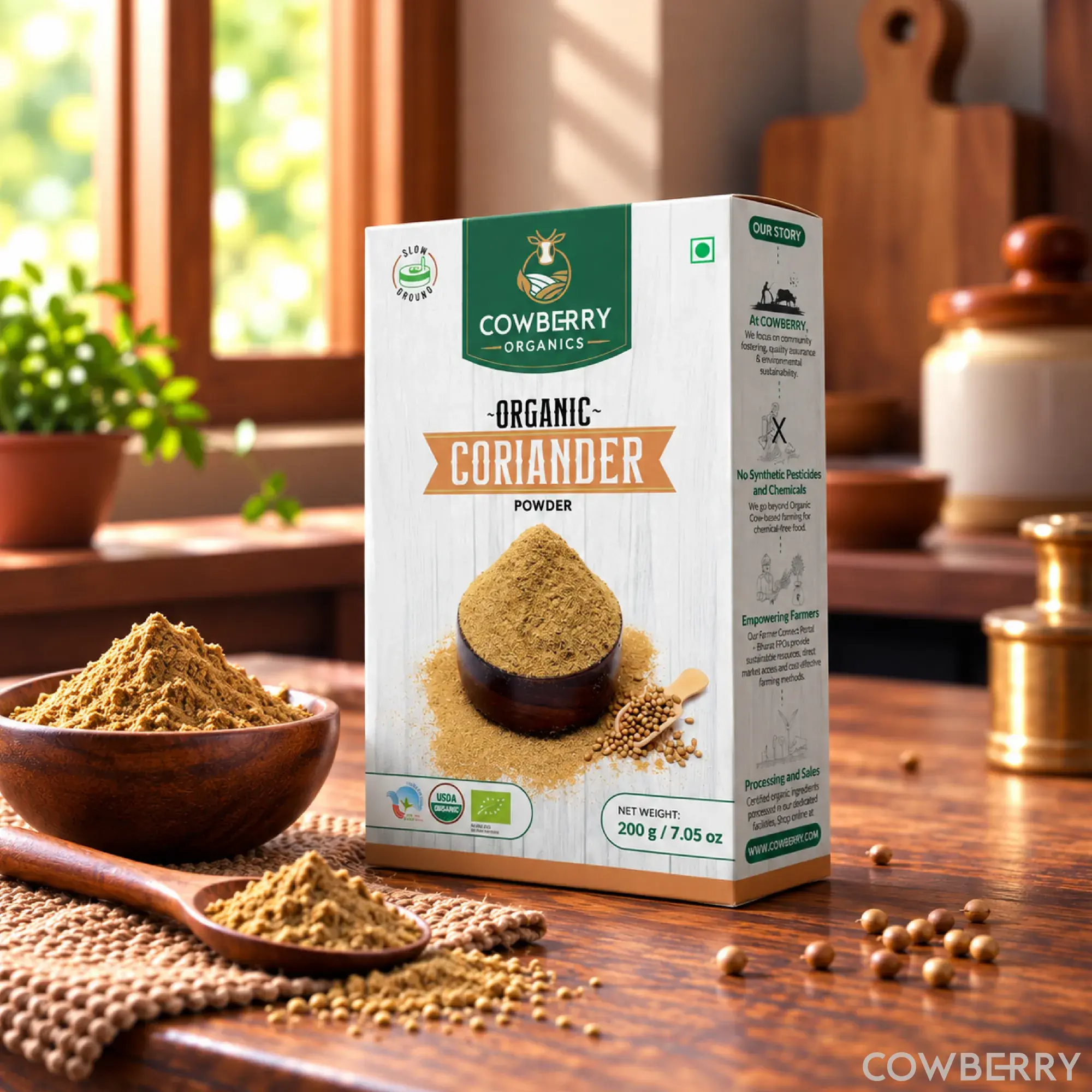
In money terms the two words describe the same shopping: a jar of coriander seeds, a pack of coriander powder, or a bunch of leaves from the sabzi market, all everyday staples, with the fresh bunch the shortest-lived of the three. Where each fits is a habit question. An Indian kitchen keeps seeds and powder in the masala box and buys leaves through the week; an American kitchen using cilantro buys the bunch for salsa and the ground seed for spice rubs. In India, COWBERRY's coriander seeds and coriander powder cover the seed side, and the leaves come fresh from the market.
Which for whom
In practice the choice is made for you by the cookbook you are reading:
- You cook Indian food. Everything is coriander: dhania seeds, dhania powder, fresh dhania leaves. The names page has all of it in Indian languages.
- You follow American recipes. Buy cilantro when the recipe says cilantro, and coriander seed or ground coriander when it says coriander.
- You are shopping online. On an Indian store, searching coriander finds the seeds and the powder; for the leaves, buy them fresh from the market.
If you cook both cuisines, keep both habits: a jar of seeds, a jar of powder, and a fresh bunch on the counter. The coriander seeds hub rounds up every use.
FAQs
What is the difference between coriander and cilantro?
None in the plant: both words name Coriandrum sativum. The difference is regional English. In India and the UK, coriander covers the seeds, the powder and the leaves; in American usage, cilantro means the fresh leaves and stems, and coriander usually means the dried seed or the ground spice.
Is coriander and cilantro the same?
Yes, exactly the same plant, and the split comes from language, not botany. An Indian kitchen calls the whole plant dhania or coriander; an American recipe calls the leaves cilantro and the dried seeds coriander. Buying under either name gets you Coriandrum sativum.
Is dhania cilantro?
Dhania is Hindi for the whole coriander plant, and cilantro is the American word for its leaves. So dhania leaves are cilantro, and dhania seeds are what American recipes call coriander seeds. One plant, three names in three kitchens.
Is dhania coriander?
Yes. Dhania is the Hindi name IFCT 2017 prints for coriander seeds, with dhaniya as a common spelling of the same word. The leaves, the seeds and the powder of the plant are all dhania, and all coriander.
Coriander or cilantro: which should I buy?
For Indian cooking, buy coriander: whole seeds, powder, and a fresh bunch of leaves, all under that one name in an Indian store. For an American recipe, match the word it prints: cilantro for the leaf, coriander for the seed. The plant in the bag is the same either way.
Difference between dhania and cilantro?
Dhania is the Hindi word for the plant, used for the leaves and the seeds; cilantro is the American English word for the leaves only. So the difference is the same as coriander vs cilantro: language and part of the plant, not the plant itself.
References
Shop this article
Keep reading
Coriander water benefits: what dhania water actually does
Peanuts in Hindi (moongfali): groundnut names in Indian languages
Peanuts for weight loss: is moongfali good? Calories, protein, portion