by COWBERRY

8 minute read
Is dalchini good for diabetes? What the evidence says (and how much)

Is dalchini good for diabetes? The most complete answer on record is a 2012 Cochrane review, and it says the evidence is insufficient: ten trials found no significant difference in HbA1c between cinnamon and control groups. This page reads that review closely, shows what a teaspoon of dalchini holds, and covers the coumarin point that matters for cassia; the cinnamon powder guide covers the spice itself.
Dalchini for diabetes control: the short answer
The most complete human evidence on the question is a 2012 Cochrane review by Leach and Kumar. It pooled ten randomised controlled trials with 577 participants who had type 1 or type 2 diabetes. They took cinnamon, mostly Cinnamomum cassia, at a mean of 2 g a day for 4 to 16 weeks. The review found no statistically significant difference in HbA1c, serum insulin or post-meal glucose between the cinnamon and control groups, and it called the effect on fasting blood glucose inconclusive. Its conclusion: there is insufficient evidence to support the use of cinnamon for type 1 or type 2 diabetes.
That is the honest answer behind this page. Dalchini earns its place as a flavour; for blood sugar, the pooled trials showed no significant difference in HbA1c, insulin or post-meal glucose, and the review's own verdict stands.
What the ten trials measured, and their weak spots
The trials matter because they set the limits of what can honestly be said. The 577 participants had type 1 or type 2 diabetes; the cinnamon was a single-spice preparation, not a masala blend; the mean dose was 2 g daily; and the trials ran 4 to 16 weeks, which is short for a condition people live with for decades. On quality, the reviewers rated the risk of bias high or unclear in all but two of the ten trials.
Side effects were infrequent and generally mild, which says something about safety at trial doses but nothing about benefit. No trial reported quality of life, complications or costs. A 2014 review of culinary herbs and spices adds the everyday angle: spices are normally eaten in small quantities and combined with other foods, so their true benefit from a health perspective is unclear. A pinch of dalchini in a curry is not a 2 g daily trial dose.
The numbers on a teaspoon of dalchini
Ground cinnamon per 100 g, from the USDA FoodData Central record this page uses: 247 kcal, 80.6 g of carbohydrate, 53.1 g of fibre, 3.99 g of protein, 8.32 mg of iron and 1000 mg of calcium. No glycemic index is printed for it in the USDA record. The full table is on the cinnamon nutrition per 100g page.
A level teaspoon, which the same record weighs at 2.6 g, carries about 6.4 kcal, 2.1 g of carbohydrate, 1.4 g of fibre, 0.2 mg of iron and 26 mg of calcium. That is what a teaspoon adds to a meal. The record's scientific name for the spice is Cinnamomum aromaticum, which is cassia, the type the diabetes trials mostly used. In Indian kitchens the spice goes into biryanis, curries, masala blends, teas and desserts.
How much and how: cinnamon for diabetes how to take
As a spice in food, in the amounts a recipe calls for. This page gives no dose, because no human evidence supports one: the 2 g a day the trials used was a trial design, not a recommendation, and the trials themselves showed no clear benefit. The 2014 review makes the same point from the kitchen side: because herbs and spices are eaten in small quantities with other foods, what they truly do for health is hard to establish.
So the practical reading is to use dalchini the way you always have, a pinch or a small piece in food and tea. The cinnamon how to use page shows how much goes into each dish. If someone suggests spoonfuls, capsules or a daily dalchini-water routine for your diabetes, ask what human study it rests on; the Cochrane review is the most complete one there is, and it does not support such a routine. What to watch at larger daily intakes is coumarin, below.
Better or worse choices: cassia or true cinnamon, and the coumarin line
Cassia is the cinnamon of the trials and of the record: the Cochrane review notes its trials used predominantly Cinnamomum cassia, and the USDA record behind this page's numbers carries the same name. For diabetes the type makes no difference to the evidence above, because the trials mostly used cassia and still found no clear benefit. The type matters for a different reason: coumarin.
A 2010 toxicology review derived a tolerable daily intake of coumarin of 0.1 mg for each kg of body weight a day, confirming the European Food Safety Authority's value, and named cassia cinnamon the main dietary source; it found that heavy consumers of cassia cinnamon may reach a daily coumarin intake corresponding to that limit. The review does not print coumarin figures per gram of any product, so this page cannot do per-teaspoon arithmetic for it. FSSAI's Eat Right India quick test tells the two barks apart: true cinnamon bark is very thin and can be rolled around a pencil or pen, while cassia bark shows several layers. The full comparison is on cinnamon vs cassia.
What to avoid
- Skipping or changing your diabetes medicines because you added dalchini to meals. The review's conclusion does not support that, and any medicine change is your doctor's call.
- Dalchini by the spoonful every day. The 2010 review's heavy-consumer finding on cassia and coumarin is the reason to keep it to cooking amounts.
- Sweetened cinnamon drinks and powders promoted for diabetes. The Cochrane review gives no basis for them, and a sweetened drink adds real carbohydrate of its own.
- Judging from one meal. A single cup of dalchini tea cannot show an effect that ten controlled trials failed to find.
For the spice itself, names, nutrition and everyday use are on the cinnamon guide.
Talk to your doctor or dietitian
Diabetes is managed with medicines, monitoring and a meal plan built for one person, and no trial above moved any of those dials. Keep taking your medicines as prescribed, and talk to your doctor before using spices or supplements in place of them. If you are thinking of a larger daily amount or a cinnamon supplement, that is exactly the conversation to have, because the coumarin question is about your daily intake, not the spice's. A dietitian can place a teaspoon of dalchini in your carbohydrate counting; at 2.1 g of carbohydrate a teaspoon, it is a small entry. For your own plan, talk to your doctor or dietitian and agree every change with them.
FAQs
Is dalchini good for diabetes?
The evidence says the question is open, not answered: the 2012 Cochrane review of ten trials in 577 people with diabetes found no statistically significant difference in HbA1c, insulin or post-meal glucose between cinnamon and control groups, and called the evidence insufficient. Dalchini is fine as a flavour in food; as a blood-sugar measure the human evidence does not support it.
Does dalchini increase blood sugar?
Not in any amount a recipe uses. A level teaspoon of ground dalchini (2.6 g) carries about 2.1 g of carbohydrate, a small share of a meal, and the 2012 Cochrane review found no statistically significant difference in post-meal glucose between cinnamon and control groups in people with diabetes. The sweet things served around dalchini move your readings more than the spice.
Does cinnamon reduce blood sugar?
The pooled human trials have not shown that it does. The 2012 Cochrane review pooled ten trials of cinnamon in people with diabetes, mostly at 2 g a day for 4 to 16 weeks; the effect on fasting blood glucose was inconclusive, and HbA1c did not differ significantly between the cinnamon and control groups. The review concluded there is insufficient evidence to support cinnamon for diabetes.
How much cinnamon a day for diabetes?
No amount, on this page: no human study supports a daily dose, so none is given. The trials the Cochrane review pooled used a mean of 2 g a day for 4 to 16 weeks, which is a trial design, not advice. Keep dalchini to cooking amounts, and if you are considering a daily supplement, talk to your doctor or dietitian first.
Which dalchini is best?
For diabetes, no type has evidence behind it, because the trials mostly used cassia and still showed no clear benefit. The type does matter for coumarin: cassia is the main dietary source in the 2010 review, and heavy consumers of cassia may reach the tolerable daily intake. FSSAI's quick test tells true cinnamon from cassia by the bark; see cinnamon vs cassia.
Can I drink dalchini tea if I have diabetes?
Yes, as a drink. A small piece of dalchini in tea is flavouring; nothing in the 2012 review supports expecting the tea to change your blood sugar, and a sweetened cup adds sugar on top of the spice. How the tea is made is on the cinnamon tea page.
References
- Leach MJ, Kumar S. Cinnamon for diabetes mellitus. Cochrane Database Syst Rev, 2012
- Abraham K, Wohrlin F, Lindtner O et al. Toxicology and risk assessment of coumarin: focus on human data. Mol Nutr Food Res, 2010
- Opara EI, Chohan M. Culinary herbs and spices: their bioactive properties, the contribution of polyphenols and the challenges in deducing their true health benefits. Int J Mol Sci, 2014
- FSSAI Eat Right India: DART (Detect Adulteration with Rapid Test), salt, spices and condiments tests
- USDA FoodData Central
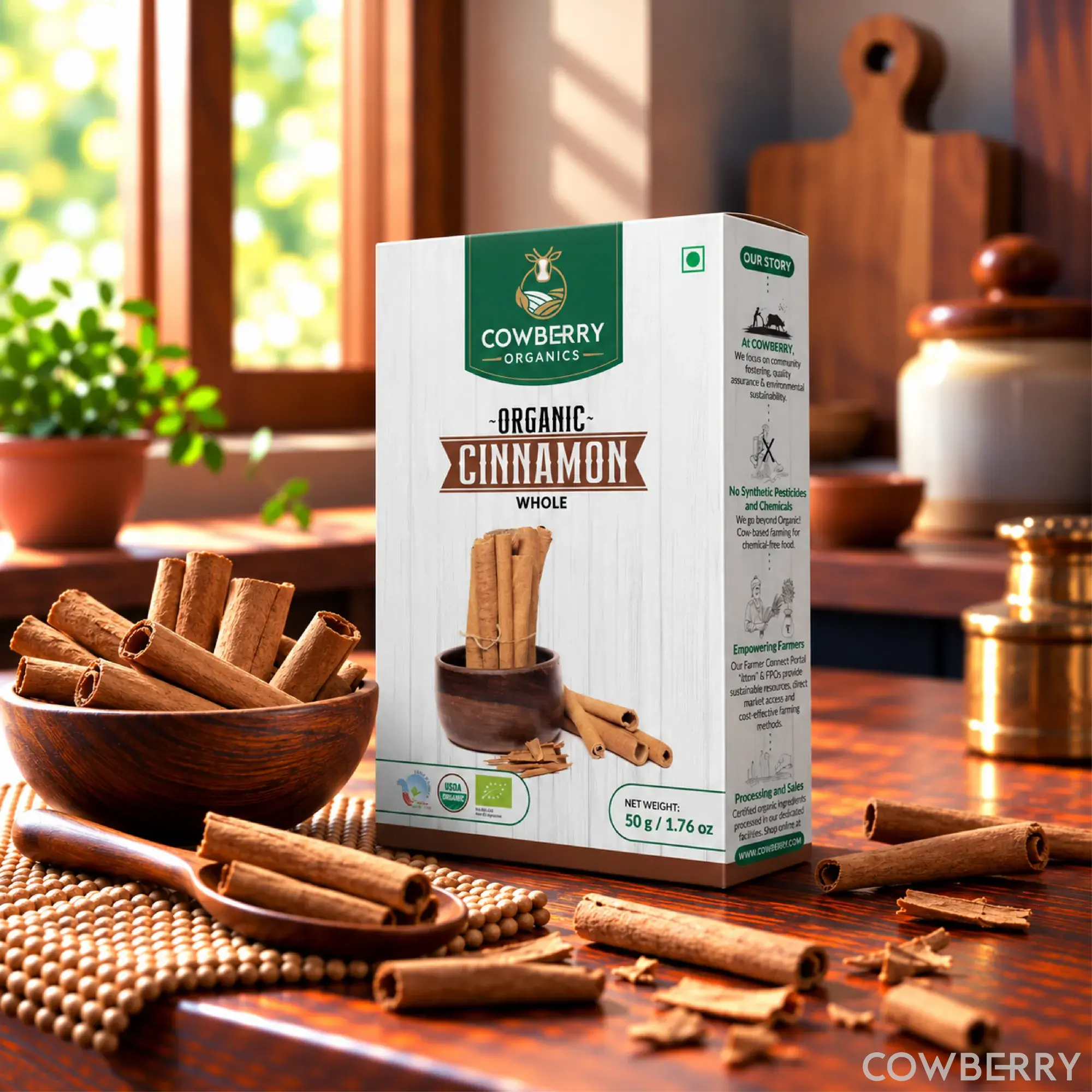
Shop this article
Keep reading
Coriander water benefits: what dhania water actually does
Peanuts in Hindi (moongfali): groundnut names in Indian languages
Coriander vs cilantro: are they the same herb?