by COWBERRY

6 minute read
Cinnamon vs cassia: coumarin, taste and how to tell them apart

Cinnamon vs cassia in three words: bark, coumarin and use. True cinnamon bark is very thin, a strip of it wrapping easily around a pencil or pen; cassia bark is thick and layered; and cassia is the main dietary source of coumarin, a compound with a tolerable daily intake that heavy cassia consumers may reach. The cinnamon powder guide covers the spice generally; this page compares the two barks.
Verdict in three lines
True cinnamon
The bark is very thin: a strip of it rolls right around a pencil or pen, and it carries a smell of its own. That is FSSAI's own quick-test description of the real thing.
Cassia
The bark is thick, several layers sitting between its rough outer face and its innermost smooth one, and it is the main dietary source of coumarin: a 2010 review found that heavy consumers of cassia may reach the tolerable daily intake of coumarin, set at 0.1 mg per kilogram of body weight per day.
Use
Cassia is the popular spice for cookies and sweet dishes, and the ground cinnamon in the USDA record is identified as cassia; true cinnamon is the thin rolled quill of the quick test. Neither is better in the abstract. The choice follows from how much you use, and which bark you want in the jar.
Cinnamon vs cassia: side by side
Everything the two barks can be told apart by, on record.
| True cinnamon | Cassia | |
|---|---|---|
| Botanical name | Cinnamomum verum, among the scientific names in the USDA record | Cinnamomum aromaticum, the name the USDA record lists for the ground spice |
| Bark | Very thin; rolls right around a pencil or pen | Several layers between the rough outer and the innermost smooth surfaces |
| Smell | A smell of its own | — |
| Coumarin | — | Main dietary source; heavy consumers may reach the tolerable daily intake |
| In the kitchen | The thin rolled quill of the quick test | A popular spice, especially for cookies and sweet dishes |
Where a cell shows a dash, no value is on record for it, and no comparison is invented.
Nutrition: only one record, and it is cassia
USDA FoodData Central's entry for ground cinnamon is the only nutrition record for cinnamon, and its scientific name is given as Cinnamomum aromaticum, which is cassia. There is no separate composition record for true cinnamon, so a second column would be invented; the honest comparison is the one shown.
Per 100 g: 247 kcal, 80.6 g of carbohydrate, 53.1 g of fibre, 3.99 g of protein, 8.32 mg of iron and 1000 mg of calcium. Per level teaspoon (2.6 g, the record's own household measure): about 6.4 kcal, 2.1 g of carbohydrate and 1.4 g of fibre. For a spice eaten in pinches, the difference that matters between the two barks is not in these numbers; it is coumarin, which the composition record does not list at all.
| Nutrient | Ground cinnamon (USDA record) |
|---|---|
| Energy (kcal) | 247 |
| Protein (g) | 4 |
| Fat (g) | 1.2 |
| Carbohydrates (g) | 81 |
| Dietary fibre (g) | 53 |
| Iron (mg) | 8.3 |
| Calcium (mg) | 1000 |
| Magnesium (mg) | 60 |
| Potassium (mg) | 431 |
| Sodium (mg) | 10 |
| Zinc (mg) | 1.8 |
| Folate (mcg) | 6 |
| Vitamin C (mg) | 3.8 |
Per 100 g raw, edible portion. Composition: USDA FoodData Central (SR Legacy), FDC ID 171320, NDB 2010. — means not reported. These are average values for the food; the label on a pack gives the values for that product.
Taste and cooking
What is on record about taste is short: true cinnamon has a distinct smell, which is exactly what FSSAI's quick test tells you to look for, and COWBERRY's own dalchini is described as naturally aromatic with a warm, sweet-spicy flavour and delicate woody notes. Cassia's recorded kitchen is baking: a 2010 review calls it a popular spice, especially for cookies and sweet dishes.
No tasting chart compares the two barks, so no flavour is ranked above the other. In Indian cooking the uses on the COWBERRY product page apply whichever bark is in the jar: biryanis, curries, masala blends, teas, desserts, baked goods, rice dishes and traditional beverages. Where each form fits is on cinnamon how to use.
Cost and where each fits
No prices on this page, and none are needed to read the shelf: the two barks are told apart by the roll test, not the price tag. Where each fits: cassia is the ground spice of baking and sweet dishes, and it is also the cinnamon most of the trials in a 2012 Cochrane review of diabetes used; true cinnamon is the thin quill you can curl around a pencil. Thick, layered cassia sold where cinnamon was expected is exactly the switch FSSAI's quick test, Detection of cassia bark in cinnamon, is built to catch.
Buy whole sticks when you want to check the bark yourself; buy powder when the recipe only meets the spice already ground. Both readings come together on the cinnamon guide.
Which for whom
- Bakers and sweet dishes: cassia is the type the 2010 review records there, for cookies and sweet dishes.
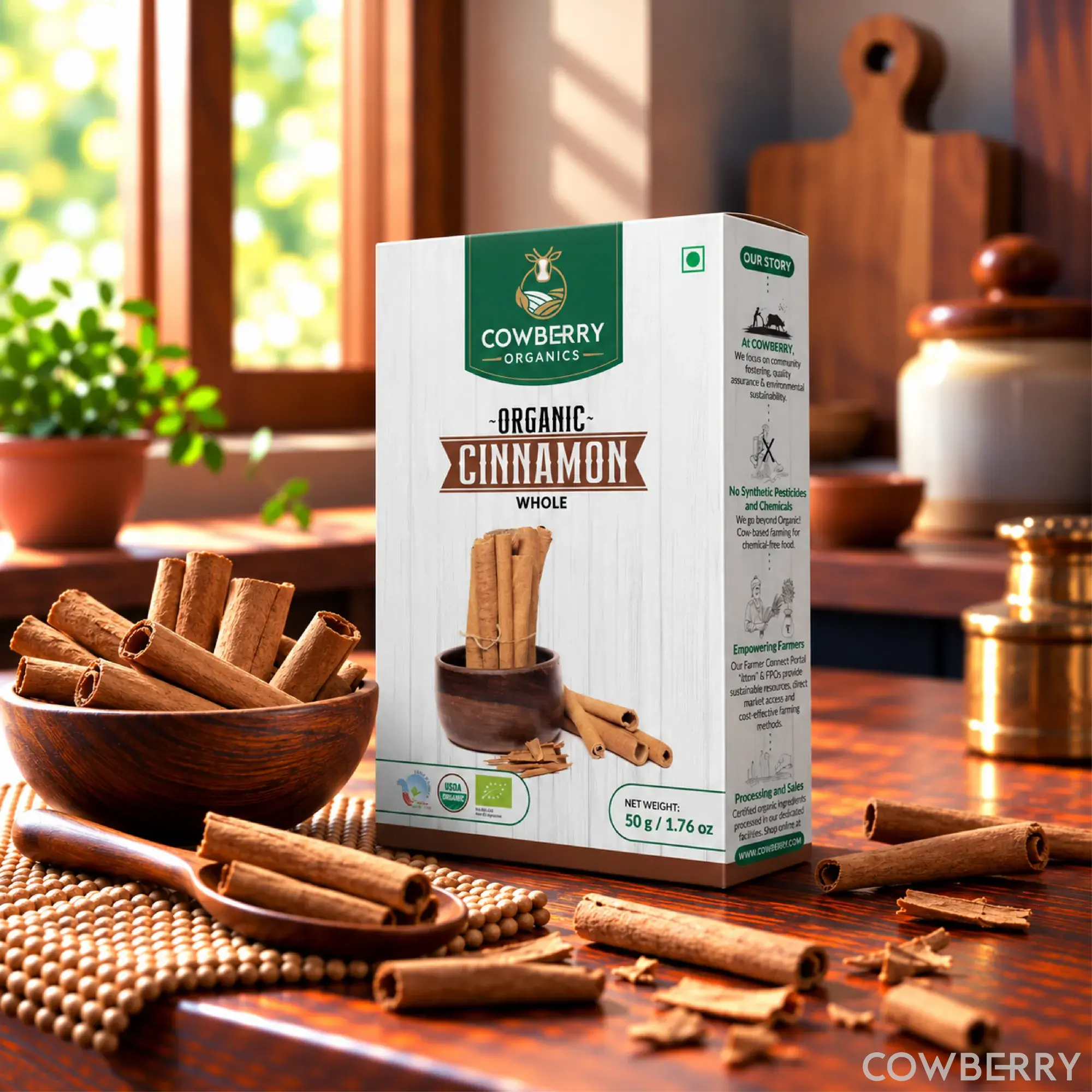
- Indian everyday cooking: whole dalchini, the form COWBERRY's Kerala-grown cinnamon is sold in, for biryanis, curries and tea.
- Anyone taking cinnamon daily in large amounts: the coumarin finding is about cassia; heavy consumers of cassia may reach the tolerable daily intake, so a spoonful-a-day habit is worth checking with a doctor. For the diabetes side, see is dalchini good for diabetes.
- Anyone who wants the true bark: buy whole quills and run the pencil test before grinding.
FAQs
What is the difference between cinnamon and cassia?
Bark and coumarin. True cinnamon bark is thin enough to wrap around a pencil or pen, with a smell of its own; cassia bark is thick, with several layers. Cassia is also the main dietary source of coumarin, and heavy consumers of it may reach the tolerable daily intake.
How to identify pure cinnamon?
With FSSAI's quick test: a strip of real cinnamon bark is so thin that it wraps around a pencil or pen, and its smell is distinct. Bark that shows several layers between a rough outer surface and a smooth inner one is cassia. Whole sticks let you run the test; powder does not.
Which dalchini is best?
It depends on the use. For baking and sweet dishes, cassia is the type on record; for someone using a lot of cinnamon every day, the coumarin finding is about cassia, whose heavy consumers may reach the tolerable daily intake. Buy whole quills and check the bark.
Is cassia cinnamon safe to use?
A 2010 risk assessment put the tolerable daily intake of coumarin at 0.1 mg for every kg of body weight each day, with cassia cinnamon as the main dietary source of the compound; heavy consumers of cassia may reach that daily intake. It gives no per-teaspoon figure, so none is given. The finding is about heavy consumers of cassia; if you use a lot every day, ask your doctor.
Does cassia taste different from cinnamon?
FSSAI's quick test and COWBERRY's product page give no taste comparison. What they do record: true cinnamon bark has a distinct smell, and COWBERRY's own dalchini is described as warm and sweet-spicy with delicate woody notes. The way to tell the two apart on record is by smell and bark, not by a tasting chart.
References
- Abraham K, Wohrlin F, Lindtner O et al. Toxicology and risk assessment of coumarin: focus on human data. Mol Nutr Food Res, 2010
- FSSAI Eat Right India: DART (Detect Adulteration with Rapid Test), salt, spices and condiments tests
- USDA FoodData Central
- Leach MJ, Kumar S. Cinnamon for diabetes mellitus. Cochrane Database Syst Rev, 2012
Shop this article
Keep reading
Coriander water benefits: what dhania water actually does
Peanuts in Hindi (moongfali): groundnut names in Indian languages
Coriander vs cilantro: are they the same herb?