by COWBERRY

5 minute read
Cinnamon how to use: sticks vs powder, daily amount and storage

Cinnamon how to use, in one line: a whole stick in anything that simmers, powder in anything that is mixed or baked. Stick for biryani, dal, curries and tea; powder for desserts, batters and masala blends. Amounts stay small, a pinch to half a teaspoon per dish, and the jar stays airtight. The cinnamon powder guide covers names, nutrition and benefits.
Short answer: how to use cinnamon in Indian cooking
The spice comes as whole sticks and as ground powder, and each form has its dishes. The product page's own list of uses covers both: curries, biryanis, masala blends, teas, desserts, baked preparations, rice dishes and traditional beverages. Whole sticks go into anything that cooks in liquid, because they give the dish their flavour slowly and are fished out before serving. Powder mixes in completely, so it goes into dry mixes, batters, desserts and the last few minutes of a curry, where a stick would arrive too late.
Sticks or powder: which wins where
Whole sticks
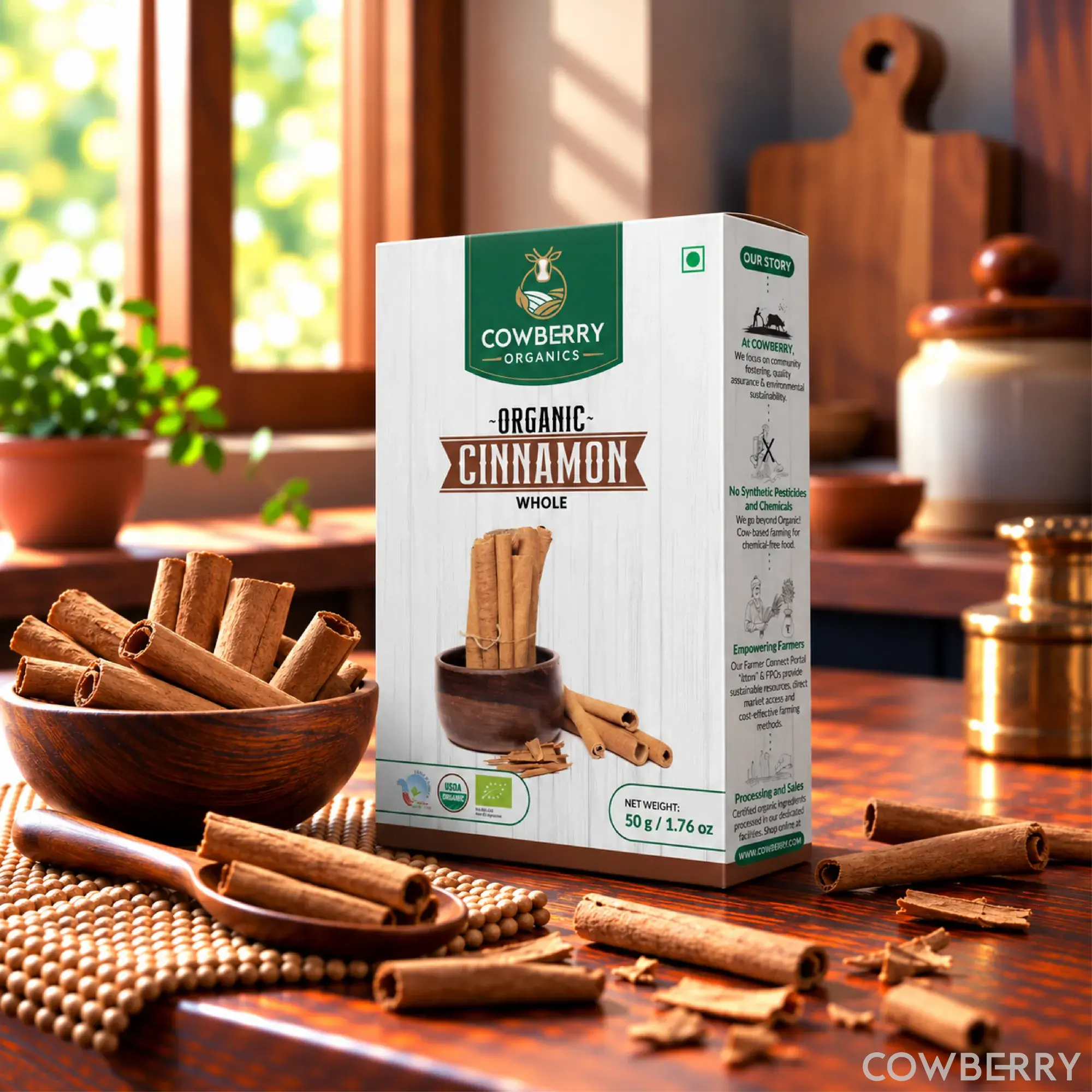
Biryani, pulao, dal, curries, and anything simmered: one or two quills go in with the whole spices at the start, and come out before the dish is served. In tea, a small piece of stick steeps in the pot. COWBERRY's cinnamon is sold whole, so you buy it in the whole form and break or grind it yourself.
Ground powder
Desserts, kheer, batters, baked goods, masala blends and porridge: powder disperses through a mixture a stick cannot. The cinnamon how to make powder page grinds small batches at home rather than keeping a big jar for months.
How much dalchini per dish and per day
Per dish, the amounts below are a working guide: one to two quills or half a teaspoon of powder in a full pot of biryani or pulao, one 3 cm piece or a quarter teaspoon in a dal or curry, a small piece of stick or a pinch of powder in a cup of tea, and a quarter to half a teaspoon of powder in a dessert or kheer. These are flavour amounts, chosen so the spice seasons without shouting over the dish.
Per day, there is no printed daily amount for the spice, and a 2014 review notes that herbs and spices are eaten in such small quantities that their true benefit is hard to prove. The one figure on record is about safety, not seasoning: a 2010 review set the tolerable daily intake of coumarin at 0.1 mg per kilogram of body weight every day and found that those who consume cassia heavily may reach it. That review gives no per-dish figure, so this page cannot say where the cooking amounts above sit against it; if you use a lot of cinnamon every day, ask your doctor. The full reading is on cinnamon vs cassia.
How to store cinnamon so it stays fragrant
The product page's storage line is the whole rule: store in a cool, dry place in an airtight container away from moisture and direct sunlight. Everything else is detail. Buy or grind powder in small amounts and keep the whole sticks for the long haul. Keep the jar away from the steam and heat above the stove, and always dip with a dry spoon; a wet spoon is how powder turns into a clump. The fridge is not needed; the rule is a cool, dry place.
How much per dish: the quick table
One table for the amounts above, to pin on the spice shelf.
| Dish | Amount | Form |
|---|---|---|
| Biryani or pulao (a full pot) | 1 to 2 sticks (or 1/2 tsp powder) | Whole (or powder) |
| Dal, curry or gravy | one 3 cm piece (or 1/4 tsp powder) | Whole (or powder) |
| Tea (a cup or pot) | a small piece or a pinch | Whole or powder |
| Dessert, kheer or baking | 1/4 to 1/2 tsp | Powder |
| Masala blend or dry mix | 1/4 tsp | Powder |
Whole sticks are fished out before serving; powder stays in. The cinnamon guide has the nutrition behind these amounts.
FAQs
How to eat dalchini powder?
In food and drinks, never dry by the spoonful: stir a pinch to a quarter teaspoon into tea, porridge, kheer or a batter, or add it to a masala blend before it meets the pan. The powder disperses through whatever it is mixed into, which is its one job.
How to store cinnamon powder?
In an airtight container in a cool, dry place, away from moisture and direct sunlight, which is the product page's own storage line, and with a dry spoon every time. Keep the jar small and top it up often.
Should cinnamon be refrigerated?
No need. Cinnamon needs a cool, dry place and an airtight container; the product page's storage line, a cool dry place away from moisture, is the rule to follow.
Does dalchini expire?
The product page gives no shelf life for cinnamon. What fades is the aroma: a jar kept airtight in a cool, dry place holds its smell longest, and a powder that no longer smells of much is simply past its best.
Can I use cinnamon in tea?
Yes; COWBERRY's product page says cinnamon can be added to tea and other warm beverages for its aromatic flavour. A small piece of stick steeps in the pot, or a pinch of powder goes into the cup; the spice scents the tea rather than sweetening it.
What is dalchini powder?
Dalchini powder is ground cinnamon; the USDA FoodData Central record names the ground spice Spices, cinnamon, ground. It is the same bark as the whole sticks, ground fine, and you can grind it at home; the cinnamon how to make powder page walks through it.
References
- Opara EI, Chohan M. Culinary herbs and spices: their bioactive properties, the contribution of polyphenols and the challenges in deducing their true health benefits. Int J Mol Sci, 2014
- Abraham K, Wohrlin F, Lindtner O et al. Toxicology and risk assessment of coumarin: focus on human data. Mol Nutr Food Res, 2010
- USDA FoodData Central
Shop this article
Keep reading
Coriander water benefits: what dhania water actually does
Peanuts in Hindi (moongfali): groundnut names in Indian languages
Coriander vs cilantro: are they the same herb?