by COWBERRY

10 minute read
Tamarind (imli): names, nutrition, benefits and how to use it

Tamarind is the souring fruit pulp behind sambar, rasam and imli chutney. IFCT 2017 measures it at 289 kcal and 9.16 mg of iron per 100 g, and a 2026 review reads its compounds as promising laboratory work. This hub gathers the names, the numbers, the benefits and the how-to in one place, from imli to malabar tamarind.
What is tamarind?
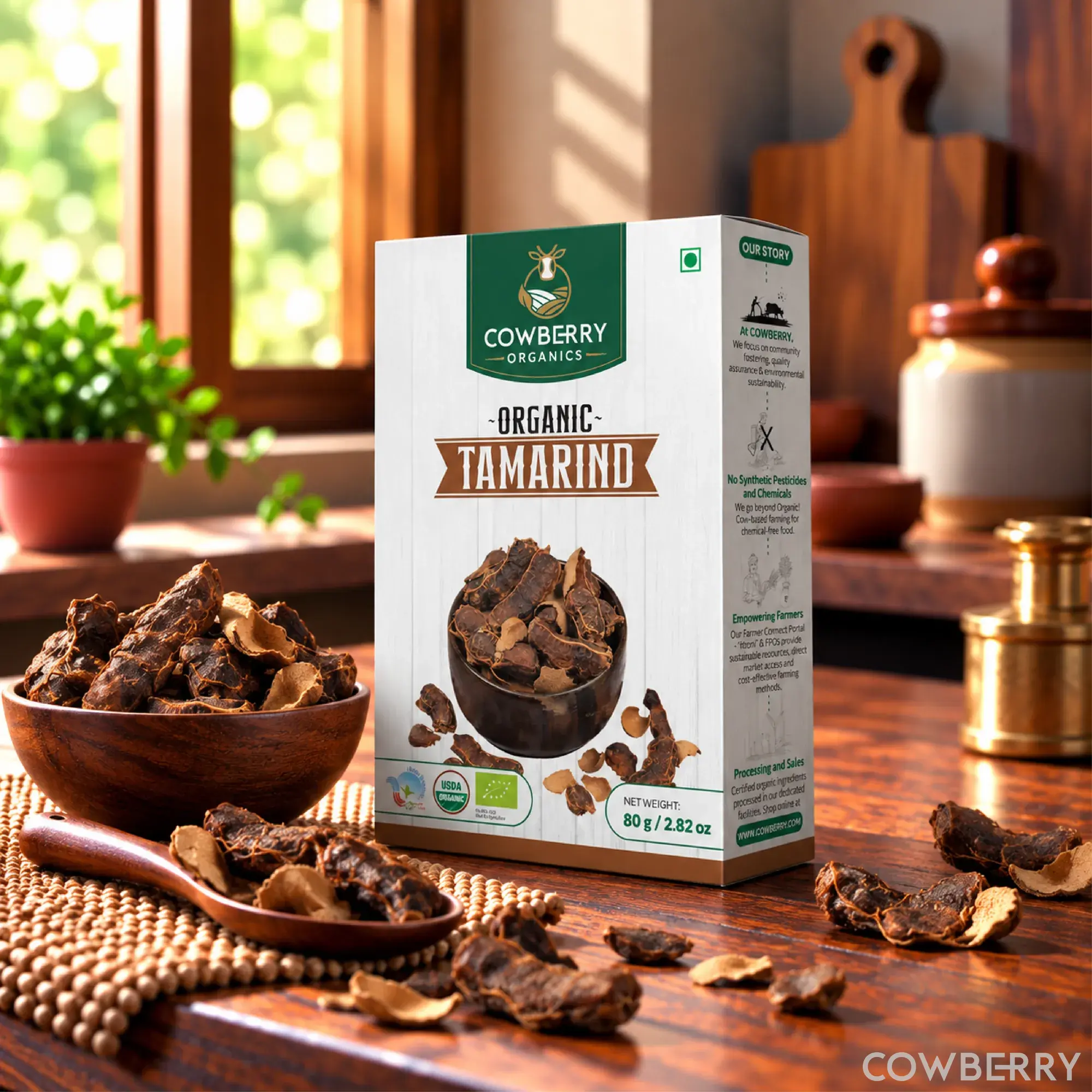
What is tamarind? It is the fruit of the tropical tree Tamarindus indica, of the Fabaceae family, per a 2026 Nutrients review. Indian kitchens cook with the pulp of that fruit, which is what sours rasam, sambhar, chutneys, curries, dals, marinades, sauces and traditional beverages; COWBERRY describes its tamarind as naturally tangy, with authentic sourness and a rich, deep flavour. Dishes balance that sourness with jaggery or chilli, and the block itself keeps for months without a fridge. Shops sell it as a pressed block, seeds and fibre still in the pulp; an 80 g pack goes a long way, because a 10 g piece sours a pot for four.
The English name is tamarind; the Hindi, Punjabi and Urdu name is imli. All the regional names, spelled language by language, are on the imli in english page.
What is imli: the names in 13 Indian languages
What is imli? Simply the Hindi, Punjabi and Urdu name for tamarind. IFCT 2017 prints the local-names list for the fruit under food code E064, thirteen names long: Hindi, Punjabi and Urdu share imli; Marathi says chinch, Gujarati amli; Bengali records tetul, Odia tentuli, Assamese teteli; in the south, Kannada hunise hannu, Telugu chintha pandu; Tamil and Malayalam both say puli; and Sanskrit records sucukrika. The same list gives the English name "Tamarind, pulp" plus the botanical name Tamarindus indica.
Two patterns emerge: one word, imli, covers Hindi, Punjabi and Urdu, and one word, puli, serves Tamil and Malayalam. So a recipe that says puli means the Tamil or Malayalam word, and one that says imli covers Hindi, Punjabi and Urdu, while chinch is Marathi and sucukrika is Sanskrit. The page that traces every spelling to its source, with the table, is imli in english.
| Language | Name (romanised) |
|---|---|
| English | Tamarind, pulp |
| Hindi | Imli |
| Marathi | Chinch |
| Gujarati | Amli |
| Punjabi | Imli |
| Bengali | Tetul |
| Odia | Tentuli |
| Assamese | Teteli |
| Kannada | Hunise hannu |
| Telugu | Chintha pandu |
| Tamil | Puli |
| Malayalam | Puli |
| Urdu | Imli |
| Sanskrit | Sucukrika |
| Botanical name | Tamarindus indica |
Source: IFCT 2017 (ICMR-NIN) local-names list. — means no name recorded in the source.
Tamarind nutrition per 100 g
The nutrition headline: 289 kcal per 100 g of pulp, 2.92 g of protein, 0.15 g of fat, 67.35 g of carbohydrate, 5.31 g of fibre, 9.16 mg of iron, 149 mg of calcium, 836 mg of potassium, 82.73 mg of magnesium and 3.62 mg of vitamin C (IFCT 2017). The energy figure looks high only because the pulp is mostly carbohydrate; cooking amounts are tiny. A 10 g piece carries 28.9 kcal and 0.9 mg of iron, and no tested glycemic index figure exists for it.
The rest of the column fills in the picture: 24.92 mg of sodium, 0.58 mg of zinc and 9.79 mcg of folate per 100 g, with vitamin C small but present. Beside it, jaggery (cane) prints 354 kcal and 84.87 g of carbohydrate per 100 g, so the sweetener a chutney pairs with imli is the denser of the two. The table below sets the two side by side; the full comparison — including black pepper, per-piece arithmetic and the per-dish numbers for rasam and chutney — is on the tamarind nutrition facts 100g page. Read the energy figure against the 10 g piece, not against a fruit bowl, and it stops looking alarming.
| Nutrient | Tamarind pulp, raw | Jaggery (cane) |
|---|---|---|
| Energy (kcal) | 289 | 354 |
| Protein (g) | 2.9 | 1.9 |
| Fat (g) | 0.1 | 0.2 |
| Carbohydrates (g) | 67 | 85 |
| Dietary fibre (g) | 5.3 | — |
| Iron (mg) | 9.2 | 4.6 |
| Calcium (mg) | 149 | 107 |
| Magnesium (mg) | 83 | 115 |
| Potassium (mg) | 836 | 488 |
| Sodium (mg) | 25 | 25 |
| Zinc (mg) | 0.6 | 0.5 |
| Folate (mcg) | 9.8 | 14 |
| Vitamin C (mg) | 3.6 | — |
Per 100 g raw, edible portion. Composition: IFCT 2017 (ICMR-NIN). — means not reported. These are average values for the food; the label on a pack gives the values for that product.
Tamarind benefits, read honestly
The benefits of tamarind are real but need honest framing. The fruit's recorded strengths are its minerals — 9.16 mg of iron, 149 mg of calcium and 836 mg of potassium per 100 g — and a 2026 review in Nutrients reports that its flavonoids, tannins, alkaloids and saponins show free radical scavenging, antimicrobial effects and a damping of pro-inflammatory mediators in laboratory and preclinical work. None of that is a human trial, and tamarind is eaten in small amounts with other foods, the very situation a 2014 culinary herbs and spices review names as the reason their true health benefit is hard to pin down.
The fibre side is quieter but real: 5.31 g per 100 g, and the ICMR-NIN Dietary Guidelines count fibre as important for proper bowel function, since it slows the absorption of carbohydrate and fat and makes a meal more filling. A 2008 paper on traditional Indian spices adds the cultural frame: current research is working to provide science-based evidence for the traditional uses. In short: expect a souring fruit with a strong mineral column, not a medicine. The ten benefits, one per nutrient or finding, are on the tamarind benefits page, and the same list in Hinglish is on imli ke fayde.
Tamarind side effects and the sweetened catch
The sources in the references document no side effects for plain tamarind; the catch is what gets added to it. Sweetened forms heap sugar and jaggery onto a pulp that is already mostly carbohydrate: candied imli, imli candy, bottled chutneys. A tablespoon of the chutney recipe lands near 21 kcal. Sour foods can be uncomfortable for some stomachs, but none of the sources in the references confirms imli causing acidity, and how you respond is individual. If you are managing blood pressure, diabetes or a pregnancy, let your doctor or dietitian place tamarind and its sweetened companions in your plan; for everyone else, the amount a dish needs is the whole story. The detail lives on the tamarind benefits page.
How to use tamarind: soak, squeeze, cook
Using tamarind means soaking it. Break off a 10 g piece, soak it in warm water, then squeeze and strain out the pulp, leaving seeds and fibre behind; the thick first press goes into chutneys and sambar, and a second press with a little more water gives the thinner extract that sours rasam and dal. A single 10 g piece usually softens in 15 to 20 minutes of warm water; the rasam recipe soaks its piece in hot water as the dal cooks, and the imli chutney recipe gives 100 g a 30-minute soak before pressing. The block gives more pulp the longer it sits in water, and a large batch of pulp can soak overnight. Amounts, times and the two presses, written around the same 10 g piece, are on the tamarind how to use page.
How to store tamarind
The whole block keeps for many months in a closed jar on a cool, dry shelf, away from sunlight and moisture; no fridge needed, which is also what COWBERRY's pack says. Refrigeration is generally not necessary for the dry block, which asks only for a cool, dry place away from sunlight and moisture, so keep the fridge for the wet forms. Once you have soaked and squeezed pulp, though, it is a wet paste: chill it in the fridge and finish it within 48 hours, or cube it into the freezer. Tamarind water belongs to the day it is made. The full form-by-form table, from dry block to frozen pulp, is on the tamarind how to store page.
Tamarind recipes: rasam and imli chutney
Two recipes show the fruit at work. The tomato rasam recipe soaks a 10 g piece of tamarind in hot water as the toor dal cooks, and one of its four bowls comes to about 82 kcal; the whole pot is on the table in about 40 minutes. A quarter cup of toor dal, mashed while hot and whisked into the pot, gives the thin soup its body and softness. The imli chutney recipe is the sweet-sour side: 100 g of tamarind and 100 g of jaggery, soaked and simmered into about 30 tablespoons of chutney in roughly 25 minutes, each tablespoon holding about 21 kcal. Both recipes keep the tamarind where it belongs — a measured souring ingredient, with the dal, ghee and jaggery carrying the rest of the energy.
Tamarind vs malabar tamarind, substitutes and the weight-loss question
Malabar tamarind, searched for as kokum or kudampuli, is another fruit, and the comparison deserves its own page: IFCT 2017 records a full entry for tamarind pulp and nothing for malabar tamarind, so the measured facts cover tamarind only; taste and use, hedged where no source records them, live on the tamarind vs malabar tamarind page.
Run out mid-recipe? The tamarind substitute page has the swaps dish by dish: amchur, made from sun-dried raw green mangoes, stands in for sambar, lime and a little jaggery rebuild chutney, and tomatoes carry curries. And on the question everyone asks — is tamarind good for weight loss — the honest answer is that none of the studies in the references reports a human trial on it: tamarind for weight loss works through the calories and the laboratory research without overselling. Read the three of them, and you will know exactly what imli can and cannot do for you.
Buying tamarind: what to look for
Buy the plain block. Check the pack for certification marks if organic matters to you, and for the words no additives and preservatives; COWBERRY's tamarind is India Organic, USDA & EU certified, grown in Karnataka and Kerala through cow-based natural farming, and packed in 80 g. Store it dry, and it will still be there when the next sambar calls; one 80 g pack, at a 10 g piece per pot, covers a long stretch of cooking. A block that has simply hardened is fine and only needs a longer soak; one with mould or a musty smell is spoiled and should be thrown away.
That is the whole fruit: a souring block with a strong mineral column, honest lab findings and a long-established place in Indian cooking. Start with the tamarind how to use page and a bowl of rasam.
FAQs
How imli taste?
Imli is sour and tangy, with a rich, deep flavour; COWBERRY calls its tamarind naturally tangy: authentic sourness, rich and deep. Dishes balance that sourness with jaggery or chilli, which is why imli chutney is sweet as well as sour. IFCT 2017 prints no figure for the fruit's sweetness, so taste before you add the sweetener.
Which imli chutney is best?
The one made at home from plain tamarind and jaggery, where you control the sweetness: the imli chutney recipe on this site pairs 100 g of tamarind with 100 g of jaggery into a chutney of about 21 kcal a tablespoon, with the salt in your hands as well. Ready-made chutneys vary in sugar and salt, so the pack label decides.
Can tamarind seeds remove microplastics?
None of the studies in the references shows tamarind seeds removing microplastics from the body. What circulates online is a claim, not a published finding on eating imli; read it as marketing. What Indian recipes use is the pulp; the seeds are pressed out and left behind. The recorded facts about tamarind are its composition and the laboratory findings on its compounds.
Is tamarind good for babies?
No dietary guidance sets an age for tamarind. It is a souring ingredient, not a baby food, and the sweetened imli snacks aimed at children carry jaggery or sugar. Chutneys and rasam for the family table are adult-seasoned foods; a baby's first foods are plainer, and your paediatrician sets the order.
How imli is made?
What Indian kitchens buy as imli is the pressed pulp of the fruit, with seeds and fibre still in it; IFCT 2017 lists the food as "Tamarind, pulp", the raw material behind every recipe on this hub. The "making" at home is turning that block into usable pulp: soaking it in warm water and squeezing out the seeds and fibre, the method on the tamarind how to use page.
References
- Indian Food Composition Tables (IFCT) 2017, ICMR-National Institute of Nutrition
- Dietary Guidelines for Indians, ICMR-National Institute of Nutrition
- Martinez CR, Diaz YA, Cianciosi D et al. The Health Benefits of Tamarindus indica: A Focus on the Relationship Between Phytochemical Composition and Physiological Effects. Nutrients, 2026
- Opara EI, Chohan M. Culinary herbs and spices: their bioactive properties, the contribution of polyphenols and the challenges in deducing their true health benefits. Int J Mol Sci, 2014
- Krishnaswamy K. Traditional Indian spices and their health significance. Asia Pac J Clin Nutr, 2008
Shop this article
Keep reading
Coriander water benefits: what dhania water actually does
Peanuts in Hindi (moongfali): groundnut names in Indian languages
Coriander vs cilantro: are they the same herb?