by COWBERRY

6 minute read
Tamarind how to store: keep imli fresh for months without fridge

Tamarind how to store it well comes down to one rule: keep the block dry. In a sealed jar, away from moisture and sunlight, whole tamarind keeps for months without a fridge; only the pulp you have soaked and squeezed needs chilling. The tamarind guide covers the fruit itself; this page gives each form its storage method and its time.
Short answer: how long does imli last
Each form of tamarind keeps differently. The dry block, stored in an airtight jar in a cool, dry place, lasts for many months, and refrigeration is generally not necessary for it. Extracted pulp and paste are wet, so they belong in the fridge and should be used within 48 hours, or frozen the day they are made. Tamarind water is for the same day's pot.
The UK Food Standards Agency sets the pattern for the wet forms: keep the fridge between 0 and 5 °C, cool food and get it chilled within one to two hours, eat prepared food within 48 hours or freeze it, and once something is fully defrosted, use it within 24 hours. Handle extracted pulp the same way.
Store the whole tamarind block: the default method
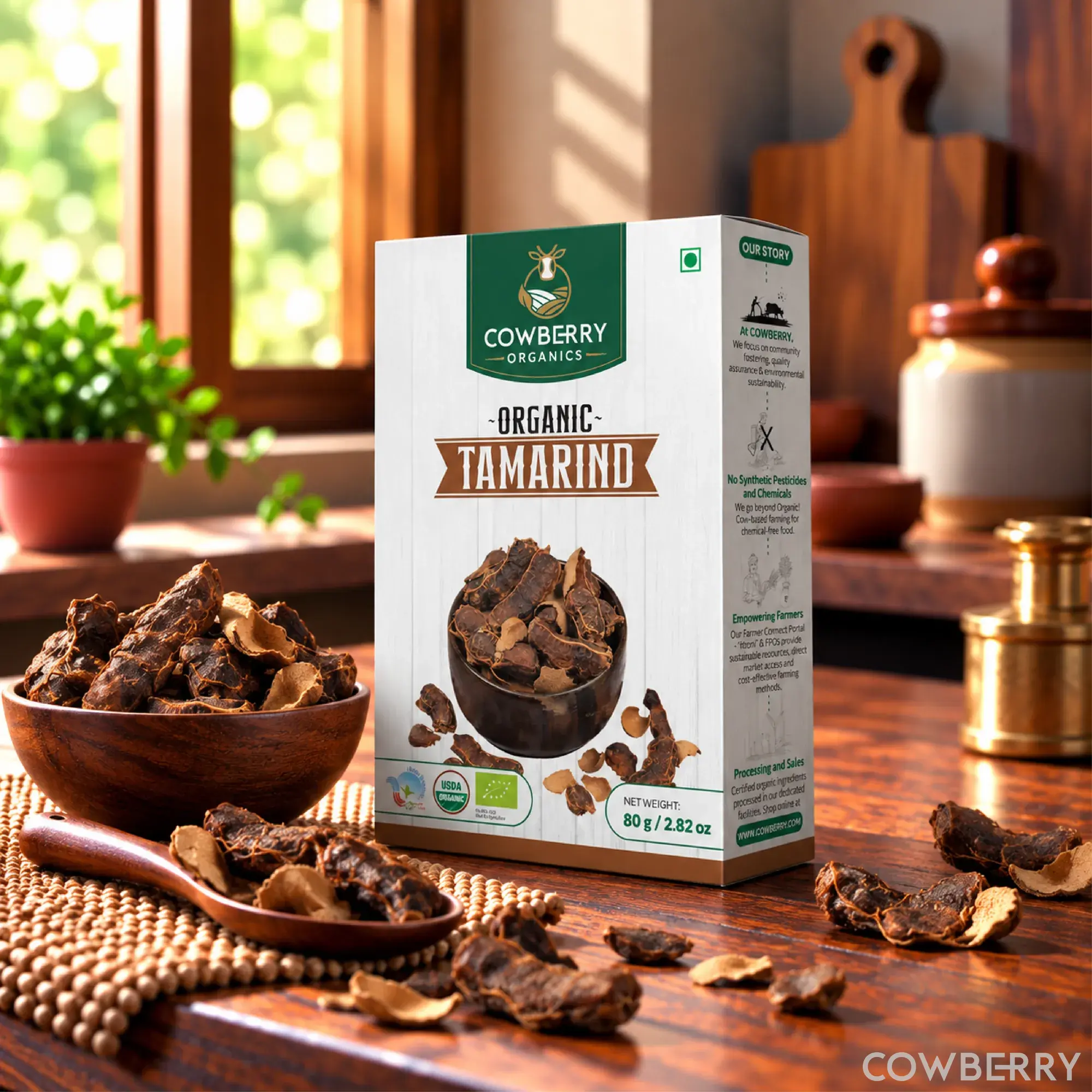
Whole tamarind is sold as a pressed block of pulp with seeds and fibre still in it, and it asks little of the kitchen. Transfer it to a glass or steel jar with a tight-fitting lid and close the jar after every use. A cool, dry shelf or cupboard away from direct sunlight and moisture is all it needs, which is also the storage COWBERRY's own pack instructions give.
One habit keeps the block sound. Break off only what you need with clean, dry hands, because every drop of water that gets into the jar is a place for mould to start. A block that shows mould, smells musty or has gone sticky all over has spoiled and should be thrown away; a block that has simply hardened is still usable and only needs a longer soak.
Store tamarind paste and soaked pulp
Once you soak tamarind and squeeze out the pulp, the rules change, because the extract is wet. Scrape the pulp into a clean glass or steel box with a lid, press the surface flat and refrigerate it, then use it within 48 hours, in line with the food safety guidance for prepared foods. Take out only as much as the dish needs with a clean spoon, and put the box back quickly.
Whole pieces that were soaked but not yet squeezed can sit in their strained state, covered, in the fridge, and should be squeezed and used the same day or the next. Tamarind water, the thin strained liquid, sours as it stands, so make the amount the recipe needs and use it the same day. For the soaking method itself, times and water, see tamarind how to use.
Freezing tamarind: pulp, paste and the block
Freezing is the way to keep extracted pulp for longer than 48 hours. Spoon the fresh pulp into an ice-cube tray or small freezer-safe boxes in the amounts your usual recipes take, so one cube is one sambar or one batch of chutney. Once frozen solid, tip the cubes into a freezer bag so they stay airtight, and drop a cube straight into the simmering dish; no defrosting is needed for cooking. If you do defrost a cube first, use it within 24 hours, which is the safety rule for fully defrosted food, and keep the freezer around -18 °C.
The dry block gains nothing from the freezer, because it already keeps for months at room temperature, and in a frosty freezer it can pick up moisture as ice crystals settle on it. Freeze pulp, not blocks.
Common mistakes
- Wet hands in the jar. Water carried in on your fingers is the usual start of mould; break the block with dry hands and close the jar at once.
- Storing the block in a plastic bag or open basket. Humid air gets in, the surface turns sticky, and mould follows. A sealed jar is the whole method.
- Fridging the dry block. It is unnecessary, and the cold, moist air of a fridge does the block no favours.
- Keeping extracted pulp at room temperature. It is a wet, sour paste with nothing preserving it; refrigerate within two hours of making it and use it within 48 hours, or freeze it.
- Making a jar of tamarind water for the week. It goes off quickly; make it per pot.
- Scraping mould off and using the rest. Mould on a wet paste has spread further than the spot you can see; throw that batch away.
Time table for each form
The table collects the keeping times from the sections above. The dry-block times are a home-kitchen guide; the wet-form times follow the UK Food Standards Agency's rules for chilling, freezing and defrosting prepared food.
| Form | Where | How long |
|---|---|---|
| Whole dry block, sealed jar | Cool, dry cupboard or shelf, no fridge | Many months |
| Opened pack, moved to a sealed jar | Cool, dry cupboard | Many months |
| Extracted pulp or paste | Fridge, 0 to 5 °C, in a lidded box | Up to 48 hours, or frozen the same day |
| Frozen pulp cubes | Freezer, around -18 °C, in a freezer bag | Freeze as soon as possible; after full defrosting, use within 24 hours |
| Soaked, unsqueezed pieces | Fridge, covered | Squeeze and use the same day or the next |
| Tamarind water | Fridge or counter, covered | Use the same day |
Once your tamarind is stored, the fun part is cooking with it: start with imli chutney or a bowl of tomato rasam, and when you run out mid-recipe, the tamarind substitute page has the swaps. The fruit's own story, names to nutrition, is on the tamarind hub.
FAQs
How to store tamarind for long time?
Keep the whole block in a sealed glass or steel jar in a cool, dry place away from direct sunlight and moisture, and break pieces off with dry hands. Stored that way it lasts for many months with no fridge. The pulp you extract is a different matter: refrigerate it and use it within 48 hours, or freeze it.
How to store imli for long time?
Imli keeps the same way as any tamarind block: an airtight dabba on a cool, dry shelf, with the jar closed tight after each use. Water is the enemy, so never store it with wet hands or a wet spoon. A dry block lasts many months; soaked pulp belongs in the fridge for up to 48 hours or in the freezer.
Does imli get expired?
Yes, eventually. Tamarind is a dried fruit, not an indefinite one: over many months it can harden, and in humid storage it can grow mould or turn sticky. A hard block is still usable after a longer soak; one with mould or an off smell should be thrown away.
Should tamarind be kept in the fridge?
Not the dry block. COWBERRY's own storage note says refrigeration is generally not necessary when the tamarind is kept in a cool, dry place away from direct sunlight and moisture. The fridge is for the wet forms only: extracted pulp and paste, which should be chilled within two hours and used within 48 hours.
References
Shop this article
Keep reading

Coriander water benefits: what dhania water actually does
Peanuts in Hindi (moongfali): groundnut names in Indian languages
Coriander vs cilantro: are they the same herb?