by COWBERRY

6 minute read
Tamarind nutrition facts 100g: calories, protein and vitamin c

Tamarind nutrition facts 100g start with 289 kcal, 2.92 g of protein and 67.35 g of carbohydrate per 100 g of raw pulp, as measured in the Indian Food Composition Tables 2017 (IFCT 2017). This page sets those numbers beside jaggery (cane) and black pepper from the same tables, then does the per-piece and per-dish arithmetic. The tamarind hub covers the fruit's story beyond the table.
Tamarind nutrition per 100 g: the full table
The table gives the tamarind nutritional value per 100g for raw pulp from IFCT 2017, set beside jaggery (cane) and black pepper from the same tables. Jaggery is the sweetener imli is cooked with in chutney, and black pepper shares the same spice shelf, so the three columns read as one kitchen context.
Three pointers before you read. First, these are per-100 g values for raw foods; a 10 g piece of tamarind carries one tenth of its column, and the next section does that arithmetic. Second, 289 kcal per 100 g looks high because the pulp is mostly carbohydrate, but cooking amounts are tiny. Third, a pack label may differ; the numbers in the table are IFCT 2017's averages.
| Nutrient | Tamarind pulp, raw | Jaggery (cane) | Black pepper |
|---|---|---|---|
| Energy (kcal) | 289 | 354 | 218 |
| Protein (g) | 2.9 | 1.9 | 10 |
| Fat (g) | 0.1 | 0.2 | 2.7 |
| Carbohydrates (g) | 67 | 85 | 36 |
| Dietary fibre (g) | 5.3 | — | 33 |
| Iron (mg) | 9.2 | 4.6 | 12 |
| Calcium (mg) | 149 | 107 | 405 |
| Magnesium (mg) | 83 | 115 | 196 |
| Potassium (mg) | 836 | 488 | 1487 |
| Sodium (mg) | 25 | 25 | 24 |
| Zinc (mg) | 0.6 | 0.5 | 1.2 |
| Folate (mcg) | 9.8 | 14 | 22 |
| Vitamin C (mg) | 3.6 | — | — |
Per 100 g raw, edible portion. Composition: IFCT 2017 (ICMR-NIN). — means not reported. These are average values for the food; the label on a pack gives the values for that product.
Tamarind calories: imli calories per 100g, per piece and per dish
Imli calories per 100g: 289. Read that against how tamarind is actually eaten. A 10 g piece of pulp — the amount that sours a sambar or curry for four — carries 28.9 kcal, with 6.7 g of carbohydrate, 0.5 g of fibre, 0.3 g of protein and 0.9 mg of iron. Split that sambar four ways, and each bowl gets about 7.2 kcal from the tamarind.
The dishes add their own energy on top. The imli chutney recipe cooks 100 g of tamarind together with 100 g of jaggery into a chutney, and each tablespoon works out to about 21 kcal, most of it the 5.1 g of carbohydrate. The tomato rasam recipe soaks its 10 g of tamarind in hot water while the dal cooks, and one of its four servings comes to about 82 kcal. That is the honest picture: tamarind is a light-handed souring ingredient, and the calories around it come from the dal, the ghee and the jaggery.
Tamarind protein, fibre and carbohydrate against jaggery and black pepper
Tamarind protein is modest: 2.92 g per 100 g, more than the 1.85 g jaggery carries and far below black pepper's 10.12 g. That is not a shortcoming — tamarind is a souring fruit, not a protein food, and the 0.3 g in a 10 g piece is background. The carbohydrate is the real story: 67.35 g per 100 g, against 84.87 g in jaggery and 36.22 g in black pepper, which is why the energy column sits where it does.
On fibre, tamarind gives 5.31 g per 100 g; black pepper lists 33.16 g, though a pinch of pepper weighs a fraction of a gram, and jaggery has no fibre figure. The 0.5 g in one 10 g piece is a small addition to a meal, but the ICMR-NIN Dietary Guidelines describe dietary fibre as important for proper bowel function, and note that it delays and retards the absorption of carbohydrate and fat and increases the satiety value of a meal. Fat is nearly absent at 0.15 g per 100 g, which is why imli sours a dal without adding richness.
Tamarind glycemic index: no tested figure to quote
There is no tested glycemic index figure for tamarind to quote. IFCT 2017 reports no glycemic index for the pulp, so no glycemic load follows from it either. What the tables do give is carbohydrate: 67.35 g per 100 g, and 6.7 g in the 10 g piece that sours a pot of sambar. Count that as part of the meal's carbohydrate, the same way you would count the jaggery in the chutney.
A souring piece of imli is not a blood sugar medicine, and no human study has shown tamarind changing blood sugar. If you count carbohydrate for diabetes, count the pulp's 6.7 g per piece with the rest of the meal, and settle portions with your doctor or dietitian. The honest limits of what the research shows are on the tamarind benefits page.
Tamarind vitamins and minerals, and the range the studies measured
The mineral column is where tamarind earns its keep. Per 100 g: 9.16 mg of iron, 149 mg of calcium, 836 mg of potassium, 82.73 mg of magnesium, 24.92 mg of sodium and 0.58 mg of zinc, plus 9.79 mcg of folate. Vitamin C sits at 3.62 mg per 100 g, small but present, where jaggery and black pepper have no entry. A 10 g piece carries 0.9 mg of iron and 15 mg of calcium — small amounts from an ingredient that costs the plate only 28.9 kcal.
To get more of the plant iron, the ICMR-NIN Dietary Guidelines suggest vitamin C rich fruits like guava, pineapple and citrus, or a chutney of coriander and green chillies, in the same meal, and they ask that beverages like tea be avoided for at least an hour before, during or soon after a meal, because tea binds dietary iron and makes it unavailable.
These are averages, and averages hide variation. In a 2017 study, pulp and seeds collected from three agro-ecological zones of Uganda were measured for zinc, magnesium, iron, phosphorus, calcium, sodium and potassium, with significant differences between zones (p <= 0.005); every pulp mineral except phosphorus and sodium varied with the zone, and the samples were Ugandan, not Indian. Cook with the IFCT numbers and expect some drift between batches. Names, storage and buying notes are on the tamarind hub.
FAQs
Does imli have vitamin c?
Yes. IFCT 2017 lists 3.62 mg of vitamin C per 100 g of raw tamarind pulp, and the 10 g piece that sours a sambar carries about 0.4 mg. It is a small contribution, not a reason to choose imli, but the vitamin is there alongside the iron and calcium in the table on this page.
Why tamarind is sour?
Tamarind is a naturally sour fruit: COWBERRY's product page calls its tamarind naturally tangy, with authentic sourness and rich, deep flavour. Behind the sourness sits a mostly carbohydrate pulp, 67.35 g per 100 g, which is why dishes balance imli with jaggery or chilli. Sourness is its job in the kitchen, as the souring agent in rasam, sambhar and chutneys.
Can imli be eaten during fast?
Whether imli is allowed in a fast comes down to the fast you are keeping; no nutritional guidance sets a rule for it. Nutritionally, a 10 g piece adds 28.9 kcal and 6.7 g of carbohydrate. Fasting rules are religious and personal rather than nutritional, so follow the rule you are keeping.
What is tamarind water?
Tamarind water is the thin, strained liquid made by soaking tamarind pieces in water. It sours as it stands, so it is made per pot and used the same day, while the thicker, squeezed pulp is what chutneys and curries use. The soaking method and times are on the tamarind how to use page.
Is imli a fruit?
Yes. A 2026 review in Nutrients describes tamarind as the fruit of Tamarindus indica, a tropical tree in the Fabaceae family. Indian cooking uses the pulp of that fruit, and IFCT 2017 records the food as "Tamarind, pulp", with its values in the table on this page.
References
- Indian Food Composition Tables (IFCT) 2017, ICMR-National Institute of Nutrition
- Dietary Guidelines for Indians, ICMR-National Institute of Nutrition
- Okello J, Okullo JBL, Eilu G et al. Mineral composition of Tamarindus indica LINN (tamarind) pulp and seeds from different agro-ecological zones of Uganda. Food Sci Nutr, 2017
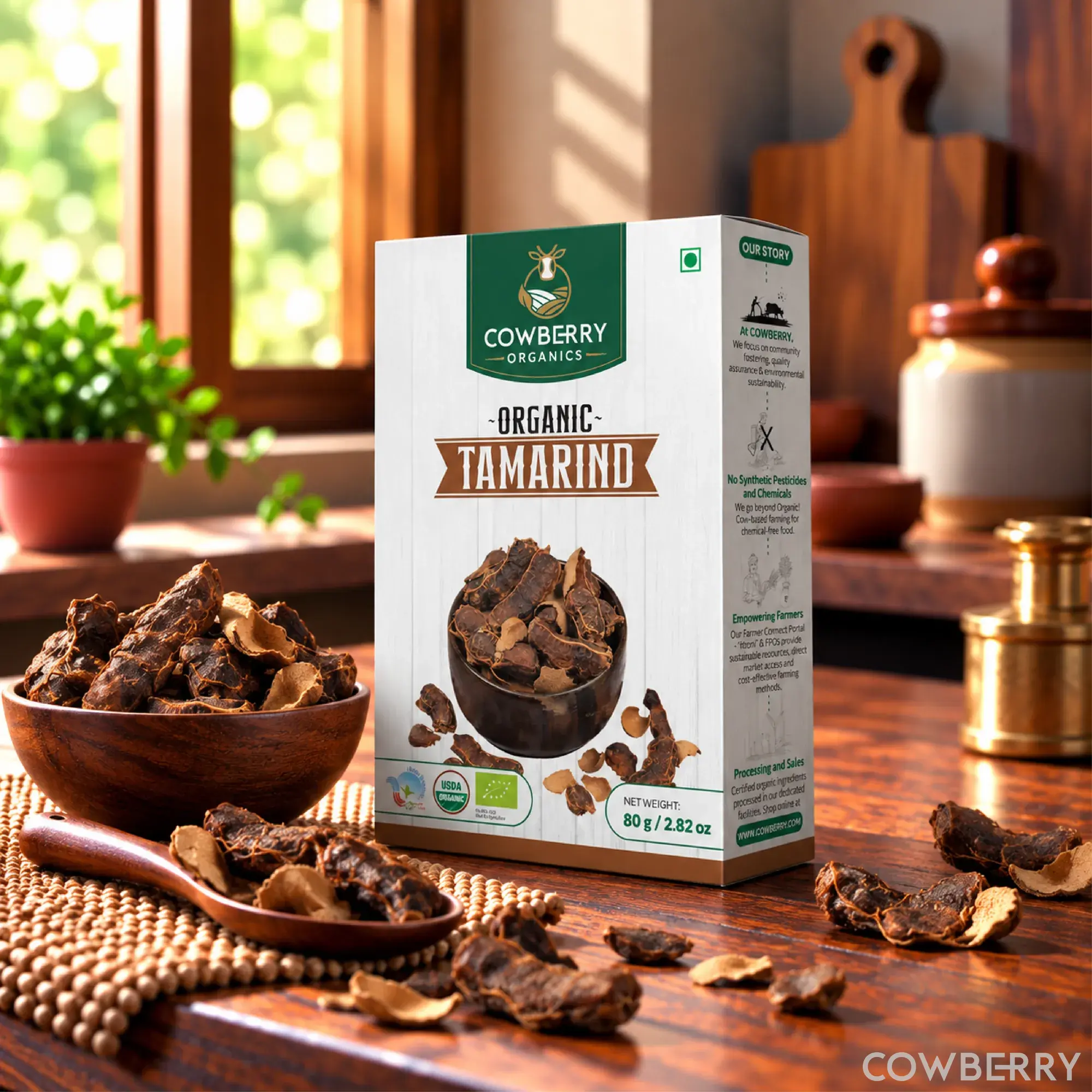
Shop this article
Keep reading
Coriander water benefits: what dhania water actually does
Peanuts in Hindi (moongfali): groundnut names in Indian languages
Coriander vs cilantro: are they the same herb?