by COWBERRY

4 minute read
Imli in English (tamarind): names in Hindi and Indian languages

Imli in English is tamarind, the sour fruit pulp behind sambar, rasam and imli chutney. IFCT 2017 prints the English name as "Tamarind, pulp", the botanical name as Tamarindus indica, and the word for the fruit in 13 Indian languages. The tamarind hub covers nutrition and uses; this page is the names, language by language.
Imli in English and 13 Indian languages: quick answer
One line per language: Hindi imli; Punjabi imli; Urdu imli; Marathi chinch; Gujarati amli; Bengali tetul; Odia tentuli; Assamese teteli; Kannada hunise hannu; Telugu chintha pandu; Tamil puli; Malayalam puli; Sanskrit sucukrika. In English the fruit is tamarind, and the botanical name is Tamarindus indica.
Every row below traces to the IFCT 2017 local-names list for food code E064, spelt exactly as that list prints it. Two facts stand out: Hindi, Punjabi and Urdu all say imli, and Tamil and Malayalam share puli.
| Language | Name (romanised) |
|---|---|
| English | Tamarind, pulp |
| Hindi | Imli |
| Marathi | Chinch |
| Gujarati | Amli |
| Punjabi | Imli |
| Bengali | Tetul |
| Odia | Tentuli |
| Assamese | Teteli |
| Kannada | Hunise hannu |
| Telugu | Chintha pandu |
| Tamil | Puli |
| Malayalam | Puli |
| Urdu | Imli |
| Sanskrit | Sucukrika |
| Botanical name | Tamarindus indica |
Source: IFCT 2017 (ICMR-NIN) local-names list. — means no name recorded in the source.
Imli meaning in English and the tamarind botanical name
Imli meaning in English is tamarind; the two words name one fruit. IFCT 2017 lists the food under the English name "Tamarind, pulp" and gives the botanical name Tamarindus indica. A 2026 review in Nutrients places the fruit the same way: tamarind comes from Tamarindus indica, a tropical tree of the Fabaceae family. The part Indian cooking uses is the pulp of the fruit.
So when a recipe asks for tamarind and the shop label says imli, nothing is lost in translation: imli is the Hindi, Punjabi and Urdu word, and tamarind is the English one. The question "what is imli called in English" has a one-word answer: tamarind.
Imli names by region
North India: imli in Hindi, Punjabi and Urdu
In Hindi the fruit is imli, and Punjabi and Urdu use the same word; IFCT 2017 prints imli for all three languages.
West India: chinch in Marathi, amli in Gujarati
In Marathi the fruit is chinch, and in Gujarati amli, both spelt exactly as the IFCT 2017 list prints them.
East India: tetul in Bengali, tentuli in Odia, teteli in Assamese
Bengali says tetul, Odia tentuli and Assamese teteli.
South India: hunise hannu in Kannada, chintha pandu in Telugu, puli in Tamil and Malayalam
In Kannada the fruit is hunise hannu, in Telugu chintha pandu, and in both Tamil and Malayalam it is puli.
Sanskrit: sucukrika
The same IFCT list records the Sanskrit name sucukrika for the fruit.
Often confused with: malabar tamarind
Malabar tamarind, which people also search for as kokum or kudampuli, is a different fruit from the tamarind of this page. IFCT 2017 prints a full names and composition entry for tamarind pulp and none for malabar tamarind, so the facts on this page cover tamarind only; the honest comparison of the two is on our difference between tamarind and malabar tamarind page.
One confusion is harmless and home-made: puli is the Tamil and Malayalam word for tamarind, and imli covers Hindi, Punjabi and Urdu, so a single word can look like two different names. The table above shows which language each spelling belongs to.
Where tamarind grows, and which pack this site sells
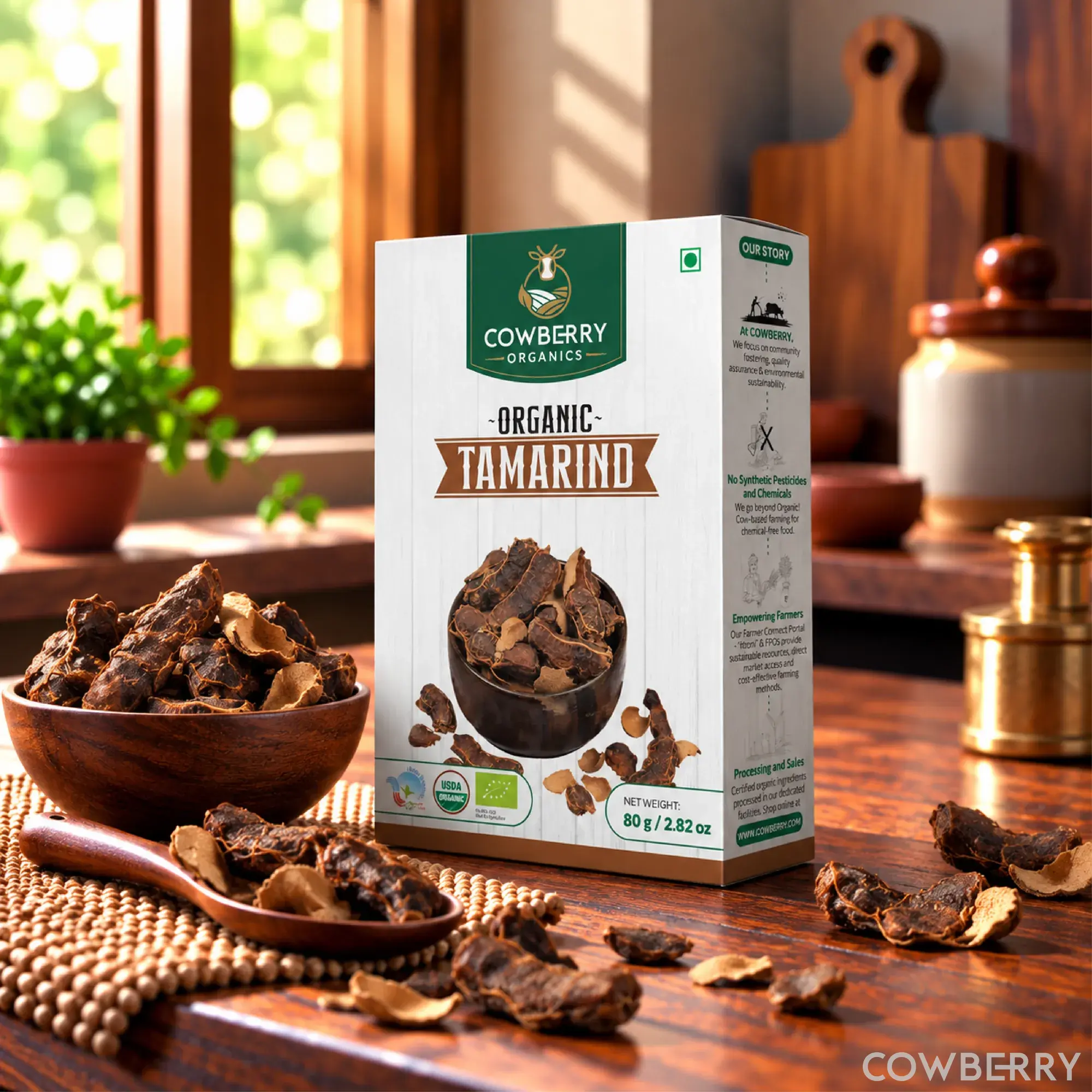
The tamarind COWBERRY sells is grown in Karnataka and Kerala, regions whose warm climate and soil the product description credits for its colour and tang; it is raised through cow-based natural farming, with no additives and preservatives, and packed in 80 g. You can find it under the English name on the shelf at COWBERRY's tamarind.
From here, the fruit's story continues on its pages: tamarind nutrition facts per 100 g has the numbers, tamarind benefits and side effects has the research, and the tamarind hub gathers names, nutrition and how-to in one place.
Cook with it: try Tomato rasam, Imli chutney.
FAQs
What is imli called in english?
Tamarind. Imli is the Hindi, Punjabi and Urdu name, and in English the same fruit is tamarind; IFCT 2017 prints the food name as "Tamarind, pulp" and the botanical name Tamarindus indica. The rest of the names, from chinch to puli, are in the table on this page.
Is tamarind a fruit?
Yes. Tamarind is the fruit of Tamarindus indica, a tropical tree of the Fabaceae family, as a 2026 review in Nutrients describes it. What Indian kitchens cook with is the pulp of that fruit, which IFCT 2017 lists as "Tamarind, pulp"; it sours rasam, sambhar and chutneys.
What is imli?
Imli is the Hindi, Punjabi and Urdu word for tamarind, the sour pulp used in rasam, sambhar, chutneys, curries and dals. IFCT 2017 records the name imli in its local-names list for tamarind pulp, food code E064, alongside chinch, tetul, puli and the other regional names in the table above.
Is imli good for health?
Per 100 g the pulp carries 9.16 mg of iron, 149 mg of calcium and 5.31 g of fibre (IFCT 2017), and a 2026 review describes antioxidant and antimicrobial effects of its compounds, mostly mechanistic and preclinical work. Tamarind is eaten in small cooking amounts, so any benefit is hard to pin down; the full picture is on tamarind benefits and side effects.
References
Shop this article
Keep reading
Coriander water benefits: what dhania water actually does
Peanuts in Hindi (moongfali): groundnut names in Indian languages
Coriander vs cilantro: are they the same herb?