by COWBERRY

6 minute read
Rock salt in Hindi, English and Indian languages (sendha namak)

Rock salt in Hindi is sendha namak, the name the Dietary Guidelines for Indians print for pink rock salt. Rock salt in English is rock salt, or pink salt and Himalayan salt on packs. Kala namak is the other rock salt — a different salt, not another name for this one. Every name below is from a public source, and the salt itself is covered on the pink salt hub.
Rock salt in Hindi and English: quick answer
The one-line answer: Hindi calls pink rock salt sendha namak, and English calls it rock salt, pink salt or Himalayan salt — four names for one salt. The table below starts from the one food-names record printed for this salt, the USDA FoodData Central entry, which carries only the English "Salt, table". The two English names added after it, rock salt and pink salt, come from Wikipedia's article on Himalayan salt, the source named under the table. The Hindi name sendha namak comes from the ICMR-NIN Dietary Guidelines, which print it beside kala namak, and it is set out in the sections below.
| Language | Name (romanised) |
|---|---|
| English | Salt, table, Rock salt, Pink salt |
| Hindi | — |
| Marathi | — |
| Gujarati | — |
| Punjabi | — |
| Bengali | — |
| Odia | — |
| Assamese | — |
| Kannada | — |
| Telugu | — |
| Tamil | — |
| Malayalam | — |
| Urdu | — |
| Sanskrit | — |
| Botanical name | — |
Source: USDA FoodData Central record 173468 (English and scientific name only; no Indian-language names in source). — means no name recorded in the source.
English ‘Rock salt’: Wikipedia: Himalayan salt. English ‘Pink salt’: Wikipedia: Himalayan salt.
Sendha namak in English: rock salt, pink salt and Himalayan salt
Sendha namak in English is rock salt. The same salt carries two more English pack names. Pink salt names the colour: ICMR-NIN separates the pink and black rock salts by colour, texture and smell, and it places pink salt among the purest salt forms. Himalayan salt names the origin: in a 2020 study that scanned 31 pink salts bought in Australia, the Himalayan-origin samples tended to carry more minerals. All four words — sendha namak, rock salt, pink salt, Himalayan salt — point to one salt, which is why is rock salt and sendha namak the same answers yes.
One note on the database label: USDA FoodData Central keeps no separate rock-salt record, so its entry for this food is the common-salt record "Salt, table". That is a database label, not an everyday English name; in shops the pack says rock salt, pink salt or Himalayan salt.
Rock salt in Hindi: sendha namak
Rock salt in Hindi is sendha namak. The Dietary Guidelines for Indians name the two rock salts together — pink salt (sendha namak), black salt (kala namak). The Hindi name matters in the kitchen because the two salts live in different jars: sendha namak seasons vrat food — kuttu roti, sabudana khichdi and fast-day curries take it in place of everyday salt — while kala namak is the dark salt kept for chaats and fruit. The guidelines also print the difference in substance: black salt's preservation uses assorted spices, charcoal, seeds and tree bark, and the salt darkens on storage, while pink salt sits among the purest forms of salts. How sendha namak fits into fast-day cooking is on why sendha namak is used in fast.
Rock salt in Gujarati and other Indian languages
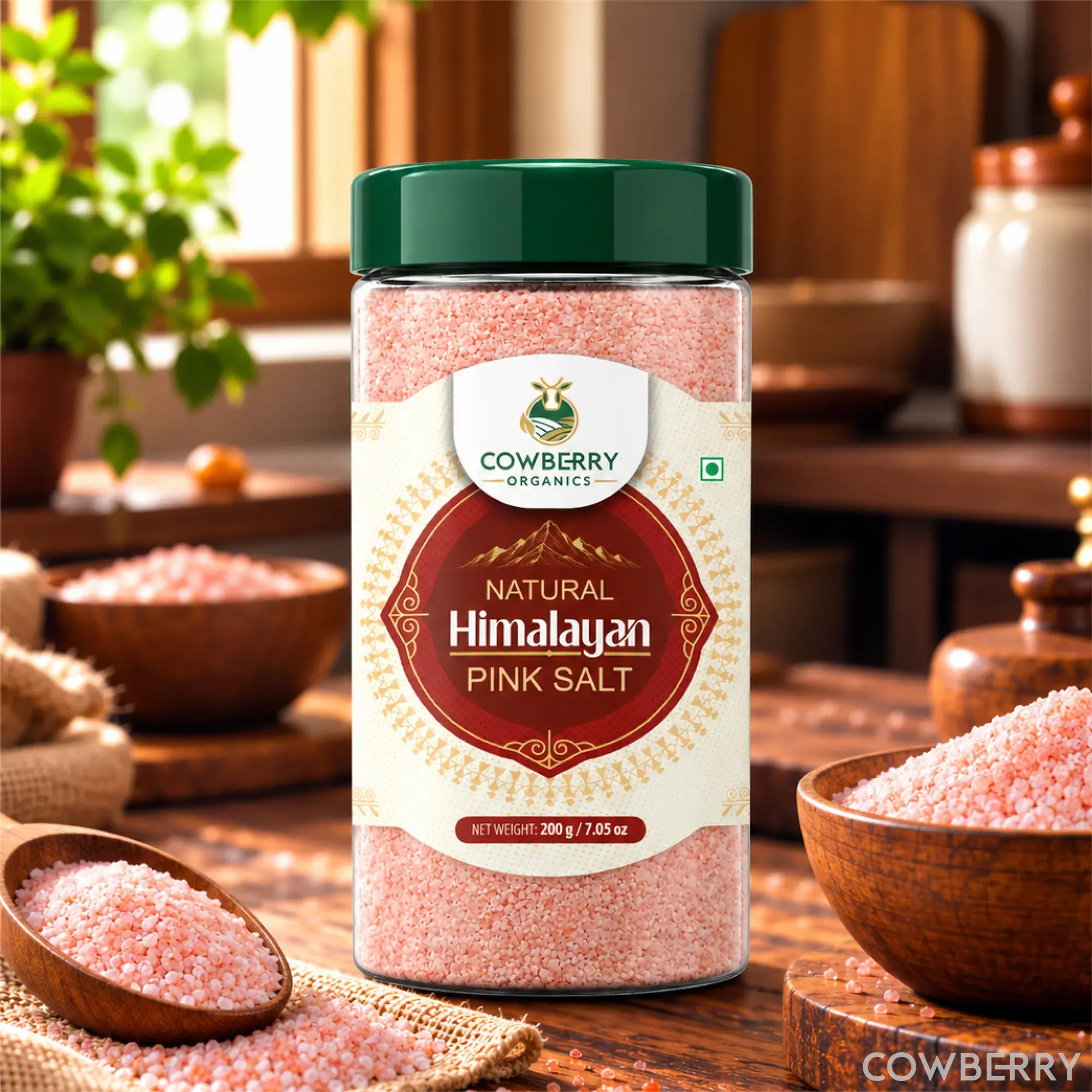
Searches for rock salt in Gujarati, Tamil or Telugu expect a separate word, and no public source prints one. The food-names records carry only the English entry, and the ICMR-NIN guidelines give the Hindi pair, sendha namak and kala namak. What the record does show is that the Hindi name is the everyday one: sendha namak is the name Indian kitchens use. COWBERRY's own pack reads natural Himalayan pink salt, the same salt as natural himalayan pink salt. For a name in another Indian language, no public source prints one, so none appears here.
Often confused with: kala namak, table salt and Epsom salt
Three salts get mixed up with sendha namak in shops and in searches.
- Kala namak (black salt): the second rock salt. Colour, texture and smell set the two apart (ICMR-NIN), and black salt is the one whose keeping uses spices, charcoal, seeds and tree bark. The full comparison is on rock salt vs black salt.
- Table salt: the fine everyday salt whose anti-caking agent keeps the grains free-flowing (ICMR-NIN). Sendha namak is the occasion salt; the two are compared on rock salt vs normal salt.
- Epsom salt: a different product altogether, not a food salt, and not sendha namak.
One more line on origins, since packs raise the question: ICMR-NIN traces every salt, table salt included, to sea salt. A pack labelled sea salt is pointing at that same origin, not at a rival of rock salt.
Where rock salt comes from
Origin in one line: the Himalayas. The Australian pink-salt study coded the country of origin of every sample, and the Himalayan ones came out generally higher in minerals. The mineral scan, though, was done on pink salt bought in Australia, not on Indian sendha namak. And every salt's root is the same: sea water, since the guidelines' line is that all salt comes from sea salt. The journey from that evaporation to the pink salt in the packet is told on how rock salt is formed, and the pink salt hub gathers names, uses and cooking in one place.
FAQs
What is sendha namak?
Sendha namak is pink rock salt, the salt the ICMR-NIN Dietary Guidelines name beside black salt (kala namak) as one of the two rock salts. The guidelines put pink salt among the purest forms of salts, and Indian kitchens use it for vrat cooking and specific occasions. In English packs it reads rock salt, pink salt or Himalayan salt.
Is rock salt and sendha namak same?
Yes. Rock salt and sendha namak are one salt: sendha namak is the Hindi name for the pink rock salt that English packs call rock salt, pink salt or Himalayan salt. ICMR-NIN prints the pair together — pink salt (sendha namak) — and names kala namak as the separate second rock salt. The name-by-name answer is on is rock salt and sendha namak the same.
Is himalayan salt sendha namak?
Yes. Himalayan salt is pink rock salt named for where it comes from, and sendha namak is the same salt named in Hindi. The Australian study of 2020 scanned 31 pink salts, with the Himalayan-origin ones generally the higher-mineral group.
Which salt is sendha namak?
The pink one. On a shelf of salts, sendha namak is the pink rock salt, next to the darker kala namak; colour, texture and smell mark the two rock salts apart (ICMR-NIN). Packs that say pink salt or Himalayan salt hold the same salt.
What is rock salt?
Rock salt is the variety of salt that ICMR-NIN's guidelines describe apart from the common white refined and non-refined salts, used for specific recipes or occasions. In India it means the pink salt, sendha namak, with black salt, kala namak, as the second rock salt.
Can sendha namak be used for cooking?
Yes. Sendha namak cooks like any salt: it seasons fast-day dishes — kuttu roti, sabudana khichdi, vrat curries — and it works in dal, chaas and raita too. Keep the same measures, because the day's salt cap of 5 g counts sendha namak like any other salt (ICMR-NIN).
References
Shop this article
Keep reading
Coriander water benefits: what dhania water actually does
Peanuts in Hindi (moongfali): groundnut names in Indian languages
Coriander vs cilantro: are they the same herb?