by COWBERRY

6 minute read
Is rock salt and sendha namak the same? Pink salt names explained

Is rock salt and sendha namak same? Yes: sendha namak is the Hindi name of the pink rock salt, sold in English as rock salt or pink salt. The Dietary Guidelines for Indians print the pair — pink salt (sendha namak) — and name black salt (kala namak) as the second, separate rock salt. Names, sodium and shopping words follow; the pink salt hub has the rest.
The verdict in three lines: is rock salt and sendha namak same?
Yes. Rock salt and sendha namak are the same salt: the Hindi name and the English name of the pink rock salt.
ICMR-NIN's Dietary Guidelines pair the names as pink salt (sendha namak) with black salt (kala namak) beside it, so the Hindi sendha namak is pinned to the pink one.
And the third name on packs — Himalayan salt, or pink salt again — is the same salt named for where it comes from: a 2020 study from Australia scanned 31 pink salts and found the Himalayan-origin samples generally carried more minerals. Three names, one salt.
Rock salt vs sendha namak: side by side
The comparison collapses into a naming table, because the two columns hold one salt.
| Rock salt | Sendha namak | |
|---|---|---|
| What it is | Pink rock salt, the English name | Pink rock salt, the Hindi name (ICMR-NIN) |
| Colour | Pink; told apart from black salt by colour, texture and smell (ICMR-NIN) | Pink — the same salt |
| Sodium per 100 g | 38800 mg (USDA's table-salt record, the stand-in) | 38800 mg — one figure, since sodium is almost similar across varieties (ICMR-NIN) |
| Kitchen use | Specific recipes or occasions (ICMR-NIN) | Vrat cooking and fast-day dishes |
| Where the name comes from | English, the pack name | Hindi, as printed in the Dietary Guidelines for Indians |
So the versus question ends where it began: there is no second salt on the other side of the table. The comparisons with two genuinely different salts are rock salt vs black salt and rock salt vs normal salt.
Rock salt vs pink salt: the names on the pack
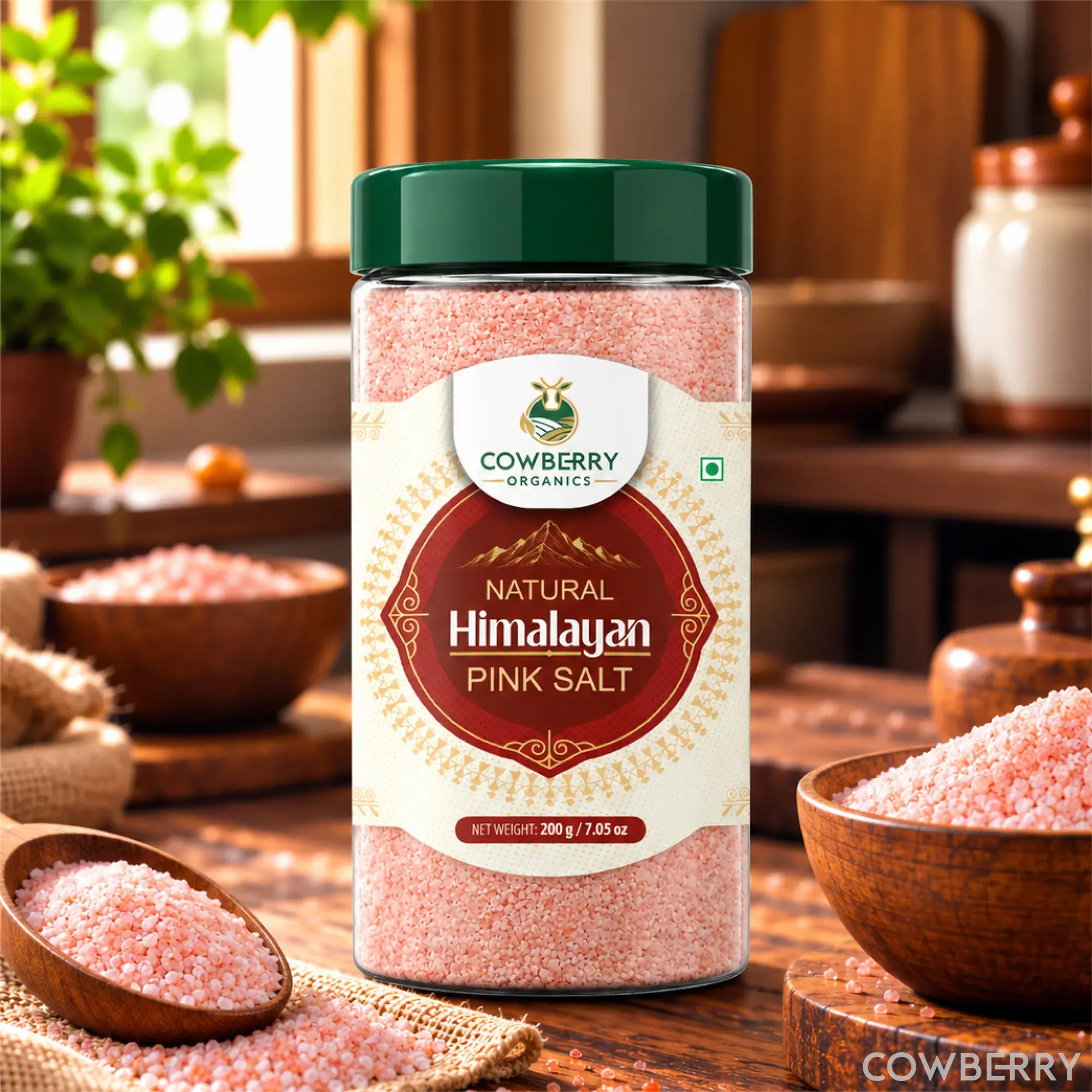
The names carry the same salt three ways. Rock salt is the English name. Pink salt names the colour: the guidelines separate pink and black rock salt by colour, texture and smell, and they place pink salt among the purest forms of salts. Himalayan salt names the origin — the word COWBERRY's pack carries, natural himalayan pink salt — and sendha namak is the Hindi name the guidelines print. So "sendha namak vs rock salt" is a naming question with one answer: not versus, but the same. The one name that does point elsewhere is kala namak, the black rock salt; the full name list is on rock salt in hindi.
Taste and cooking: one salt, one job
One salt means one taste and one cooking job. Sendha namak seasons vrat food — kuttu roti, sabudana khichdi, fast-day curry — and dissolves in dal, chaas and raita the way any salt does. The pink colour is the visible difference from table salt, and ICMR-NIN puts the sodium across salt varieties at almost similar, so no recipe gains or loses saltiness by swapping the labels. In the jar the pink salt usually comes in larger crystals, so vrat cooks crush it fresh — a pinch between the fingers or a few turns of the mortar — while kala namak, the other rock salt, is kept for chaats and fruit with its distinct smell.
Cost and where each fits
Because the two names sit on one salt, the cost question is about the label, not the salt. The same pink rock salt can wear a plain sendha namak label or a Himalayan one, and the price moves with the label, the pack and the shop rather than with any difference in the salt itself. Where each fits is the honest divider: the jar labelled sendha namak is the vrat jar, bought for fast days, and the jar labelled rock salt or pink salt is the same salt bought under its English name. Choose by the use — vrat or everyday — and let the label follow, because the salt under both labels is one.
Which to choose for whom
Fast-day kitchens: the sendha namak label, because that is the word on the vrat list. Shoppers reading pack names: pink salt or Himalayan salt — the same salt, so check that the label states the origin plainly and calls it natural salt. Households watching sodium: the 5 g a day cap applies whichever name is on the jar (ICMR-NIN), and a level teaspoon of the salt carries 1940 mg of sodium. Households that want iodized salt: that is the everyday table salt's job, since no public record prints an iodine figure for rock salt — the WHO's iodization guideline covers food-grade table salt, and ICMR-NIN's "use iodized salt" points there. Whichever jar you reach for, it is the same pink salt inside, and the pink salt hub gathers every page about it in one place.
FAQs
Is rock salt and sendha namak same?
Yes, they are one salt. Rock salt is the English name and sendha namak is the Hindi name of the pink rock salt, the pair ICMR-NIN prints as pink salt (sendha namak). Packs that say Himalayan salt or pink salt are selling the same salt under a third name.
Is sendha namak and pink salt same?
Yes. Pink salt is sendha namak described by its colour, the pink rock salt the guidelines place among the purest forms of salts. The name changes with the label — pink salt, rock salt, sendha namak — but the salt does not.
Is pink salt sendha namak?
Yes. Pink salt is the English colour name of the salt Hindi calls sendha namak. The guidelines name the two rock salts — pink salt (sendha namak) and black salt (kala namak) — and the pink one is the vrat salt.
Difference between rock salt and pink salt?
None in the salt; the difference is only in the word. Rock salt is the English name and pink salt names the colour of the same salt, the one ICMR-NIN lists as pink salt (sendha namak) and places among the purest forms of salts.
Does rock salt contain iodine?
The public record gives rock salt no iodine figure. The WHO's salt-iodization guideline covers food-grade table salt, and that is where India's iodized salt is; ICMR-NIN's advice to use iodized salt points at the everyday salt, not at rock salt.
Is sendha namak and rock salt same?
Yes: one salt, two languages. The Dietary Guidelines for Indians pair the names themselves, pink salt (sendha namak), and give the separate second rock salt as black salt (kala namak). Anyone asking this can use the two words interchangeably in the shop and the kitchen.
References
- Dietary Guidelines for Indians, ICMR-National Institute of Nutrition
- Fayet-Moore F, Wibisono C, Carr P et al. An Analysis of the Mineral Composition of Pink Salt Available in Australia. Foods, 2020
- USDA FoodData Central
- WHO guideline: fortification of food-grade salt with iodine for the prevention and control of iodine deficiency disorders (2014)
Shop this article
Keep reading
Coriander water benefits: what dhania water actually does
Peanuts in Hindi (moongfali): groundnut names in Indian languages
Coriander vs cilantro: are they the same herb?