by COWBERRY

7 minute read
Why sendha namak is used in fast: vrat rules and how to use it

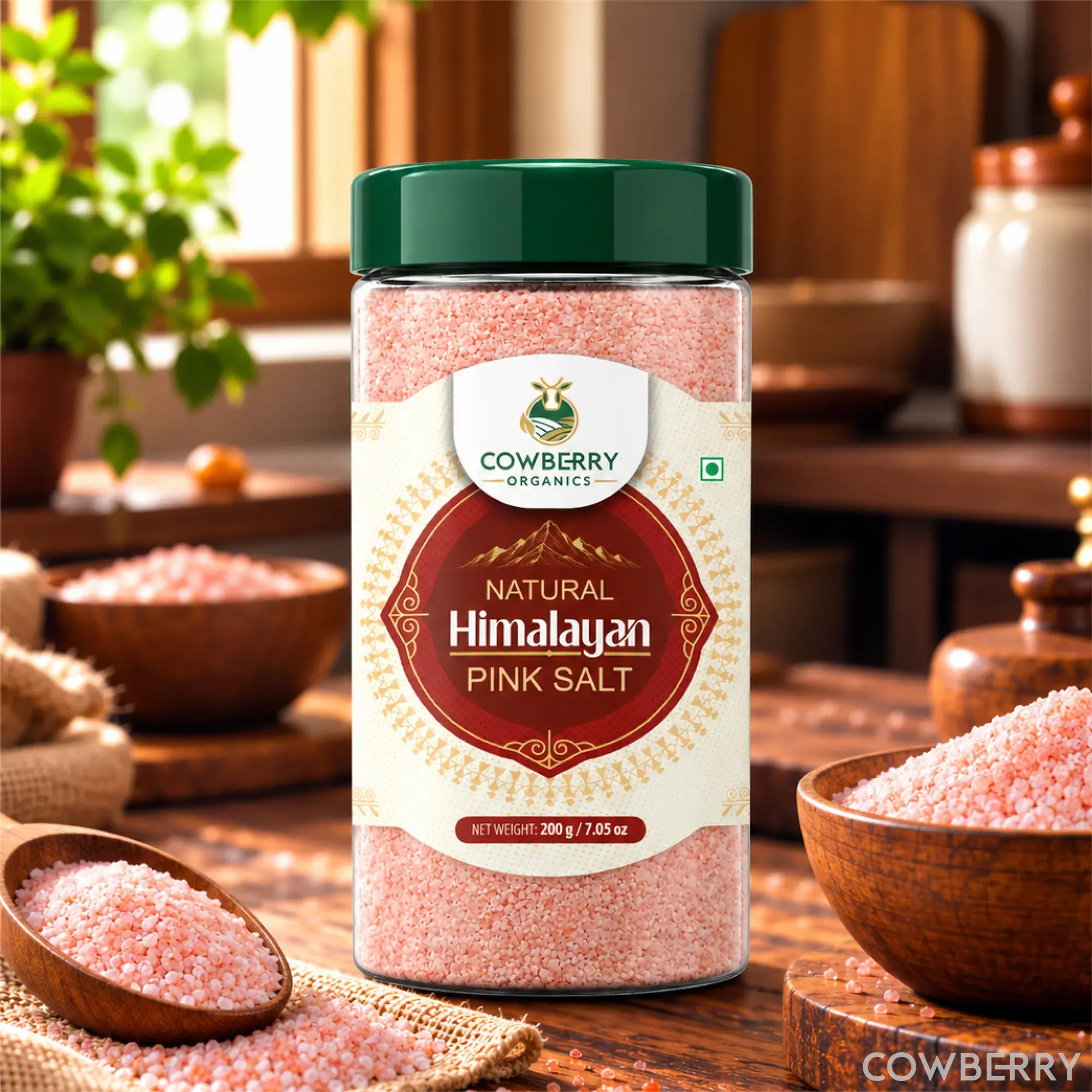
Why sendha namak is used in fast: many vrat kitchens set the everyday table salt aside and season fast-day food with sendha namak, the pink rock salt. The Dietary Guidelines for Indians record that rock salt is used for specific recipes or occasions and place pink salt among the purest forms of salts. What that swap means in practice is below, and the pink salt hub frames the rest.
Why sendha namak is used in fast: the short answer
The short answer is custom, not nutrition: in many homes the everyday table salt stays out of the kitchen on fast days and sendha namak, the pink rock salt, seasons the vrat dishes in its place. The Dietary Guidelines for Indians record that in addition to the common white refined and non-refined salts, rock salt is also used for specific recipes or occasions. They do not mention fasting, so the vrat custom rests on household and religious practice, not on a nutrition source. The same guidelines name the two rock salts — pink salt (sendha namak), black salt (kala namak) — place pink salt among the purest forms of salts, and add the line that counts: irrespective of the variety of salt, consumption should be limited, as the sodium content in them is almost similar.
Sendha namak for fasting: the vrat rules
Vrat food customs are kitchen customs, and in many homes they keep one salt at hand: sendha namak. On fast days many kitchens turn to vrat grains and tubers — kuttu and rajgira flours, sabudana, sweet potato — and season them with rock salt. A fast-day plate can look like this: kuttu roti with rock salt in the dough, sabudana khichdi seasoned with sendha namak, a vrat curry with rock salt in the masala, and fast-day namkeen with a pinch of the same salt. The swap runs through the whole day, not one dish. Meanwhile the everyday salt — the fine everyday salt, the anti-caking-agent form ICMR-NIN describes for common salt — waits in the cupboard until the fast ends.
What the numbers say: sodium in sendha namak
Neither IFCT 2017 nor USDA FoodData Central carries a rock-salt record, so the sodium figure used on this page, 38,800 mg per 100 g, comes from USDA's table-salt record — a fair stand-in, because ICMR-NIN says the sodium across the varieties is almost similar. A level teaspoon of sendha namak is 5 g, and at that rate one teaspoon carries 1940 mg of sodium. ICMR-NIN caps the day's added salt at 5 g, one teaspoon, and describes common salt as 40 percent sodium and 60 percent chloride. A 2017 survey of 1395 people used 24-hour urine samples to estimate salt intake: 8.59 g a day in Delhi and Haryana and 9.46 g in Andhra Pradesh, both above the WHO's 5 g maximum. The survey did not separate rock salt from table salt. The takeaway for a fast day: sendha namak is not a low-sodium salt, and nothing about a vrat changes that.
How much sendha namak belongs on a fast day
The 5 g cap does not pause on fast days, because the sodium in sendha namak is almost similar to the sodium in any other salt (ICMR-NIN). The day's dishes — kuttu khichdi, rotis, a fast-day curry, chaas — should therefore share that one teaspoon. The trap is the salted snack shelf: ICMR-NIN lists snack foods, savouries, papads and salted nuts among the foods that push salt intake up, and fast-day namkeen and fried makhana may come pre-salted. A vrat day with namkeen packets, salted chaas and a well-seasoned khichdi can add up quickly. The fix is the same as any other day: salt the cooking lightly, taste before adding more at the table, and count the namkeen in the day's total.
Sendha namak vs kala namak vs table salt on a fast day
Three salts, three jobs. Sendha namak is the usual vrat salt: it seasons everything from the kuttu roti to the fast-day curry. Kala namak is the second rock salt, preserved with assorted spices, charcoal, seeds and tree bark (ICMR-NIN); colour, texture and smell mark the two apart (ICMR-NIN). Table salt is the everyday finely ground salt. In many homes, on a fast day the first one runs the kitchen and the other two wait; on an ordinary day all three share the 5 g cap, since the sodium content in them is almost similar (ICMR-NIN). The full side-by-sides are on rock salt vs black salt and rock salt vs normal salt.
What to avoid with sendha namak in a fast
Three mistakes to skip. First, using the pink salt as a free pass: the sodium in it is almost similar to any other salt (ICMR-NIN), so a fast day with heavy shaking is still a heavy-sodium day. Second, expecting the pink colour to deliver minerals: a 2020 study of 31 pink salts bought in Australia found you would need over 30 g of pink salt a day, roughly six teaspoons and well beyond the day's cap, before the minerals made any meaningful contribution. Third, dipping a wet spoon into the salt jar: moisture clumps the salt and makes it hard to shake out evenly. Keep the jar dry, the spoon dry, and the day's salt at one level teaspoon or less. The pink salt hub's pages cover the salt itself in detail.
Talk to your doctor or dietitian
If fast days come with medicines — for blood pressure, the heart or the kidneys — the salt question belongs to your doctor or dietitian. ICMR-NIN associates high salt intake with high blood pressure and related heart and blood-vessel problems, and a fast day does not change that arithmetic: vrat namkeen and salted snacks can push the day's salt up exactly as packaged snacks do. When your doctor has set a sodium limit, ask how sendha namak and fast-day snacks fit into it before the next vrat. For everyone else the rule printed in the guidelines stands: keep the day's added salt — pink, black or white — at 5 g, one level teaspoon.
FAQs
Why sendha namak is used in fast?
Because it is the salt many households use on fast days in place of everyday table salt. Fasting kitchens season kuttu rotis, sabudana khichdi and vrat curries with sendha namak, the pink rock salt that ICMR-NIN names beside black salt and places among the purest forms of salts. The same 5 g a day cap applies to it as to any salt.
Can sendha namak be eaten in fast?
Yes. Sendha namak is the usual salt of the vrat plate: it goes into the dough, the khichdi, the curry and the chaas on fast days. Keep the day's total at one level teaspoon, 5 g, because its sodium counts like any salt's (ICMR-NIN).
Why rock salt is used in fasting?
Rock salt is the salt many fasting kitchens use, and in India that means the pink sendha namak. ICMR-NIN records that rock salt is used for specific recipes or occasions and that pink salt is one of the purest forms of salts. In practice the vrat day's cooking — rotis, khichdi, sabudana, namkeen — is seasoned with sendha namak while the everyday table salt stays out.
Why sendha namak is allowed in fast?
Sendha namak is used in fast because it is the salt many households keep for fast days: the pink rock salt, as opposed to the everyday table salt. It is a custom, not a sodium rule — the sodium in the two is almost similar (ICMR-NIN), so the allowance is about which salt is used, not about using more of it.
Does sendha namak have iodine?
No iodine figure is printed for sendha namak: the WHO's iodization guideline is about food-grade table salt, not rock or pink salt, and the food-composition record carries sodium only. ICMR-NIN says to use iodized salt. See rock salt vs normal salt for the iodine story.
Can we eat sendha namak daily?
Yes, as the salt of a normal day too — but it is not a low-sodium swap. ICMR-NIN sets the day's added salt at 5 g, one teaspoon, for every variety, and a 2017 Indian survey measured 8.59 g to 9.46 g a day already. If your household relies on iodized table salt, keep that in the everyday jar and use sendha namak within the same 5 g total.
References
- Dietary Guidelines for Indians, ICMR-National Institute of Nutrition
- Johnson C, Mohan S, Rogers K et al. Mean Dietary Salt Intake in Urban and Rural Areas in India: A Population Survey of 1395 Persons. J Am Heart Assoc, 2017
- Fayet-Moore F, Wibisono C, Carr P et al. An Analysis of the Mineral Composition of Pink Salt Available in Australia. Foods, 2020
- WHO guideline: fortification of food-grade salt with iodine for the prevention and control of iodine deficiency disorders (2014)
- USDA FoodData Central
Shop this article
Keep reading
Coriander water benefits: what dhania water actually does
Peanuts in Hindi (moongfali): groundnut names in Indian languages
Coriander vs cilantro: are they the same herb?