by COWBERRY

6 minute read
Rock salt vs normal salt: iodine, sodium and which to choose

Rock salt vs normal salt: the everyday table salt is finely ground, usually iodized, and rock salt is the pink sendha namak kept for fast days. The sodium is almost similar — ICMR-NIN says so plainly — so the real difference is iodine and the job each salt does in the kitchen. The numbers, the iodine story and the choice are below, with the pink salt hub behind them.
The verdict in three lines: rock salt vs normal salt
Same sodium job, different shelf roles. Table salt is the finely ground everyday salt, processed with an anti-caking agent (ICMR-NIN), and the iodized salt in Indian kitchens is this everyday salt.
Rock salt, the pink sendha namak, is the occasion salt — ICMR-NIN records it as used for specific recipes or occasions — and no public food-composition record gives it an iodine figure.
The sodium is almost similar in every variety (ICMR-NIN), so neither jar is a low-sodium choice: the difference is iodine and where each salt sits in the kitchen.
Difference between rock salt and normal salt: side by side
The two jars on one table.
| Normal salt (table salt) | Rock salt (sendha namak) | |
|---|---|---|
| Form | Finely ground, processed with an anti-caking agent (ICMR-NIN) | Pink rock salt, one of the purest forms of salts (ICMR-NIN) |
| Iodine | The iodized one; WHO's fortification guideline covers food-grade table salt | No iodine figure on record; the guideline does not cover rock salt |
| Sodium per 100 g | 38800 mg (USDA table-salt value) | 38800 mg — the same stand-in figure, sodium almost similar (ICMR-NIN) |
| Sodium per teaspoon | 1940 mg in a level teaspoon | 1940 mg — same |
| Kitchen role | Everyday cooking | Vrat cooking and specific occasions |
The naming pair is on is rock salt and sendha namak the same, and the fast-day rules behind the pink jar are on why sendha namak is used in fast.
Rock salt vs iodised salt: the iodine story
The one difference with a guideline behind it is iodine. The WHO's salt-iodization guideline is about fortifying food-grade salt with iodine, and the salt India fortifies is the everyday table salt; ICMR-NIN's points-to-remember says to use iodized salt. For rock salt, no public food-composition record gives an iodine figure, and the WHO guideline does not address rock or pink salt — so no iodine figure is printed for rock salt either way. In practice, the iodine in an Indian kitchen's salt comes from the table-salt jar, and a kitchen that uses only sendha namak is using a salt with no printed iodine figure. What is on record is the sodium, and it is the same story in the next section.
What the numbers say: sodium in both
The sodium side is a tie. The figure, 38800 mg of sodium per 100 g, comes from USDA's table-salt record and stands in for both, because neither IFCT 2017 nor USDA keeps a rock-salt record and ICMR-NIN says the sodium content in the varieties is almost similar. A level teaspoon is 5 g and holds 1940 mg of sodium, whichever jar it comes from, and the day's cap is 5 g — one teaspoon (ICMR-NIN). Indians already run above that: a 2017 survey measured Indian adults at 8.59 g of salt per day in Delhi and Haryana, with 9.46 g per day in Andhra Pradesh, without separating rock salt from table salt in the measurement. On minerals, a 2020 Australian study scanned 31 pink salts sold in Australia and concluded the minerals would need over 30 g a day — nearly six teaspoons — to count for anything.
Taste and cooking: fine grains vs pink crystals
The cooking difference is texture and role. Table salt is finely ground and processed so the grains stay free-flowing (ICMR-NIN) — the salt that melts into dal, sabzi and dough. Sendha namak usually comes in larger crystals, crushed fresh over fast-day dishes such as kuttu roti, sabudana khichdi and vrat curry, and its pink colour is the one visible tell. On the tongue both are salt: common salt, in the guidelines' words, is 40 percent sodium with 60 percent chloride, and with the sodium in the varieties almost similar, a recipe tastes the same salted with either. The difference is where each is expected: table salt in the everyday salt jar, sendha namak in the vrat jar.
Cost and where each fits
The two jars are bought differently, and that shapes the cost. Table salt is the everyday purchase, used in pot after pot; sendha namak is the occasion purchase, bought for fast days. Prices move with brand and pack, and no number is quoted here; what matters is that neither jar changes the sodium math. So the cost question should not decide the salt question — the vrat rules and the iodine question should.
Which to choose for whom
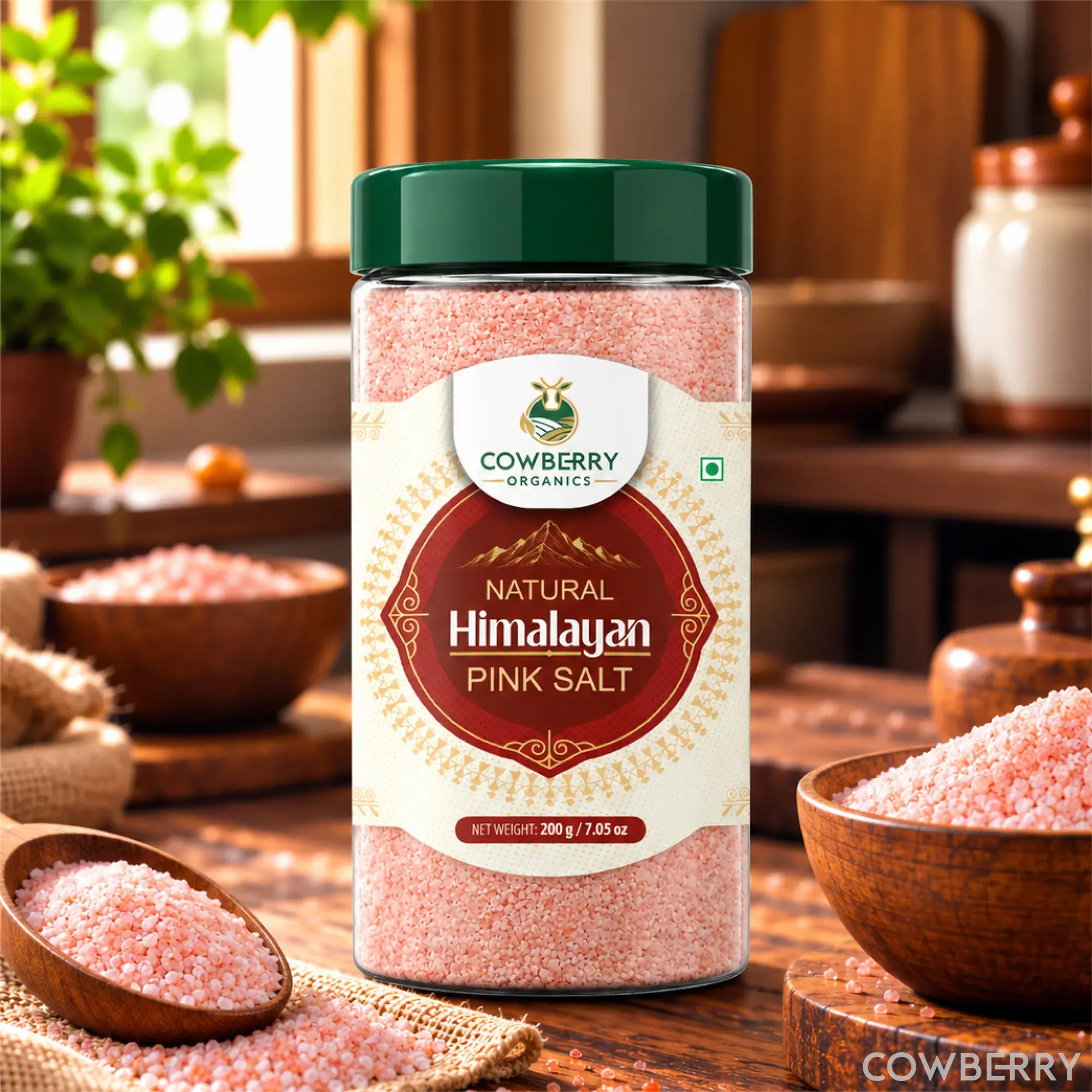
Everyday cooking: normal iodized salt, the fine salt that the guidelines' advice to use iodized salt points at. Fast days: sendha namak, the pink rock salt of the vrat plate. Households that count on salt for iodine: the iodized table salt is the jar that carries it, since the public record holds no iodine figure for rock salt. Households watching sodium: both jars count toward the 5 g a day cap (ICMR-NIN), so the choice stays a kitchen choice, not a sodium one. And the pink jar itself is COWBERRY's natural himalayan pink salt; the pink salt hub has the salt's other pages.
FAQs
Does rock salt have iodine?
The public food-composition record holds no iodine figure for rock salt, so none is quoted. The WHO's salt-iodization guideline covers food-grade table salt — the everyday salt that ICMR-NIN's advice to use iodized salt points to.
Is sendha namak non iodized?
The record does not say: no public source gives an iodine figure for sendha namak. What is on record is that India's iodized salt is the everyday table salt, and ICMR-NIN's advice to use iodized salt points there.
Is rock salt iodized?
No public record says so. The WHO's iodization programme is for food-grade table salt, and no iodine figure is printed for rock salt. The jar that is iodized is the table salt.
Sendha namak vs normal salt which is better?
Neither is better as salt: the sodium is almost similar (ICMR-NIN), so both count the same toward the 5 g a day cap. The real question is the job — iodized table salt for everyday cooking, sendha namak for vrat days.
Rock salt or normal salt which is better?
For everyday cooking, normal salt — because it is the iodized one. For fast days, rock salt — because it is the vrat salt. For sodium, they are a tie: almost similar content (ICMR-NIN), one teaspoon a day either way.
Difference between rock salt and normal salt?
Form, iodine and job. Normal salt is fine-ground with an anti-caking agent added (ICMR-NIN) and iodized; rock salt is the pink sendha namak of vrat cooking, with no iodine figure on record. Sodium: almost similar in both.
References
- Dietary Guidelines for Indians, ICMR-National Institute of Nutrition
- Fayet-Moore F, Wibisono C, Carr P et al. An Analysis of the Mineral Composition of Pink Salt Available in Australia. Foods, 2020
- Johnson C, Mohan S, Rogers K et al. Mean Dietary Salt Intake in Urban and Rural Areas in India: A Population Survey of 1395 Persons. J Am Heart Assoc, 2017
- WHO guideline: fortification of food-grade salt with iodine for the prevention and control of iodine deficiency disorders (2014)
- USDA FoodData Central
Shop this article
Keep reading
Coriander water benefits: what dhania water actually does
Peanuts in Hindi (moongfali): groundnut names in Indian languages
Coriander vs cilantro: are they the same herb?