by COWBERRY

5 minute read
Rock salt vs black salt (kala namak): difference and which to use

Rock salt vs black salt: two salts, not one. Rock salt is the pink salt, sendha namak, and black salt is kala namak — the pair the Dietary Guidelines for Indians name side by side and separate by colour, texture and smell. What separates them, what the sodium says, and where each belongs in Indian cooking is below; the pink salt hub gathers the salt's other pages.
The verdict in three lines: rock salt vs black salt
Different salts. Rock salt (sendha namak) is the pink rock salt; black salt (kala namak) is the dark one — ICMR-NIN lists them as the two rock salts and says colour, texture and smell tell them apart.
Black salt is preserved differently: assorted spices, charcoal, seeds and tree bark go into its keeping, and it darkens on storage (ICMR-NIN).
The sodium is the catch: ICMR-NIN says the sodium content in them is almost similar, so black salt is not a low-sodium salt either — the 5 g a day cap covers both.
Rock salt and black salt difference: side by side
The two rock salts on one table.
| Rock salt (sendha namak) | Black salt (kala namak) | |
|---|---|---|
| What it is | Pink salt, one of the purest forms of salts (ICMR-NIN) | Black salt, preserved with spices, charcoal, seeds and tree bark (ICMR-NIN) |
| Colour | Pink | Dark; grows darker on storage (ICMR-NIN) |
| Smell | Told from black salt by its smell (ICMR-NIN) | Told from pink salt by its smell (ICMR-NIN) |
| Sodium per 100 g | 38800 mg (USDA table-salt value standing in) | Almost similar (ICMR-NIN); no separate record exists |
| Kitchen use | Vrat dishes and fast-day cooking | Chaat, raita and fruit |
The naming pair — why rock salt and sendha namak are one salt — is on is rock salt and sendha namak the same, and the sodium side is below.
The sodium in both: what the numbers say
One number covers the pair. Neither IFCT 2017 nor USDA keeps a record for either rock salt, so the number used is USDA's table-salt value, 38800 mg of sodium per 100 g — a fair stand-in, since the guidelines put the sodium across salt varieties at almost similar. A level teaspoonful, 5 g, holds 1940 mg of sodium, and the day's cap is that one teaspoon (ICMR-NIN). On the mineral side, a 2020 study scanned 31 pink salts purchased in Australia and found the minerals would need over 30 g a day, close to six teaspoons, before they mattered; no public study gives mineral figures for kala namak, so no mineral figure is printed for it.
Sendha namak vs kala namak in the kitchen: taste and cooking
The kitchen split is by smell and job. Sendha namak seasons vrat food — kuttu rotis, sabudana khichdi, fast-day curries — as the salt of the fasting kitchen. Kala namak is sprinkled on chaat, mixed into raita, pressed onto cut fruit, or stirred into chutneys. Because the two look different — pink against dark — and smell different (ICMR-NIN), the jars are easy to tell apart on the shelf. What does not change between them is the saltiness: with almost similar sodium, a dish needs the same small amount either way, and both stay inside the 5 g a day cap. If the fast-day rules in your family name sendha namak only, keep kala namak for non-fast days rather than guessing.
Cost and where each fits
Where each fits matters more than what each costs. Sendha namak is bought for vrat days and used across the day's cooking; kala namak is bought for chaat and fruit, used a pinch at a time. Prices differ by brand and pack; the honest cost rule is the same as for any salt — a little goes a long way, and both salts sit inside the one-teaspoon day.
Which to choose for whom
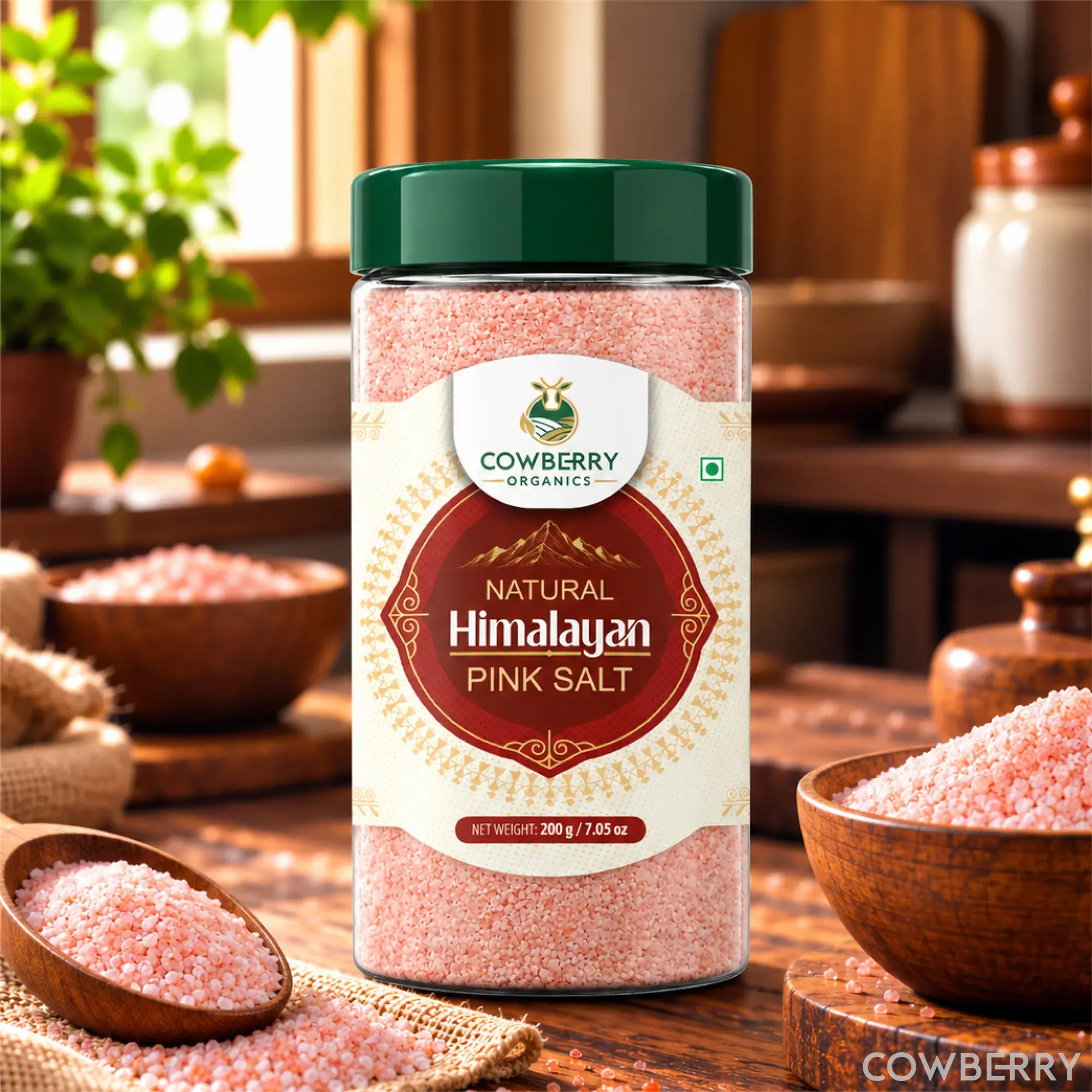
Fasting kitchens: sendha namak, the vrat salt — why sendha namak is used in fast covers the rules. Chaat, raita and fruit lovers: kala namak, the salt whose smell is the point. Everyday cooking: neither is the iodized everyday salt — that is table salt's job, since the guidelines' advice is to use iodized salt, and the pair is compared on rock salt vs normal salt. Anyone watching sodium: both count toward the 5 g day, since the sodium content in them is almost similar (ICMR-NIN). And the pink jar itself, under whichever name, is COWBERRY's natural himalayan pink salt; the salt's remaining pages are gathered on the pink salt hub.
FAQs
Is black salt and sendha namak same?
No. Black salt is kala namak and sendha namak is the pink rock salt; the Dietary Guidelines for Indians name them as the two rock salts and separate them by colour, texture and smell. The sodium in them is almost similar, but the salts are not the same.
Is sendha namak and black salt same?
No. Sendha namak is the pink salt and black salt is kala namak, the dark rock salt preserved with spices, charcoal, seeds and tree bark (ICMR-NIN). They share a sodium level and little else.
Is sendha namak and kala namak same?
No. The guidelines print them as different salts: pink salt (sendha namak), black salt (kala namak). Kala namak is the dark one for chaat; sendha namak is the pink one of vrat cooking.
What is rock salt and black salt?
They are the two rock salts of Indian kitchens. Rock salt, in India, is the pink sendha namak; black salt is kala namak, which is kept with assorted spices, charcoal, seeds and tree bark and darkens on storage (ICMR-NIN).
What is sendha namak and kala namak?
Sendha namak is pink rock salt, the vrat salt the guidelines describe as one of the purest forms of salts. Kala namak is black salt, the dark rock salt kept for chaat and fruit. The two are the pair the guidelines name as India's rock salts.
Difference between sendha namak and kala namak?
The difference is colour, smell and job. Sendha namak is pink and seasons fast-day food; kala namak is dark, preserved with spices, charcoal, seeds and tree bark (ICMR-NIN), and goes on chaat, raita and fruit. Sodium is almost similar in both.
References
Shop this article
Keep reading
Coriander water benefits: what dhania water actually does
Peanuts in Hindi (moongfali): groundnut names in Indian languages
Coriander vs cilantro: are they the same herb?