by COWBERRY

10 minute read
What is millet: types, names, nutrition and how to cook it

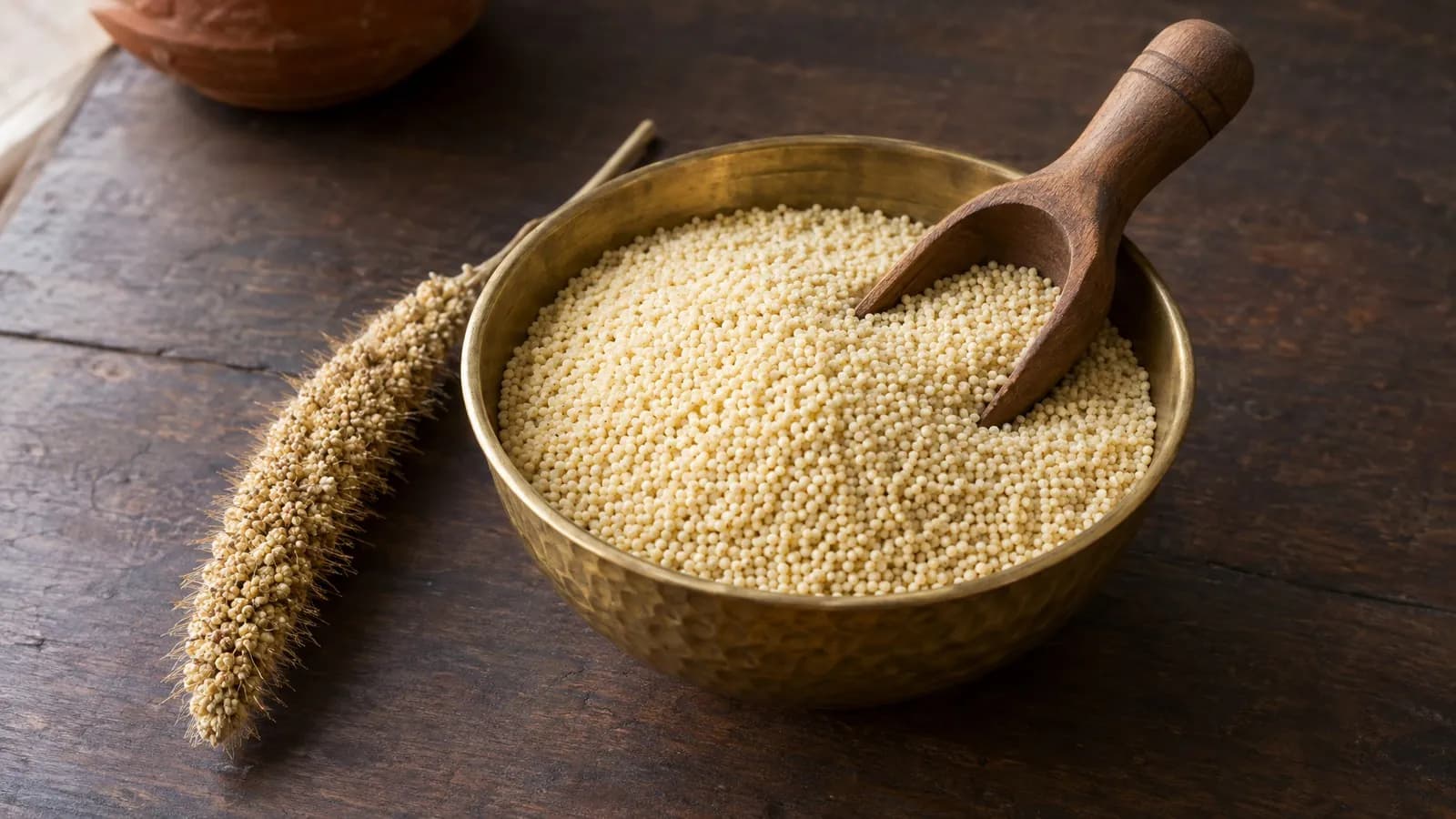
What is millet? The short answer: a family of small-seeded grasses grown for grain, and in India the name covers eight of them — sorghum (jowar), pearl millet (bajra), finger millet (ragi), foxtail, proso, little, barnyard and kodo millet. This hub rounds up the names, the numbers, the cooking and the cautions.
What is millet, exactly
ICAR-IIMR defines millets as a group of highly variable small seeded grasses, widely grown around the world as cereal crops or grains for fodder and human food — not a taxonomic group, but a functional or agronomic one. In plain terms, "millet" is a farming and kitchen category, not a single species.
The same source places millets among the important crops of the semi-arid tropics of Asia and Africa, with 97 per cent of world production in developing countries. The FAO adds that millets can grow on arid lands with minimal inputs and are resilient to changes in climate; the United Nations declared 2023 the International Year of Millets. For a grain-by-grain introduction — sorghum, pearl millet, finger millet, foxtail, proso, little, barnyard and kodo — see our types of millets guide.
The millets of India, by name
Each Indian millet travels under several names, and IFCT 2017 records them language by language. The table below gives the full set for finger millet (ragi). Around it: jowar is Jolada in Kannada, Jonna in Telugu and Jondhahlaa in Marathi; bajra is Sajje in Kannada, Kambu in Tamil and Bajri in Gujarati; kodo millet is Varagu in Tamil and Koovaragu in Malayalam; little millet is Samai in Tamil and Sama in Kannada. Names matter at the shop: a pack labelled Varagu is kodo millet, and one labelled Samai is little millet.
One name worth knowing is atta: millet atta simply means flour milled from whole millet, and the grain's own name travels with it — jowar atta, bajra atta, ragi atta. The types of millets guide carries the complete name lists for every grain.
| Language | Name (romanised) |
|---|---|
| English | Ragi |
| Hindi | Ragi |
| Marathi | Nachni |
| Gujarati | Bavato |
| Punjabi | Mandal |
| Bengali | Ragi |
| Odia | Mandia |
| Assamese | Ragi |
| Kannada | Ragi |
| Telugu | Ragi |
| Tamil | Kelvaragu |
| Malayalam | Panjapulle |
| Urdu | Mandwa |
| Sanskrit | Madhulika |
| Botanical name | Eleusine coracana |
Source: IFCT 2017 (ICMR-NIN) local-names list. — means no name recorded in the source.
Marathi: IFCT 2017 prints ‘Bakri’; ‘Nachni’ per ICAR-Indian Institute of Millets Research, millets information page (vernacular names).
Millet nutrition per 100 g
The table below shows the three big Indian millets — finger millet (ragi), sorghum (jowar) and pearl millet (bajra) — with the numbers IFCT 2017, the Indian Food Composition Tables, prints for them, raw and whole, per 100 g. Kodo millet (332 kcal, 8.9 g protein, 6.4 g fibre) and little millet (347 kcal, 10.1 g protein, 7.7 g fibre) sit just beside them. Across the five, energy runs from 321 to 348 kcal, a spread of only 27 kcal, while protein spans 7.2 to 11 g and fibre 6.4 to 11.5 g.
If you are asking what is millet flour, the answer is the same table: flour milled from the whole grain keeps the grain's own values. The full breakdown — every nutrient, the GI of each grain and per-serving maths — lives on the millet nutritional value per 100g page.
| Nutrient | Ragi (finger millet) | Jowar (sorghum) | Bajra (pearl millet) |
|---|---|---|---|
| Energy (kcal) | 321 | 334 | 348 |
| Protein (g) | 7.2 | 10 | 11 |
| Fat (g) | 1.9 | 1.7 | 5.4 |
| Carbohydrates (g) | 67 | 68 | 62 |
| Dietary fibre (g) | 11 | 10 | 11 |
| Iron (mg) | 4.6 | 4 | 6.4 |
| Calcium (mg) | 364 | 28 | 27 |
| Magnesium (mg) | 146 | 133 | 124 |
| Potassium (mg) | 443 | 328 | 365 |
| Sodium (mg) | 4.8 | 5.4 | 4.1 |
| Zinc (mg) | 2.5 | 2 | 2.8 |
| Folate (mcg) | 35 | 39 | 36 |
| Glycemic index (GI) | 68 | 66 | 57 |
Per 100 g raw, edible portion. Composition: IFCT 2017 (ICMR-NIN). GI: University of Sydney GI database. — means not reported. These are average values for the food; the label on a pack gives the values for that product.
Millet benefits, in one sweep
The millet atta benefits page builds ten benefits out of these numbers; the short version is a handful of standouts.
- Fibre. 6.4 to 11.5 g per 100 g, and the Dietary Guidelines describe fibre as retarding the absorption of carbohydrates and fats and adding to satiety.
- Protein. Bajra leads at 11 g per 100 g, and millet protein, low in lysine, complements the lysine-rich pulses the guidelines pair it with — dal and millet on one plate improve each other's protein quality.
- Calcium. Ragi's 364 mg per 100 g is a calcium count ICAR-IIMR calls the richest among the millets, far above jowar's 27.6 mg and bajra's 27.4 mg.
- Iron. Bajra carries 6.4 mg and ragi 4.6 mg per 100 g, with vitamin C foods at the same meal helping absorption.
- Gluten free. Millets are gluten free and non-glutinous grains, so millet atta works for people with gluten allergy or coeliac disease.
- Polyphenols. The outer layer of the grain concentrates polyphenols that ICAR-IIMR describes as health-promoting phytochemicals with antioxidant function.
The benefits page spells out each of these with its numbers, and pairs them with the cautions that balance the picture.
Millet side effects: who should go easy
For most people, millets are everyday food. The cautions below are the ones the sources actually make.
- Kidney stones and ragi. ICAR-IIMR notes that a high ragi intake can raise oxalic acid in the body, and so does not advise ragi for people with kidney stones.
- Thyroid questions and bajra. A 2024 systematic review of nine studies — eight of pearl millet, one of fonio — decided the data did not support saying pearl millet in an ordinary balanced diet causes goitre, and asked for more research.
- A new level of fibre. The guidelines describe dietary fibre as reducing constipation; step up gradually, one millet meal a day at first, and drink enough water.
- Babies. The WHO guidance keeps a baby on exclusive breastfeeding through the first six months; complementary foods begin from six months of age. Run millet porridge past the paediatrician before it lands in a small child's bowl.
If you manage diabetes, a kidney condition or a thyroid condition on a prescribed diet, talk to your doctor or dietitian before you change staples. The millet atta benefits page has the full cautions with sources.
Millets for blood sugar and weight
Glycemic index is where the grains part ways. In the University of Sydney database, bajra's rotis and chapatis average a GI of 57 across three India-tested entries made with flour and water only; jowar's 66 comes from its lone entry, de-husked grain boiled in Botswana; ragi's 68 rests on a single India-tested entry of dehusked, soaked and steamed grain; and little millet's 89 on a single India-tested entry of cooked unpolished grain. Kodo millet has no plain-grain figure. The database's about-GI page calls 55 or under low and 70 or over high, which puts bajra rotis just above the low band and little millet in the high one.
Beyond single values, the 2021 diabetes meta-analysis of Anitha and colleagues found that in people with diabetes, keeping millets in the diet over the long run cut fasting blood glucose about 12 per cent and the after-meal reading about 15 per cent. For weight, the simpler story is satiety: the guidelines tie fibre to a fuller feeling, and all five millets sit within 27 kcal of each other per 100 g. Quantity matters too — the guidelines suggest millets make up 20 to 30 per cent of a day's cereals, weighed raw, which is 50 to 75 g on a 250 g allowance. The is millet atta good for diabetes and best millet for weight loss pages turn those numbers into meals and portions.
How to cook millets
Each millet has its own kitchen route.
- Whole jowar and bajra. Eight hours in water, then pressure cook like rice; the grain turns soft and fluffy.
- Foxtail, little, kodo and barnyard millet. A rinse suffices, or a 20 to 30 minute soak when there is time; they cook in 10 to 15 minutes even without a pressure cooker.
- Ragi. Mostly eaten as flour — dosa, roti, mudde and porridge. The ragi dosa recipe needs no fermentation, and ragi porridge is ready in about 15 minutes.
- Millet atta. Knead with warm water and hand-pat; bajra roti and jowar bhakri show the method, and jowar bhakri starts from flour.
Fifteen more ways to put these grains on the breakfast plate — dosa, upma, khichdi, porridge and idli — are in our millet recipes round-up.
How to store millets
Whole grain keeps best: in a steel or glass jar with a tight lid, kept somewhere cool and dry, it will hold for many months. A quick smell test before every use catches trouble early.
Flour is the fragile half. Milling crushes the germ, and the oil in it oxidises, giving a rancid smell and flavour (ICAR-IIMR), which is what limits the life of every millet flour; a 2025 review puts bajra flour's usable life at about a week. Buy flour in small packs, keep it airtight, and move it to the fridge through the humid monsoon months, June to September. A musty or bitter smell says the flour has gone off; throw it away. Cooked millet dishes belong in the fridge and are best within two days.
Millets vs rice
Put side by side, the two grains split on fibre and GI. Ragi, jowar and bajra carry 10.2 to 11.5 g of fibre per 100 g, several times what milled white rice brings; on GI the gap is smaller than most people expect, with bajra roti at 57, jowar at 66 and ragi at 68, next to 50 for white basmati and 58 for brown rice in the same database. Rice wins on ease — a rinse and 15 to 20 minutes on the hob, no soaking — while millets ask for a little planning and give more flavour in return.
Which one should sit on your plate, and where each fits in a daily meal, is the whole subject of the millets vs rice page.
How to buy millets
Two decisions cover most buying: grain or flour, and whole-milled or sifted.
- Grain or flour. Whole grain keeps for months and grinds fresh when you need it; flour is ready for rotis and dosas but goes stale far sooner.
- Whole-milled or sifted. ICAR-IIMR notes the outer layer of the grain is where fibre, minerals and phenolics concentrate, so pick whole-milled atta and check the milling date.
- Certification. For organic millets, the pack should carry a recognised organic certification mark.
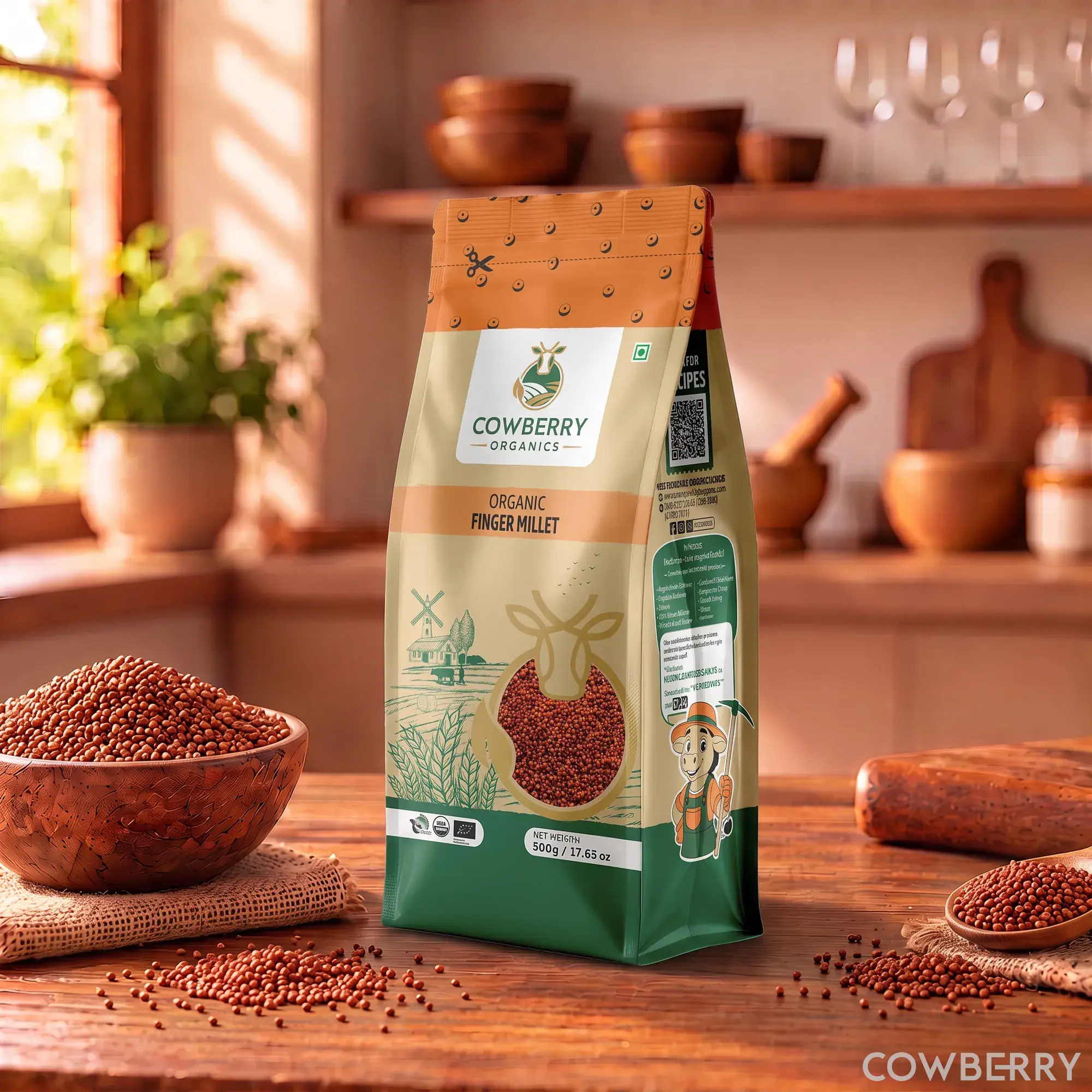
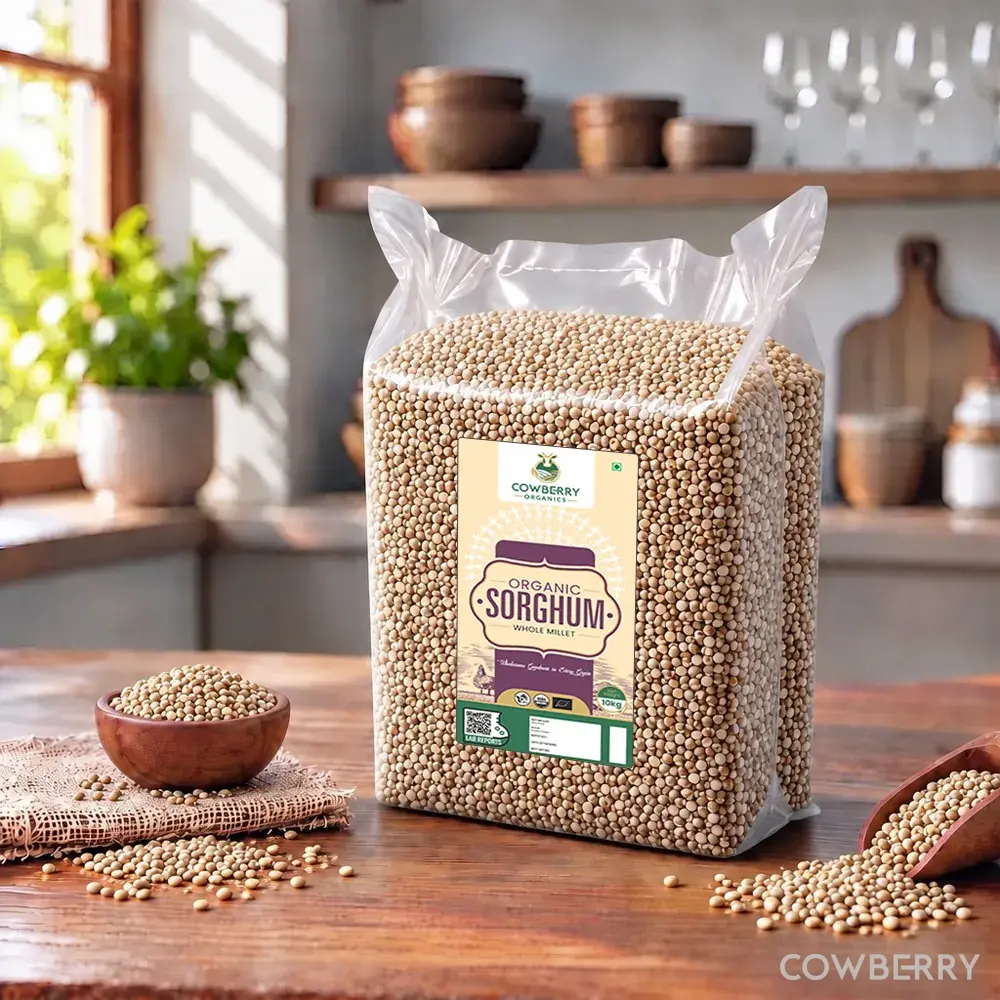
COWBERRY's finger millet (grown in Karnataka and the Western Ghats) and sorghum (grown in Maharashtra) are organically grown, packed whole with nothing added, and India Organic, USDA & EU certified.
FAQs
What is millet?
Millet is a grain from a group of small-seeded grasses. In India the name covers eight grains — jowar, bajra and ragi, plus foxtail, proso, little, barnyard and kodo millet — grouped by ICAR-IIMR as a farm category rather than a botanical one. The rest of this page fills in names, nutrition, GI and cooking.
Is quinoa a millet?
No. Quinoa is a different crop that appears beside millets in nutrition comparisons but stays outside ICAR-IIMR's list of eight Indian millets. Both are small grains that cook like rice, which may be where the confusion begins.
Is oats a millet?
No. Oats come from a different grass and are a cereal in their own right, not one of the eight millets in ICAR-IIMR's list. The confusion usually starts at the breakfast shelf, where oats and millet flakes sit side by side and both cook into porridge.
Is rice a millet?
No. Rice is a cereal grain of its own, grown and milled differently, and it sits outside the millet family ICAR-IIMR describes — though both cook by boiling. How the two compare on fibre, GI and daily use is laid out in our millets vs rice page.
What is millet atta?
Millet atta is flour ground from whole millet grain — usually bajra, jowar or ragi — with the outer layer of the grain left in. Since ICAR-IIMR finds the fibre, minerals and phenolics concentrated in that outer layer, whole-milled atta keeps them; a sieved flour drops part of them.
Which millet atta is best?
There is no single best — the right atta depends on what you want from it. Bajra atta leads on protein (11 g) and fibre (11.5 g per 100 g) and carries the lowest tested GI at 57; ragi atta leads on calcium at 364 mg per 100 g; jowar atta is mild in taste.
How long can millet be stored?
Whole millet grain keeps for many months when it sits in an airtight jar in a cool, dry cupboard. Milled flour is the fragile part: once the germ is crushed its oil turns rancid, and a 2025 review puts bajra flour's usable life at about a week. Cooked millet dishes are best within two days in the fridge.
References
- Indian Food Composition Tables (IFCT) 2017, ICMR-National Institute of Nutrition
- Dietary Guidelines for Indians, ICMR-National Institute of Nutrition
- University of Sydney glycemic index database (GI search)
- University of Sydney: about the glycemic index
- ICAR-Indian Institute of Millets Research: millets information and vernacular names
- Nutritional and health benefits of millets, ICAR-Indian Institute of Millets Research (PDF)
- FAO: International Year of Millets 2023
- Anitha S et al. A systematic review and meta-analysis of the potential of millets for managing and reducing the risk of developing diabetes mellitus. Front Nutr, 2021
- Anitha S, Upadhyay S, Grando S et al. Does consumption of pearl millet cause goiter? A systematic review of existing evidence. Front Nutr, 2024
- WHO: complementary feeding (health topic)
- Naraharasetti B, Chakraborty S. Thermal and nonthermal processing of pearl millet flour: impact on microbial safety, enzymatic stability, nutrients, functional properties, and shelf-life extension. Compr Rev Food Sci Food Saf, 2025
- UK Food Standards Agency: How to chill, freeze and defrost food safely
Shop this article
Keep reading
Foxtail millet vs quinoa: nutrition, taste and which to choose
Foxtail millet in Kannada, Hindi, Tamil and other Indian names
10 benefits of kangni (foxtail millet) and its side effects