by COWBERRY

7 minute read
Jaggery Uses: How to Cook, Bake and Sweeten With Gur

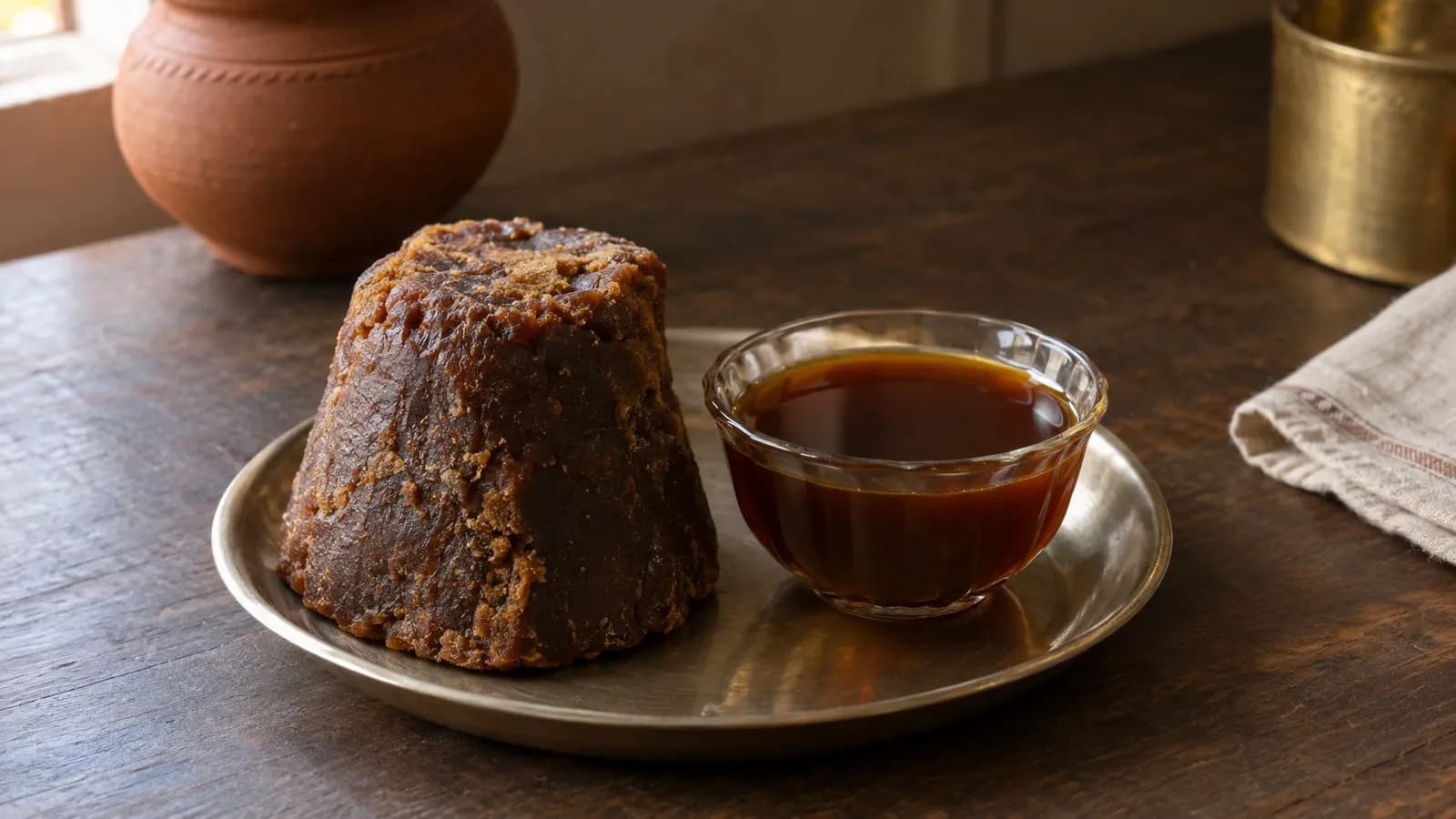
Jaggery uses: sweetening tea, oats and dal, cooking traditional sweets and swapping in for white sugar in baking. Crumble, grate or dissolve the gur and it fits any of them. The jaggery hub has the background on gur itself — how it is made and how to keep it.
Jaggery uses: the quick list
- Sweetening drinks: chai, filter coffee, warm milk, sherbets and lemonade. Dissolve the gur while the drink is warm, or grate it in so it melts fast.
- Everyday dal and khichdi: Gujarati dal, amti and pongal each take a small piece of gur for a rounded, not sugary, taste.
- Sweets: modak, laddu, halwa, chikki and payasam; gur is the traditional sweetener and part of the flavour in each.
- Baking: as jaggery powder, it replaces refined white sugar in cakes, cookies and breads, and brings a caramel note with it.
- Breakfast bowls: grated over oats, daliya or poha, or melted into the milk of porridges.
Ready-made recipes are gathered in the jaggery recipes roundup, from jaggery tea to ukadiche modak.
How to use jaggery in tea and drinks
Chai is the first use. Boil the water, tea leaves, milk and spices as usual, and add the gur off the heat, a small piece at a time, until the sweetness is right; it melts into the warm cup. Grated or powdered gur dissolves fastest. The same rule serves filter coffee, warm milk and cold drinks: for panakam, gur is stirred into water with ginger and a squeeze of lemon. A piece dropped into hot water softens and melts on its own, so sweeten while the cup is still warm.
The full method for the cup is in jaggery tea, the cold drink in panakam, and jaggery water is the base for both.
How to use jaggery in cooking and sweets
In savoury cooking gur is a rounding note, not a sweet layer. Gujarati dal gets its balance from a small piece melted in near the end; amti and pongal do the same. Start with a thumbnail-sized piece per pot, taste, and add more only if the dish needs it. Crumbled gur also goes into khichdi as it simmers.
In sweets it is the main sweetener and part of the identity. The recipes give the measures: ukadiche modak for the steamed sweet, jaggery laddu for the quick one, and amla murabba with jaggery for the preserve.
How to use jaggery in baking and oats
For baking, the powder is the tool: the 2022 Sugar Tech review records that makers now turn out powdered, granular and liquid forms to stand in for refined white sugar in bakery work, chocolate-making, confectionery and drinks. Jaggery powder swaps into cakes, cookies and breads and carries its caramel taste through the bake; start near a one-for-one swap and taste before you commit, then let the first bake teach you the adjustment.
For oats and breakfast bowls, grate or crush a small piece over warm oats, daliya or poha, or melt a piece into the milk or water while the grain cooks. The sweetness then spreads on its own, and no spoonful stays grainy.
Swapping jaggery for white sugar: the numbers
Jaggery and white sugar are not the same thing gram for gram, and the per-100 g values make the swap concrete:
| Per 100 g | Jaggery (cane) | White sugar |
|---|---|---|
| Energy | 354 kcal | 387 kcal |
| Carbohydrates | 84.87 g | 100 g |
The sugar side is pure carbohydrate: white sugar, as the same review puts it, is nothing but sucrose, whereas jaggery's glucose, fructose and sucrose come with minerals and vitamins attached. In plain plate terms, a level teaspoon (5 g) of jaggery powder gives 17.7 kcal, and 100 g of white sugar carries 33 kcal and 15.13 g of carbohydrate more than the same weight of jaggery.
White sugar's glycemic index is listed as 70, the mean of 25 database entries from several countries (range 48 to 110). The tables have no GI entry for jaggery. What the swap means for the plate is weighed on jaggery vs sugar; the glycemic numbers are set out on jaggery nutrition and glycemic index.
Jaggery powder, block, cubes or syrup: which form for which job
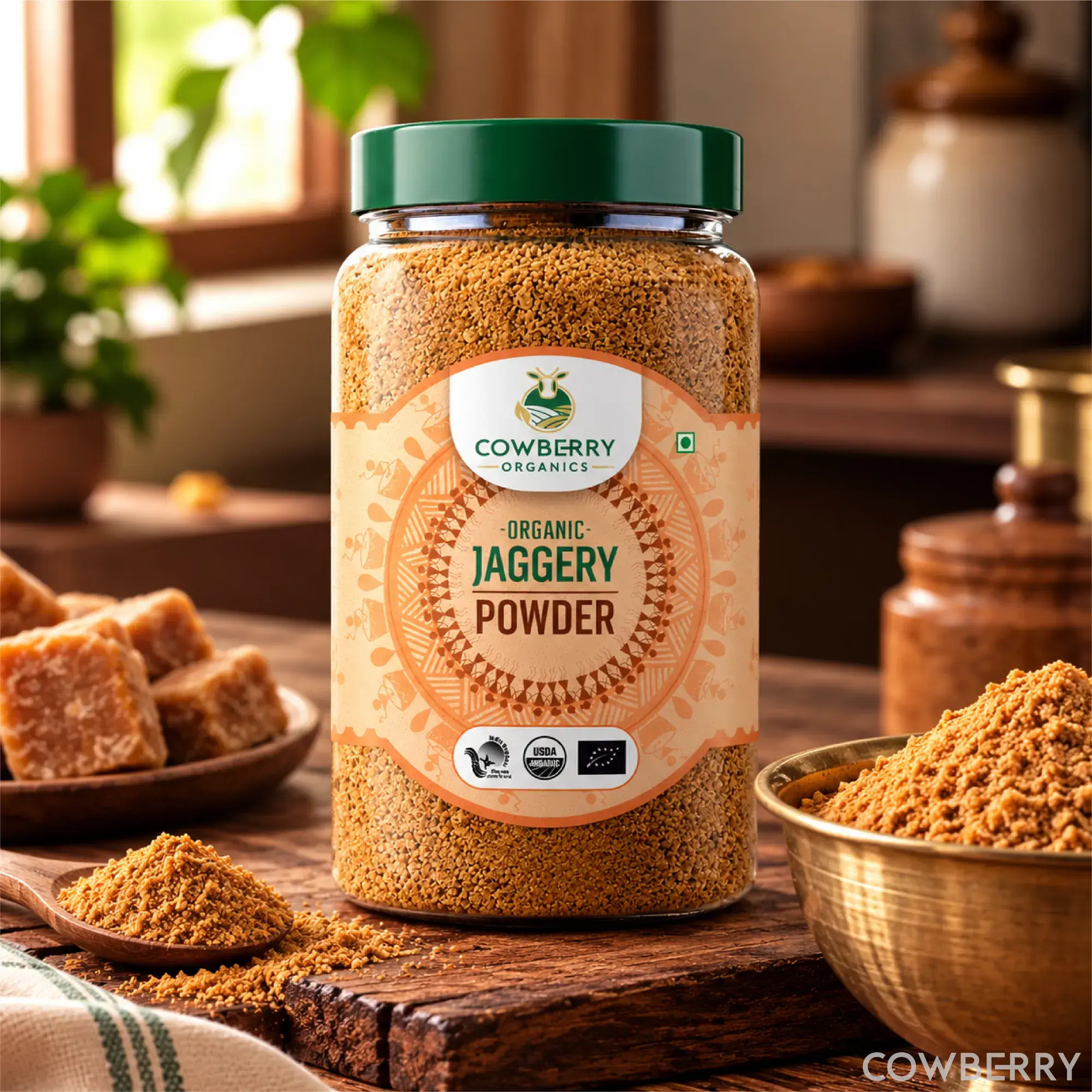
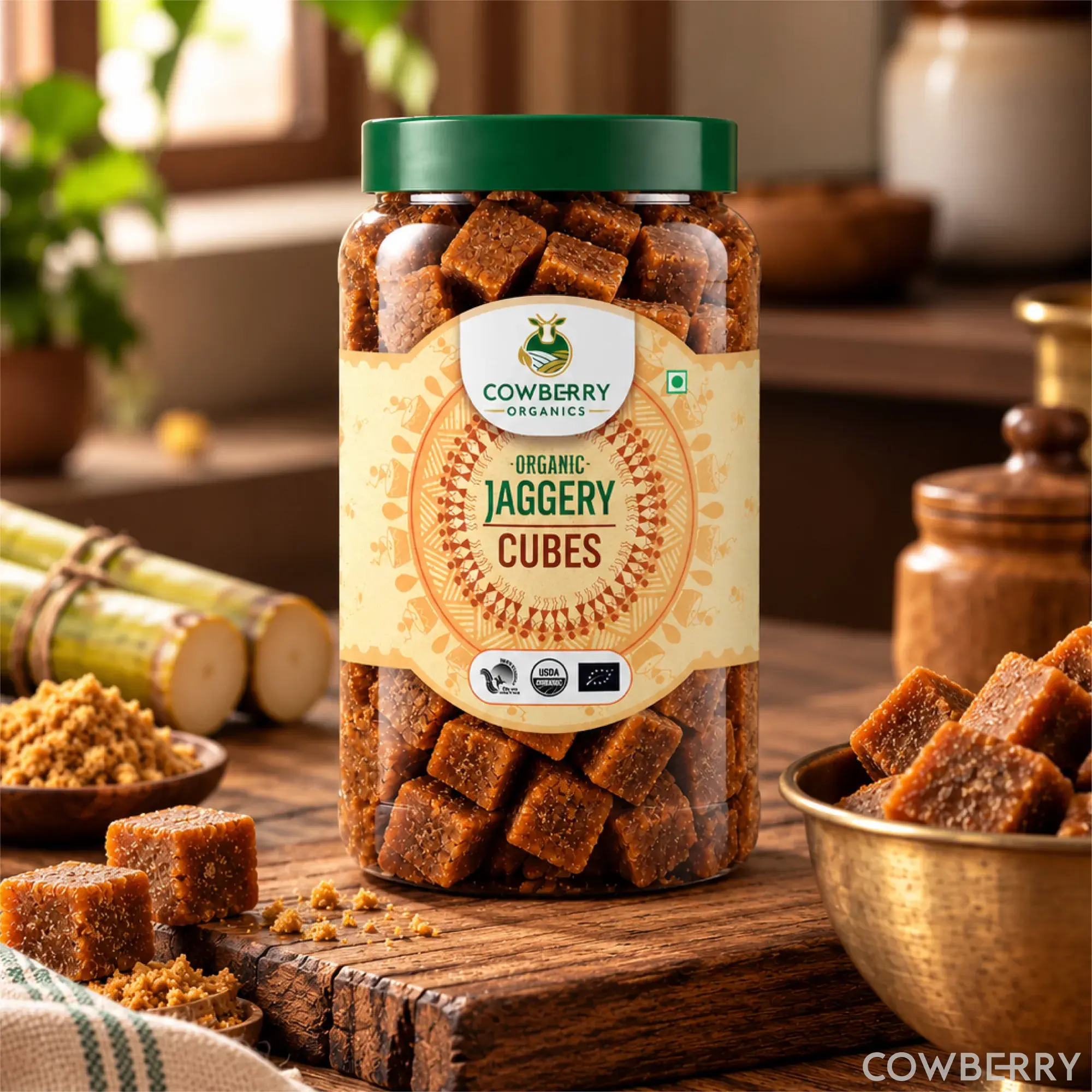
The form decides the job. A block is the everyday form: grate or shave off what a cup of tea or a dal needs. Cubes are the same gur cut to a measured size, one cube at a time for a cup. Powder is the kitchen all-rounder: finely crushed, it is one of the forms the 2022 review lists as stand-ins for refined white sugar in bakery products and beverages, and COWBERRY's dissolves instantly in warm milk, tea or oats. Syrup, the liquid form, is for pouring.
Where to keep each form so it stays usable is on how to store jaggery.
A sweetener, not a health food
Whatever the use, gur counts as added sugar on the plate. ICMR-NIN's dietary guidelines class jaggery among the added sugars, the same shelf as honey and table sugar: keep the day's sugar under 5 percent of energy — roughly 20 to 25 g for an adult — and, ideally, avoid it altogether. WHO's guideline is the same shape: keep free sugars under 10 percent of daily energy, and consider cutting them below 5. The sweetener's minerals, recorded in the Sugar Tech review, do not change that arithmetic; the jaggery hub page and jaggery benefits and side effects weigh what they mean.
FAQs
How to use jaggery?
Grate it into tea, coffee, warm milk or oats, melt a small piece into dal and khichdi as they simmer, use it as the sweetener in sweets such as modak and laddu, or bake with the powdered form. Add a little at a time and taste, because the piece that is right for one dish is too much for another. Start with a thumbnail-sized piece per pot of dal.
Can we add jaggery in oats?
Yes. Add it while the oats are warm or while they cook, so the piece melts and the sweetness spreads evenly; grated or powdered jaggery dissolves fastest. A level teaspoon (5 g) of jaggery powder gives 17.7 kcal, which is useful to know when you measure into a breakfast bowl. Stir, taste and stop.
Can jaggery be used instead of sugar?
Yes, it is a common swap. In baking, the powder replaces refined white sugar in cakes, cookies and breads, as the 2022 Sugar Tech review records for bakery products; in drinks and dal it replaces it by taste. 100 g of white sugar carries 33 kcal and 15.13 g of carbohydrate more than 100 g of jaggery.
What is jaggery made of?
Jaggery is boiled-down sugarcane juice, thickened and set. The 2022 Sugar Tech review compresses the making into three verbs, boiling, concentrating and clarifying, and the set juice takes the shapes on the shelf: blocks, cubes, granules or syrup. The name jaggery comes from jagara, the Portuguese word for coarse brown sugar, the same review records.
What is jaggery powder?
Jaggery powder starts as jaggery, granulated and dried down to a moisture level of 1 to 2 percent; the 2022 review credits that dryness with better storability than the other forms. The same review records that the powder, granular and liquid forms now stand in for refined white sugar in bakery work, chocolate, confectionery and drinks. Finely milled, it dissolves quickly in warm milk, tea or oats.
Is jaggery good for health?
The guidelines weigh it as a sweetener, not a health food: added sugars, jaggery with honey and table sugar, bring calories and no other nutritive value, so ICMR-NIN asks for less than 5 percent of a day's energy to come from them. WHO suggests cutting free sugars to below 10 percent of energy, better below 5. The balance is weighed on jaggery benefits and side effects.
References
- Rao GP, Singh P. Value addition and fortification in non-centrifugal sugar (jaggery): a potential source of functional and nutraceutical foods. Sugar Tech, 2022
- Dietary Guidelines for Indians, ICMR-National Institute of Nutrition
- WHO guideline: sugars intake for adults and children (2015)
- Indian Food Composition Tables (IFCT) 2017, ICMR-National Institute of Nutrition
- University of Sydney glycemic index database (GI search)
Shop this article
Keep reading
Raw Sugar vs Brown Sugar: Is Demerara the Same Thing?
Does honey contain sugar? Carbs per 100g and the WHO sugar limit
Date Jaggery (Khejur Gur in English): Types, Forms and How to Use It