by COWBERRY

7 minute read
How to Store Jaggery: Keep It Dry, Soft and Free of Fungus

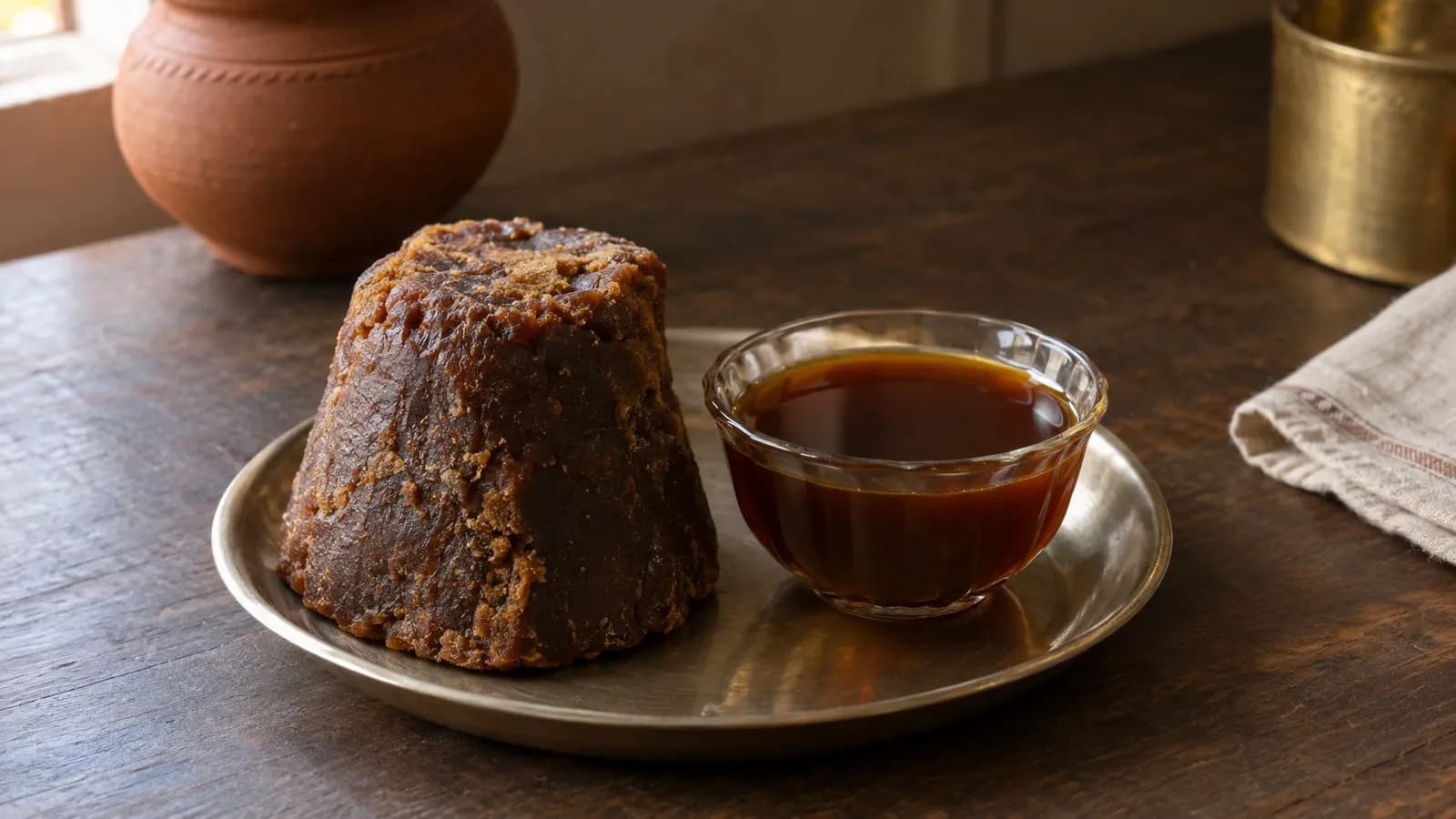
How to store jaggery comes down to one rule: keep it away from moisture. Boiled cane juice takes water back from humid air, which turns blocks soft and sticky, clumps the powder and can grow fungus. Airtight glass or steel, a cool dry cupboard and a dry spoon solve all three. The jaggery hub covers what it is and how it is made.
Short answer: how to store jaggery
Keep jaggery in an airtight container, in a cool, dry place, and take it out only with a dry spoon. That is the whole answer; the rest is about why. Jaggery is cane juice boiled until most of the water is gone, and it is never fully dry: a 2022 review in Sugar Tech puts solid jaggery at 3 to 10 percent moisture and granulated powder at 1 to 2 percent. That leftover water, plus the moisture jaggery pulls from humid air, is what turns blocks soft and sticky, clumps the powder and feeds fungus. FSSAI's standard caps cane jaggery at 7 percent moisture.
Step by step: how to store jaggery for long time
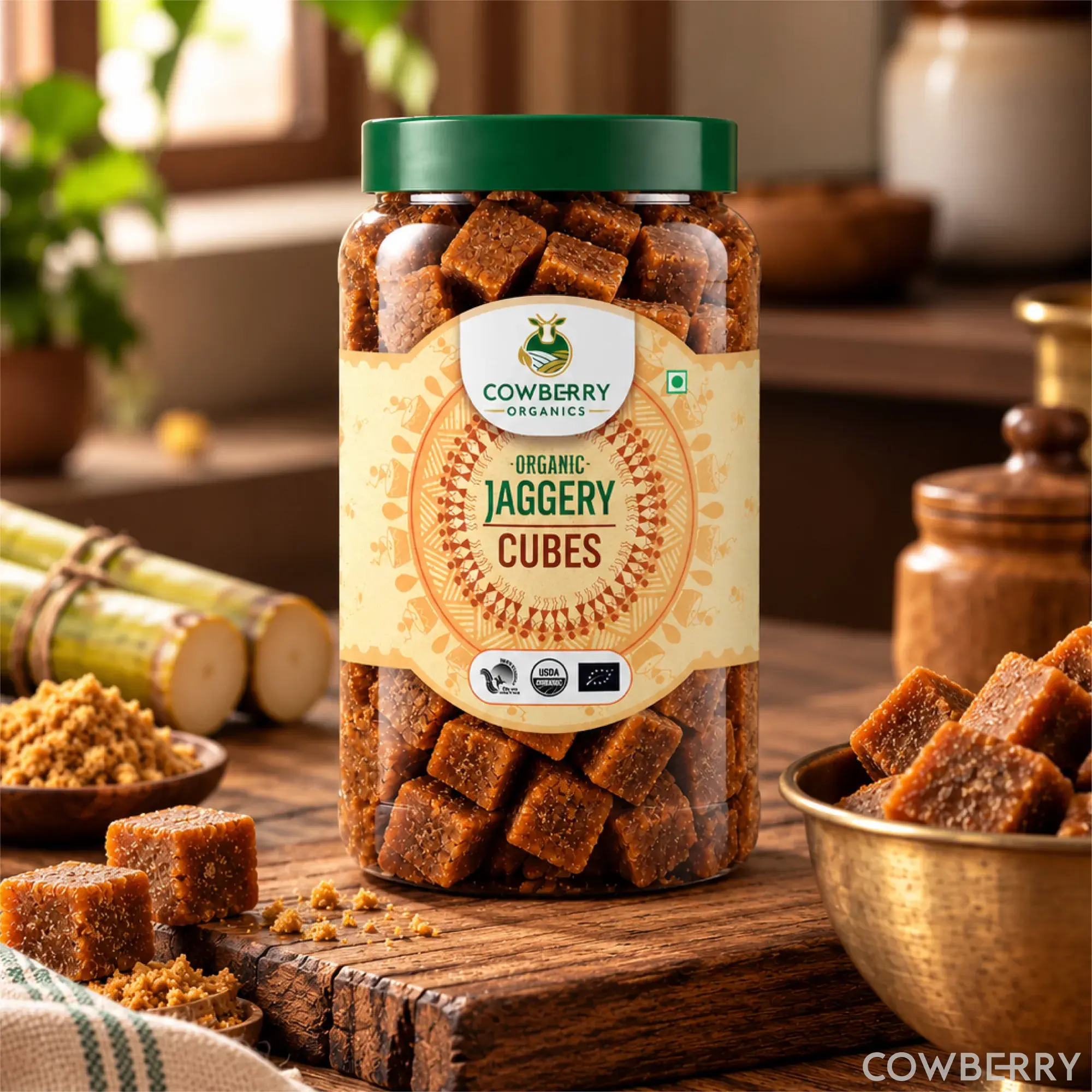
- Keep the block whole. A whole block or cube exposes less surface to the air than grated bits, so it stays drier. Grate only what the next dish needs.
- Pick glass or steel. An airtight glass or steel jar with a lid that closes tight. Rinse it and dry it fully before the jaggery goes in; a damp jar starts the problem.
- Fill, close, and use a dry spoon. Close the lid after every use, and never dip a wet or used spoon in. Every drop of water that goes in has to come back out through the jaggery.
- Choose the spot. A shelf away from the stove, the kettle and the window, where the air stays cool and dry. Heat softens a block; steam wets it.
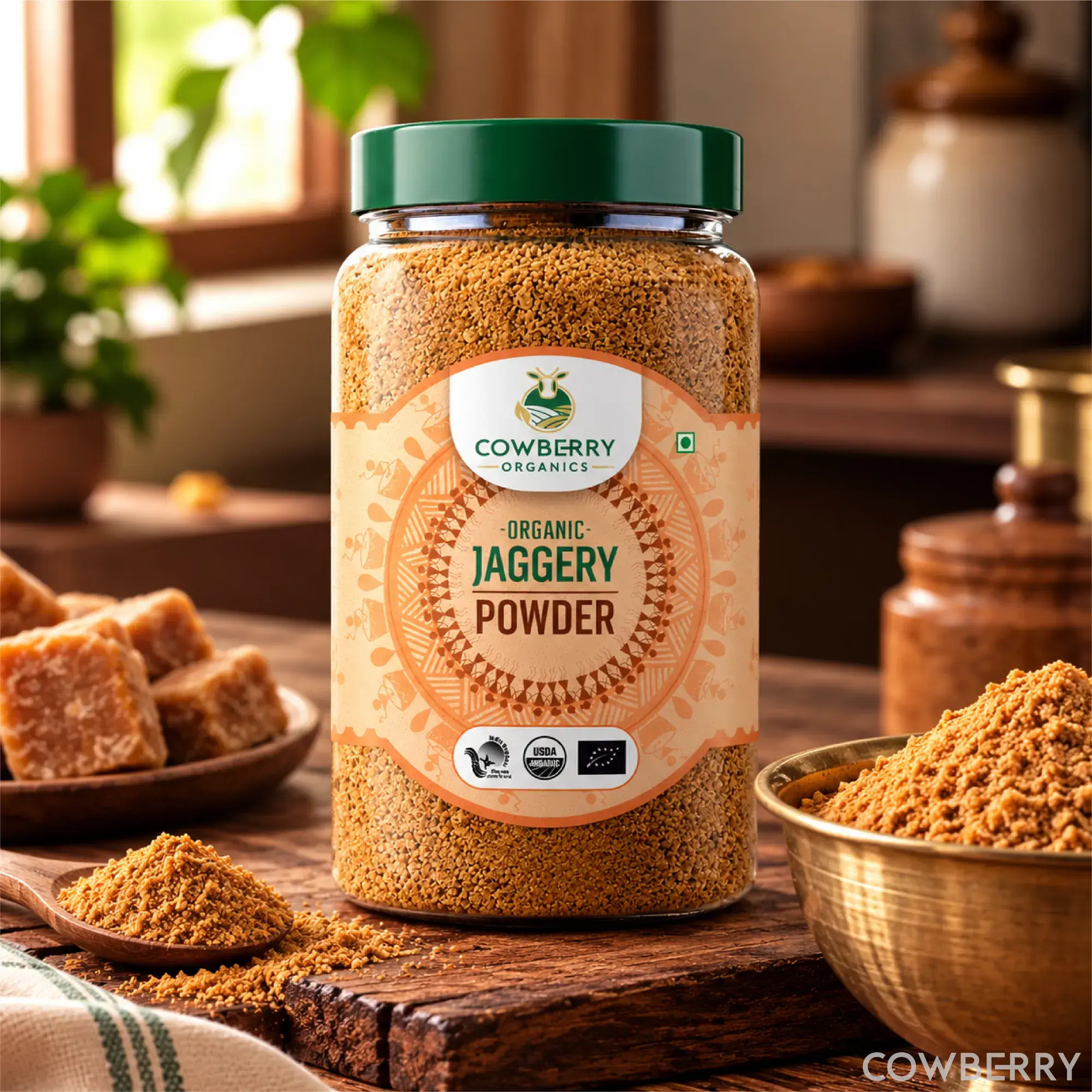
- Give powder the smallest jar. Powder is granulated jaggery that the maker has dried to 1 to 2 percent moisture before storage, and that low moisture is exactly what gives it the better storability the review notes; a big half-empty jar lets humid air undo that work. Keep a small jar for daily use and refill it from a sealed larger pack.
- Check it once in a while. Before the monsoon and after, open the jar, look at the surface and smell the contents. Sticky at the surface means the air is getting in; catch it before the fuzz does.
Storing jaggery in monsoon, summer and the fridge
In the monsoon the air itself is the enemy. Airtight means airtight: leave the lid on, take out only what the dish needs, and keep a small daily jar separate from the sealed pack so the big jar is not opened over and over in humid weather. If a block turns sticky at the surface, wipe it dry with a clean cloth and use it soon; if the block is soft all through or smells sour, treat it as spoiled.
Summer heat softens jaggery; a soft block with no sour smell or fuzz is still fine to use and easier to grate. Keep the jar in the coolest cupboard, not near the stove or in the sun. The fridge is not needed for a dry block, and it has a cost: a cold jar taken out into warm air gathers condensation on the jaggery, which adds exactly the moisture you were keeping away. In a very humid coastal city, if you do refrigerate, keep the jar sealed until it has warmed to room temperature.
Signs jaggery has gone bad (and one sign that does not count)
A block that has gone hard is not bad. Jaggery that loses a little moisture turns hard at the edges, and the fix is easy: grate the hard part, or warm the block briefly and it softens. Hardness is a sign of dryness, the one thing storage wants.
These are the signs that mean throw it away: a block that stays wet or weeps liquid, a sour or fermented smell where a fresh block smells of caramel, and any white or green fuzzy growth on the surface. The smell is usually the earliest sign of the three. Do not scrape the fuzz off and use the rest.
How long jaggery keeps: moisture by form
Moisture is the number that matters for keeping, and the forms leave the maker with very different amounts of it. The review's figures and FSSAI's caps:
| Form | Moisture it leaves the maker with | What that means for storage |
|---|---|---|
| Solid block or cubes | 3 to 10 percent (Sugar Tech review) | FSSAI caps cane jaggery at 7 percent; keep it in an airtight jar in a dry cupboard |
| Granulated powder | 1 to 2 percent, dried before storage | Its low moisture gives it the better storability the review notes; keep the jar sealed |
| Liquid jaggery (syrup) | 30 to 35 percent | The 10 percent cap FSSAI sets for gur does not apply to the liquid kinds; keep the bottle closed and use it soon |
How long a block keeps has no single figure on record: the same review names poor storability and shelf life among the reasons jaggery's use stays limited. Go by the date on the pack, and by the look-and-smell checks above.
Buy and keep: storage starts at the shop
Storage starts at the shop. A block that is already damp, or one that was never made clean, will not keep no matter how good the jar is; the checks for buying well are on how to identify pure jaggery, and how jaggery is made shows why the moisture left in each form differs. When the stored gur comes out of the jar, the jaggery hub has the recipes, and jaggery uses walks through tea, oats, sweets and baking. For dishes, start with the jaggery recipes roundup.
FAQs
How to store jaggery in fridge?
You do not need to. A dry block and a sealed jar of powder both keep well in a cool, dry cupboard, so the fridge is only for very humid houses, and it has a catch. Chill a jar and then carry it into warm air, and the surface gathers condensation, which is the one thing jaggery must not meet. If you do refrigerate, leave the jar closed until it has fully warmed up.
Does jaggery expire?
No source gives jaggery a fixed shelf life. A 2022 review counts poor storability and shelf life among the reasons jaggery consumption stays limited, so go by the date on the pack and by the jar itself. A dry block that smells of caramel is fine to use; a wet, sour-smelling or fuzzy one is not.
Can jaggery get fungus?
Yes, when it has been damp for a while. Jaggery absorbs moisture from the air, and a block kept open through a wet monsoon can grow white or green fuzz on the surface. The jar is the defence: airtight glass or steel, a dry spoon, and a dry cupboard. A block that has grown fungus should be thrown away, not scraped.
Can jaggery go bad?
Yes, and moisture is the cause each time. If a block will not dry or keeps weeping, smells sour or fermented in place of caramel, or shows fuzzy patches of white or green, it has been damp for too long and should be thrown away. Dryness is the opposite sign: a hard block has only lost moisture, so warm it briefly or grate it and it is ready to use again.
How to store jaggery in summer?
Heat mostly softens jaggery, so the job in summer is shade, not cold. Keep the jar in the coolest, driest cupboard, away from the stove and the window, and the lid on. A block that has gone soft in the heat, with no sour smell or fuzz, is fine to use and easy to grate; put the jar back as soon as you have taken your piece.
How to store jaggery in rainy season?
The rainy season is when the moisture in the air does the damage, so the rules tighten: one small jar out for daily use, the big pack sealed and shut, and a check of the surface every few days. A sticky surface means humid air is getting in; dry that piece with a clean cloth and finish it first.
References
Shop this article
Keep reading
Raw Sugar vs Brown Sugar: Is Demerara the Same Thing?
Does honey contain sugar? Carbs per 100g and the WHO sugar limit
Date Jaggery (Khejur Gur in English): Types, Forms and How to Use It