by COWBERRY

6 minute read
How to eat bengal gram: soaked, roasted and daily

How to eat bengal gram runs from everyday dal to soaked, roasted and powdered forms: a katori of cooked chana dal with rice or roti is the daily anchor, boiled soaked chickpeas make a snack, and the roasted gram works as a dry bite. The ways, how much a day and which form fits which meal follow; the chana dal guide covers it.
Short answer
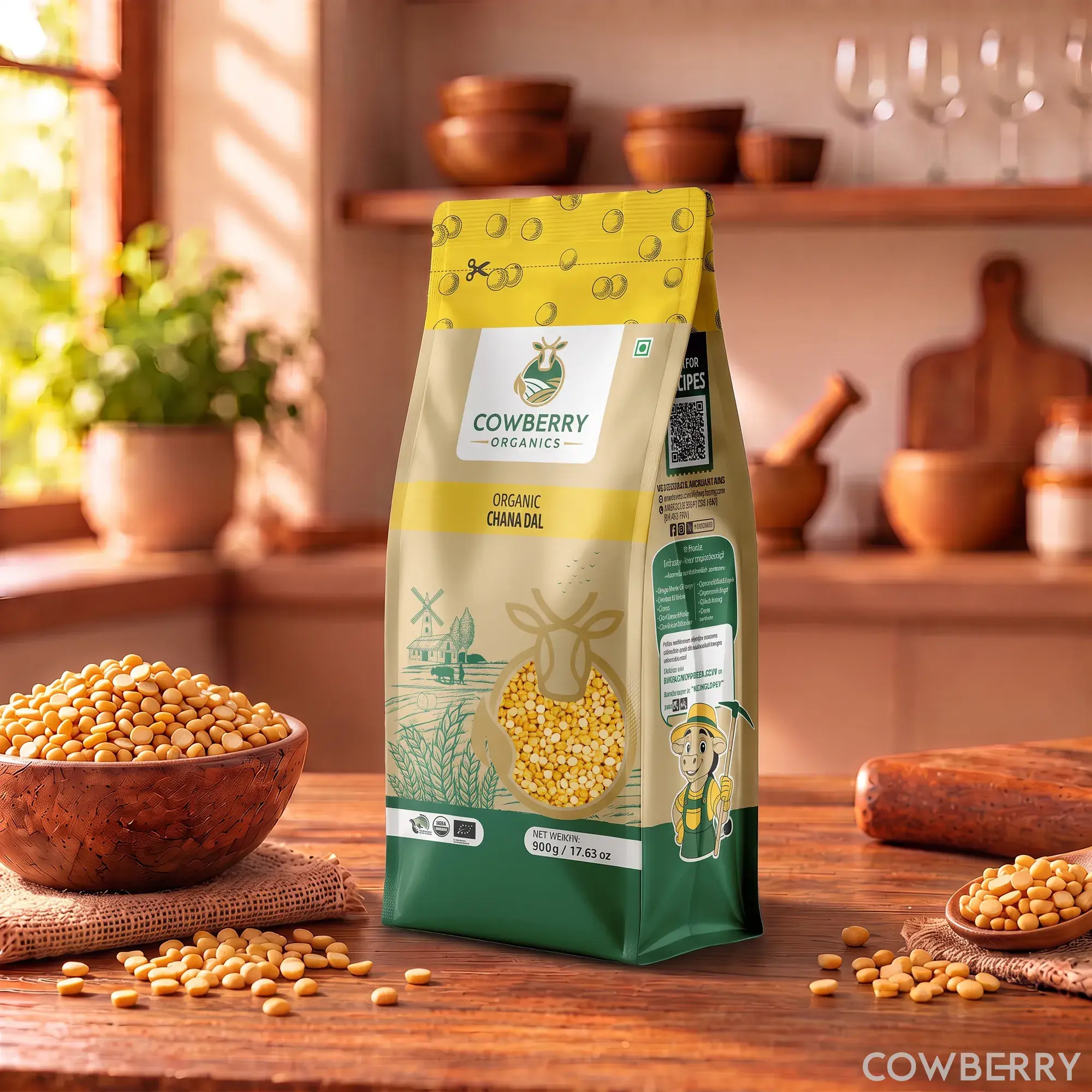
The everyday answer: eat chana dal the way Indian kitchens always have, cooked soft with a light tadka, over rice or with roti, one katori made from about 30 g of dry dal. Around that anchor sit the other forms of bengal gram: whole chickpeas soaked overnight and boiled for a snack, roasted gram as a dry bite, and besan or sattu as the flour form. Keep the plate near the guideline ratio of 3 to 1 cereal to pulse, keep the oil light, and the dal stays an everyday food rather than an occasion one.
The everyday ways: dal, khichdi and fry
The standard preparation is plain dal: soak if you can, pressure cook the split gram until soft, temper it with a little oil, cumin or mustard seeds and curry leaves, and eat it with rice or roti. A chana dal khichdi folds the dal into rice in one pot, the classic soft meal; a chana dal fry keeps the grains separate and lightly spiced, cooked with less water so the dal holds its shape. For all three, the dal is the protein and fibre of the plate: a katori from 30 g of dry dal carries about 6.5 g of protein and 4.5 g of fibre.
Soaked bengal gram, boiled
The whole gram's everyday form is the soaked and boiled chickpea. Soak kala chana overnight, 6 to 8 hours in cool water, boil it with a little salt until the grains give under a finger, and eat it as a snack or a salad base with onion, tomato and lemon. The ICMR-NIN dietary guidelines list roasted or boiled chickpeas among nutritious snack options, and boiled soaked chana is exactly that. The soaked-bengal-gram form keeps the full skin and its fibre, so a small bowl fills the gap between meals without a packet in sight. Soak times and the quick hot soak for the whole gram are in the chana dal soak guide.
Roasted gram, besan and sattu
The dry forms carry the gram into snacks and batters. Roasted chana, the whole gram dry-roasted to a crunch, is the handbag snack; the guidelines place roasted chickpeas among nutritious snack options, with the usual portion sense. Ground, the gram becomes besan, the chickpea flour of pakoras and chana dal laddu; the FSSAI standard defines besan as the product made by grinding gram. Roasted and ground again, it becomes chana sattu, the flour mixed with water as a summer drink; the FSSAI standard calls it roasted Bengal gram flour. Besan and sattu are gram, just dry-milled, so they carry the gram's protein into forms the dal cannot take.
How much bengal gram a day
The ICMR-NIN adult plate prints 85 g of pulses a day, and bengal gram in its forms can fill part of it. A katori of cooked chana dal, using 30 g of dry dal, is about 99 kcal with 6.5 g of protein and 4.5 g of fibre, and a fuller bowl from 50 g of dry dal is about 165 kcal with 10.8 g of protein, so one katori a day sits comfortably inside the 85 g allowance alongside the week's other dals. The same guidelines recommend pulses and cereals in roughly a 3 to 1 balance, since the two together give good quality protein; in practice that means a measured portion of rice or roti beside the dal, not a mountain of cereal under a spoon of dal. More on the dal's nutrition and kitchen notes is on the chana dal hub page.
Storage and practical notes
Dry chana dal keeps for months in a sealed jar in a cool, dry cupboard; the pulse beetle is the stored chickpea's known pest, and a tight lid is the simple answer. Wash the dal before soaking, and keep cooked dal in the fridge, where it stays good for up to two days. Gas is the last practical note: the gram's galacto-oligosaccharides are fermented by gut bacteria, and the wind some people feel early on settles within a few weeks of regular eating, so start with half a katori and build up. None of these notes change the main point: bengal gram is an everyday food, best eaten the everyday way, cooked and measured.
FAQs
How to eat bengal gram?
Start with the everyday dal: cook split chana dal soft and eat it with rice or roti, one katori from about 30 g of dry dal, with a light tadka. Soaked and boiled whole chickpeas make a snack, roasted gram a dry bite, and besan or sattu work in batters and drinks. Keep the oil light and the cereal to about 3 to 1.
Difference between bengal gram and chickpea?
None in the species: Bengal gram is one name for the chickpea, specifically the brown desi type. The large white chickpea is the kabuli type. So Bengal gram is a chickpea, and chana dal is Bengal gram split and husked; both the whole gram and the dal come from the same seed.
Is bengal gram and chana dal same?
Chana dal is one form of Bengal gram: the split, husked inner seed of the brown desi chickpea, the part that cooks soft. The whole gram with its dark skin is kala chana. Same plant, different forms; the dal cooks faster because the skin is gone.
Does chana dal have protein?
Yes: per IFCT 2017, 100 g of the dry dal carries 21.55 g of protein, and a katori cooked from 30 g of dry dal gives about 6.5 g of protein. Eating it with rice or roti in a cereal-pulse ratio of about 3 to 1 gives good quality protein.
Can chana dal be soaked overnight?
Yes: 6 to 8 hours in cool water overnight, then drain, and cook in fresh water. For the same evening, an hour at room temperature or a 30-minute hot soak works. The full times are in the chana dal soak guide.
Can chana dal cause gas?
Yes, in some people: the galacto-oligosaccharides in the gram are fermented by gut bacteria, which makes gas. Most people who eat pulses regularly adjust within a few weeks of steady intake. Small portions and steady intake help most people.
References
- Indian Food Composition Tables (IFCT) 2017, ICMR-National Institute of Nutrition
- Dietary Guidelines for Indians, ICMR-National Institute of Nutrition
- Thompson HJ. Improving human dietary choices through understanding of the tolerance and toxicity of pulse crop constituents. Curr Opin Food Sci, 2019
- Erler F, Ceylan F, Erdemir T, Toker C. Preliminary results on evaluation of chickpea, Cicer arietinum, genotypes for resistance to the pulse beetle, Callosobruchus maculatus. J Insect Sci, 2009
- FSSAI: Food Products Standards and Food Additives Regulations compendium (Version XXII, 02.03.2022): 2.4.4 Besan and 2.4.33 Roasted Bengal Gram Flour (Chana Sattu)
- UK Food Standards Agency: How to chill, freeze and defrost food safely
Shop this article
Keep reading
Green gram plant: crop, varieties and how it grows in India
Rajma vs lobia: difference, nutrition and which to choose
Rajma plant: how rajma is grown in India (it is not a tree)