by COWBERRY

6 minute read
Chana dal soaked overnight: how long and why to soak

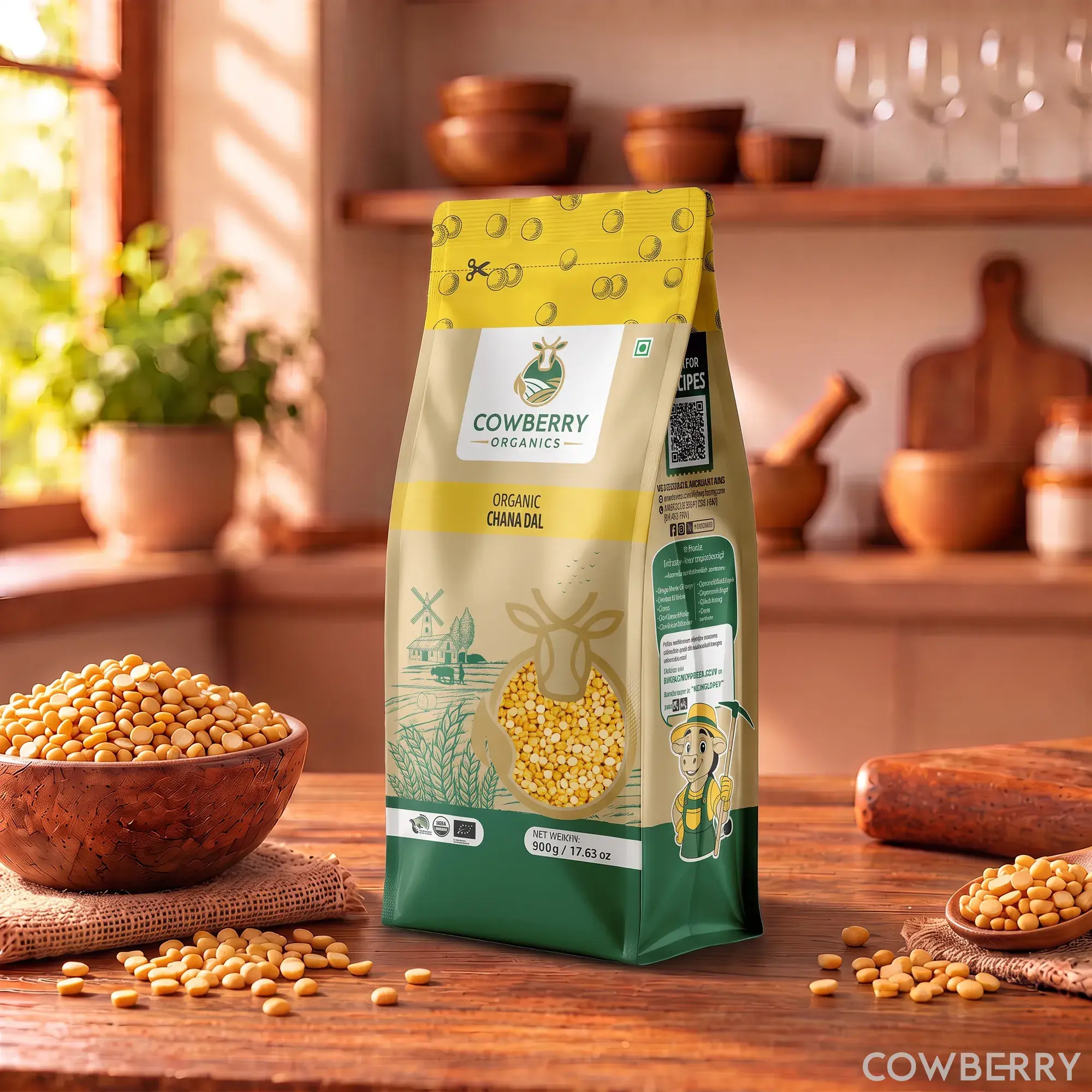
Chana dal soaked overnight is the classic prep: 6 to 8 hours in cool water softens the split gram for a quick, even cook the next morning. Shorter options exist, a quick hot soak included, and the dal even cooks unsoaked with more pot time. Exact times, what soaking changes and when it is worth doing follow; the chana dal guide covers it.
Soak times at a glance
Four numbers cover the kitchen. Overnight: 6 to 8 hours in cool water, the classic prep. Standard: one hour in room-temperature water. In a hurry: thirty minutes minimum, with the grain still softening a little during cooking. Quick hot soak: pour just-boiled water over the rinsed dal, cover it, and leave it for thirty minutes, then drain and cook; this is the chana dal quick soak for same-day meals. You can also skip the soak entirely: split chana dal cooks unsoaked with extra water and more pot time, at a slight cost in evenness. For whole chana the overnight 6 to 8 hours is the standard, and its quick soak is at least 3 hours in hot water, with water added generously.
Why soak chana dal at all
Soaking is preparation, not ritual. In Canadian pulses, researchers found that soaking lowers lectins and oxalates, the compounds that can interfere with nutrient use, but not phytic acid, and that cooking lowers the whole set far more; the ICMR-NIN guidelines add that the anti-nutritional factors in pulses are destroyed by boiling and pressure cooking. So the soak's real jobs are practical: it shortens the cooking time, lets the grains cook evenly rather than splitting unevenly, and means the dal needs less fuel and watching. There is a texture point too: a soaked dal cooks to a softer, silkier mash, which matters in dal and khichdi, and less in dishes where the grain should hold its shape.
The overnight soak, step by step
Chana dal soaked overnight follows a simple routine. Rinse the dal in two or three changes of water until the water runs clear. Cover it with cool water about two fingers above the grain, and leave it at room temperature for 6 to 8 hours; in hot weather, keep the bowl in the fridge so the water stays fresh. In the morning the grains look plump and the water slightly cloudy. Drain the water away and rinse once more, then cook in fresh water; the soak water carries the dust and some of the compounds the soak is meant to remove, so it is not reused. The dal then cooks noticeably faster than an unsoaked batch would, in a pressure cooker or an open pot, whichever you normally use.
The quick hot soak and the unsoaked route
When the plan changes mid-morning, the chana dal quick soak is thirty minutes in hot water: put the rinsed dal in a heatproof bowl, pour water just off the boil over it, cover, and wait thirty minutes before draining and cooking. A one-hour soak in room-temperature water sits between the two, and thirty minutes in room-temperature water is the minimum for a token head start. Cooking without a soak works because the split grain is small and husked: rinse it, add more water than the recipe asks, and give it extra pot time, tasting for softness. Whole chana benefits more from the soak than the split dal does, so give it the longer times: 6 to 8 hours in cool water, or at least 3 hours in hot water for the quick soak.
What changes and what does not
Soaking changes the grain's behaviour in the pot, not its identity in the bowl. The soaked dal cooks faster and more evenly, and the cooked dal is softer; the nutrition figures on the pack are for the dry dal, and the soak water is drained away. The soak also does not turn the dal into a different food. Gas is its own topic: most people who eat pulses regularly adapt within a few weeks of steady intake. Once it is in the pot, the guidelines' folate point still applies: boil it with just enough water, without having to drain the water, to keep the folate in the pot.
Soak for the dish, not out of habit
Match the soak to the dish. Soft dal with rice, khichdi and soups want the overnight or hot soak, because an evenly cooked, mashable grain is the point. Dishes where the dal should keep its shape, like a chana dal fry or an upma-style preparation, want the one-hour soak so the grains soften without turning to paste. The unsoaked route suits a pressure-cooked khichdi on a busy evening. Once the dal is cooked, eat it within a day or two, kept covered in the fridge. More ways to use the soaked and cooked dal are in the how to eat bengal gram guide, and the dal's nutrition and kitchen notes are on the chana dal hub page.
FAQs
Can chana dal be soaked overnight?
Yes. Rinse the dal, cover it with cool water, and leave it 6 to 8 hours; in hot weather keep the bowl in the fridge. Drain the water and cook in fresh water. The overnight soak gives the fastest, most even cook of the three standard times.
Should chana dal be soaked overnight?
It depends on the day. Overnight soaking suits a morning cook and gives the most even result; for the same day, one hour at room temperature or a 30-minute hot soak covers it. Split chana dal also cooks unsoaked with extra water and pot time. If your meal has whole chana in it, the longer soak is worth it.
Why soak chana dal?
To shorten the cooking time and cook the grains evenly. In pulses, soaking lowers lectins and oxalates, the compounds that can interfere with nutrient use, though not phytic acid; cooking lowers all of them far more. A soaked dal also mashes to a softer texture, which suits dal and khichdi.
Can chana dal be cooked without soaking?
Yes: the split, husked grain is small enough to cook unsoaked. Rinse it, add more water than usual, and give it extra pot time, checking for softness. The soak is about speed and evenness, not safety; the dal is always cooked through before eating.
Do i need to soak chana dal before cooking?
No, soaking is optional for the split dal. It shortens the cooking, evens the texture and makes a softer mash, so it is worth an hour when you can spare it, and worth the overnight soak for a morning cook. Unsoaked, the same dal cooks with more water and time.
What is bengal gram?
Bengal gram is the chickpea's English name, and chana dal is the desi brown seed split and husked, which is why it cooks fast. The whole gram with the dark skin is kala chana. It is the same seed in three forms: whole, split and flour.
References
- Dietary Guidelines for Indians, ICMR-National Institute of Nutrition
- Thompson HJ. Improving human dietary choices through understanding of the tolerance and toxicity of pulse crop constituents. Curr Opin Food Sci, 2019
- Shi L, Arntfield SD, Nickerson M. Changes in levels of phytic acid, lectins and oxalates during soaking and cooking of Canadian pulses. Food Res Int, 2018
- UK Food Standards Agency: How to chill, freeze and defrost food safely
Shop this article
Keep reading
Green gram plant: crop, varieties and how it grows in India
Rajma vs lobia: difference, nutrition and which to choose
Rajma plant: how rajma is grown in India (it is not a tree)