by COWBERRY

6 minute read
Green tea vs black coffee: benefits, taste and which to choose

Green tea vs black coffee is settled by one number the guidelines print: tea holds 30 to 65 mg of caffeine in a 150 ml cup, brewed coffee holds 80 to 120 mg, and both count against the same 300 mg tolerable daily limit. Nutrition, taste, cost and what the weight-loss evidence shows follow, with the tea's own pages gathered on the green tea hub.
Verdict in three lines
- Caffeine: black coffee is the stronger cup. Brewed coffee prints 80 to 120 mg per 150 ml cup against tea's 30 to 65 mg, and the 300 mg tolerable daily limit watches both.
- Taste: green tea is the gentler cup. A delicate, clean leaf tea, best drunk plain; black coffee is coffee without milk, and the guidelines add a caution for excess.
- Weight loss: neither wins. The Cochrane review found green tea preparations gave small, not statistically significant loss, and coffee has no weight-loss finding on this page, so neither drink gets the claim.
Green tea vs coffee: side by side
| Point | Green tea | Black coffee |
|---|---|---|
| What it is | Minimally processed leaf of Camellia sinensis, steeped | Roasted coffee, brewed from grounds or dissolved from instant powder |
| Caffeine per 150 ml cup | 30 to 65 mg (ICMR-NIN) | 80 to 120 mg brewed; 50 to 65 mg instant (ICMR-NIN) |
| How it is made | One teaspoon at 80 to 85 C for 2 to 3 minutes, never boiling | Grounds brewed in hot water, or instant powder stirred in |
| Milk | Best without, per the guidelines | Black means no milk by definition |
The caffeine rows are the whole practical difference: the same 150 ml cup carries two very different doses, which is why the count, not the drink, decides how much fits a day. The coffee side, from beans to brewing, lives on the coffee hub.
Nutrition: coffee powder and the cup
The nutrition table below shows one column on purpose: a USDA record exists for dry coffee powder, but none for the dry green tea leaf. Per 100 g, the USDA entry for dry instant coffee powder lists 353 kcal, 12.2 g of protein, 75.4 g of carbohydrates, 0.5 g of fat and no fibre, with 4.41 mg of iron, 141 mg of calcium, 327 mg of magnesium and 3540 mg of potassium. IFCT 2017 carries no green tea entry, and USDA FoodData Central lists only brewed green tea, so the leaf has no column to compare; the fair comparison is the cup.
What the guidelines add about the cup: tea, green or black, contains theobromine and theophylline, which are known to relax arteries, and flavonoids and other antioxidant polyphenols, which may reduce the risk of coronary heart disease and stomach cancer, benefits best obtained without milk. Both drinks share the tannin caution, an hour away from meals for iron's sake, and a day kept inside the 300 mg caffeine limit. On safety, the 2018 review's liver concerns came from concentrated, catechin-rich preparations taken as large single doses, not from brewed tea, and neither drink on this page is an extract.
| Nutrient | Black coffee (instant powder, dry) |
|---|---|
| Energy (kcal) | 353 |
| Protein (g) | 12 |
| Fat (g) | 0.5 |
| Carbohydrates (g) | 75 |
| Dietary fibre (g) | 0 |
| Iron (mg) | 4.4 |
| Calcium (mg) | 141 |
| Magnesium (mg) | 327 |
| Potassium (mg) | 3540 |
| Sodium (mg) | 37 |
| Zinc (mg) | 0.3 |
| Folate (mcg) | 0 |
| Vitamin C (mg) | 0 |
Per 100 g raw, edible portion. Composition: USDA FoodData Central (SR Legacy), FDC ID 171893, NDB 14214. — means not reported. These are average values for the food; the label on a pack gives the values for that product.
Taste and preparation
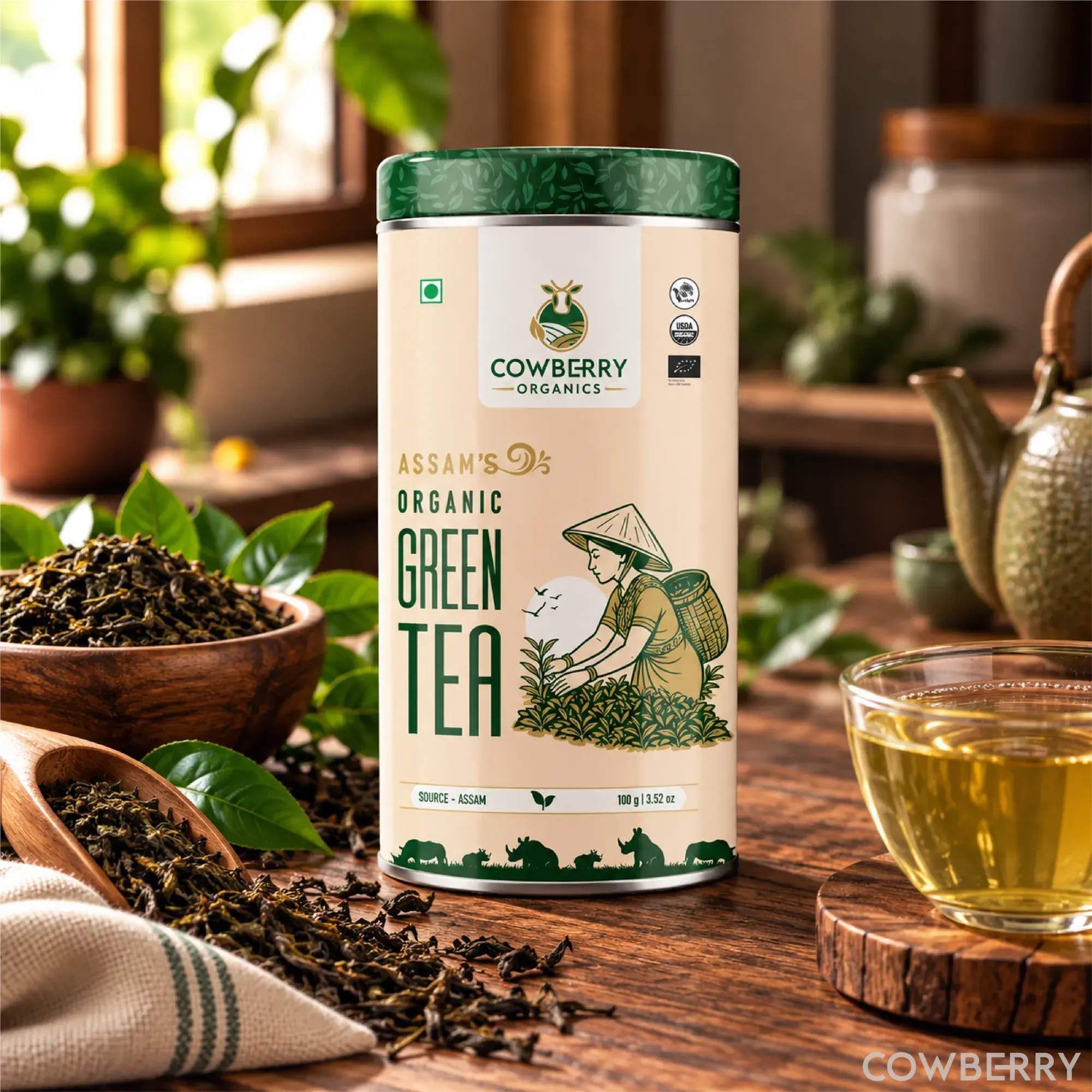
Green tea brews from whole young leaves, COWBERRY's from organic gardens in Assam, minimally processed; the cup is delicate, with a clean, full character, made from one teaspoon at 80 to 85 C for 2 to 3 minutes, never boiling water, and drunk plain. Black coffee is coffee without milk, made by brewing roasted grounds or dissolving instant powder, and its caffeine is the point for many.
The guidelines give each drink its own caution: excessive consumption of coffee is known to increase blood pressure and cause abnormalities in heartbeat, and excessive tea is to be avoided for its caffeine content. Taken inside the 300 mg limit, either drink is a plain, unsweetened cup, and the guidelines ask for moderation rather than any cup count.
Cost and where each fits
Cost depends on the brand, the pack and how much you use per cup, so no price comparison is made here. Coffee's stronger caffeine dose suits a firmer lift, tea's gentler one a lighter lift, and both belong an hour away from meals.
Where each drink fits the day: black coffee for the firmer lift; green tea for the lighter lift and the slow cup; and the tea leaves themselves in food and iced tea, collected on the green tea recipes page. The broader comparison that brings chai in too is on the coffee vs tea page.
Green tea vs black coffee: which is better for you
- Caffeine-sensitive or evening drinkers: green tea, at 30 to 65 mg a cup.
- Needing the stronger cup: black coffee, at 80 to 120 mg, counted inside 300 mg.
- Watching weight: for the green tea vs black coffee for weight loss question, the Cochrane result above is the whole answer, with the full evidence on the green tea for weight loss page.
- Watching iron: both drinks share the tannin caution, so both sit an hour from meals.
- Both in one day: a tea and a brewed coffee together print 110 to 185 mg of caffeine, inside the limit; if you are pregnant, ask your doctor about caffeine before stacking cups.
The tea side of every comparison here sits on the green tea hub.
FAQs
Why green tea is better than coffee?
The guidelines crown neither drink. What they do print is a gentler caffeine for tea: 30 to 65 mg in a 150 ml cup, against 80 to 120 mg for brewed coffee, so a tea drinker gets less stimulation per cup and more room inside the same 300 mg tolerable daily limit.
Difference between green tea and black coffee?
Different plants and different cups. Green tea is the steeped, minimally processed leaf of Camellia sinensis; black coffee is coffee drunk without milk. Per 150 ml cup, tea prints 30 to 65 mg of caffeine and brewed coffee 80 to 120 mg, and each carries its own caution in the guidelines.
Does green tea have caffeine?
Yes, and the number is printed: 30 to 65 mg in a 150 ml cup of tea, which sits below the 80 to 120 mg printed for brewed coffee and beside instant coffee's 50 to 65 mg. All three count toward the same 300 mg tolerable daily limit, with moderation the guidelines' advice.
Is green tea or black coffee better for weight loss?
Neither is shown to be. For green tea, the Cochrane review found a small weight loss that was not statistically significant; for coffee, this page cites no weight-loss finding, so neither earns a claim. The full evidence sits on the green tea for weight loss page.
Can I drink green tea and black coffee on the same day?
Yes, inside the limit. One tea and one brewed coffee together print 110 to 185 mg of caffeine at the ranges above, within the 300 mg tolerable daily limit, leaving room for another cup of tea. Keep both an hour from meals, and if you are pregnant, ask your doctor about caffeine first.
References
- Dietary Guidelines for Indians, ICMR-National Institute of Nutrition
- Jurgens TM, Whelan AM, Killian L et al. Green tea for weight loss and weight maintenance in overweight or obese adults. Cochrane Database Syst Rev, 2012
- Hu J, Webster D, Cao J et al. The safety of green tea and green tea extract consumption in adults - Results of a systematic review. Regul Toxicol Pharmacol, 2018
- USDA FoodData Central
Shop this article
Keep reading

Coffee vs tea: caffeine, benefits and which is better
Coffee calories per 100g: powder, beans and filter coffee
Coffee in pregnancy: how much caffeine is safe