by COWBERRY

9 minute read
10 benefits of fenugreek seeds (and its side effects)

Fenugreek seeds benefits rest on what the seed actually holds: 25.41 g of protein and 47.55 g of fibre per 100 g (IFCT 2017), plus blood-glucose findings from a 2014 meta-analysis that pooled ten trials. Ten benefits follow, each with its source, then what has not been shown, side effects, and how much a day. The fenugreek (methi) hub covers the plant.
Methi dana benefits: the ten, each with its source
Ten benefits follow, numbered, and each one carries the number or the study behind it. One and two are composition facts from IFCT 2017; three to six are clinical findings; seven to ten are the minerals, the B vitamin and the fats. None of them is a reason to stop a medicine, and the later sections say what is not shown.
1. Protein: 25.41 g per 100 g
Fenugreek seeds carry 25.41 g of protein per 100 g, roughly 1.8 times the cumin-seed figure and 2.4 times coriander's. The ICMR-NIN Dietary Guidelines describe proteins as performing a wide range of functions in the body, with needs rising during growth, pregnancy, illness and stress. A 4 g teaspoon adds about 1.0 g of protein to a meal: a contribution, not a course.
2. Fibre: 47.55 g per 100 g, nearly half the seed
Almost half of every seed is dietary fibre. The guidelines say dietary fibre delays and retards absorption of carbohydrates and fats, and adds to the satiety value; a 2008 review of traditional Indian spices calls fenugreek seeds a rich source of soluble fibre used in Indian cuisine. One teaspoon holds 1.9 g of it.
3. Fasting blood glucose: 0.96 mmol/L down in ten trials
In a 2014 meta-analysis in Nutrition Journal, fenugreek intake moved fasting glucose down by 0.96 mmol/L (95% CI -1.52 to -0.40, ten trials). The glucose findings showed up only where people with diabetes were given medium or high doses; the summary names the doses only as medium or high, and the trials were mostly of low methodological quality.
Blood glucose and lipids: the findings and their limits
4. Two-hour postload glucose: 2.19 mmol/L lower in seven trials
The same meta-analysis recorded two-hour postload glucose 2.19 mmol/L lower than control (95% CI -3.19 to -1.19, seven trials). Here too, the significant effects came from the medium- and high-dose studies, all in people with diabetes, and results varied widely between trials.
5. HbA1c: 0.85 percentage points lower across three trials
HbA1c, the longer-horizon blood-sugar marker, was 0.85 percentage points lower (95% CI -1.49 to -0.22, three trials), a figure the authors report across the three trials that measured it. The authors take the trials as supporting a beneficial effect of fenugreek seeds on blood-sugar control in people with diabetes, and they ask for better-designed trials. People on blood-glucose medicines should tell their doctor before making fenugreek a daily habit, and no spice replaces a prescribed medicine.
6. Blood glucose and lipids: the 2008 overview
A 2008 overview in the Asia Pacific Journal of Clinical Nutrition describes the seeds as reducing blood glucose and lipids, and calls them a food adjuvant for diabetes. The wording is from 2008; the 2014 meta-analysis above is the sharper, more specific evidence, and it carries the limits already stated.
Iron, minerals, folate and the omega fats
7. Iron: 8.47 mg per 100 g, absorbed better with vitamin C
Fenugreek seeds provide 8.47 mg of iron per 100 g. Plant iron is taken up better when vitamin C shares the meal: the guidelines list guava, pineapple and citrus fruits, plus coriander-and-green-chilli chutneys, as foods that lift iron absorption from plant sources eaten alongside a regular meal, and they ask that tea be kept at least an hour away from a meal since tea binds the meal's iron and makes it unavailable. A teaspoon contributes 0.3 mg.
8. Magnesium 167 mg, potassium 891 mg per 100 g
These are the seed's large mineral figures. The guidelines describe minerals as governing nerve cell transmission, acid/base and fluid balance, and enzyme and hormone activity. A teaspoon carries 6.7 mg magnesium and 35.6 mg potassium; small shares of the day, which is the honest scale for a spice.
9. Folate: 51.11 mcg per 100 g, above cumin and coriander
Folate sits at 51.11 mcg, clearly above cumin's 27.79 mcg and coriander's 22.07 mcg. The guidelines call folate a B vitamin essential for multiplication and maturation of red cells. A teaspoon gives about 2.0 mcg.
10. Omega fats: on the guidelines' n-3 and n-6 list
The Dietary Guidelines name flax seeds, perilla and fenugreek seeds as good sources of both n-6 and n-3 PUFAs. The seed's fat total is small, 5.72 g per 100 g, and a teaspoon holds 0.2 g of fat, so this benefit is a composition fact rather than a large daily share.
What has not been shown: hair, lactation and weight loss
Three popular methi claims get no number on this page, because none of the fenugreek studies in the references shows them. Hair: nothing in the references shows fenugreek seeds growing hair or regrowing it; the hair packs and rinses are home tradition, not findings. Breast milk: nothing in the references shows fenugreek increasing milk supply. Weight loss: nothing in the references shows the seeds causing weight loss; the fibre figure above may add to a meal's satiety value, which is not the same as a weight-loss result.
There is a general reason to expect little from any spice at kitchen amounts. Opara and Chohan, writing in the International Journal of Molecular Sciences in 2014, observe that culinary herbs and spices, eaten in small quantities with other foods, leave their true health benefit hard to pin down. A teaspoon of methi dana is exactly that situation.
Fenugreek seeds side effects: what the sources say
None of the fenugreek references prints a side-effect list for fenugreek seeds, so this page invents none. What the references do support is a real blood-glucose effect at trial doses, and that is where caution belongs. Anyone taking blood-glucose medicines should talk to their doctor before making fenugreek a daily habit; spices and supplements never take the place of prescribed medicines. Ask your doctor or dietitian whether fenugreek fits your plan.
Pregnancy and breastfeeding: the references do not address fenugreek in pregnancy or while nursing, so ask your doctor before adding it deliberately. And do not chase the trial numbers with heaped spoons: the trials gave fenugreek at medium or high doses under study settings; a home spoon is not that. The guidelines list fenugreek among seeds to eat three to four times a week or more, and set no amount.
How much fenugreek seeds per day
No grams-per-day figure is printed in any of the references, so this page sets none. The trial doses are described only as medium or high, and the guidelines' habit is a rhythm, not a measure: fenugreek seeds, like amaranth, flax, chia and basil seeds, have health promoting effects and can be consumed at least three to four times a week.
For the arithmetic of a real portion: one level teaspoon (4 g) holds about 9.4 kcal, 1.0 g of protein, 0.4 g of carbohydrate, 1.9 g of fibre and 0.3 mg of iron. That is the kitchen scale; anything beyond culinary amounts is a conversation for your doctor or dietitian. The fenugreek (methi) hub covers the plant beyond the seed.
How to eat fenugreek seeds
Three everyday forms are the seed's usual kitchen uses: soak a teaspoon (4 g) of seeds overnight and chew the softened seeds with their soak water, the methi dana water method; temper a quarter teaspoon (1 g) in hot oil at the start of a dal or sabzi; or roast and grind seeds for doughs and masalas, the fenugreek powder method. Step-by-step methods live on the fenugreek seeds how to eat page.
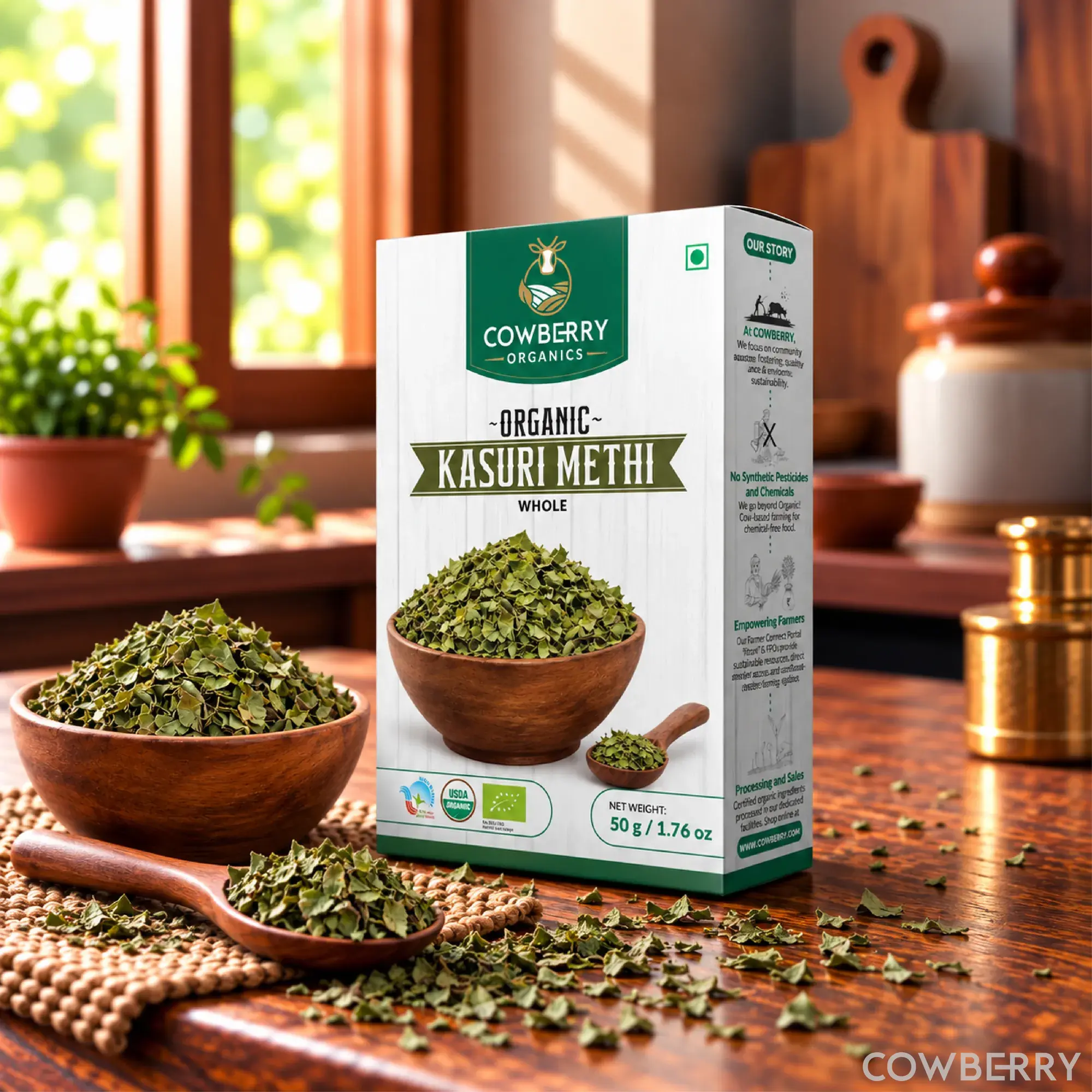
The numbers on this page are for the seeds; the dried leaves, kasuri methi, carry no measured benefits in the references and are a flavour (see difference between kasuri methi and methi). The diabetes findings with their doses and limits are set out on is kasuri methi good for diabetes, and the full per-100 g table is on fenugreek seeds nutrition per 100g.
FAQs
Which methi dana is best for weight loss?
None of the fenugreek studies in the references shows any methi dana causing weight loss, so this page does not rank seeds for it. What the references show is 47.55 g of fibre per 100 g and the guidelines' statement that dietary fibre increases the satiety value of a meal; feeling full is not the same as losing weight. Eat the seed in kitchen amounts with the rest of the plate; the whole meal, not one spice, does the work.
Is fenugreek seeds good for hair?
None of the fenugreek studies in the references shows fenugreek seeds improving hair, so this page makes no hair claim. Methi hair masks and rinses belong to home practice, and the references have nothing to say about them. IFCT 2017 shows protein and minerals in the seed, which is not a hair benefit; for hair concerns, a dermatologist is the right address.
Why fenugreek seeds good for hair?
Methi hair masks are home practice, and none of the fenugreek studies in the references shows a measured hair effect, so this page gives no further reason. The honest reading is in the section above: the seed holds protein and minerals, and a hair result is not shown in the references.
How much fenugreek seeds per day?
No per-day amount is printed in any of the references, so this page gives none. The trials describe their doses only as medium or high, and the guidelines list fenugreek among seeds to eat three to four times a week or more. In kitchen terms, a teaspoon (4 g) holds about 9.4 kcal and 1.9 g of fibre; beyond culinary amounts, talk to your doctor or dietitian.
What are the side effects of fenugreek seeds?
None of the fenugreek references prints a side-effect list, so this page writes no list. The caution the references do support is about blood glucose: fenugreek lowered it at trial doses, so anyone on blood-glucose medicines should check with their doctor before making fenugreek a daily habit, and prescribed medicines keep their place. In pregnancy and while breastfeeding, ask your doctor first.
Does fenugreek increase breast milk?
None of the fenugreek studies in the references shows fenugreek increasing milk supply, so this page makes no lactation claim. The belief is widespread in home practice, and the references simply do not address it. If you are breastfeeding and considering fenugreek, ask your doctor or a lactation specialist rather than leaning on a spice.
References
- Indian Food Composition Tables (IFCT) 2017, ICMR-National Institute of Nutrition
- Dietary Guidelines for Indians, ICMR-National Institute of Nutrition
- Neelakantan N, Narayanan M, de Souza RJ et al. Effect of fenugreek (Trigonella foenum-graecum L.) intake on glycemia: a meta-analysis of clinical trials. Nutr J, 2014
- Opara EI, Chohan M. Culinary herbs and spices: their bioactive properties, the contribution of polyphenols and the challenges in deducing their true health benefits. Int J Mol Sci, 2014
- Krishnaswamy K. Traditional Indian spices and their health significance. Asia Pac J Clin Nutr, 2008
Shop this article
Keep reading
Coriander water benefits: what dhania water actually does
Peanuts in Hindi (moongfali): groundnut names in Indian languages
Coriander vs cilantro: are they the same herb?