by COWBERRY

6 minute read
How to make fenugreek powder at home and when to use it

Fenugreek powder is roasted methi dana, ground fine: a two-step home job that takes ten minutes of attention and a cool grinder. Made this way it is fresher than a jar that sat on a shelf, and one teaspoon (4 g) of seeds becomes about a teaspoon of powder ready for thepla, paratha and masala. The fenugreek (methi) hub covers the plant.
Roast first, grind second: the method
Take the methi dana you need, from a teaspoon for a single dough up to a small jar's worth, and put it in a dry kadhai or tawa on the lowest flame. Stir without stopping. In two to four minutes the seeds deepen from yellow-brown to reddish-brown and release a warm, nutty smell; take the pan off the heat at that point, because a few seconds more turns them black and harshly bitter.
Spread the roasted seeds on a plate and let them cool completely. Grinding warm seeds steams the inside of the grinder and makes the powder cake, so this wait matters. Then grind in short pulses, not one long run, opening the jar if it feels warm. Sieve for a fine powder if you like, jar it only once it is fully cool, and wipe the grinder dry afterwards.
Storage: how long and how well
Home-ground methi powder goes into a dry, airtight jar, stored cool and away from light and from the steam of the cooking hob. Spoon it out dry; a wet spoon brings mould and lumps. Neither IFCT 2017 nor COWBERRY's product pages prints a shelf-life figure for home-ground powder, so the practical rule is to grind small batches and use them within a few months, while the aroma is still strong.
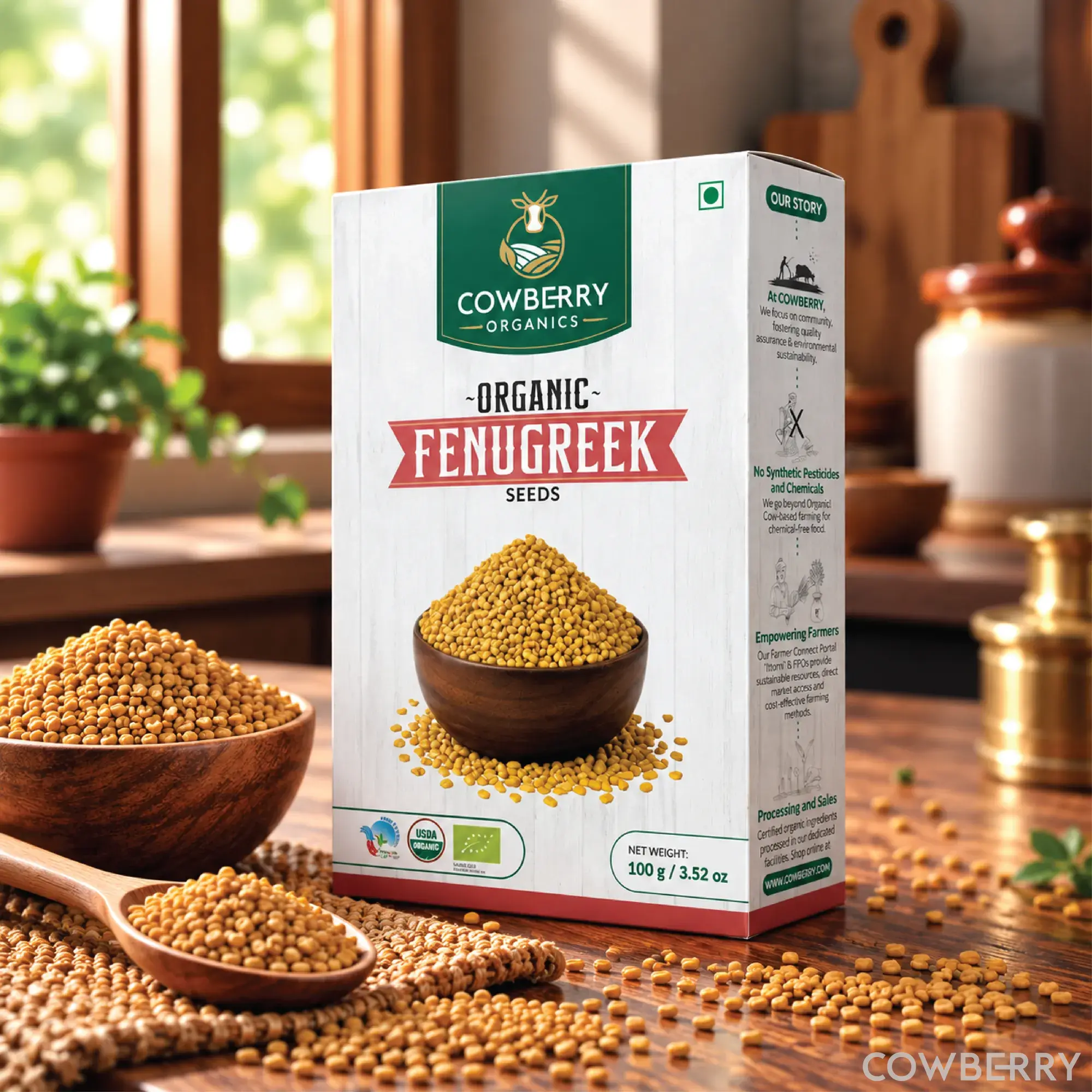
Whole seeds keep their aroma far longer than powder, which is exactly why grinding at home beats buying it ready-ground. The whole methi dana you start from is sold in 100 g and 250 g packs, cleaned and packed whole, and it stays fragrant in its jar for the season.
Seeds vs powder: the difference, and which to buy
The difference between fenugreek seeds and powder is one stage of work: the powder is the seed, roasted and ground, nothing added and nothing removed. The two forms suit different jobs. Seeds temper in hot oil, soak overnight and keep their aroma long; powder stirs straight into doughs and dry masalas but fades sooner, so it is made in small amounts.
Which is better depends on the shelf, not the seed. If you temper and soak, buy the seeds whole. If the only use you have is thepla dough, powder is the convenient form. The freshest route is the one this page describes: whole seeds from the pack, roasted and ground as needed, and the fenugreek hub links the seed's other pages, from how to eat it to what the leaves are.
Where methi dana powder goes
Doughs first: half to one teaspoon kneaded into thepla or paratha flour gives the bread its bitter-green note, and the roasting the dough then gets on the tawa rounds the flavour. Dry masalas second: sambar podi, pickle masalas and mixed spice blends take a spoonful where whole seeds would stay gritty. Third, gravies and kadhi: a pinch stirred in near the end adds the methi note without a tempering.
One use this page will not write about: hair packs made with methi powder are a home tradition, but no source in the references supports any claim about them, so the powder here stays in the kitchen. The other ingredient people confuse it with, kasuri methi, is not this powder at all; the difference between kasuri methi and methi page sorts the two out.
What a teaspoon of powder holds, and a quick thepla dough
A teaspoon of powder ground from one teaspoon (4 g) of seeds carries the seed's numbers: about 9 kcal, 1 g of protein, 0.4 g of carbohydrate, 1.9 g of fibre and 0.3 mg of iron. The fibre is the part worth naming, and the whole-seed story, with soaking and tempering methods, is on the fenugreek seeds how to eat page.
A quick thepla dough in one line: for a dough for four, knead whole-wheat flour with a teaspoon of this powder, salt, chilli, a spoon of oil and water to a soft dough, rest it briefly, roll thin and cook on a tawa. Thepla is where Indian kitchens usually reach for this powder.
FAQs
How kasuri methi is made?
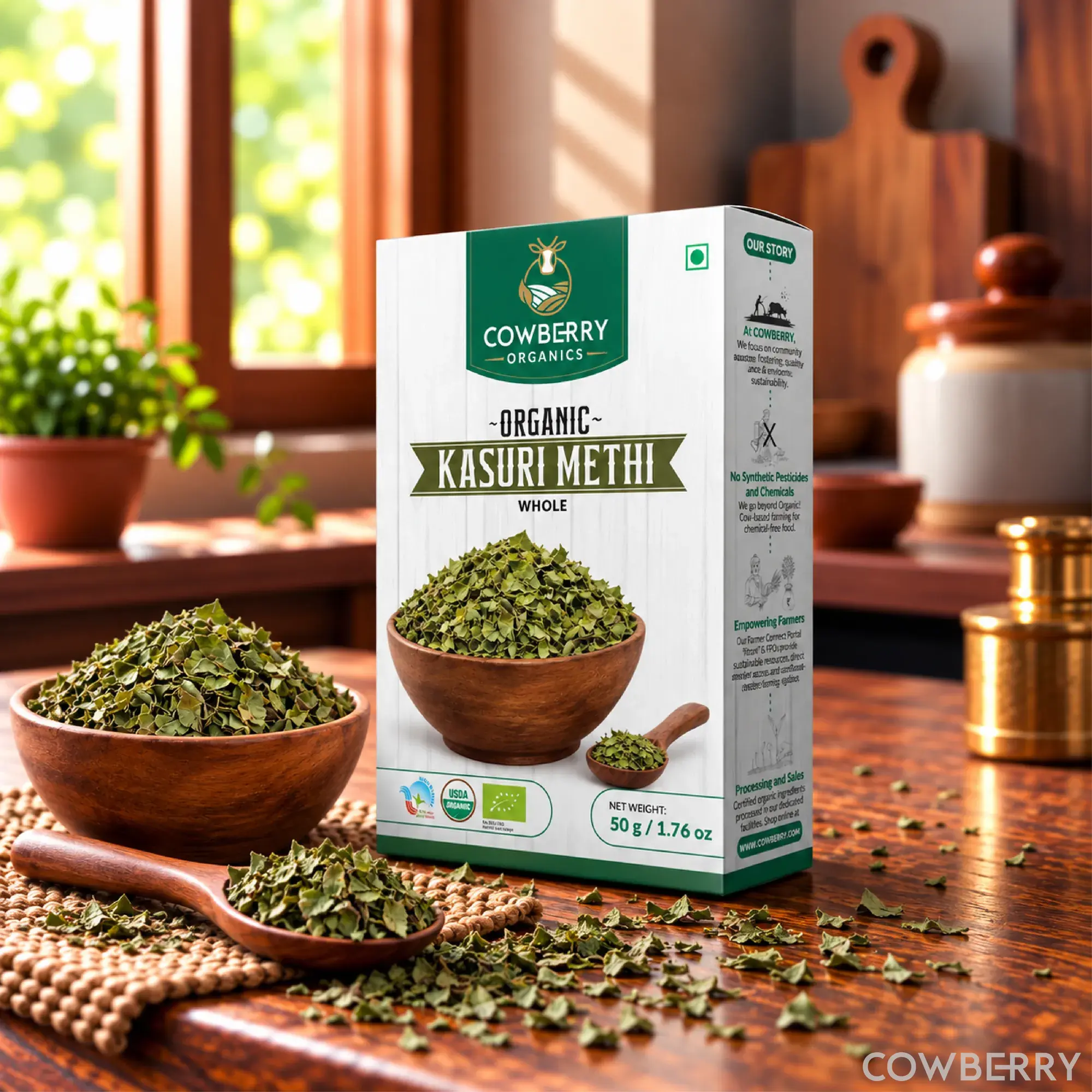
Kasuri methi is not made from the seeds at all: it is fenugreek leaves, harvested at peak freshness and dried, then packed crumbled (the pack facts describe the leaves as grown in Rajasthan and naturally dried). Methi dana powder, by contrast, is roasted fenugreek seeds ground fine. Two products from two parts of the same plant.
Does dried fenugreek leaves expire?
Every pack carries its own date, and the storage rules are the same as for any dried herb: airtight, cool, dry, away from light. The aroma and green colour fade before anything dangerous happens, so old kasuri methi loses its reason to exist in the kitchen. Neither IFCT 2017 nor COWBERRY's product pages prints a shelf-life figure.
Fenugreek seed or powder, which is better?
For tempering and soaking, the whole seed, which also keeps its aroma far longer. For doughs and dry masalas, the powder, which mixes in without a grinding step. The practical answer is both: keep the seeds whole in a jar and grind a small batch of powder every few weeks, which is fresher than any ready-ground pack.
How much fenugreek powder per day?
IFCT 2017 and COWBERRY's product pages print no daily amount, so this page gives none. In cooking it goes by the spoon into doughs and masalas; a teaspoon of powder ground from 4 g of seeds carries about 9 kcal and 1.9 g of fibre. If you eat methi for blood sugar reasons, the question belongs to your doctor.
How long does homemade methi powder last?
Kept in a dry, airtight jar in a cool place, it stays fragrant for a few months; after that the aroma fades and it is time to roast and grind a fresh batch. Neither IFCT 2017 nor COWBERRY's product pages prints a shelf-life number for home-ground powder, which is why grinding small batches and using them up is the rule.
What is methi dana powder called in Hindi?
Methi dana powder, or simply methi powder; methi is the Hindi name for fenugreek and dana means the seed. The rest of the plant's names, from menthe in Kannada to venthayam in Tamil, are on the fenugreek names page.
References
Shop this article
Keep reading
Coriander water benefits: what dhania water actually does
Peanuts in Hindi (moongfali): groundnut names in Indian languages
Coriander vs cilantro: are they the same herb?