by COWBERRY

7 minute read
Fenugreek seeds: how to eat, soak and use them daily

Fenugreek seeds, how to eat them without the raw bitterness: soak, temper, roast, sprout or grind. Raw methi dana is hard and sharp; heat or water tames it. The five ways below use the amounts an Indian kitchen actually cooks with, and each ends in a dish. The fenugreek (methi) hub covers the plant.
Raw, soaked or roasted: the short answer
Soak methi dana overnight when you want to chew the seeds or drink the soak water. Temper it in hot oil when a dal or sabzi starts with a tadka. Roast and grind it when doughs and dry masalas are the destination. Sprout it when you want the freshest, least bitter form. Raw and dry, the seeds are edible but hard and sharply bitter, and none of the ways below uses them that way.
One number covers most of what follows: a level teaspoon of methi dana weighs 4 g, and the five ways below all start from that. If the question is really about the dried leaves, that is a different ingredient, explained on the difference between kasuri methi and methi page.
Soaked overnight: the everyday way
Put one teaspoon (4 g) of seeds in a small bowl and cover them with room-temperature water, about a glass (250 ml), and leave them overnight or for six to eight hours. By morning the seeds have swollen, turned soft and released a little of their bitterness into the water. Chew the softened seeds on their own or fold them into curd, and the soak water itself is the drink described on the methi dana water benefits page.
What that teaspoon holds: about 9 kcal, 1 g of protein, 0.4 g of carbohydrate, 1.9 g of fibre and 0.3 mg of iron. The fibre is most of the story, and the guidelines quote in the last section explains why it matters. Use the soaked seeds soon, and start with a smaller amount if you have never eaten them this way.
Tempered in hot oil: the tadka way
For dal, sambar, kadhi and sabzi, the seeds go in first. Heat the oil, add a quarter teaspoon (1 g) of methi dana, and take the pan off the flame as soon as the seeds crackle and turn a shade darker. They burn in seconds, and a burnt seed turns the whole dish bitter, so the moment you smell the change, the dal water or vegetables go in on top of it.
The seeds do not soften in a tempering the way they do in a soak; they stay as small bitter-sweet bites inside the dal, and that is the point. Keep the amount at a quarter teaspoon per family-sized pot until you know how much bitterness your household likes.
Roasted and ground: for thepla, paratha and masala
Dry-roast the seeds on a low flame until they deepen in colour and smell toasted, about two to four minutes, then cool and grind them into powder. That powder goes into thepla and paratha doughs, into dry masalas and pickles, and it keeps in an airtight jar. The full method, with quantities and storage, is on the fenugreek powder page.
Roasting cuts the raw sharpness and brings out the warm, nutty side of the seed, so this is the form to reach for when the dish bakes or fries the spice with the flour rather than tempering it in oil. One teaspoon (4 g) of seeds yields roughly a teaspoon of powder once ground.
Sprouted at home: the freshest way
Fenugreek seeds sprout readily in the kitchen. Soak one teaspoon (4 g) of seeds overnight, drain them in the morning, and leave them in a strainer or tied loosely in a damp muslin cloth for a day or two, rinsing once or twice. Tiny pale shoots appear, and the sprouted seeds taste greener and far less bitter than raw ones.
Use the sprouts in salads, raitas and chutneys, or stir them into a sabzi in the last minutes of cooking. This is a plain home-kitchen method; the seeds themselves are the fenugreek plant's next generation, which is also why they sprout so willingly. Keep the sprouts covered in the fridge, rinse them before use and eat them soon; throw them out if they turn sour or slimy.
How much methi dana per day, and what to expect
Neither IFCT 2017 nor ICMR-NIN's Dietary Guidelines prints a daily gram amount for fenugreek seeds, so this page sets none. As a kitchen habit, ICMR-NIN's Dietary Guidelines count fenugreek seeds among the small seeds worth eating three to four times a week, and describe the fibre in seeds as slowing the uptake of carbohydrate and fat while adding fullness to a meal. A teaspoon (4 g) soaked, or a quarter teaspoon (1 g) tempered, is a normal culinary amount within that habit, and the fenugreek hub ties together every page on this plant, from names to nutrition.
What to expect: a mild, pleasant bitterness, and a fibre-filled start to the meal. What not to do: swallow them dry by the spoon, or eat trial-sized quantities chasing the diabetes numbers on the is kasuri methi good for diabetes page. If you are on medicines that lower blood glucose, speak with your doctor before fenugreek becomes a daily habit; nothing on this page replaces the medicines prescribed for you.
FAQs
Can fenugreek seeds be eaten raw?
Dry and raw, they are edible but hard, sharply bitter and rarely eaten that way; the kitchen's ways with them are soaking, tempering, roasting and sprouting. Soaked overnight, the seeds soften enough to chew comfortably, and that is the closest the kitchen comes to eating them raw. Roasted or sprouted forms are the mildest.
Which fenugreek seeds is best?
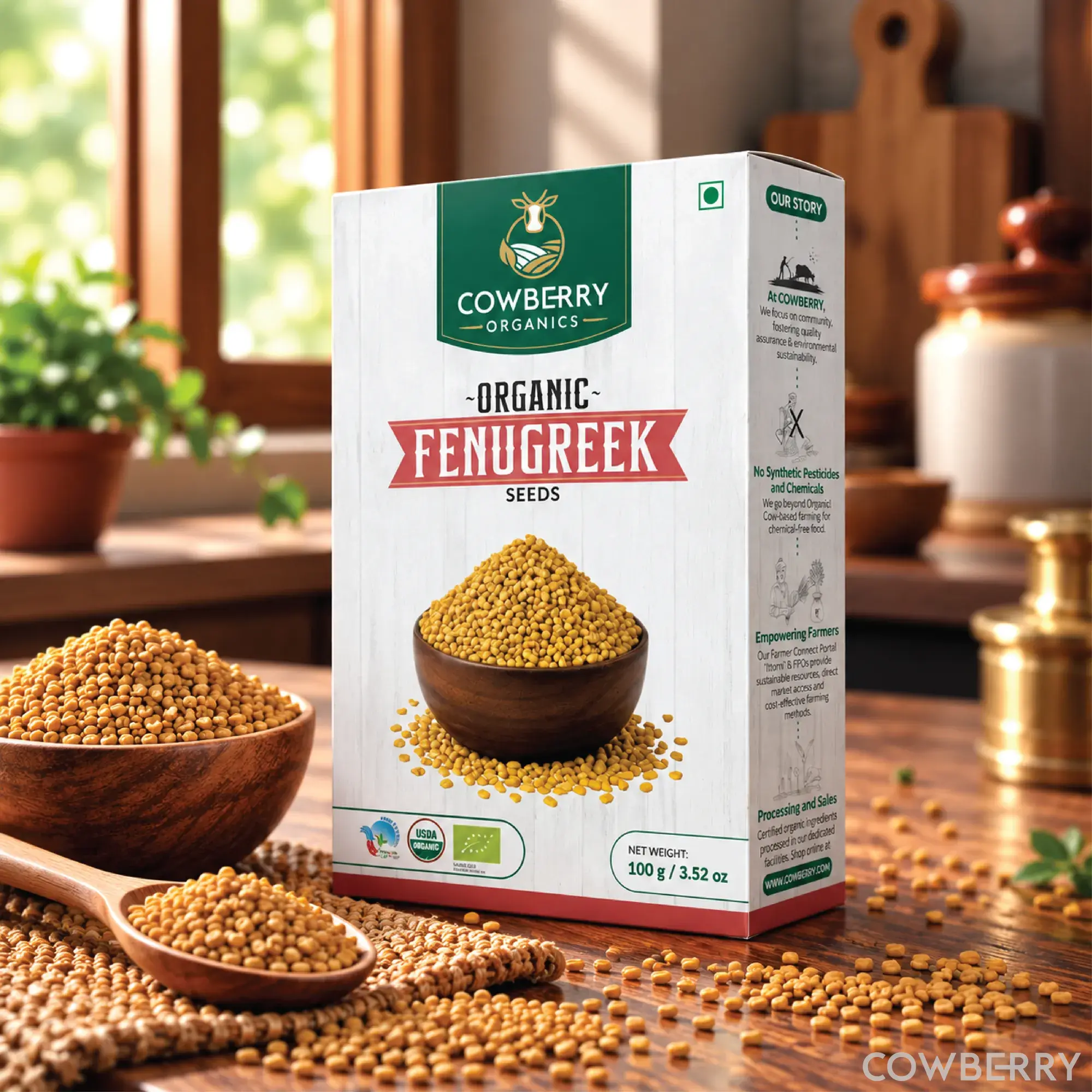
Choose whole seeds that look uniform, yellow-brown and clean, without stones, dust or broken grain; the pack facts on COWBERRY's methi dana describe cleaned seeds packed whole, grown in Rajasthan and Madhya Pradesh. Keep them in an airtight jar in a cool, dry place. IFCT 2017, the Dietary Guidelines and COWBERRY's product page print no grading standard, so clean and whole is the rule.
How much methi dana per day?
Neither IFCT 2017 nor ICMR-NIN's Dietary Guidelines prints a daily gram amount, so this page gives none. A level teaspoon (4 g) soaked overnight, or a quarter teaspoon (1 g) in a tempering, is a normal culinary amount, and the dietary guidelines list fenugreek seeds among foods that can be eaten three to four times a week. For diabetes, the decision belongs to your doctor.
Is soaked methi dana better than roasted?
They suit different jobs rather than being better or worse. Soaked seeds soften for chewing and give the soak water its drink, while roasting deepens the aroma for grinding into thepla and paratha doughs and dry masalas. Choose by what the dish needs: soak for a morning habit, roast for the masala shelf.
Can methi dana be eaten on an empty stomach?
The soaked-seed habit is usually a morning one, seeds chewed with the soak water before breakfast, and nothing in the references sets a rule against it. Start with a small amount and see how your stomach takes the fibre and bitterness. If you eat fenugreek for blood sugar reasons, clear the habit with your doctor.
Do fenugreek seeds sprout at home?
Yes, and readily. Soak one teaspoon (4 g) of seeds overnight, drain them, and keep them in a strainer or a damp muslin cloth for a day or two, rinsing once or twice, until pale shoots appear. The sprouted seeds go into salads, raitas and chutneys, and they keep covered in the fridge, rinsed and eaten soon.
References
Shop this article
Keep reading
Coriander water benefits: what dhania water actually does
Peanuts in Hindi (moongfali): groundnut names in Indian languages
Coriander vs cilantro: are they the same herb?