by COWBERRY

7 minute read
Difference between kasuri methi and methi: dried leaves vs seeds

Difference between kasuri methi and methi in one line: kasuri methi is dried fenugreek leaves, a finishing herb, while methi, or methi dana, is the seed, a cooking spice. One is crushed over a finished curry, the other is tempered in hot oil or soaked overnight. They come from the same plant and do different jobs; the fenugreek (methi) hub covers the plant's names, nutrition and benefits.
Verdict in three lines
Kasuri methi is the leaf. Fenugreek leaves, harvested at peak freshness and dried, sold crumbled; a pinch crushed over the dish at the end is its whole job.
Methi dana is the seed. Small, hard, yellow-brown, bitter-sweet; it needs heat or soaking before it gives anything, and it does the tempering work of a spice.
They do not swap one-for-one. Same plant, different parts, different timing in the pot. A pinch of leaves cannot start a tempering, and a spoon of seeds cannot finish a curry with that green, aromatic lift.
The side-by-side table below puts the seed's numbers in one column; the leaves get their own section on taste and use, and the what is kasuri methi page covers the leaf in detail.
Side by side: kasuri methi vs methi dana
IFCT 2017 has an entry for fenugreek seeds and none for dried fenugreek leaves, so the table below holds the seed column alone, and this page gives the leaves no per-100 g figures. Read the seed entry: 235 kcal, 25.41 g of protein, 10.57 g of carbohydrate, 47.55 g of dietary fibre, 8.47 mg of iron, 135 mg of calcium and 891 mg of potassium per 100 g. In the amounts either is actually eaten, the difference between the two is not nutrition but use: the seed is measured in teaspoons, the leaf in pinches.
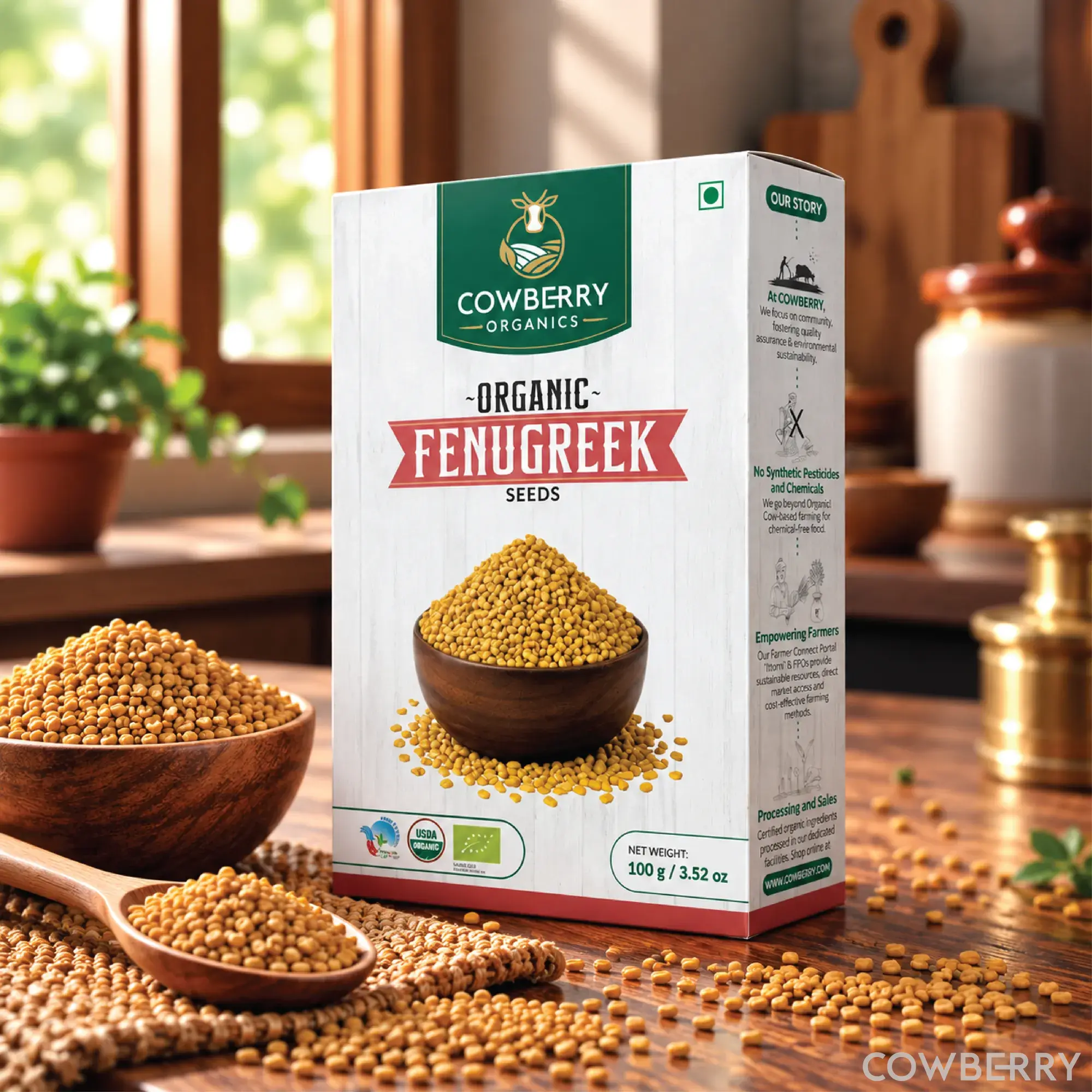
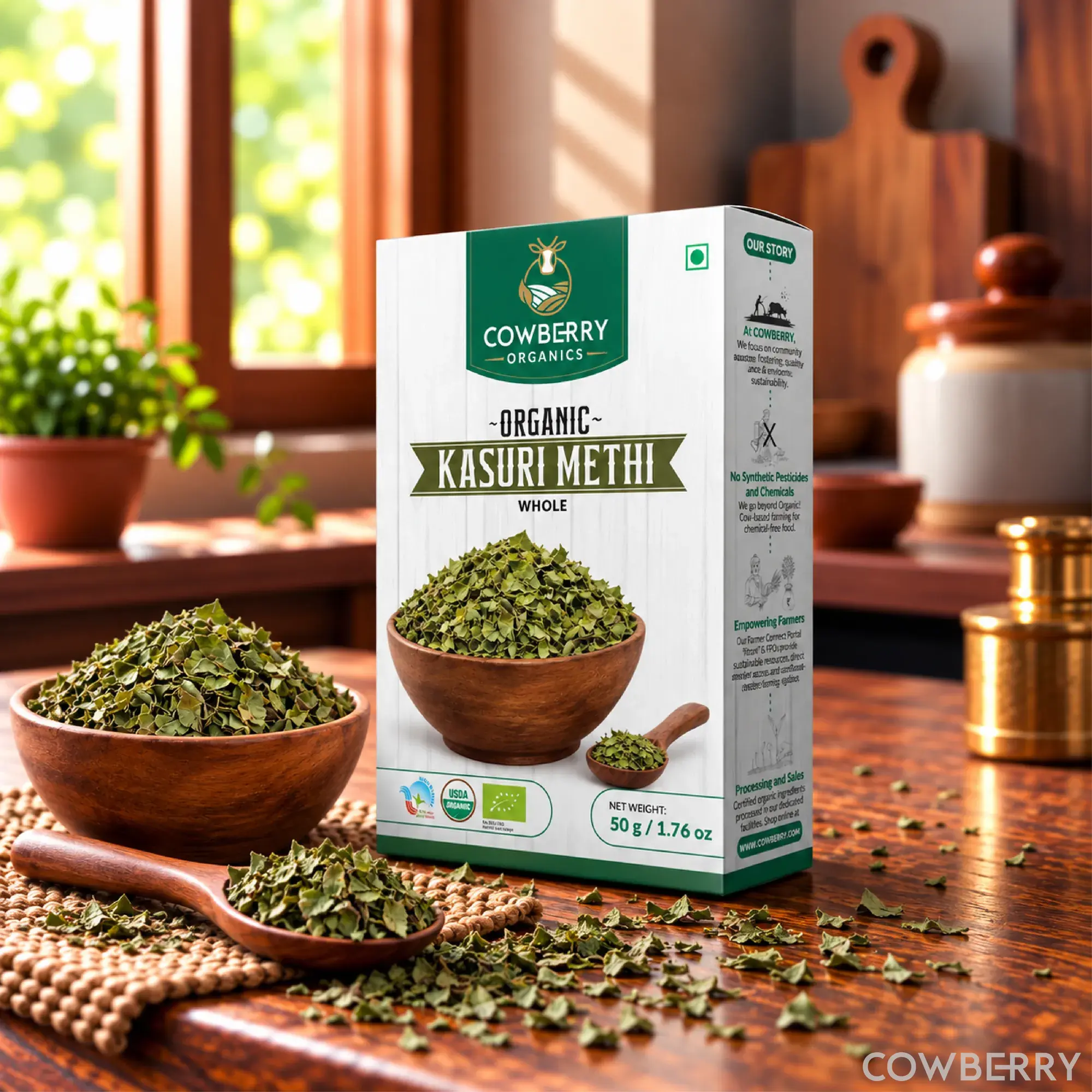
What the packs say about each: COWBERRY's methi dana is grown in Rajasthan and Madhya Pradesh and packed whole; its kasuri methi is made from leaves grown in Rajasthan, naturally dried. One plant, two harvests of different parts.
| Nutrient | Fenugreek seeds (methi dana), raw |
|---|---|
| Energy (kcal) | 235 |
| Protein (g) | 25 |
| Fat (g) | 5.7 |
| Carbohydrates (g) | 11 |
| Dietary fibre (g) | 48 |
| Iron (mg) | 8.5 |
| Calcium (mg) | 135 |
| Magnesium (mg) | 167 |
| Potassium (mg) | 891 |
| Sodium (mg) | 40 |
| Zinc (mg) | 3.8 |
| Folate (mcg) | 51 |
Per 100 g raw, edible portion. Composition: IFCT 2017 (ICMR-NIN). — means not reported. These are average values for the food; the label on a pack gives the values for that product.
Taste and cooking: leaves vs seeds
Methi dana. Bitter-sweet, and bitter wins until heat arrives. Indian cooking tempers it first in hot oil for dal, sambar and sabzi, soaks it overnight until the seeds swell and soften, or roasts and grinds it for thepla and paratha doughs. A quarter teaspoon (1 g) is a normal tempering amount; more than that and the dish turns sharply bitter.
Kasuri methi. Earthy, slightly bitter and aromatic, with the fresh-leaf character the seeds do not have. Crush the dried leaves between your palms and add them near the end of cooking: curries, dals, paneer dishes, parathas and rich gravies are the dishes the pack names. Heat is brief or none, so the aroma stays.
Swapping them. Not one-for-one. If a recipe wants kasuri methi and you only have seeds, leave the seeds out or temper a few; if it wants the seeds and you only have the leaves, the dish will lack the base bitterness and the tempering step has nothing to crackle in the oil.
Nutrition: what is measured and what is not
For the seeds, one teaspoon weighs 4 g and gives about 9 kcal, 1 g of protein, 0.4 g of carbohydrate, 1.9 g of fibre and 0.3 mg of iron. For the leaves, IFCT 2017 publishes no composition values, and it hardly matters: kasuri methi goes in by the pinch. A 2014 review in the International Journal of Molecular Sciences makes the general point that herbs and spices are eaten in such small quantities, usually with other foods, that their true health benefit is hard to establish.
On the seeds specifically, ICMR-NIN's Dietary Guidelines list fenugreek seeds among foods with health-promoting effects, to be eaten at least three to four times a week, and count them among the plant foods that bring n-3 fatty acids. The diabetes evidence, which is also about the seeds and not the leaves, is set out on is kasuri methi good for diabetes. The leaves carry no measured benefit in any of the references at all; they are bought for aroma.
Cost and where each fits
Pack size tells the story. Methi dana is sold in larger packs, because a tempering and a soak take it by the spoon. Kasuri methi comes in a small pack, because a pinch a dish goes a long way and a little jar of it sits in the masala shelf for months. Neither is a big spend for a household.
Where each fits: the seeds belong in the pot early, in dals, sambars, pickles, kadhi, thepla and any dish that starts with a tempering; ground, they go into doughs and dry masalas. The leaves belong at the very end, on gravies, dals, paneer, parathas and anything that wants a finishing note. One is the base of a dish, the other is the last ten seconds.
Which for whom
- You cook dals and temperings: methi dana, kept whole in the masala dabba.
- You want a restaurant-style finish on gravies and paneer: kasuri methi, crushed at the end.
- You find fenugreek too bitter: the leaves in pinches give the aroma with far less bitterness than the seeds; the pack describes the leaf as slightly bitter and aromatic.
- You are asking about blood sugar: the trials are about the seeds, at trial doses, and the details are on the diabetes page linked above.
- You want the names straight: methi, methi dana, menthe, venthayam and the rest are one seed in different languages, on the fenugreek names page, and the fenugreek hub ties the plant together.
FAQs
Difference between fenugreek seeds and leaves?
The seeds are the methi plant's spice: small, hard, bitter-sweet, tempered in hot oil or soaked. The leaves are the same plant's greens, and dried they become kasuri methi, a finishing herb crushed over curries and dals. Different parts, different timing: seeds go in early and carry the base bitterness, leaves go in last for aroma.
Is kasuri methi and methi same?
Same plant, not the same ingredient. Methi is the Hindi name for fenugreek, and methi dana means its seeds. Kasuri methi is made from the dried leaves. The seed needs heat or soaking and behaves like a spice; the leaf is already dried and ready to crumble over a finished dish, so the two are not interchangeable in a recipe.
How much dried fenugreek leaves to use?
Start with a pinch for a curry or dal that serves four: take the leaves between your palms, crush them over the dish near the end of cooking, and taste before adding more. No gram amounts are printed in the references, because the leaf is measured by eye. A little goes far; too much turns a gravy unpleasantly bitter.
Can I use methi dana instead of kasuri methi?
Only as a stand-in for the fenugreek note, not as a copy. The seed is hard and needs to be tempered or soaked, so it cannot be crushed over a finished dish the way the leaves are. If a recipe ends with kasuri methi and you have only seeds, temper a quarter teaspoon (1 g) of seeds earlier in the cooking and skip the finishing pinch.
Which is better for cooking: methi seeds or kasuri methi?
Neither is better; they do different jobs. The seeds build the bitter base of dals, sambars and parathas from the start of cooking. The leaves finish curries, gravies and paneer with an earthy, aromatic lift at the end. A well-stocked masala shelf usually holds both, the seeds in a jar and the leaves in a small airtight pack.
Does kasuri methi have the same benefits as methi seeds?
There is no evidence in the references for benefits of the dried leaves at all, so this page does not extend the seed's findings to them. The human trials, including the 2014 meta-analysis behind the diabetes claims, used fenugreek seeds, with the glucose effects seen at medium or high doses in people with diabetes. The leaves are a flavour, used in pinches; the full account is on the diabetes page.
References
- Indian Food Composition Tables (IFCT) 2017, ICMR-National Institute of Nutrition
- Dietary Guidelines for Indians, ICMR-National Institute of Nutrition
- Opara EI, Chohan M. Culinary herbs and spices: their bioactive properties, the contribution of polyphenols and the challenges in deducing their true health benefits. Int J Mol Sci, 2014
- Neelakantan N, Narayanan M, de Souza RJ et al. Effect of fenugreek (Trigonella foenum-graecum L.) intake on glycemia: a meta-analysis of clinical trials. Nutr J, 2014
Shop this article
Keep reading
Coriander water benefits: what dhania water actually does
Peanuts in Hindi (moongfali): groundnut names in Indian languages
Coriander vs cilantro: are they the same herb?