by COWBERRY

10 minute read
Gehu atta (wheat flour): names, nutrition, benefits and how to cook it

Gehu atta is wheat flour: atta is flour, and the grain is gehun in Hindi, gehu atta being the everyday word for wheat flour. This hub gathers the whole subject in one place, the names, the per-100 g numbers, the benefits and side effects, cooking, storage and links to every wheat page and recipe on this site.
What is gehu atta, and what is sharbati wheat
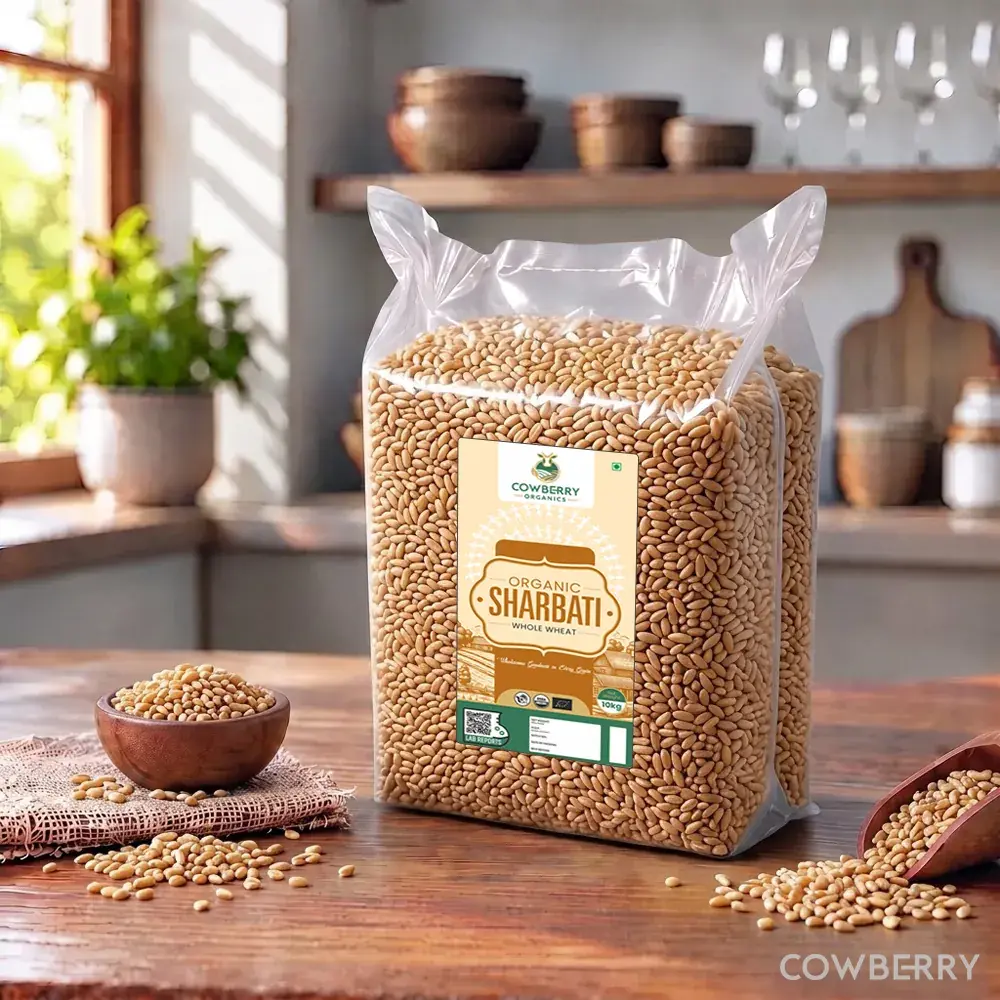
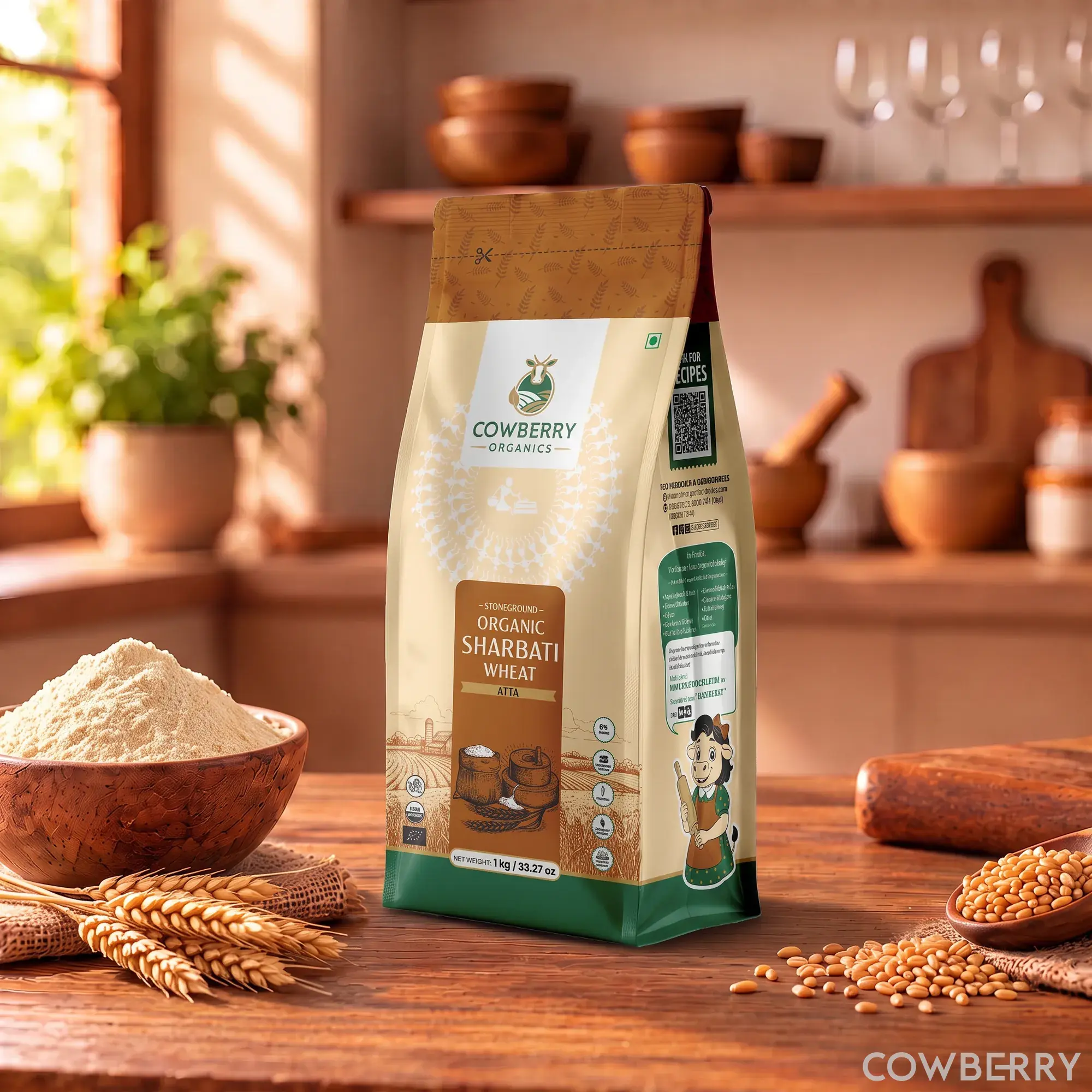
What is gehu atta? Wheat flour: atta means flour, and the grain behind it is wheat, gehun in Hindi, the bread wheat whose botanical name IFCT 2017 records as Triticum aestivum. What is sharbati wheat? A named variety of that same species: a premium Madhya Pradesh wheat from the Ashoknagar region, known in the trade as MP wheat; the product page paints the grain with natural sweetness, a soft texture and naturally golden colour, kneading into softer, more elastic dough. And what is sharbati atta? The flour milled from that wheat; in this catalogue, the whole berries ground on a stone chakki, so nothing of the bran or fibre is milled away. The variety set against unnamed wheat is sorted out on sharbati wheat vs normal wheat.
Because sharbati is a variety name and not another cereal, IFCT 2017's single pooled whole-wheat entry speaks for every whole wheat flour in the group, sharbati atta and chakki atta included. The catalogue carries the harvest in both forms, whole grain and flour, so recipes that start from the berries and recipes that start from the flour both draw on the same numbers this page prints.
Gehu atta names in Indian languages
IFCT 2017's local-names list records the grain under thirteen Indian language names: gehun for Hindi and Urdu, gehu for Marathi, ghaun for Gujarati, kanak for Punjabi, gom for Bengali, gahama for Odia, ghehu for Assamese, godhi for Kannada, godhumalu for Telugu, godumai for Tamil, godhumbu for Malayalam and godhum for Sanskrit, with wheat, whole as the English name. In English the variety is called sharbati wheat, and the word needs no translation. Behind every spelling stands the same grain, Triticum aestivum, so the word changes with the state and the cereal does not; the name-by-name guide is on sharbati wheat in english.
| Language | Name (romanised) |
|---|---|
| English | Wheat, whole |
| Hindi | Gehun |
| Marathi | Gehu |
| Gujarati | Ghaun |
| Punjabi | Kanak |
| Bengali | Gom |
| Odia | Gahama |
| Assamese | Ghehu |
| Kannada | Godhi |
| Telugu | Godhumalu |
| Tamil | Godumai |
| Malayalam | Godhumbu |
| Urdu | Gehun |
| Sanskrit | Godhum |
| Botanical name | Triticum aestivum |
Source: IFCT 2017 (ICMR-NIN) local-names list. — means no name recorded in the source.
Gehu atta nutrition per 100 g
The per-100 g numbers below are whole wheat's, as recorded in the Indian Food Composition Tables 2017 for its pooled whole-wheat sample: 322 kcal, 64.72 g of carbohydrate, 10.59 g of protein, 1.47 g of fat and 11.23 g of fibre.
On the plate the table shrinks to a roti. Rolled from the 30 g of atta this site's recipes use per roti, one phulka carries 97 kcal before any ghee, of which 19 g is carbohydrate, alongside 3.2 g of protein and 3.4 g of fibre; two rotis bring 193 kcal and 6.7 g of fibre. A 40 g katori of the flour holds 129 kcal and 4.5 g of fibre, and a 120 g cup comes to 386 kcal with 13.5 g of fibre.
The glycemic index printed for whole wheat is 47, low on the Sydney scale, and a GI figure tracks the preparation, not 100 g of grain; the full number trail, the roti tests included, is on the glycemic index of wheat page.
Under the headline numbers sits the mineral column: iron 3.97 mg, magnesium 125 mg and folate 30.09 mcg in every 100 g, nutrients a whole-grain flour keeps and a refined one loses.
| Nutrient | Whole wheat atta (sharbati) |
|---|---|
| Energy (kcal) | 322 |
| Protein (g) | 11 |
| Fat (g) | 1.5 |
| Carbohydrates (g) | 65 |
| Dietary fibre (g) | 11 |
| Iron (mg) | 4 |
| Calcium (mg) | 39 |
| Magnesium (mg) | 125 |
| Potassium (mg) | 366 |
| Sodium (mg) | 2.5 |
| Zinc (mg) | 2.9 |
| Folate (mcg) | 30 |
| Glycemic index (GI) | 47 |
Per 100 g raw, edible portion. Composition: IFCT 2017 (ICMR-NIN). GI: University of Sydney GI database. — means not reported. These are average values for the food; the label on a pack gives the values for that product.
Gehu atta benefits and side effects, in short
The benefits column is fibre first: 11.23 g per 100 g, which the Dietary Guidelines for Indians count as easing the uptake of carbohydrates and fats and helping a meal satisfy for longer. The wider evidence belongs to whole grains: a 2016 BMJ meta-analysis of 45 prospective studies tied each 90 g of whole grains eaten daily to a 19 percent lower coronary heart disease risk and a 17 percent lower risk of dying from any cause; stroke risk fell 12 percent, cardiovascular disease 22 percent and cancer 15 percent in the same pooled estimate, and the reductions kept growing up to 210-225 g a day, where refined grains earned little credit. A 2019 Lancet series found its sharpest risk reductions at 25 g to 29 g of daily fibre, most protective in the general population. The side effects are short to list: gluten, the cereal protein wheat shares with barley and rye, extra calories when the plate outgrows the person, and phytate, which cooking and fermentation reduce. Both columns get their own pages: wheat benefits and side effects for the benefits, and is sharbati atta gluten free for the gluten question.
Sharbati atta for diabetes and for weight loss
For diabetes, the split that matters is whole against refined. Sharbati atta is whole wheat with GI 47, and a 2013 pooling of 16 cohorts linked every additional three daily servings of whole grains to a 32 percent drop in type 2 diabetes risk (RR 0.68); refined grains showed no such association (RR 0.95). The mix matters too: ICMR-NIN's indicative GI table prints wheat with chana dhal a long way below wheat chapatti alone, so read the mix as a direction rather than a set GI.
For weight loss the same fibre does the work: a roti carries 97 kcal with 3.4 g of fibre before any ghee, so the portion stays small while the meal stays filling. Each question has its own page: is sharbati atta good for diabetes and is sharbati atta good for weight loss.
Sharbati wheat vs normal wheat, and the chakki question
Two comparisons come up in every wheat conversation. Sharbati wheat vs normal wheat is a variety question: a named premium MP variety against wheat sold without a variety claim, one IFCT entry shared by both, the difference living in colour, sweetness and dough; the side-by-side is on sharbati wheat vs normal wheat. The chakki question is about the mill: chakki atta is stone-ground flour, and what this catalogue sells is sharbati wheat ground on a slow stone chakki, a mill that keeps the whole berry's bran, fibre and germ oils in the flour; the two labels in detail are on sharbati atta vs chakki atta.
How to cook gehu atta: roti first
The workhorse is the roti, and the sharbati atta roti recipe here is written for a beginner. Two cups of atta meet two-thirds of a cup of lukewarm water and half a teaspoon of salt, kneaded for about ten minutes into a soft, smooth dough, with a teaspoon of ghee rubbed in at the end. A twenty-minute rest lets the flour drink the water, then the dough divides into 8 balls of 30 g each, rolled thin into rounds. A hot tawa cooks each roti for about a minute a side until pale brown spots appear, and a quick hold over the flame puffs it into a phulka; on an induction hob, the same puff comes from pressing the roti through a folded cloth while it sits on the tawa. Two teaspoons of ghee smeared over the stack finish the batch, which feeds four people, two rotis each, in about fifty minutes plus the rest. The gobi paratha recipe starts from the same flour and dough, stuffed and roasted with ghee.
Wheat recipes for every meal
Breakfast has the aloo paratha recipe, the plain paratha recipe, the methi thepla recipe for travel, the poori recipe for special mornings and a rava-based vegetable upma recipe. Lunch and dinner add the gobi paratha recipe and the festival plate of the dal baati churma recipe. Snacks run from the khakhra recipe and mathri recipe to the kachori recipe and the sakkarpara recipe. Sweets close the list: panjiri recipe, methi ladoo recipe, rava ladoo recipe, puran poli recipe and badusha recipe. Every one of them is written for a home kitchen, with ingredients, steps and serving counts on its own page.
How to store gehu atta
Whole wheat atta keeps best sealed in a container somewhere cool and dry, as the product page advises, and the same page would rather you store it sealed in the fridge through warm months. Because the bran and germ are still in the flour, whole-grain atta turns sooner than refined flour: the germ's oils go rancid, and a dull, musty smell, flour that clumps, or a roti that bakes bitter all say the batch has turned, so give the flour a sniff before kneading if the jar has sat a while. Buy a pack you will finish in about a month, keep a dry spoon in the flour, and set the jar away from the stove and the sink. The monsoon adds its own chapter, and the full routine is on how to store atta.
Buying gehu atta: what to look for
The buying rule is the same one this page has kept throughout: whole grain, stone-ground. COWBERRY's sharbati wheat is raised organically in Madhya Pradesh, without synthetic chemicals, and harvested at natural ripeness, sold as whole grain, and the sharbati atta is the same wheat chakki-ground on stone with no additives or preservatives; both are India Organic, USDA & EU certified. When a pack reaches the kitchen, the milling date is worth a look and the most recent pack is the better buy, since whole-grain flour does not wait. This page quotes no prices; premium is the variety's market position, and the budget is the buyer's.
FAQs
What is sharbati wheat?
A named variety of bread wheat, Triticum aestivum, from the fields around Ashoknagar in Madhya Pradesh, sold in the trade as MP wheat. The catalogue's product page paints the grain golden, naturally sweet and soft in texture, with dough that is softer and more elastic. Sharbati is a variety name, not a translation of wheat.
What is sharbati atta?
Flour milled from sharbati wheat; in this catalogue the whole berries are ground on a stone chakki, which keeps the berry's bran, fibre, germ oils, vitamins and minerals in the flour, and nothing else is added. Sharbati names the variety; atta names the flour.
How to store wheat atta for long time?
Sealed in a container, somewhere cool and dry, which is the product page's advice, and check the smell before kneading when the flour has sat for weeks. For the monsoon months the extra steps are on how to store atta.
Is sharbati atta good for health?
As a whole-grain wheat flour, yes within a varied plate: every 100 g carries 11.23 g of fibre alongside 10.59 g of protein, plus the soft, sweet rotis the variety is known for. It is food, not medicine, and the day still turns on the portion. The full case is on wheat benefits and side effects.
Which atta is good for health?
The whole-grain ones: they keep the bran and the fibre that a refinery would remove, and the Dietary Guidelines for Indians set the whole-grain share of the day's cereals at half or more. Variety is a matter of taste; the milling decides the nutrition.
Is sharbati atta gluten free?
No. Sharbati atta is wheat, and wheat belongs to the three gluten cereals, so anyone with coeliac disease keeps it off the plate. The swaps that work are listed on is sharbati atta gluten free.
Why sharbati wheat is famous?
For the roti it makes: a naturally golden grain with natural sweetness and a soft texture, dough that comes together softer and more elastic, with rotis that bake up soft and fluffy, as the product page lists them. Its fame is about eating quality.
References
- Indian Food Composition Tables (IFCT) 2017, ICMR-National Institute of Nutrition
- Dietary Guidelines for Indians, ICMR-National Institute of Nutrition
- University of Sydney glycemic index database (GI search)
- University of Sydney: about the glycemic index
- Aune D, Keum N, Giovannucci E, et al. Whole grain consumption and risk of cardiovascular disease, cancer, and all cause and cause specific mortality: systematic review and dose-response meta-analysis of prospective studies. BMJ, 2016
- Aune D, Norat T, Romundstad P, et al. Whole grain and refined grain consumption and the risk of type 2 diabetes: a systematic review and dose-response meta-analysis of cohort studies. Eur J Epidemiol, 2013
- Reynolds A, Mann J, Cummings J, et al. Carbohydrate quality and human health: a series of systematic reviews and meta-analyses. Lancet, 2019
- NHS: coeliac disease
- Gupta RK, Gangoliya SS, Singh NK. Reduction of phytic acid and enhancement of bioavailable micronutrients in food grains. J Food Sci Technol, 2015
Shop this article
Keep reading
Foxtail millet vs quinoa: nutrition, taste and which to choose
Foxtail millet in Kannada, Hindi, Tamil and other Indian names
10 benefits of kangni (foxtail millet) and its side effects