by COWBERRY

6 minute read
Difference between sharbati atta and chakki atta: variety vs mill

Difference between sharbati atta and chakki atta in one line: sharbati names the wheat variety, chakki names the mill, so the two words answer different questions and one flour can be both. The gehu atta hub covers wheat flour broadly; this page compares the variety and the mill, then the numbers.
Difference between sharbati atta and chakki atta: the one-line answer
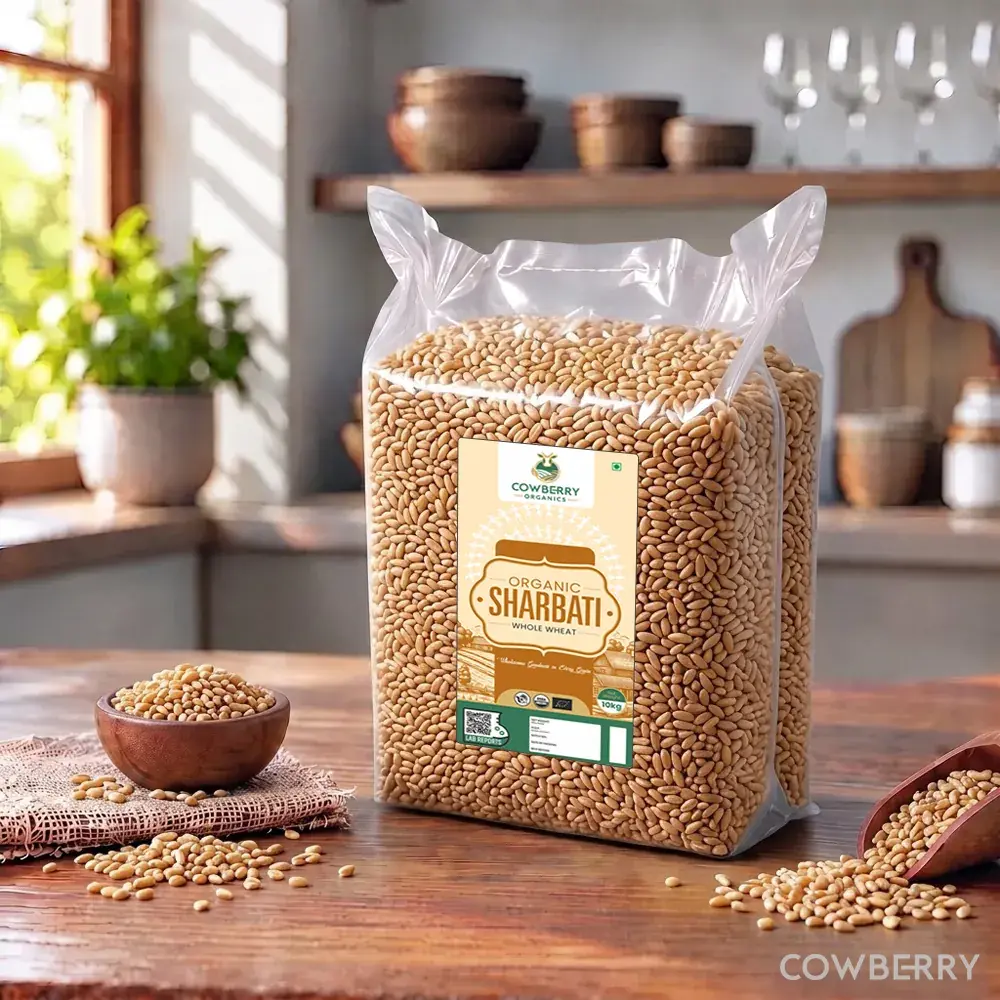
Sharbati atta is named for the wheat it is milled from: the premium Madhya Pradesh variety described as naturally golden, sweet-tasting and soft-textured. Chakki atta is named for the way any wheat is milled: a chakki is a stone mill, and chakki atta is flour ground between stones instead of rollers. So sharbati atta vs chakki atta is not a contest between two rivals but a crossing of two labels, and a packet can wear both at once.
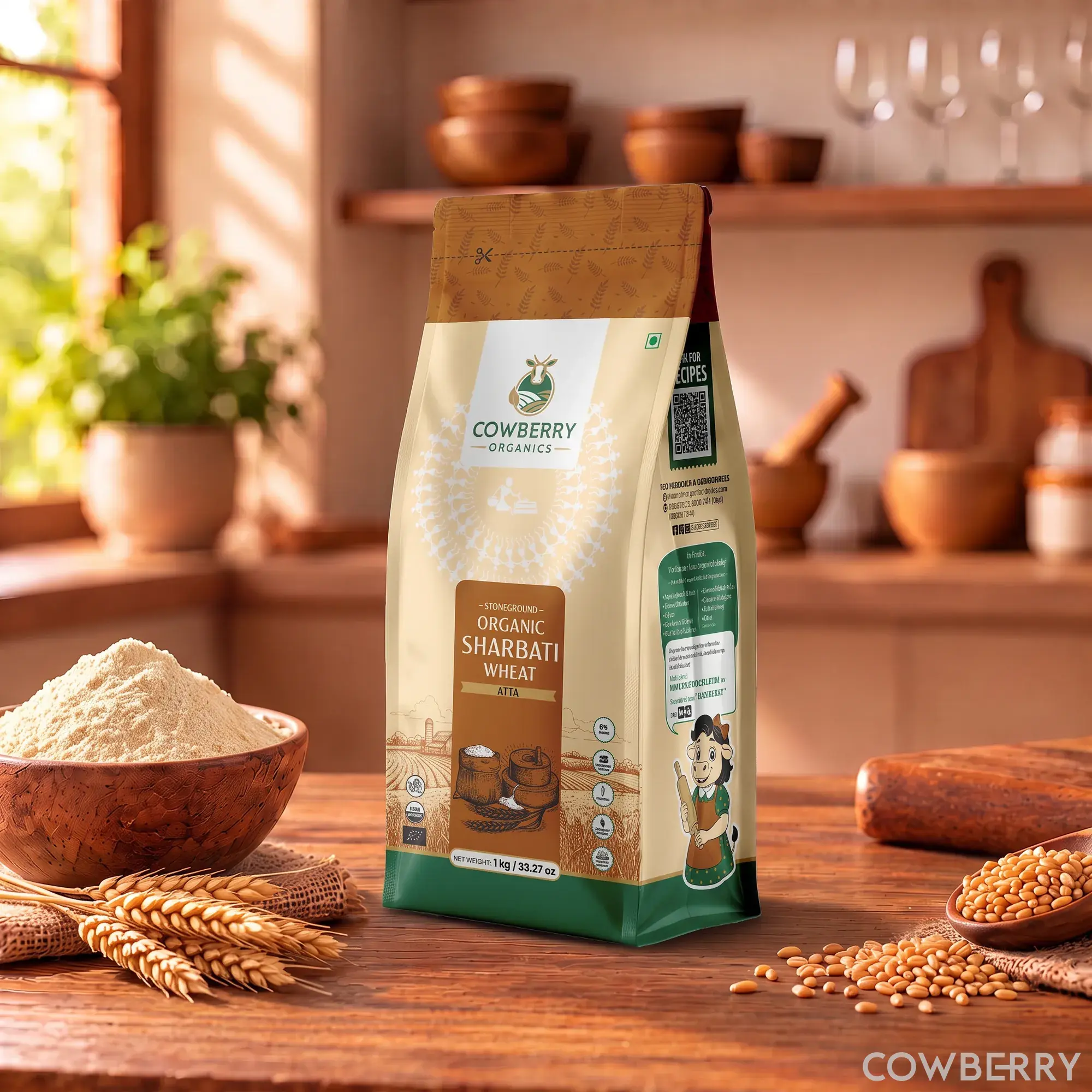
That crossing is exactly what this catalogue sells: the sharbati atta here is chakki-ground on stone, keeping the whole wheat berry intact, bran, fibre, germ oils, vitamins and minerals all included, as the product page describes. The two words then describe one flour from different sides, and the real comparison is against the third player in the market: roller-milled, refined atta.
Chakki atta: what the stone mill does
Chakki atta is stone-ground atta. The product page for this range describes the traditional chakki process as keeping the whole wheat berry intact, with the bran, fibre, germ oils, vitamins and minerals preserved, and contrasts it with modern roller mills, where refined methods strip away the essential nutrients. The product page presents the mill as the nutrition decision: the chakki process keeps the whole grain in the flour, while refining strips the essential nutrients away.
That is the fibre story in one paragraph: whole wheat carries 11.23 g of fibre per 100 g, and the chakki is the machine that keeps it in the packet. What the chakki does not change is the grain itself, which is where sharbati comes in.
Sharbati atta: what the variety brings
Sharbati atta is the flour of sharbati wheat, the variety the product page places in Madhya Pradesh, around Ashoknagar and neighbouring districts, and calls MP wheat in the trade. The same page lists its traits: naturally golden in colour, sweet on the tongue and soft in texture, and puts the variety's protein and gluten quality naturally above standard wheat varieties, which gives a softer and more elastic dough, and rotis that bake soft and fluffy.
Those traits are about eating quality, not about the mill. The same sharbati wheat can be milled in different ways, and the product page ties the whole grain's bran and fibre to the chakki process. The variety is about taste and dough; the mill is about what stays in the flour.
Sharbati atta vs chakki atta nutrition: the same entry
On nutrition, sharbati atta and chakki atta are not rivals because both, milled whole, are whole wheat: IFCT 2017 lists one whole-wheat entry, and both labels share it. Per 100 g, that entry gives 322 kcal, 10.59 g of protein, 11.23 g of fibre and 64.72 g of carbohydrate.
The comparison that changes numbers is chakki-ground whole atta against refined atta, and IFCT 2017 has no refined-flour entry to set beside it, so there are no comparison figures to give. The one figure the records give is the fibre above, and the product page's statement that refined methods strip away essential nutrients while the chakki process keeps them in.
| Nutrient | Whole wheat atta, chakki-ground |
|---|---|
| Energy (kcal) | 322 |
| Protein (g) | 11 |
| Fat (g) | 1.5 |
| Carbohydrates (g) | 65 |
| Dietary fibre (g) | 11 |
| Iron (mg) | 4 |
| Calcium (mg) | 39 |
| Magnesium (mg) | 125 |
| Potassium (mg) | 366 |
| Sodium (mg) | 2.5 |
| Zinc (mg) | 2.9 |
| Folate (mcg) | 30 |
| Glycemic index (GI) | 47 |
Per 100 g raw, edible portion. Composition: IFCT 2017 (ICMR-NIN). GI: University of Sydney GI database. — means not reported. These are average values for the food; the label on a pack gives the values for that product.
Roti by roti: the numbers on the plate
Made with the 30 g of atta the site's roti recipes are built on, one sharbati chakki atta roti gives 97 kcal, 19 g of carbohydrate, 3.2 g of protein and 3.4 g of fibre; two rotis make 193 kcal and 6.7 g of fibre. The sharbati atta roti recipe is built on that 30 g measure, and the soft, fluffy result is the variety's half of the partnership.
For baking, the same pairing works the other way around: the product page says sharbati wheat flour can be used in baking, in cakes and cookies, and the stone-ground flour keeps the whole grain's fibre.
Which to buy: sharbati atta vs chakki atta which is better
Better at what? For nutrition, the decision is the mill: chakki-ground whole atta keeps the bran and fibre that refining strips away, and the ICMR-NIN dietary guidelines say at least half of cereals should be whole grains. For rotis, the variety adds its part: sharbati's softer dough and fluffy rotis are what the premium variety is known for. So the question is not which label is better but which combination you are buying.
On cost, no prices are quoted: price tags are a shop's call. What the product page does say is that the trade sells sharbati wheat as a premium variety wheat, and that the flour here is stone-ground and organically grown, so the premium sits in the variety and the method, and the budget question belongs to the buyer.
Bottom line
Sharbati atta is a variety; chakki atta is a mill. Choose the variety for soft, sweet-tasting rotis, choose the stone mill to keep the whole grain's bran and fibre, and the flour sold on this page is both at once. The one comparison that changes the numbers is whole against refined; the whole-wheat fibre is 11.23 g per 100 g, and no refined figure sits beside it. The gehu atta hub links every wheat page and recipe.
FAQs
What is the difference between sharbati atta and chakki atta?
Sharbati atta names the wheat variety, the premium Madhya Pradesh wheat sold as MP wheat; chakki atta names the mill, flour ground on stone instead of rollers. They answer different questions, so one flour can be both, and the sharbati atta in this catalogue is chakki-ground.
How is sharbati atta different?
In the wheat: sharbati is a named variety, naturally golden with natural sweetness and a soft texture, and the product page sets its protein and gluten quality naturally above standard wheats; the product page links this to a softer, more elastic dough and fluffy rotis.
What is sharbati atta made of?
Whole sharbati wheat. The flour here is chakki-ground on stone, keeping its bran, its fibre, its germ oils, its vitamins and its minerals in, with no additives or preservatives; refined methods strip those parts away.
Which sharbati atta is best?
The one that keeps the whole grain: stone-ground, so the bran and fibre stay in, and made from nothing but the wheat itself. There is no single best brand; the useful filters sit on the product pages, from the chakki grinding to the organic growing.
Why is sharbati wheat expensive?
The product page prints positioning, not price tags: the trade positions sharbati wheat as a premium variety wheat, organically grown with no synthetic chemicals and harvested at natural ripeness. Whether the softer dough and fluffier rotis are worth the premium is a kitchen decision.
What is the difference between sharbati atta and normal atta?
Normal atta is flour sold without a variety named; sharbati atta is flour of the named Madhya Pradesh variety, with its golden colour, sweetness and soft texture. The full variety comparison is on sharbati wheat vs normal wheat.
References
Shop this article
Keep reading
Foxtail millet vs quinoa: nutrition, taste and which to choose
Foxtail millet in Kannada, Hindi, Tamil and other Indian names
10 benefits of kangni (foxtail millet) and its side effects