by COWBERRY

6 minute read
Sharbati wheat in English, Hindi and 13 Indian languages

Sharbati wheat in English is simply wheat, whole wheat: the botanical name IFCT 2017 records is Triticum aestivum, and sharbati is a variety name, not a translation. In Hindi the grain is gehun, and thirteen Indian languages have their own word for it. All thirteen names sit below, each with its source; the grain itself is covered on the gehu atta hub page.
Sharbati wheat in English, Hindi and 13 Indian languages: quick answer
One line per language: Hindi gehun; Marathi gehu; Gujarati ghaun; Punjabi kanak; Bengali gom; Odia gahama; Assamese ghehu; Kannada godhi; Telugu godhumalu; Tamil godumai; Malayalam godhumbu; Urdu gehun; Sanskrit godhum. In English it is wheat, whole wheat, and the botanical name is Triticum aestivum.
The source behind every entry is IFCT 2017's local-names list, food code A020. Hindi and Urdu happen to share one word, gehun, and the South Indian names godhumalu and godumai begin with the same letters. Names appear in Latin letters, with each spelling kept exactly as the source gives it.
| Language | Name (romanised) |
|---|---|
| English | Wheat, whole |
| Hindi | Gehun |
| Marathi | Gehu |
| Gujarati | Ghaun |
| Punjabi | Kanak |
| Bengali | Gom |
| Odia | Gahama |
| Assamese | Ghehu |
| Kannada | Godhi |
| Telugu | Godhumalu |
| Tamil | Godumai |
| Malayalam | Godhumbu |
| Urdu | Gehun |
| Sanskrit | Godhum |
| Botanical name | Triticum aestivum |
Source: IFCT 2017 (ICMR-NIN) local-names list. — means no name recorded in the source.
Sharbati wheat in English, and what the name sharbati means
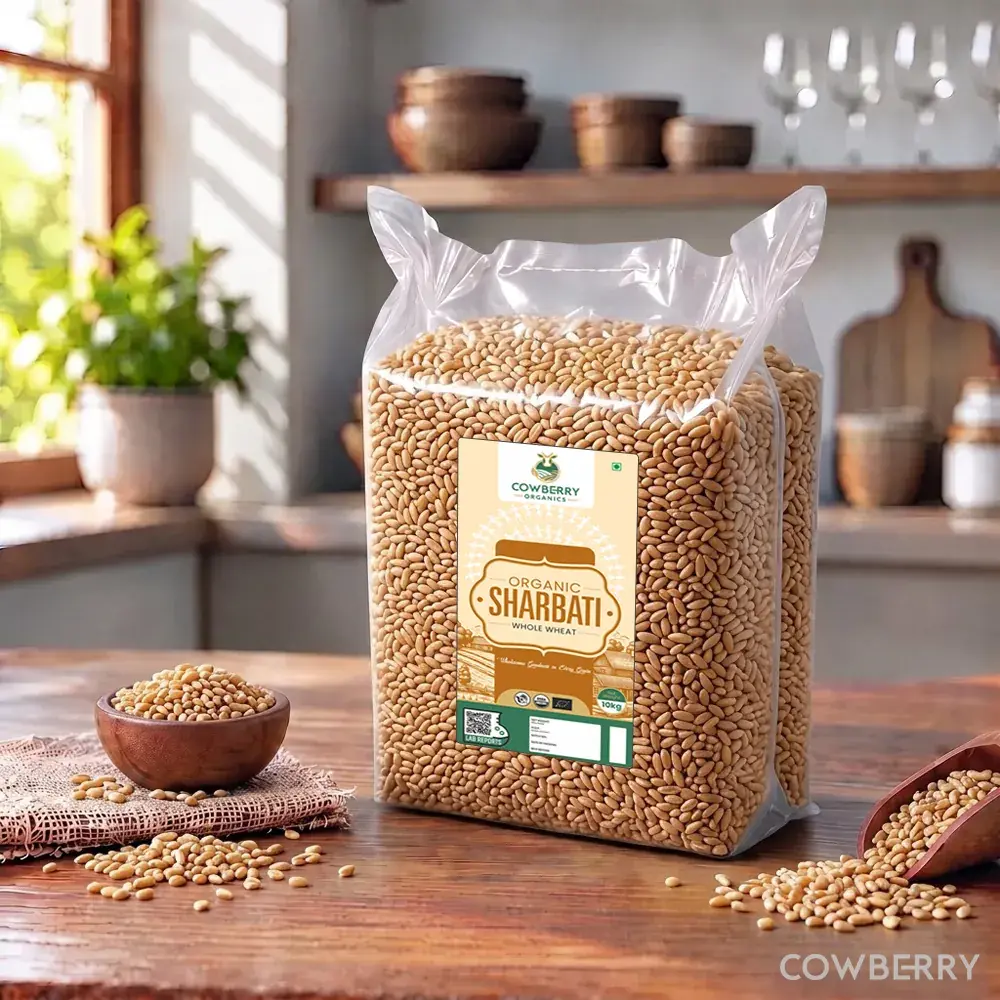
Sharbati wheat in English is wheat: IFCT 2017 prints 'Wheat, whole' as the English name, and the botanical name is Triticum aestivum, the species behind every bread wheat. Sharbati is not another language's word for wheat; it is the name of a wheat variety, the way basmati names a rice variety. So sharbati wheat in English is best kept as sharbati wheat, with no translation needed or offered.
What the variety name stands for comes from the product page: sharbati is the premium wheat of Madhya Pradesh, grown around Ashoknagar and neighbouring districts, known in the trade as MP wheat, naturally golden in colour, naturally sweet and soft in texture. Those are the traits the page lists for its soft rotis and softer, more elastic dough, and they belong to this variety, not to the word for wheat in any language.
Wheat names by region
North India: gehun in Hindi, kanak in Punjabi, gehun in Urdu
In Hindi the grain is gehun, and Urdu prints the same word. Punjabi keeps its own name: kanak.
West India: gehu in Marathi, ghaun in Gujarati
Marathi says gehu and Gujarati ghaun.
East India: gom in Bengali, gahama in Odia, ghehu in Assamese
Bengali calls the grain gom, Odia gahama and Assamese ghehu, three short names for the same seed.
South India: godhi, godhumalu, godumai and godhumbu
Kannada says godhi, Telugu godhumalu, Tamil godumai and Malayalam godhumbu. The four South Indian names begin alike, and the table keeps each spelling exactly as IFCT prints it. Sanskrit records godhum.
Often confused with sharbati wheat
Five names sit next to sharbati wheat on shop shelves and in searches.
- Chakki atta: not a wheat variety but a milling method, stone grinding; the sharbati flour in this catalogue is chakki-ground. The full comparison is on sharbati atta vs chakki atta.
- Normal wheat: sharbati is a variety of the same species, Triticum aestivum; the comparison page is sharbati wheat vs normal wheat.
- Dalia: wheat again, but broken rather than milled; the broken wheat names page covers it.
- Khapli (emmer wheat): a different wheat species, Triticum dicoccum, with no IFCT 2017 entry, and the only emmer entry in the GI database is a pasta made from it; its gluten story is on is khapli atta gluten free.
- Kuttu: not wheat at all but buckwheat, Fagopyrum esculentum, a different plant, with a USDA FoodData Central entry of its own.
Where sharbati wheat grows, and how to identify it
Sharbati wheat is a Madhya Pradesh crop. The product page names Ashoknagar and the surrounding districts as its home ground and calls the variety MP wheat in the trade, grown organically, no synthetic chemicals, and harvested at natural ripeness. The same page describes the grain as naturally golden and sweet, with a soft texture, a dough that is softer and more elastic, and rotis that bake soft and fluffy.
Names run ahead of geography, though: a packet labelled gehun, gehu or godumai is wheat in that language, while a packet labelled sharbati is a claim about the variety. The glycemic index of wheat page carries the numbers for the grain, the sharbati wheat vs normal wheat page sorts variety from variety, and the gehu atta hub collects every wheat page and recipe.
Cook with it: try Aloo paratha, Puran poli, Panjiri.
FAQs
What is sharbati wheat in English?
Wheat, whole wheat: IFCT 2017 prints 'Wheat, whole' as the English name, and the botanical name is Triticum aestivum. Sharbati is not a translation but a variety name, so English keeps it as sharbati wheat, the way basmati names a rice variety.
What is sharbati wheat?
A premium variety of bread wheat, Triticum aestivum, grown in Madhya Pradesh around Ashoknagar and known in the trade as MP wheat. The product page describes it as naturally golden with a natural sweetness and soft texture, which gives a dough that is softer and more elastic, and rotis that stay soft and fluffy.
What is sharbati atta?
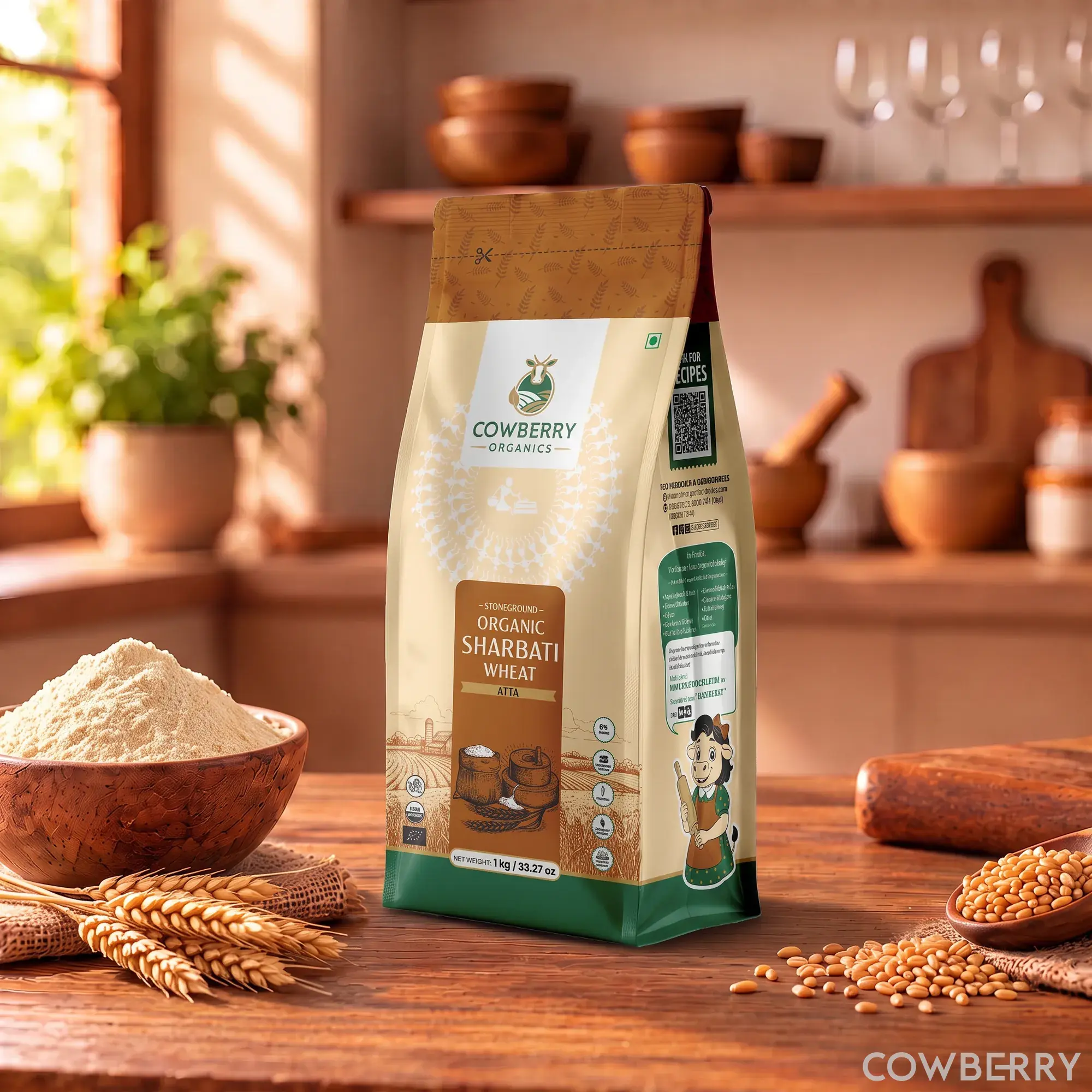
Flour milled from sharbati wheat. COWBERRY's version is whole wheat berries, chakki-ground on stone, so the bran, the fibre and the germ oils, vitamins and minerals all stay in the flour, with no additives or preservatives. The product page sells it as a whole-wheat flour with the variety's naturally sweet aroma and soft texture.
What is sharbati wheat atta?
The same flour under a fuller name: atta milled from sharbati wheat, with sharbati naming the variety and atta the flour. The product page describes it as a stone-ground whole-wheat flour with the variety's naturally sweet aroma and soft texture.
How to identify sharbati wheat?
The product page describes sharbati wheat as naturally golden and sweet, with a soft texture, but those traits are hard to judge from a handful of grain. The reliable identifier is the label: sharbati is a variety claim, and MP wheat on the pack points to the same Madhya Pradesh crop.
What is emmer wheat flour?
Flour from emmer wheat, Triticum dicoccum, the wheat sold in India as khapli. It is a different species from bread wheat, and IFCT 2017 has no emmer entry; the only emmer entry in the GI database is an Italian pasta made from it. Its gluten question has its own page, is khapli atta gluten free.
References
Shop this article
Keep reading
Foxtail millet vs quinoa: nutrition, taste and which to choose
Foxtail millet in Kannada, Hindi, Tamil and other Indian names
10 benefits of kangni (foxtail millet) and its side effects