by COWBERRY

8 minute read
Sunflower oil vs soybean oil: nutrition and which to choose

Sunflower oil vs soybean oil, the short version: both are liquid seed oils, usually sold refined, and a 2022 review lists both among the oils to use in place of saturated fat. Neither has a nutrition table on this site, so no per-100 g figures are quoted for either; soyabean oil does appear in ICMR-NIN's omega-3 table, and sunflower oil does not. The full comparison, with sources, follows.
Sunflower oil vs soybean oil: the verdict in three lines
- The fat: a 2022 review published in the Journal of Clinical Lipidology lists canola, corn, olive, soybean, safflower and sunflower among the healthier oils to use in place of saturated fat, in heart-protective eating patterns. The review's point is the swap away from saturated fat; the guidelines still ask for moderation in oils high in omega-6.
- What sets them apart: soyabean oil is in ICMR-NIN's table of oils that furnish omega-3, at 1.5 g for 100 mg of n-3 PUFA; sunflower oil is not in that table. For most oilseeds omega-6 is the dominant polyunsaturated fat, so moderation applies to both.
- In the kitchen: both are usually sold refined and taste close to neutral, and the guidelines note refining leaves the fatty acids as they were; they print no smoke point for either oil, so none is quoted.
Neither oil carries cholesterol: plant foods have none, as the guidelines note. The amounts that matter, and the swap logic, are on low cholesterol oil.
Soya oil or sunflower oil: side by side
| Point | Soybean oil | Sunflower oil |
|---|---|---|
| Seed | Soyabean | Sunflower seed |
| How it is usually sold | Refined | Refined |
| Omega-3 (ALA) | In ICMR-NIN's table: 1.5 g furnishes 100 mg of n-3 PUFA | Not in that table |
| Omega-6 | Omega-6 dominates in most oilseeds (ICMR-NIN) | Same general rule |
| Cholesterol | None, as in all plant foods | None, as in all plant foods |
| 2022 review | On the list of oils that replace saturated fat | On the list of oils that replace saturated fat |
| Nutrition table on this site | None | None |
The reason there are no numbers: the only oils with nutrition tables on this site are mustard oil and groundnut oil, and these two are not among them. For a fatty acid breakdown, the guidelines carry a chart of twelve cooking fats drawn from IFCT 2017 data, soyabean and sunflower included; it splits each into saturated, monounsaturated, omega-6 and omega-3 fat.
Nutrition: what the guidelines say about these two oils
ICMR-NIN's chart of twelve cooking fats, drawn from IFCT 2017 data, splits each oil's 100 g among its fatty acids; soyabean and sunflower are both on it. The chapter's general rule applies to both seeds: omega-6 makes up the bulk of the polyunsaturated fat in most oilseeds, and the guidelines ask for moderation in oils high in omega-6.
For the omega-3 side, the same chapter prints a list of foods that furnish 100 mg of n-3 PUFA: soyabean oil appears at 1.5 g, and mustard/rapeseed oil at 0.7 g; sunflower oil is not listed. The guidelines also count soyabean among the n-3 food sources, with walnuts, flax seeds, chia seeds, fenugreek seeds, mustard and leafy vegetables. Soybean vs sunflower oil, then, comes down to one difference in the guidelines: the n-3 table.
For everything else, the honest answer is above: neither oil has a nutrition table on this site, so no kcal, vitamin or mineral figures are quoted here. For what an oil's numbers look like, the two oils that are covered, mustard oil and groundnut oil, both carry the same 884 kcal and 100 g of fat per 100 g, shown in the table below.
Refining, the way both of these oils are usually sold, leaves the fatty acid composition alone, the guidelines note, so the refined bottle keeps the seed's fat split. The pressing side of the story is the kachi ghani meaning guide.
| Nutrient | Mustard oil | Groundnut oil |
|---|---|---|
| Energy (kcal) | 884 | 884 |
| Protein (g) | 0 | 0 |
| Fat (g) | 100 | 100 |
| Carbohydrates (g) | 0 | 0 |
| Dietary fibre (g) | 0 | 0 |
| Iron (mg) | 0 | 0 |
| Calcium (mg) | 0 | 0 |
| Magnesium (mg) | 0 | 0 |
| Potassium (mg) | 0 | 0 |
| Sodium (mg) | 0 | 0 |
| Zinc (mg) | 0 | 0 |
| Folate (mcg) | 0 | 0 |
| Vitamin C (mg) | 0 | 0 |
Per 100 g raw, edible portion. Composition: USDA FoodData Central (SR Legacy), FDC ID 172337, NDB 4583; USDA FoodData Central (SR Legacy), FDC ID 171410, NDB 4042. — means not reported. These are average values for the food; the label on a pack gives the values for that product.
Taste and cooking: where each fits in the kitchen
Flavour. The guidelines note only that refining removes the odour. Refined soybean and sunflower oils are usually mild in flavour, which suits dishes where the masala, batter or bake should lead, and many cooks use sunflower oil for frying that should not be tasted and soybean oil for everyday sabzis; this is kitchen convention, not citation.
Heat. No smoke-point temperature is printed in the guidelines, so none is quoted. Both are widely sold refined, and refining extends shelf life, the practical point on the bottle.
Frying and reuse. The guidelines say sauteing, steaming, grilling, boiling or baking should be used instead of frying, and are specific on reuse: filtered, used oil may go into curry preparation, but it must not fry again; use it up within a day or two.
Dishes. The site's falafel and kachori recipes are fried snacks, and both are written with groundnut oil.
Cost and keeping: the practical difference
No prices or numbers here, only the pattern the sources support: soybean or sunflower oil is usually bought refined, and refining extends shelf life, the guidelines note, which makes these the long-keeping bottles of the Indian kitchen. The guidelines print no cost comparison between the two seeds, so none is given.
Where each fits:
- Soybean oil: often used for everyday sabzis and dals; 1.5 g of soyabean oil furnishes 100 mg of n-3 PUFA in the guidelines' table.
- Sunflower oil: often used for frying and baking, and for food where the oil should not be tasted.
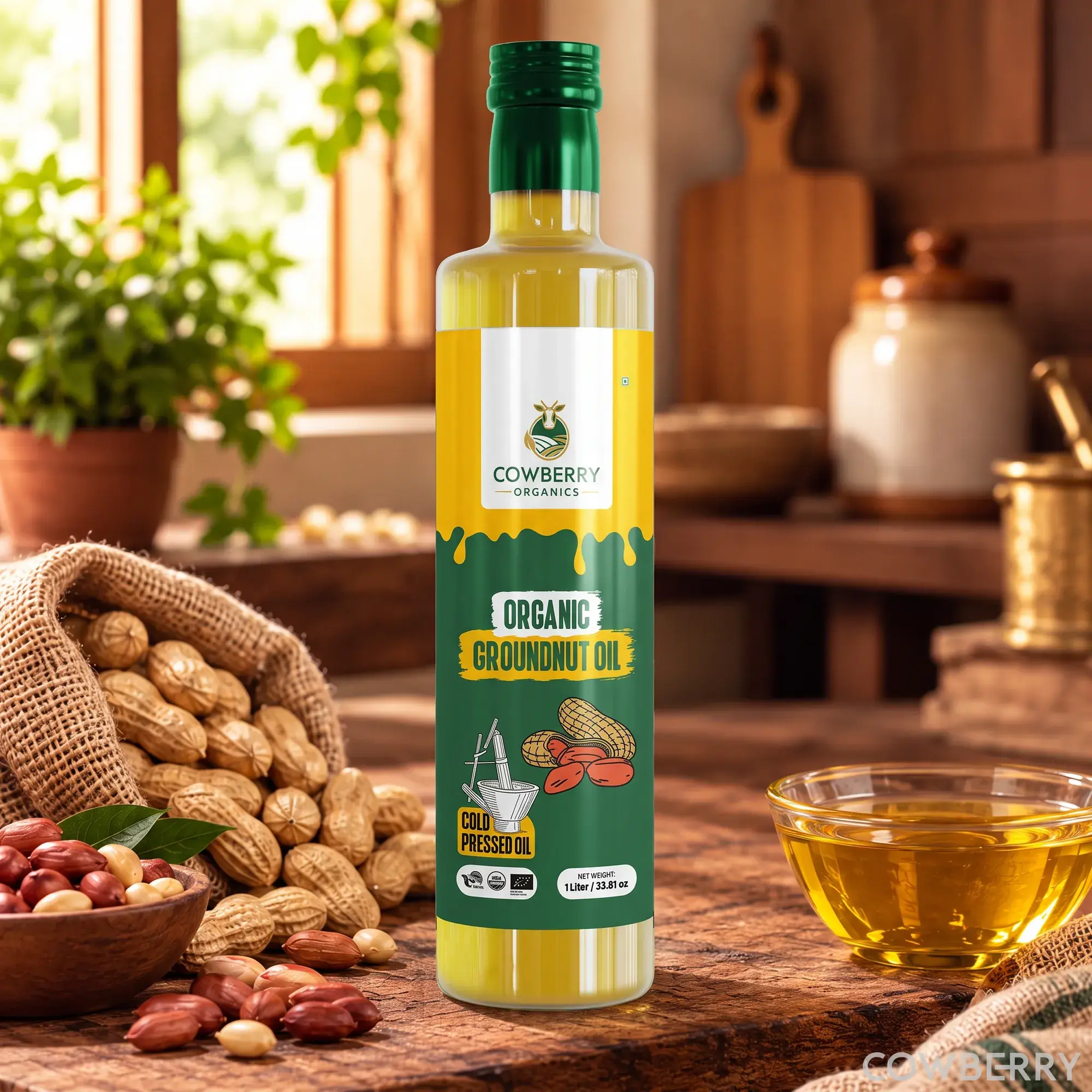
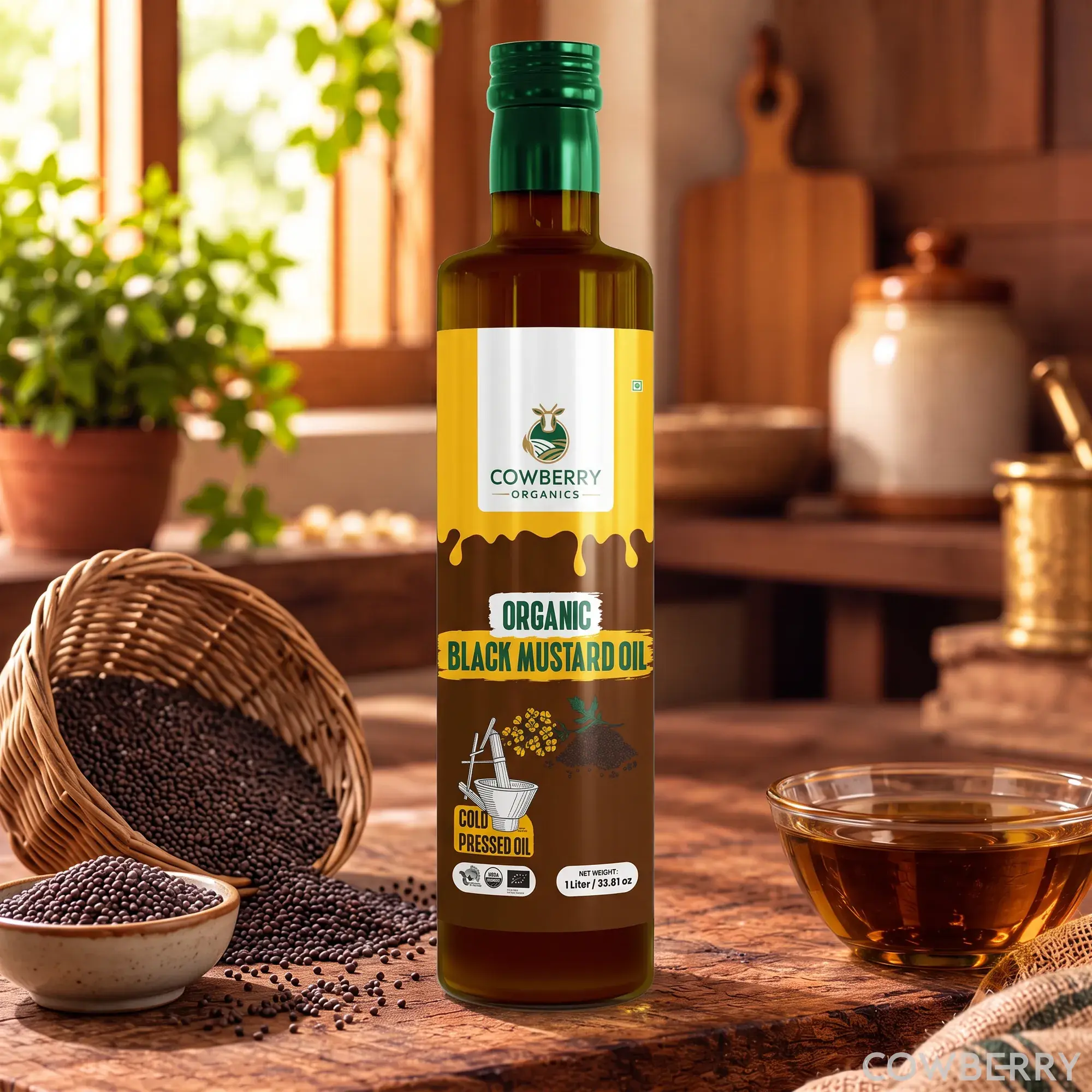
COWBERRY's product facts advise keeping its oils in a cool place away from direct sunlight, and any cooking oil bottle can be kept the same way. If the two oils COWBERRY does press interest you, the guides to mustard oil and groundnut oil cover each seed; its cold-pressed groundnut oil is suited to frying and sauteing, with a mild, nutty flavour.
Which oil for whom
- You eat few omega-3 foods like flax, walnut or soyabean: soybean oil is the one of the two in the guidelines' table of oils that furnish n-3; sunflower oil is not in that table.
- You fry often: either works, with the amount and the reuse rules above mattering more than the seed.
- You want little taste from the oil: both are usually mild, and the guidelines say refining removes the odour.
- You are watching cholesterol: both replace saturated fat, per the 2022 review, and WHO finds that replacing saturated fat with unsaturated fat lowers LDL cholesterol; neither oil contains cholesterol; the amounts are on low cholesterol oil.
- You already cook mostly in mustard or groundnut oil: the guidelines' table lists mustard/rapeseed oil at 0.7 g, less than soyabean oil's 1.5 g for the same 100 mg of n-3 PUFA, so soyabean oil adds nothing on n-3 that mustard oil lacks; groundnut oil is not in the table.
- You have heart disease or a doctor's diet plan: let the doctor or dietitian set the oil and the amount.
FAQs
Is refined oil good for health?
In moderation, as with every extracted seed oil: the guidelines say crude and refined oils alike may contain undesirable substances. Refining removes the odour and extends shelf life without altering the fatty acid composition, so a refined sunflower or soybean oil keeps the seed's fat split; it also removes small amounts of minor components and adds preservatives. The two oils on this page are usually sold refined, and neither carries cholesterol.
Difference between cold pressed and refined oil?
Cold pressing means expeller pressing with no heat applied, so the bottled oil keeps its antioxidants and phytonutrients, plus the compounds of crude oil. Refining chemically removes those compounds, takes the odour away and adds preservatives; the fatty acids themselves survive the refining, while shelf life grows and the odour goes. All the detail is on cold pressed oil vs refined oil.
What is cold pressed mustard oil?
Mustard seed pressed without heat and bottled unrefined, the kachi ghani oil of Indian kitchens. It matters to this comparison as the third option: a pungent, deep-coloured oil with a place in the guidelines' n-3 table, unlike sunflower oil. COWBERRY presses its mustard oil slowly from Rajasthan and Bengal seed, without heat or chemicals.
Which is better, sunflower oil or soybean oil?
Neither wins outright on the evidence in the guidelines. Both replace saturated fat, both are usually sold refined and neutral, and neither has a nutrition table here, so no composition figures separate them. Soybean oil has the one recorded difference: 1.5 g of it furnishes 100 mg of n-3 PUFA in the guidelines' table, where sunflower oil does not appear.
Is sunflower oil better than soybean oil for frying?
The guidelines record no head-to-head verdict and no smoke points, so not on evidence. Both are usually refined and neutral, and both are used for frying, within the rules that matter more: a moderate amount, oil used for frying not reused for frying, and used oil consumed in a day or two, as the guidelines ask.
Can I use soybean oil instead of sunflower oil?
Yes. Both are refined, neutral liquid oils, and the swap changes a dish's calories by nothing; it changes the fatty acid mix, and soyabean oil is the one of the two in the guidelines' n-3 table. What matters on both is the amount, the freshness and not reusing frying oil.
References
- Dietary Guidelines for Indians, ICMR-National Institute of Nutrition
- Indian Food Composition Tables (IFCT) 2017, ICMR-National Institute of Nutrition
- WHO guideline: saturated fatty acid and trans-fatty acid intake for adults and children (2023)
- Poddar KH, Sikand G, Kalra D et al. Mustard oil and cardiovascular health: why the controversy? J Clin Lipidol, 2022
- USDA FoodData Central (SR Legacy): Oil, mustard, FDC ID 172337
- USDA FoodData Central (SR Legacy): Oil, peanut, salad or cooking, FDC ID 171410
Shop this article
Keep reading
Cold pressed oil benefits: why they survive processing better
Mustard oil vs refined oil: nutrition, cooking and which to choose
Mustard oil omega 3: nutrition, calories and fat per 100g