by COWBERRY

5 minute read
Harbhara in English: kala chana names in Hindi and Indian languages

Harbhara in English is Bengal gram, the name IFCT 2017 gives the dark chickpea sold as kala chana or brown chana. The complete set of Indian-language names sits in the table below, every name as IFCT 2017 records it. The kala chana hub covers cooking and nutrition.
Harbhara in English and the other names: quick answer table
Harbhara in English is Bengal gram — Bengal gram, whole, to be exact, the name IFCT 2017 gives the dark desi chickpea, with Cicer arietinum as its botanical name. In shops and recipes the same grain is kala chana, brown chana or black chickpeas, three everyday names for one seed. The table holds the complete set of Indian-language names: thirteen languages plus the English name, each exactly as IFCT 2017 records it for Bengal gram, whole.
| Language | Name (romanised) |
|---|---|
| English | Bengal gram, whole |
| Hindi | Chana |
| Marathi | Harbara, Harbhara |
| Gujarati | Chana |
| Punjabi | Shole |
| Bengali | Chola |
| Odia | Buta |
| Assamese | Boot |
| Kannada | Kadale |
| Telugu | Sanagalu |
| Tamil | Kondaikadalai |
| Malayalam | Kadala |
| Urdu | Chana |
| Sanskrit | Chanak |
| Botanical name | Cicer arietinum |
Source: IFCT 2017 (ICMR-NIN) local-names list. — means no name recorded in the source.
Marathi ‘Harbhara’: spelling variant of the IFCT 2017 name ‘Harbara’.
Harbhara in English: the botanical name and what brown chana is
Bengal gram and brown chana are one thing. The seed behind the names is Cicer arietinum, the chickpea, and IFCT 2017 files the dark type under the English name Bengal gram, whole. A 2012 chickpea review in the British Journal of Nutrition fills in the grain itself: chickpea is a pulse crop grown and eaten all over the world, especially in Afro-Asian countries; starch leads its storage carbohydrates, with dietary fibre next; the lipids sit low but carry unsaturated fatty acids, linoleic and oleic among them; and the protein holds significant amounts of all the essential amino acids except the sulphur-containing ones, which can be complemented by adding cereals to the daily diet.
So harbhara in English — and brown chana in English — is Bengal gram, the desi chickpea, whether the pack says kala chana, brown chana or black chickpeas.
Kala chana names in Hindi, Marathi and the other Indian languages
The table above carries the whole set: Chana in Hindi, Harbara in Marathi, Chana in Gujarati, Shole in Punjabi, Chola in Bengali, Buta in Odia, Boot in Assamese, Kadale in Kannada, Sanagalu in Telugu, Kondaikadalai in Tamil, Kadala in Malayalam, Chana in Urdu and Chanak in Sanskrit. Every one of these comes from the same IFCT 2017 list for Bengal gram, whole. The everyday spellings on Indian shelves vary — harbhara and harbara are the same Marathi word written two ways — and harbhara dal, with the extra word, names the split grain, chana dal.
Often confused with: brown chana, kabuli chana and harbara dal
- Kala chana and brown chana: the same grain — kala chana on Hindi lips, brown chana on the pack — and IFCT 2017 files both as Bengal gram, whole.
- Kabuli chana: the white type, not another name for the black one. USDA lists it as chickpeas, garbanzo beans, bengal gram, and the white type has its own guide at the kabuli chana hub.
- Harbhara and harbara dal: harbhara is the Marathi name of the whole gram; harbhara dal names the split, skinned grain, whose English name is Bengal gram, dal — chana dal in the kitchen.
Where the chickpea behind harbhara is grown
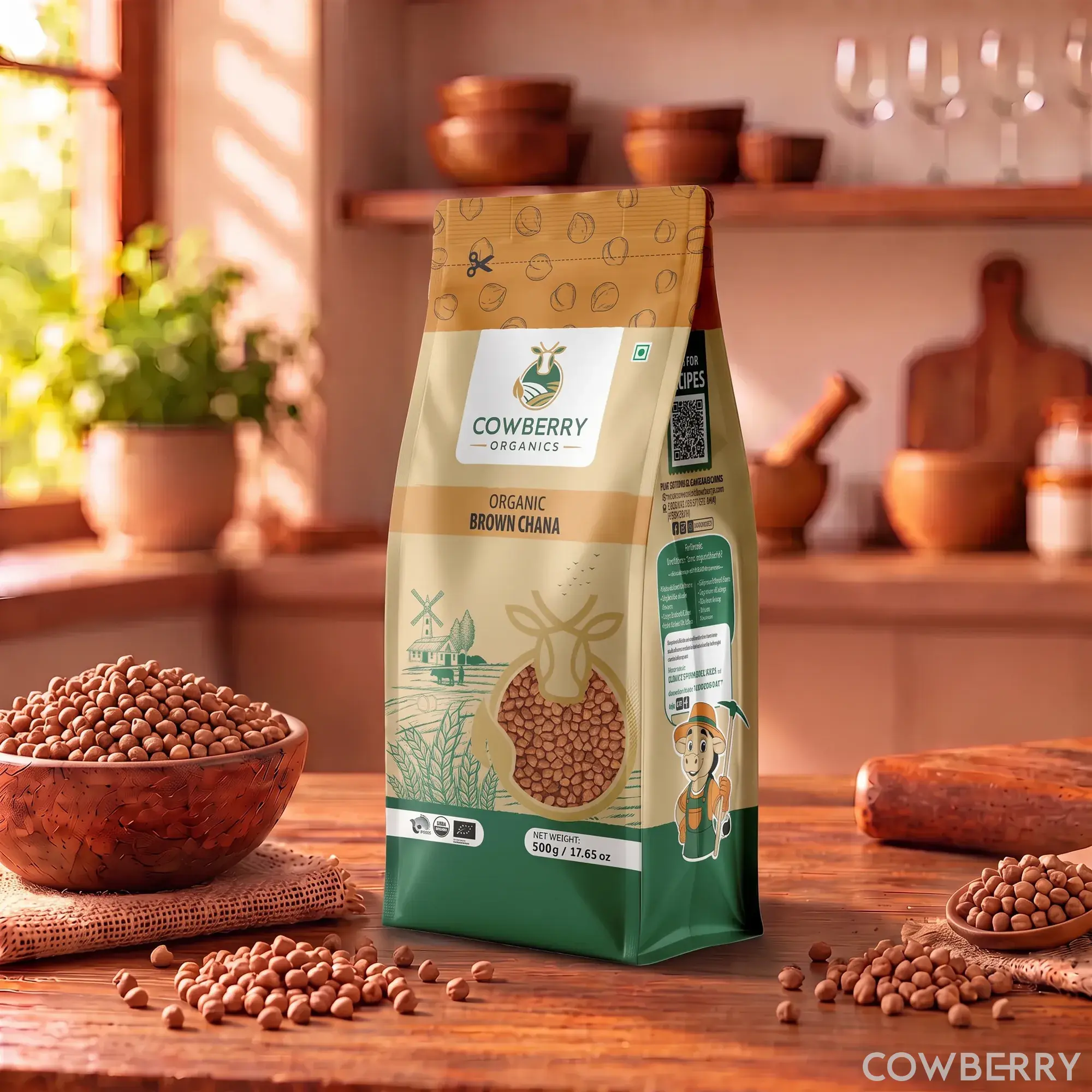
Kala chana is a pulse in the strict sense: the FAO counts chickpeas among the most well-known and commonly consumed types of pulses, the edible dry seeds of leguminous plants. COWBERRY's own brown chana is desi chickpea grown with cow-based organic farming in the fertile soils of Central and Northern India, harvested at full maturity and left unpolished, which keeps its dense texture and nutty flavour. For the names, soak times and every kala chana recipe, start with the kala chana hub; the kala chana curry recipe shows the grain at work.
FAQs
What is kala chana called in english?
Bengal gram — Bengal gram, whole, as IFCT 2017 files it, with the botanical name Cicer arietinum. On packs and in recipes the same dark chickpea is also called brown chana and black chickpeas, so the three English-facing names are one seed.
What kala chana called in english?
The same answer from the shelf: kala chana is sold as brown chana, which is the desi chickpea or Bengal gram. The IFCT 2017 name for the whole grain is Bengal gram, whole, and every Indian-language name in the table above belongs to that one seed.
What is black chickpeas called?
In Hindi, chana; in Marathi, harbara; in Tamil, kondaikadalai; in Kannada, kadale; in Bengali, chola — the full thirteen-language list is in the table above. The English name for the whole grain is Bengal gram, and black chickpeas is itself the everyday English name.
What is kala chana?
The dark, small-seeded desi type of chickpea, Cicer arietinum, eaten whole in curries, chaat and sprouted salads across India. Kala is the Hindi word for black, so kala chana is literally black chana; brown chana is the same grain under its shop name.
Difference between kala chana and brown chana?
None. Kala chana is the Hindi name for the dark chickpea and brown chana is the trade name for the same desi grain; both are Bengal gram, whole, in IFCT 2017. A pack of brown chana is a pack of kala chana.
Difference between black chickpeas and white chickpeas?
Colour, size and seed type. Black chickpeas are the small, dark desi type — Bengal gram — and white chickpeas the larger kabuli type; the two are set side by side, number by number, on the kala chana vs kabuli chana page.
References
Shop this article
Keep reading
Green gram plant: crop, varieties and how it grows in India
Rajma vs lobia: difference, nutrition and which to choose
Rajma plant: how rajma is grown in India (it is not a tree)