by COWBERRY

6 minute read
Saunf how to use: how to eat fennel seeds daily and in cooking

Saunf how to use: the same fennel seeds work three ways, chewed whole after a meal, steeped into tea or water, and stirred into cooking from tadka to sweets. Home quantities are pinches and teaspoons, not doses; one teaspoon of whole saunf weighs about 2 g. The fennel seeds hub covers the seed itself, and the six methods follow.
Short answer
Six ways, in one line each: chew a small spoonful after meals; brew saunf tea; soak a teaspoon overnight for saunf water; roast and grind the seeds into masalas and spice blends; stir them into sweets and festive drinks such as thandai; and bake them into baked goods. The seed stays the same in all six; only the form changes, whole, crushed, ground or steeped.
Fennel seeds how to eat: six ways that work
- Chew a small spoonful after a meal. The classic Indian use: a pinch to a teaspoon taken neat after lunch or dinner. The seeds are mildly sweet with a refreshing aftertaste, which is the whole point of the habit.
- Brew saunf tea. Lightly crush the seeds so the water reaches inside, steep in hot water and strain. The saunf tea recipe gives the full method and timings.
- Soak for saunf water. One teaspoon in a glass of water, left overnight, makes the everyday drink; the overnight method and when to drink it are on the how to make saunf water page.
- Roast and grind into masalas. A quick dry roast deepens the aroma, and ground saunf belongs in Indian spice blends and the masala for baked goods. Roast only as much as a dish needs and grind it fresh.
- Stir into sweets and festive drinks. Whole or ground, saunf's sweet note suits desserts and festive drinks; thandai is the classic, made to the thandai recipe.
- Temper into savoury dishes. A pinch of whole saunf goes into the tempering of curries and vegetable dishes alongside the other whole spices, adding its sweet edge without taking over.
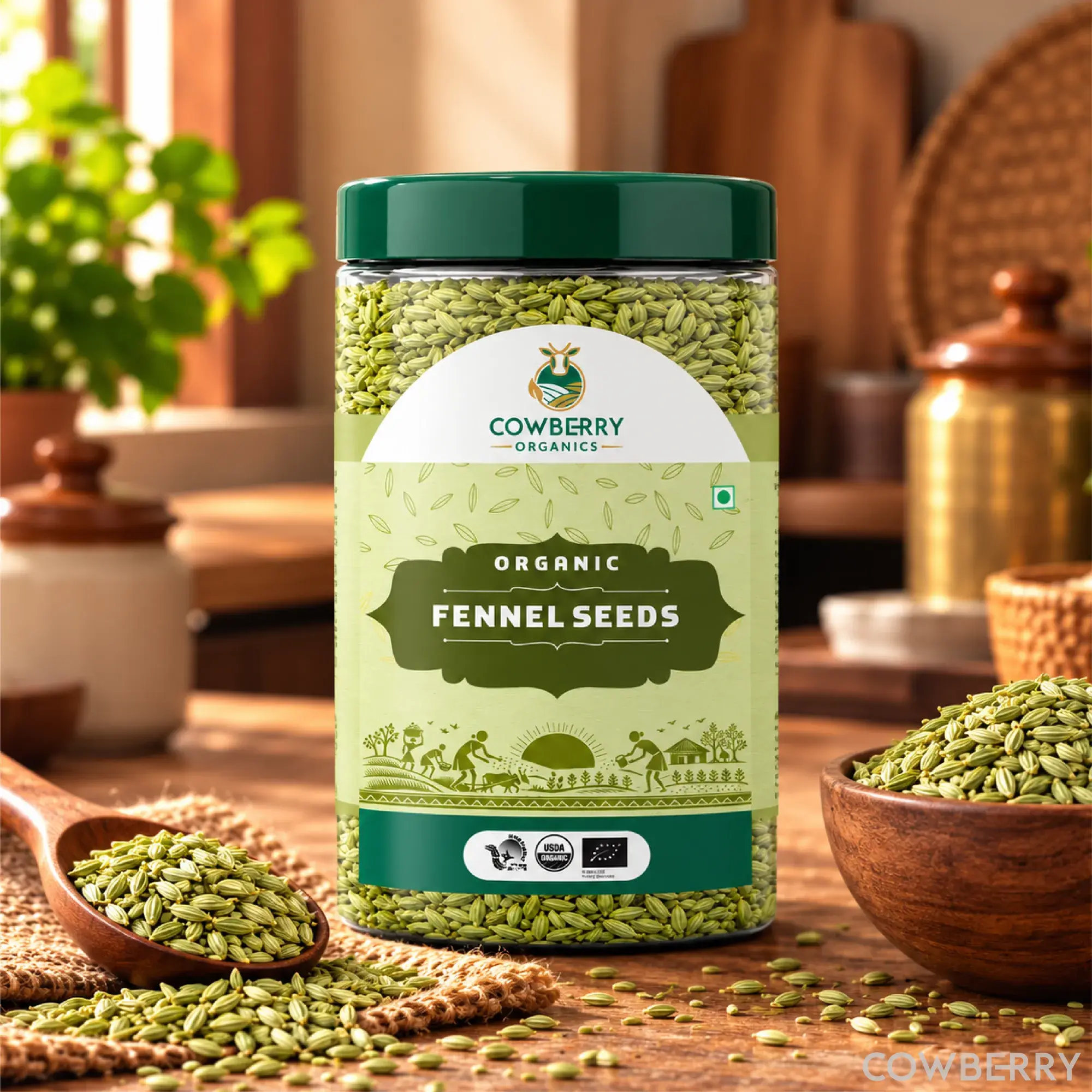
At the shop, the seed to reach for is the bright green one; the guide to which fennel seeds are good walks through the choice, and ajwain vs saunf sorts saunf from its pungent look-alike.
How much saunf per day
Saunf is a seasoning, so the honest guide is what kitchens actually use: pinches and teaspoons, whether chewed, brewed or cooked. One teaspoon of whole saunf weighs about 2 g, and that spoon gives roughly 7 kcal, 0.8 g of fibre and 24 mg of calcium; the per-100 g figures behind it are 345 kcal, 39.8 g of fibre and 1200 mg of calcium in the USDA FoodData Central record for fennel seed. A 2014 review of culinary herbs and spices makes the matching point: these foods are normally eaten in small quantities, so any true health benefit is hard to pin down.
Common mistakes
- Using saunf where the recipe means ajwain. The two seeds are different spices: saunf is sweet and refreshing, ajwain bold and pungent, so a swap changes the dish. Ajwain vs saunf sets them side by side.
- Throwing out a jar because it smells mild. A quiet aroma from the pack is normal: the seeds release their full aroma when lightly roasted or gently crushed.
- Scorching the seeds in the tadka. Keep the oil at a medium heat when whole saunf goes in and move the pan along at the first sizzle; seeds left in oil that is too hot darken and spoil the tempering.
- Confusing saunf with its relatives at the shop. Ajwain, cumin and aniseed share a shelf with saunf; the fennel seeds in hindi page names them in their Indian languages so the right jar comes home.
- Leaving the pack open. Airtight storage holds the aroma; the full method is on how to store fennel seeds.
Time and quantity table
The six ways condense into one table, with the per-teaspoon numbers at the bottom. One teaspoon of whole saunf is taken as 2 g here.
| Use | Amount | Time or note |
|---|---|---|
| Chewed after a meal | A pinch to a teaspoon | Any time of day; many homes take it after lunch or dinner |
| Saunf tea | 1 tablespoon for 2 cups in the recipe, lightly crushed | Steeped and strained; full method in the saunf tea recipe |
| Saunf water | One teaspoon in a glass of water | Soaked overnight; see how to make saunf water |
| Tadka and spice blends | A pinch to half a teaspoon | Added with the other whole spices over a medium heat |
| Sweets and festive drinks | 2 tablespoons for 4 cups of milk in the thandai recipe | Whole or ground, as in thandai |
| One teaspoon, as an example | 2 g | 7 kcal, 0.8 g of fibre, 24 mg of calcium |
For the rest of the story, names, nutrition and benefits, the fennel seeds hub gathers it all; this page stops at the spoon.
FAQs
How much saunf to eat daily?
There is no set number for saunf. Homes use a pinch to a teaspoon, chewed after meals, brewed into tea or cooked into food. Think of it like any flavouring: enough to season the day, not a quantity to chase.
Why saunf is eaten after food?
For the taste. Saunf is mildly sweet with a refreshing aftertaste, so a small spoonful after a meal works as a mouth freshener, and chewing releases more of the aroma. The habit is widespread in Indian homes, though the studies behind the reputation are mostly preclinical, and the human evidence for a digestion effect is thin. Eat it for the flavour, and it has done its job.
Can saunf be eaten in fast?
Yes, in everyday practice. Saunf is a spice, not a grain, and homes commonly keep it on fasting days: a pinch chewed on its own, or a glass of saunf water soaked overnight. Keep it plain and unsweetened, and it stays a small, simple extra on the fast-day plate.
Which fennel seeds are good?
Bright green seeds, the colour of fresh saunf, and whole seeds rather than pre-ground powder, because the aroma sits inside the seed until it is roasted or crushed. Choose seeds that are evenly green and keep them in an airtight jar once the pack is open. The guide to which fennel seeds are good compares the types in detail.
Does saunf helps in digestion?
The human evidence for that is thin. The 2024 fennel review in Critical Reviews in Food Science and Nutrition rests mostly on preclinical studies, and the review itself points to gaps in the literature that future research needs to fill. What is certain is the flavour, mildly sweet and refreshing, which is reason enough to chew it.
Is fennel seeds good for health?
Fennel seeds are a kitchen staple with a sweet, refreshing flavour, and there is little human evidence of a health effect. A 2014 review of culinary herbs and spices notes that such foods are eaten in amounts too small to prove a true health benefit, so judge saunf by its flavour, not by promises. The numbers are on the fennel seeds nutritional value per 100g page.
References
- USDA FoodData Central
- Rafieian F, Amani R, Rezaei A et al. Exploring fennel (Foeniculum vulgare): Composition, functional properties, potential health benefits, and safety. Crit Rev Food Sci Nutr, 2024
- Opara EI, Chohan M. Culinary herbs and spices: their bioactive properties, the contribution of polyphenols and the challenges in deducing their true health benefits. Int J Mol Sci, 2014
Shop this article
Keep reading
Coriander water benefits: what dhania water actually does
Peanuts in Hindi (moongfali): groundnut names in Indian languages
Coriander vs cilantro: are they the same herb?