by COWBERRY

5 minute read
Ajwain vs saunf: nutrition, taste and which to choose

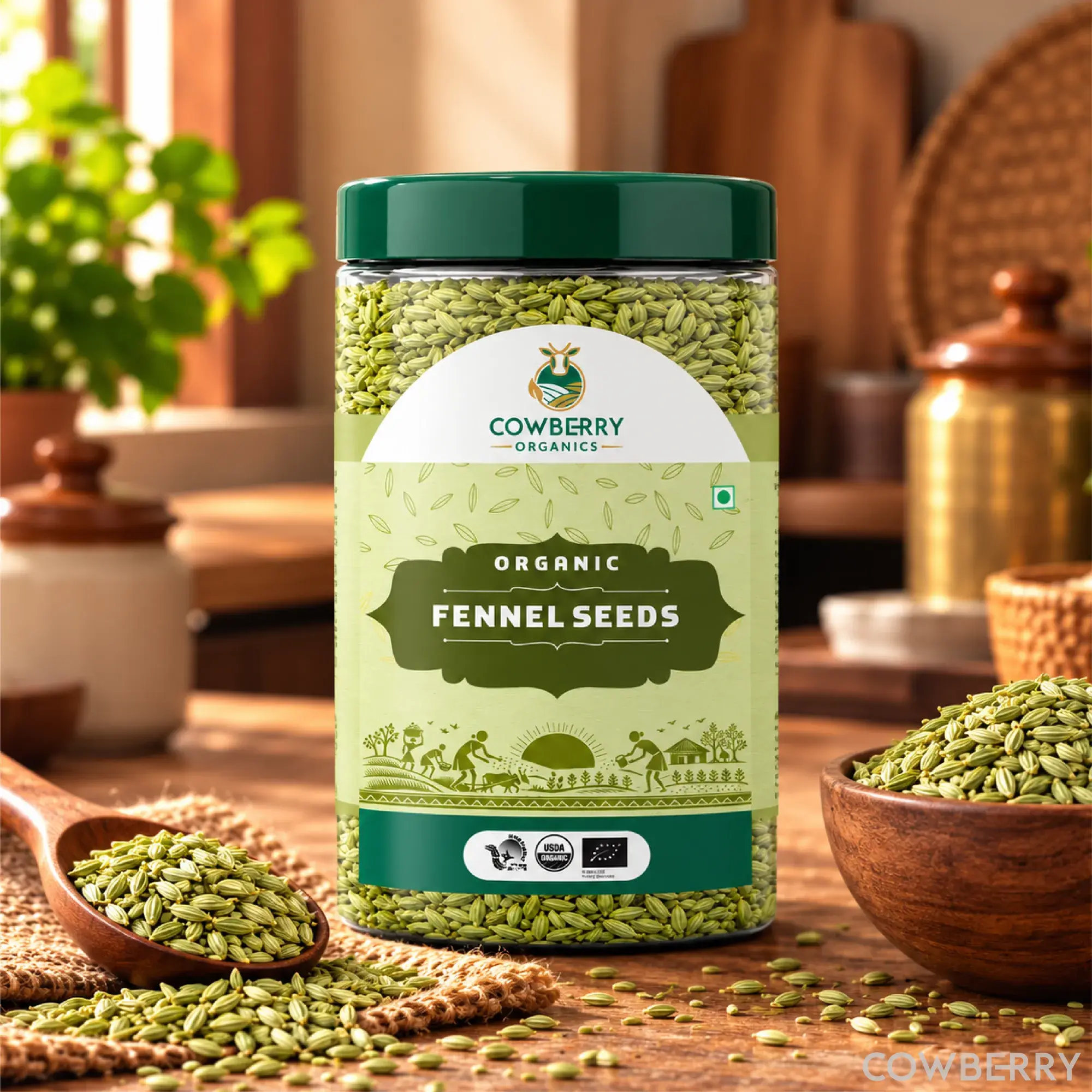
Ajwain vs saunf, in one line: they are two different spices from two different plants. Saunf is the sweet, refreshing seed of fennel (Foeniculum vulgare); ajwain is the bold, pungent seed of ajwain (Trachyspermum ammi). Everything below, the names, the nutrition figures and the cooking, follows from that single difference. The fennel seeds hub covers saunf in full.
Verdict in three lines
Saunf is the mildly sweet seed, built for the after-meal bowl, tea and sweets. Ajwain is the strong, savoury seed, built for tadka, parathas and mathri. On paper saunf leads on fibre and calcium and ajwain on fat and zinc, but both are eaten by the pinch, so the real verdict is the dish you are making.
The numbers behind that verdict sit in the nutrition section below, and the two seeds are not substitutes for each other.
Ajwain vs saunf: names, taste and everyday use side by side
The two seeds are told apart by name, taste and job before you ever open a packet, and the Hindi names are the fastest tell: saunf against ajwan. In English the pair is fennel seeds and carom seeds, though IFCT 2017 records ajwain's English name as omum.
| Saunf (fennel seeds) | Ajwain (carom seeds) | |
|---|---|---|
| English name | Fennel seeds | Ajwain; omum in IFCT 2017 |
| Hindi name | Saunf | Ajwan |
| Botanical name | Foeniculum vulgare | Trachyspermum ammi |
| Taste | Mildly sweet with a refreshing aftertaste | Bold and pungent |
| Where it is used | After-meal chewing, teas, sweets and baked goods | Tadka, parathas, mathri and other savoury dishes |
The Indian-language names of saunf are on the fennel seeds in hindi page.
Nutrition: fennel seeds vs ajwain per 100 g
The two sets of figures come from different composition tables, so read them as neighbours, not rivals: saunf's figures are the USDA FoodData Central record for fennel seed, ajwain's are IFCT 2017. Down the columns the split is plain. Fibre: 39.8 g for saunf against 20.58 g for ajwain, about 1.9 times as much. Calcium: 1200 mg against 1034 mg; iron 18.5 mg against 13.65 mg; magnesium 385 mg against 273 mg. Ajwain answers with fat, 21.11 g against 14.9 g, and zinc, 5.67 mg against 3.7 mg. Potassium is level at 1690 mg to 1692 mg, and energy at 345 kcal to 358 kcal. The USDA record for saunf lists 21 mg of vitamin C; IFCT 2017 lists none for ajwain. Neither the USDA record nor IFCT 2017 lists a glycemic index for these seeds, so no GI figure is given. In the kitchen both are used by the pinch, which shrinks every gap above to almost nothing.
| Nutrient | Fennel seeds (saunf) | Ajwain (carom) |
|---|---|---|
| Energy (kcal) | 345 | 358 |
| Protein (g) | 16 | 16 |
| Fat (g) | 15 | 21 |
| Carbohydrates (g) | 52 | 25 |
| Dietary fibre (g) | 40 | 21 |
| Iron (mg) | 18 | 14 |
| Calcium (mg) | 1200 | 1034 |
| Magnesium (mg) | 385 | 273 |
| Potassium (mg) | 1690 | 1692 |
| Sodium (mg) | 88 | 29 |
| Zinc (mg) | 3.7 | 5.7 |
| Folate (mcg) | — | 52 |
| Vitamin C (mg) | 21 | — |
Per 100 g raw, edible portion. Composition: USDA FoodData Central (SR Legacy), FDC ID 171323, NDB 2018; IFCT 2017 (ICMR-NIN). — means not reported. These are average values for the food; the label on a pack gives the values for that product.
Taste and cooking
Saunf's sweetness makes it the tea-and-sweets spice. Crushed seeds steeped in hot water give saunf tea; soaked overnight it becomes the everyday saunf water; ground into milk, nuts and spices it flavours thandai. Baked goods and spice blends take it too.
Ajwain's pungency is a savoury tool: it goes into the tadka and into paratha and mathri doughs, where its bold, pungent note carries the dish. In a recipe the two are not one-for-one swaps; ajwain would overpower a sweet, and saunf's mild sweetness disappears in a tadka. What to reach for when neither is at hand is on the substitutes guide for carom seeds, and the ajwain hub covers carom seeds on their own.
Cost and where each fits
Both are everyday masala spices bought in small packs, so cost rarely decides the choice; the dish decides. Saunf fits the sweet side of the kitchen: the after-meal bowl, tea, saunf water, festive drinks and baked sweets. Ajwain fits the savoury side: tadka, parathas and mathri. Many kitchens keep both jars side by side and reach for them in different pots, and both keep well for months in dry, airtight jars away from light.
Which for whom
- After-meal chewing and tea: saunf. It is mildly sweet and refreshing, the seed people chew after dinner.
- Tadka, flatbreads and savoury baking: ajwain. Its bold pungency is built for savoury dishes such as parathas and mathri.
- Sweets and festive drinks: saunf, whole or ground, as in thandai.
- Anyone still unsure: the table above, plus the fennel seeds hub and the ajwain hub, which each cover their spice in full.
FAQs
Difference between carom seeds and fennel seeds?
Carom seeds are ajwain and fennel seeds are saunf: two different plants with opposite tastes. Fennel is Foeniculum vulgare, mildly sweet with a refreshing aftertaste; carom is Trachyspermum ammi, bold and pungent. The Hindi names say it all, saunf against ajwan. In the kitchen fennel goes into tea, sweets and the after-meal bowl, while carom goes into tadka, parathas and mathri.
Difference between ajwain and fennel seeds?
Ajwain is the strong, savoury spice and fennel seeds are the mild, sweet one. Ajwain, sold in English as carom seeds, comes from Trachyspermum ammi; fennel seeds are saunf, from Foeniculum vulgare. Their Indian names differ across the board: ajwan against saunf in Hindi. Per 100 g, saunf carries 39.8 g of fibre to ajwain's 20.58 g, while ajwain carries 21.11 g of fat to saunf's 14.9 g.
Difference between fennel seeds and cumin seeds?
Two different plants from the same botanical family. Cumin is Cuminum cyminum, which a 2021 review describes as indigenous to Egypt, the Mediterranean and South Asian countries; fennel is Foeniculum vulgare, a Mediterranean herb. In the kitchen cumin belongs to savoury tempering and spice blends, while fennel leans to tea, sweets and the after-meal bowl. They are not substitutes for each other.
Is saunf good for health?
For health, saunf's record is thin. A 2024 review of fennel reports antibacterial, antiviral, antioxidant and anti-inflammatory activity, mostly from in vitro and in vivo studies, and a 2014 review of culinary spices notes that the small quantities eaten in cooking make a true health benefit hard to pin down. Saunf's solid contribution is flavour. The nutrient breakdown is on the fennel seeds nutritional value per 100g page.
References
- Indian Food Composition Tables (IFCT) 2017, ICMR-National Institute of Nutrition
- USDA FoodData Central
- Rafieian F, Amani R, Rezaei A et al. Exploring fennel (Foeniculum vulgare): Composition, functional properties, potential health benefits, and safety. Crit Rev Food Sci Nutr, 2024
- Opara EI, Chohan M. Culinary herbs and spices: their bioactive properties, the contribution of polyphenols and the challenges in deducing their true health benefits. Int J Mol Sci, 2014
- Singh N, Yadav SS, Kumar S et al. A review on traditional uses, phytochemistry, pharmacology, and clinical research of dietary spice Cuminum cyminum L. Phytother Res, 2021
Shop this article
Keep reading
Coriander water benefits: what dhania water actually does
Peanuts in Hindi (moongfali): groundnut names in Indian languages
Coriander vs cilantro: are they the same herb?