by COWBERRY

5 minute read
Fennel seeds in hindi and english: saunf names in indian languages

Fennel seeds in Hindi is saunf, and in English the same seeds are fennel seeds, botanical name Foeniculum vulgare. Gujarati has variyali, Bengali mouri, Odia pana madhuri, Kannada sompu kaalu, Tamil sombu and Telugu sopu ginjalu. Each name below carries its source under the table, and the fennel seeds hub covers the seed itself.
Quick answer: fennel seeds in Hindi and seven more languages
One line per language, with Hindi first: saunf in Hindi and Punjabi; variyali in Gujarati; mouri in Bengali; pana madhuri in Odia; sompu kaalu in Kannada; sombu in Tamil; and sopu ginjalu in Telugu. In English the seed is fennel seed, and the botanical name is Foeniculum vulgare.
None of the composition tables list fennel's Indian names, so each Indian-language name below carries its own source under the table, written in Latin letters and spelt as its source prints it.
| Language | Name (romanised) |
|---|---|
| English | Spices, fennel seed |
| Hindi | Saunf |
| Marathi | — |
| Gujarati | Variyali |
| Punjabi | Saunf |
| Bengali | Mouri |
| Odia | Pana Madhuri |
| Assamese | — |
| Kannada | Sompu Kaalu |
| Telugu | Sopu Ginjalu |
| Tamil | Sombu |
| Malayalam | — |
| Urdu | — |
| Sanskrit | — |
| Botanical name | Foeniculum vulgare |
Source: USDA FoodData Central record 171323 (English and scientific name only; no Indian-language names in source). — means no name recorded in the source.
Hindi ‘Saunf’: Wikipedia: Fennel. Gujarati ‘Variyali’: Wikipedia: List of plants used in Indian cuisine. Punjabi ‘Saunf’: Wikipedia: List of plants used in Indian cuisine. Bengali ‘Mouri’: Wikipedia: Panch phoron. Odia ‘Pana Madhuri’: Wikipedia: List of plants used in Indian cuisine. Kannada ‘Sompu Kaalu’: Wikipedia: List of plants used in Indian cuisine. Telugu ‘Sopu Ginjalu’: Wikipedia: List of plants used in Indian cuisine. Tamil ‘Sombu’: Wikipedia: Chettinad cuisine.
Fennel seeds in English and the botanical name
In English the seeds are fennel seeds; the USDA FoodData Central record for the spice prints the English name as 'Spices, fennel seed'. The botanical name is Foeniculum vulgare, and a 2024 review in Critical Reviews in Food Science and Nutrition places the plant in the Apiaceae family and describes it as a hardy perennial herb. The word fennel descends from the Latin faeniculum, also faenum, meaning hay, after the plant's feathery, hay-like leaves.
Saunf and fennel are one thing, not two: saunf is the Hindi word for the seed, and a pack labelled saunf and a pack labelled fennel seeds hold the same spice; the fennel seeds hub covers what the seed offers in the kitchen.
Names by region
North India: saunf in Hindi and Punjabi
Hindi calls the seeds saunf, and Punjabi prints the same word. It is also the name behind the after-meal habit of eating the seeds raw or roasted as mukhwas, a breath freshener.
West India: variyali in Gujarati
Gujarati has variyali. Beyond the table, the pack's own search names print badishep for the same seed.
East India: mouri in Bengali, pana madhuri in Odia
Bengali has mouri, the name printed for the seed in the five-spice mix panch phoron; Odia prints pana madhuri.
South India: sombu in Tamil, sompu kaalu in Kannada, sopu ginjalu in Telugu
Tamil has sombu, printed for fennel in the Chettinad spice list; Kannada prints sompu kaalu and Telugu prints sopu ginjalu. The pack's search names also list perumjeerakam.
The names this page could not pin down
Assamese, Malayalam, Urdu and Sanskrit names for fennel did not surface in any checked source, so the table leaves those cells blank rather than guess.
Often confused with
- Saunf and fennel: the same seed. Saunf is the Hindi word for fennel seeds, and nothing separates the two jars.
- Ajwain: a different plant altogether, bold and pungent where saunf is sweet. The ajwain vs saunf page sets them side by side.
- Cumin: Cuminum cyminum, a third seed on the same shelf; a 2021 review places cumin in the same Apiaceae family as fennel. They are different spices.
- Aniseed: a separate plant, not another name for saunf; an Indian recipe that says saunf wants fennel seeds.
Where fennel grows
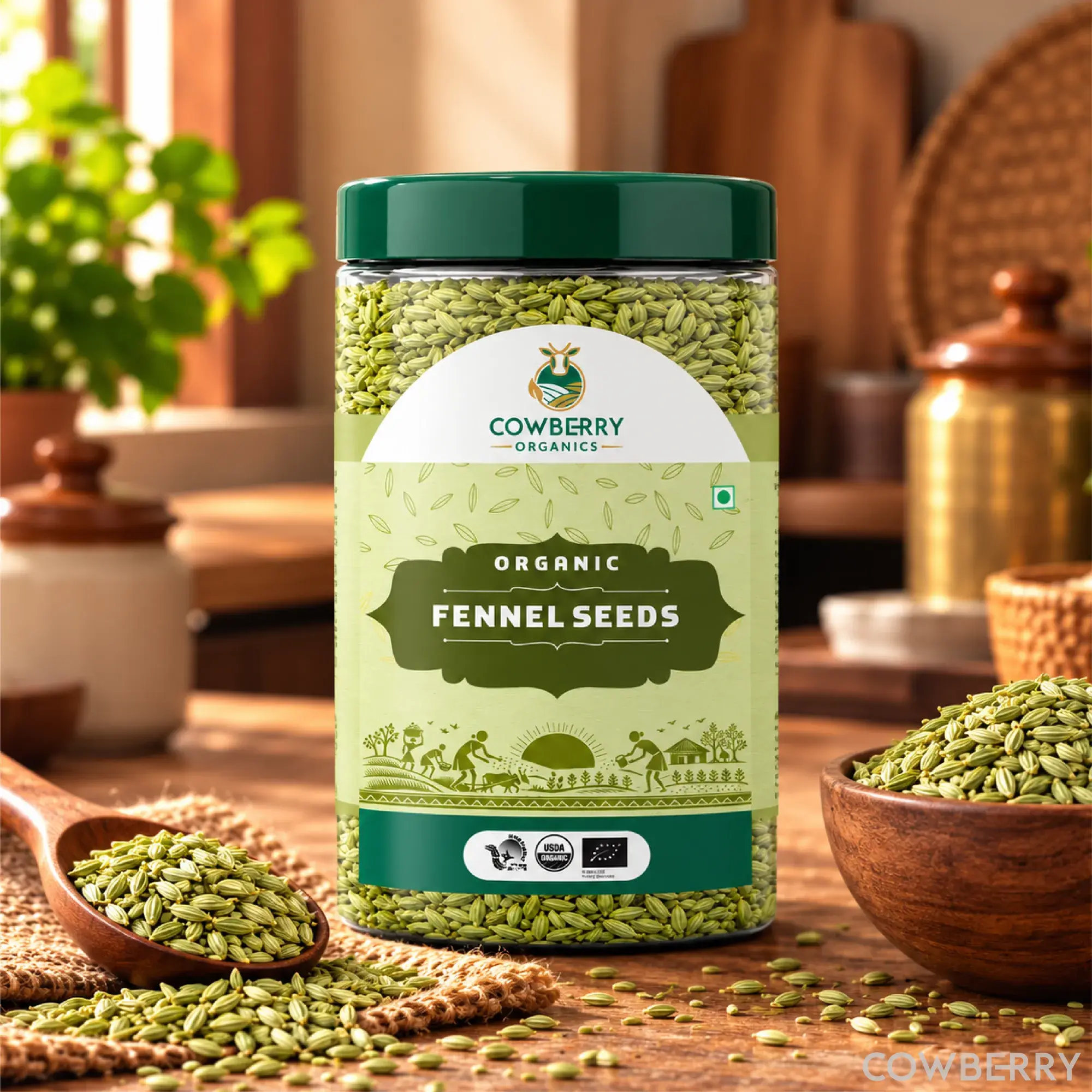
A 2024 review in Critical Reviews in Food Science and Nutrition says fennel is generally considered native to the Mediterranean shores and has become widespread in many regions of the world; the same review describes a hardy perennial herb long used as a medicinal and culinary plant. COWBERRY's saunf comes from the plains of Rajasthan, where the semi-arid climate and sandy loam soils suit the crop, and is sold whole as organic fennel seeds. Cook with it: saunf flavours the festive thandai and the everyday saunf tea.
FAQs
What is fennel seeds in hindi?
Fennel seeds in Hindi is saunf. The word covers the whole seed, the spice jars on shop shelves and the mouth-freshening pinch after a meal, and it is the name used across Hindi-speaking homes. The botanical plant is Foeniculum vulgare; saunf is simply its Hindi word.
What is saunf called in english?
Saunf in English is fennel seeds; the USDA FoodData Central record for the spice prints the English name as 'Spices, fennel seed'. The plant is Foeniculum vulgare, of the Apiaceae family. A jar of saunf and a jar labelled fennel seeds hold exactly the same spice, one name Hindi, one English.
Is saunf and fennel same?
Yes, they are exactly the same thing. Saunf is the Hindi name and fennel seeds is the English name for the seed of Foeniculum vulgare. There is no second spice hiding behind either word; a recipe asking for saunf and one asking for fennel seeds want the same green seeds from the same jar.
Difference between fennel seeds and aniseed?
They are two different plants. Fennel is Foeniculum vulgare, the seed behind saunf; aniseed comes from a separate, similar-tasting plant, and fennel itself is sometimes mislabelled as anise, the two being easy to mix up. When an Indian recipe says saunf it means fennel seeds, so aniseed is not the swap.
Which saunf is good for digestion?
No variety of saunf has proven digestion benefits behind it; the research on fennel is mostly preclinical. So choose by freshness and look, bright green whole seeds in an airtight pack, and let the flavour do the rest. The which fennel seeds are good guide compares the types.
References
- USDA FoodData Central
- Rafieian F, Amani R, Rezaei A et al. Exploring fennel (Foeniculum vulgare): Composition, functional properties, potential health benefits, and safety. Crit Rev Food Sci Nutr, 2024
- Singh N, Yadav SS, Kumar S et al. A review on traditional uses, phytochemistry, pharmacology, and clinical research of dietary spice Cuminum cyminum L. Phytother Res, 2021
Shop this article
Keep reading
Coriander water benefits: what dhania water actually does
Peanuts in Hindi (moongfali): groundnut names in Indian languages
Coriander vs cilantro: are they the same herb?