by COWBERRY

5 minute read
How to make saunf water: overnight soak and when to drink it

How to make saunf water: steep one teaspoon of fennel seeds (about 2 g) in a 250 ml glass of water overnight, 6 to 8 hours, strain out the seeds in the morning and drink the water plain, chilled or lightly warmed. It is the cold, no-heat way with fennel seeds, and the same seeds also make hot saunf tea.
The overnight soak, briefly
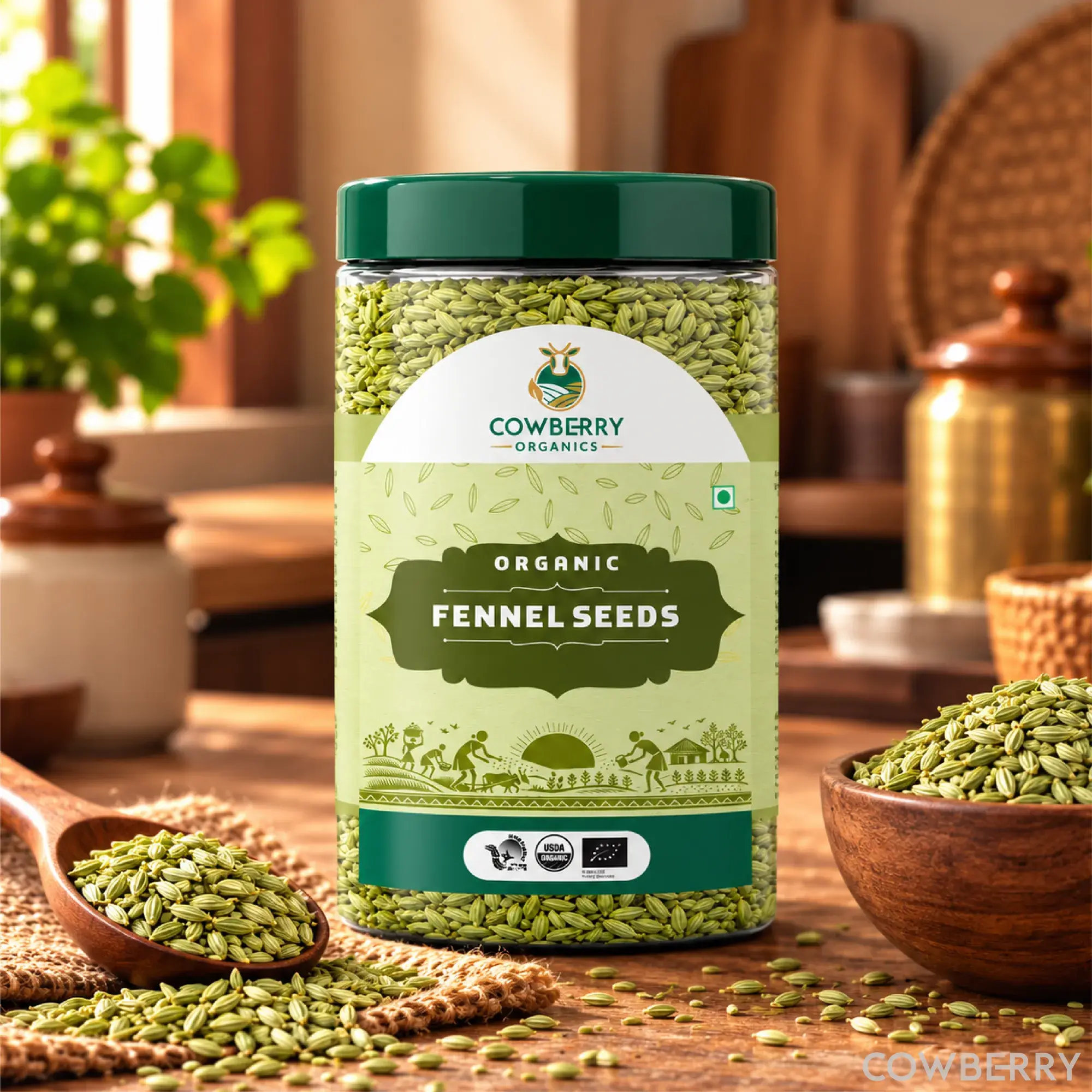
One teaspoon of fennel seeds, one 250 ml glass of water, one night: that is the whole recipe. The seeds soften and hand the water their pale colour and gentle sweetness, and you strain them out before drinking. A light crush first releases more aroma, which is why crushed or roasted saunf smells stronger than raw. Keep expectations plain, though. A 2014 review in the International Journal of Molecular Sciences notes that because spices are eaten in small amounts, usually with other foods, their true health benefit is hard to establish, and no published trial has tested this drink itself. What the teaspoon does carry, per the USDA food tables, is about 7 kcal, 0.8 g fibre, 24 mg calcium and 0.4 mg iron. The seed behind the drink is the fennel seeds one.
Step by step: how to make saunf water at night
- Measure. One level teaspoon of fennel seeds (about 2 g) per 250 ml glass. More than a teaspoon makes the drink strong and harsh rather than mild.
- Rinse. Swirl the seeds in a strainer under running water and drain; this takes off the dust that travels with any whole spice.
- Crush lightly. Press the seeds once with the back of a spoon. Fennel releases its full aroma once crushed, so this step gives a stronger glass; skip it for a milder one.
- Add the water and cover. Pour 250 ml of clean water over the seeds in a glass or small jar, stir once and cover the mouth with a lid or a small plate.
- Soak overnight, 6 to 8 hours. Room temperature is fine in cool weather. In the warm months the water can turn by morning, so set the covered jar in the fridge for the soak instead.
- Strain and drink. Pour through a tea strainer, press the seeds lightly with a spoon to get the last of the liquid, and drink. Finish the glass within the day; in warm weather keep it chilled.
A quicker method: steeped saunf water in 15 minutes
Short on time? Steep the same teaspoon of seeds in a cup of just-boiled water, covered, for 15 minutes off the flame, then strain. The hot steep pulls the flavour fast and gives a warm drink that sits close to saunf tea; chill the strained water if you want the cold version without the overnight wait. What the hot method should not do is boil: hard-boiling fennel seeds on the stove turns the water bitter, so bring the water to a boil, pour it over the seeds and leave the cup covered.
When to drink fennel seeds water
No published evidence fixes one best hour, so fit the glass around your day. Many homes drink it first thing in the morning before breakfast, or sip it after a meal, the moment when saunf is traditionally chewed. An evening or bedtime glass is also fine; the drink is simply fennel-flavoured water. One glass at a time is the usual measure, because the flavour is meant to stay gentle. If you are making it daily, the overnight jar becomes a habit the way morning tea does; keep it covered and the seeds fresh. Other everyday ways with the seed are in saunf how to use.
Common mistakes (and the time and quantity table)
- Too many seeds. A heaped spoonful per glass tastes medicinal; one level teaspoon is the balance.
- Boiling the seeds. A rolling boil turns the water bitter; soak cold or steep in just-boiled water, and skip the stove.
- Soaking out in summer heat. Warm water left overnight can sour; in hot months the covered jar goes in the fridge.
- Keeping the strained water for days. It is plain water with plant matter in it; make it fresh each morning or keep the day's glass chilled.
- Old, faded seeds. Seeds that have lost their colour and smell give flat water; start with fresh saunf — see which fennel seeds are good.
The numbers below are for one glass; the seeds are strained out before drinking.
| Step | Time or quantity |
|---|---|
| Fennel seeds | 1 teaspoon (about 2 g) per glass |
| Water | 250 ml per glass |
| Cold soak | 6 to 8 hours, overnight |
| Hot steep | 15 minutes in just-boiled water, covered |
| Straining | Before drinking, through a tea strainer |
| Keeps | The day it is made; chilled in warm weather |
| One teaspoon gives | About 7 kcal, 0.8 g fibre, 24 mg calcium, 0.4 mg iron |
FAQs
When to drink fennel seeds water?
Whenever it fits your day; no trial fixes an ideal hour. Morning before breakfast and after meals are the common times in Indian homes, and an evening glass works too, since the drink is only fennel-flavoured water. Pick a slot you will actually keep, and chill the jar in summer.
Can we drink saunf water at night?
Yes. A glass at bedtime is fine; saunf water is simply water steeped with a teaspoon of fennel seeds, with nothing in it that needs a daytime slot. If you soak it at night in warm weather, keep the covered jar in the fridge and strain it in the morning.
Can I soak fennel seeds overnight?
Yes, and overnight is the standard method. One teaspoon (about 2 g) of seeds in 250 ml of water, covered, for 6 to 8 hours; the seeds soften and the water takes on their flavour. In hot weather, move the jar to the fridge for the soak. Strain before drinking.
Does saunf helps in digestion?
No published trial has tested saunf water for digestion, so no honest page can promise it. A 2014 review in the International Journal of Molecular Sciences notes that the small amounts in which spices are eaten make their true health benefit hard to establish. A 2024 review of fennel lists human findings for infantile colic and dysmenorrhea, but not from this drink.
Which fennel seeds are good?
Fresh, bright-green, even-coloured whole seeds with a sweet smell when crushed; faded or dusty seeds give flat-tasting water. The two shop kinds, and what each is best for, are compared on the which fennel seeds are good guide.
References
- USDA FoodData Central
- Rafieian F, Amani R, Rezaei A et al. Exploring fennel (Foeniculum vulgare): Composition, functional properties, potential health benefits, and safety. Crit Rev Food Sci Nutr, 2024
- Opara EI, Chohan M. Culinary herbs and spices: their bioactive properties, the contribution of polyphenols and the challenges in deducing their true health benefits. Int J Mol Sci, 2014
Shop this article
Keep reading
Coriander water benefits: what dhania water actually does
Peanuts in Hindi (moongfali): groundnut names in Indian languages
Coriander vs cilantro: are they the same herb?