by COWBERRY

5 minute read
Fenugreek in English, Hindi and Indian languages (methi, menthya)

Menthya in English is fenugreek: the small yellow-brown seed called methi in Hindi, venthayam in Tamil, menthulu in Telugu and uluva in Malayalam. One seed, fourteen names, and this page lists them all from IFCT 2017's own name list. The fenugreek (methi) hub covers the plant.
Fenugreek in English, Hindi and Indian languages: quick answer
The printed name list behind this page, from the IFCT 2017 local-names table for the seed, reads like this: English fenugreek seeds; Hindi methi; Marathi, Punjabi, Bengali, Odia, Assamese and Urdu methi; Gujarati methi dana; Kannada menthe; Telugu menthulu; Tamil venthayam; Malayalam uluva; Sanskrit methe. The plant behind all of them is Trigonella foenum graecum, and every name in the table below is that one seed.
Two spellings you will hear more than the printed ones: menthya in Karnataka, a common spelling of the Kannada menthe, and vendhayam in Tamil Nadu, written for the same venthayam. The table shows each language with its printed name, and the notes below it carry those everyday variants.
| Language | Name (romanised) |
|---|---|
| English | Fenugreek seeds |
| Hindi | Methi |
| Marathi | Methi |
| Gujarati | Methi dana |
| Punjabi | Methi |
| Bengali | Methi |
| Odia | Methi |
| Assamese | Methi |
| Kannada | Menthe, Menthya |
| Telugu | Menthulu |
| Tamil | Venthayam, Vendhayam |
| Malayalam | Uluva |
| Urdu | Methi |
| Sanskrit | Methe |
| Botanical name | Trigonella foenum graecum |
Source: IFCT 2017 (ICMR-NIN) local-names list. — means no name recorded in the source.
Kannada ‘Menthya’: spelling variant of the IFCT 2017 name ‘Menthe’. Tamil ‘Vendhayam’: spelling variant of the IFCT 2017 name ‘Venthayam’.
Menthya in English, and the other South Indian names
Menthya in English is fenugreek, and in the IFCT 2017 table the Kannada name appears as menthe; menthya is the spelling most Karnataka kitchens use, and both mean the seed. Add soppu and the meaning changes: soppu is the Kannada word for leafy greens, so menthya soppu in English is fenugreek leaves, the fresh methi greens sold in bunches.
The rest of the south: Tamil venthayam, Telugu menthulu, Malayalam uluva. They appear in the table above, and a sambar or a tempering tastes the same in every language; only the word on the packet changes from state to state.
Methi dana in English, and the other Indian names
Methi dana in English is fenugreek seeds, and the word splits neatly: methi is the Hindi name for fenugreek, the plant and its greens, and dana means seed or grain. Across much of the country the printed name is simply methi, in Hindi, Urdu, Marathi, Punjabi, Bengali, Odia and Assamese alike, with Gujarati adding the dana and calling the seeds methi dana.
The dried leaves have their own Hindi name: kasuri methi, which in English is dried fenugreek leaves, and the what is kasuri methi page covers how they are made and used. The seed and the leaf, side by side, are sorted out on the difference between kasuri methi and methi page.
Why one seed carries fourteen names
Fenugreek is cooked across India, and language after language of the subcontinent has its own word for it, the way a spice found in many kitchens does. The seed does not change at the state border: methi dana in a Gujarat bazaar is venthayam in a Chennai one and menthulu in Hyderabad, and each name appears in the table above as its region's word for the same thing.
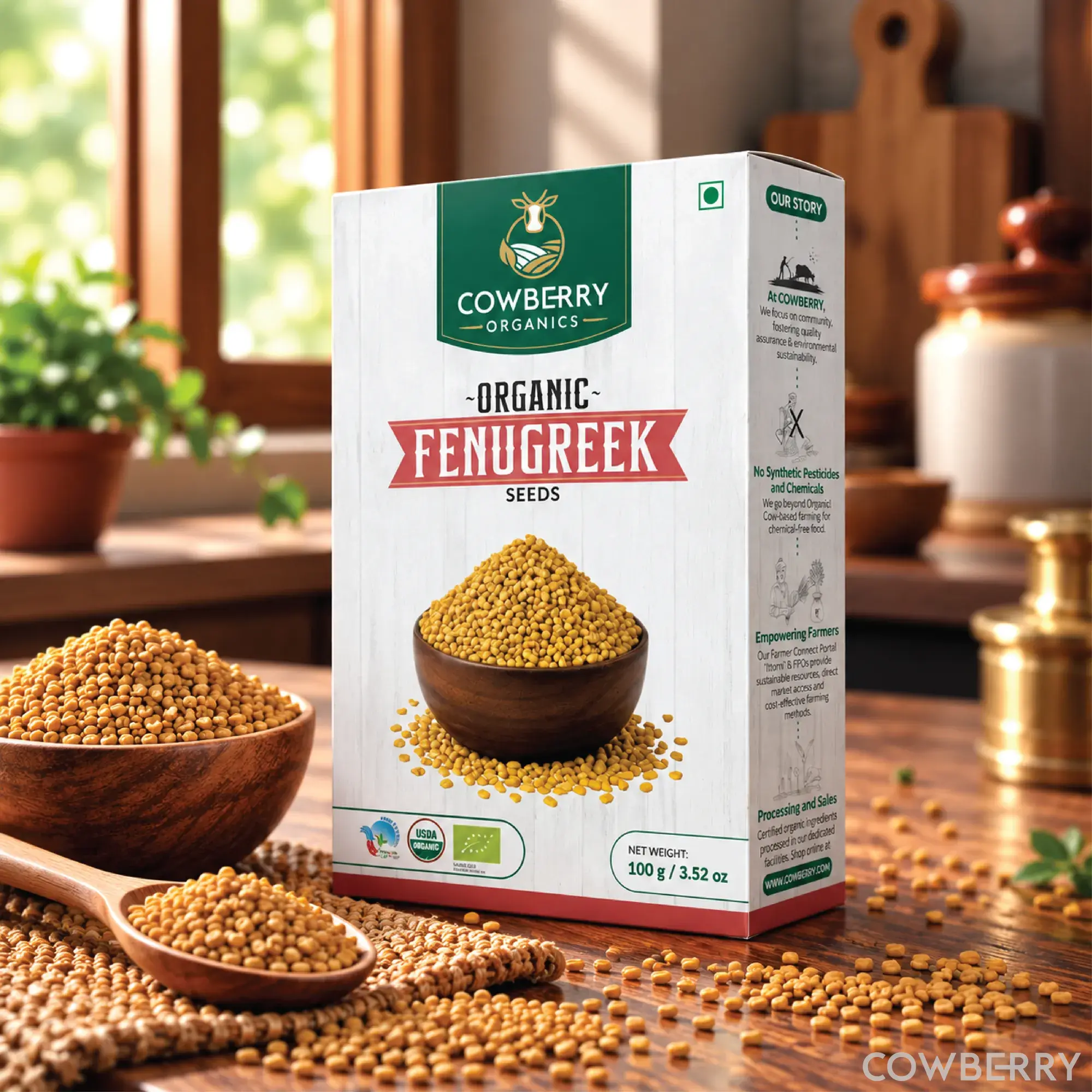
For shopping, that means knowing two words is enough: fenugreek seeds, the English name printed on packs such as COWBERRY's, and your own language's word from the table. Ask for methi, menthya, venthayam, menthulu or uluva and you will be handed the same small yellow-brown seeds.
The names on the pack and in the kitchen
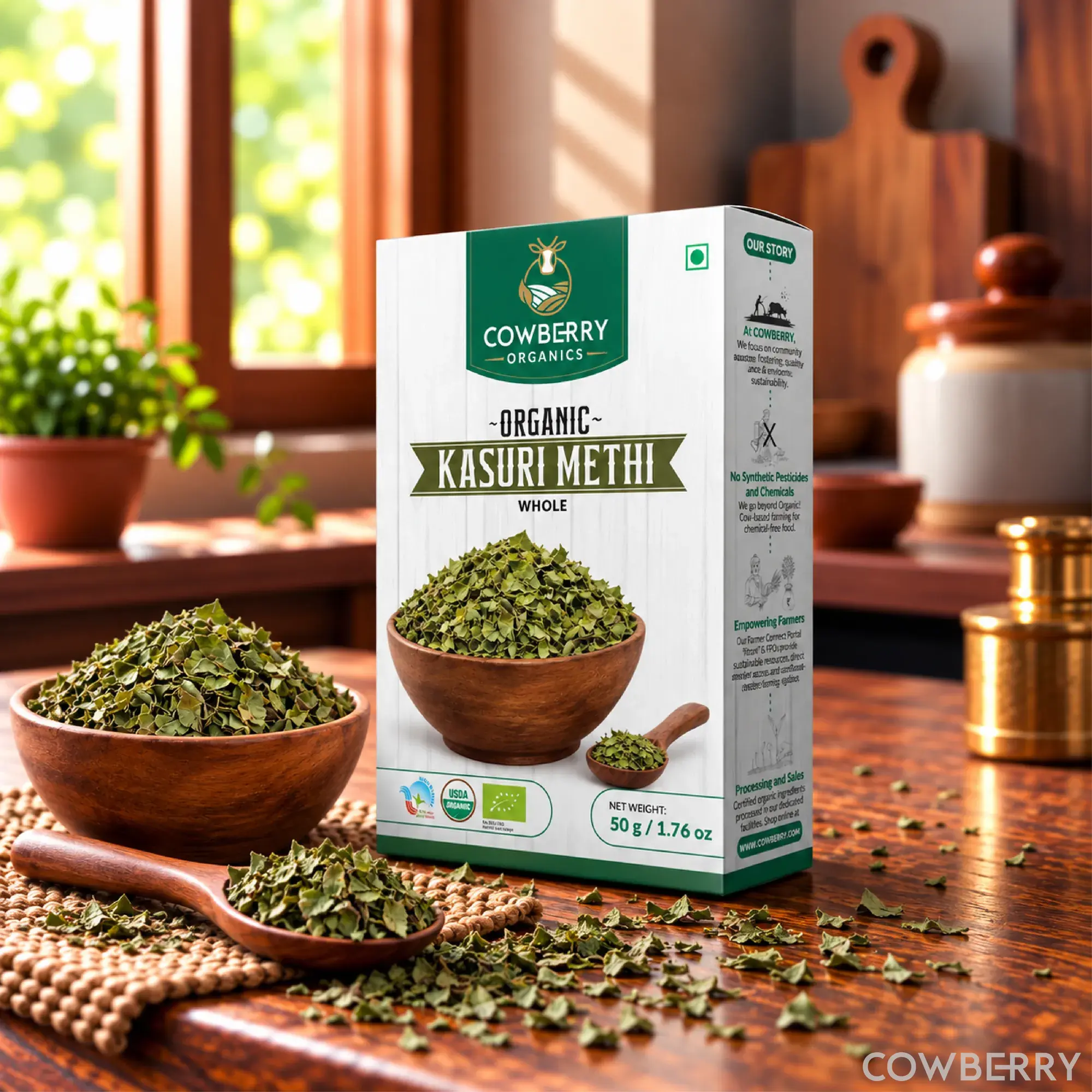
COWBERRY's seed pack is labelled Organic Fenugreek Seeds, with methi dana as the name many Indian kitchens use, and its leaf pack is labelled Organic Kasuri Methi, which is the dried-leaf product described in Hindi as kasuri methi. Between them the two packs cover the seed and the leaf, the dana and the kasuri.
That is the whole name map: fenugreek seeds in English, methi and methi dana across the north, menthe and menthya in Kannada, venthayam in Tamil, menthulu in Telugu, uluva in Malayalam, methe in Sanskrit. The fenugreek hub links the pages on what the seed does in the kitchen, from soaking to powder.
FAQs
What is methi dana in english?
Methi dana in English is fenugreek seeds: methi is the Hindi name for fenugreek and dana means seed. The English name printed in IFCT 2017 is exactly that, fenugreek seeds, and the same seed is venthayam in Tamil, menthulu in Telugu and uluva in Malayalam.
Difference between methi dana and methre?
There is no difference in the seed: methi dana is the Hindi name for the seeds (methi, with dana meaning seed), and methre is the Sanskrit name, printed in IFCT 2017 as methe. Both point to the same small yellow-brown seed. The table above lists every language's word for it, and each one names the same thing.
Difference between fenugreek seeds and flax seeds?
They are different plants entirely: fenugreek is methi, and flax is the linseed plant, whose seeds IFCT 2017's tables do not cover. The confusion comes from diet lists that name both among small seeds to eat regularly. This page is about fenugreek; flax facts belong to flax sources.
What is menthya soppu in english?
Menthya soppu in English is fenugreek leaves or greens: menthya is the Kannada word for fenugreek and soppu means leafy greens. The same greens are methi in Hindi and, once dried and crumbled, become kasuri methi. The seed's Kannada name, menthe or menthya, is the one in the table above.
What is kasuri methi in english?
Kasuri methi in English is dried fenugreek leaves: the leaves of the methi plant, dried and crumbled, used as a finishing herb in curries, dals and gravies. It is the leaf half of the plant whose seed half is methi dana, and the full account is on the what is kasuri methi page linked above.
What is fenugreek called in Tamil?
Venthayam, often written vendhayam. The printed name list gives Tamil venthayam, Telugu menthulu, Malayalam uluva and Kannada menthe, with menthya as the common Kannada spelling. In Hindi and most northern languages it is methi, and in English IFCT 2017 prints fenugreek seeds.
References
Shop this article
Keep reading
Coriander water benefits: what dhania water actually does
Peanuts in Hindi (moongfali): groundnut names in Indian languages
Coriander vs cilantro: are they the same herb?