by COWBERRY

16 minute read
Green moong (whole green gram): names, nutrition, benefits, sprouting

Green gram is the English name for whole green moong (sabut moong, Vigna radiata), the small olive-green pulse that Indian kitchens soak, boil, sprout and split into moong dal. Per 100 g, IFCT 2017 gives it 22.5 g protein and 17 g fibre, and its glycemic index is 38, which counts as low. Below: its names, its numbers, the cautions, and how to cook, sprout, store and buy it.
What is green gram (whole moong)?
Green gram is the whole seed of Vigna radiata, a pulse (the dry edible seed of a legume) that Indian kitchens call green moong, sabut moong, whole moong or mung bean. Each bean is only a few millimetres long, olive green with a thin white line along one edge, and once soaked it cooks soft in about half an hour. That softness makes it an easy everyday pulse for anyone who wants a light meal that still carries real protein.
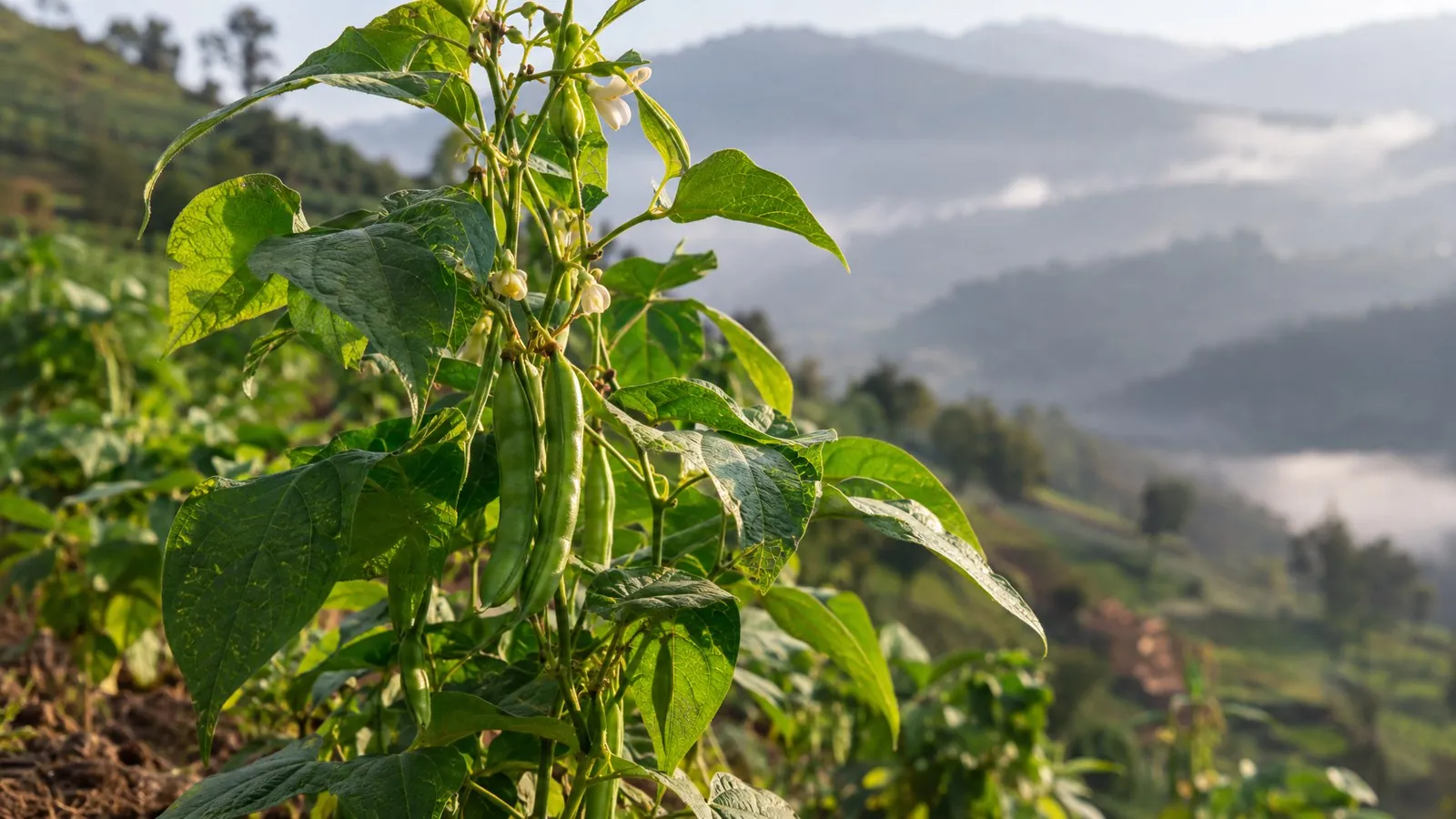
The green gram plant is a short, bushy annual with small yellow flowers and thin pods that darken as they ripen, each holding a row of seeds. It is a quick-growing warm-season crop, and like other pulses it fixes nitrogen in the soil, which makes it useful in crop rotations.
One bean, three products. Whole green moong is the unsplit bean with its skin on. Split with the skin left on it becomes moong chilka, and split and dehusked it becomes the yellow moong dal of khichdi and dal tadka. The yellow dal cooks faster and tastes milder, but it keeps only a little over half the fibre: the whole bean has 17 g fibre per 100 g against 9.4 g in the dal (IFCT 2017). Split moong dal has its own guide, moong dal; this page is about the whole bean, which is also the only form that sprouts.
Green gram names in Indian languages
Across North India the bean is simply moong, or sabut moong when you need to say whole rather than split. IFCT 2017 romanises the Hindi as mung; moong is the same word in its everyday spelling. The Sanskrit name mudga appears in the table with its own source note. Marathi speakers say mun, Gujarati mug, Bengali moog, Odia muga, Kannada hesare kalu, Telugu pesalu and Tamil pasipayir; the spellings on shop boards vary with the script they were transliterated from. The split dal has its own set of names in every language (mug dal, hesara bele, pesara pappu, payatham paruppu), listed in the moong dal guide. In English you will also meet mung bean, green mung and whole moong bean. Do not confuse it with green lentils, which are a different pulse from a different plant.
| Language | Name (romanised) |
|---|---|
| English | Green gram, whole |
| Hindi | Mung, Moong |
| Marathi | Mun |
| Gujarati | Mug |
| Punjabi | Sabut moong dal |
| Bengali | Moog |
| Odia | Muga |
| Assamese | Gota mogu mah |
| Kannada | Hesare kalu |
| Telugu | Pesalu |
| Tamil | Pasipayir |
| Malayalam | Cheru Pararu, Cheru payaru |
| Urdu | Moong |
| Sanskrit | Mudga |
| Botanical name | Vigna radiata |
Source: IFCT 2017 (ICMR-NIN) local-names list. — means no name recorded in the source.
Hindi ‘Moong’: spelling variant of the IFCT 2017 name ‘Mung’. Malayalam ‘Cheru payaru’: spelling variant of the IFCT 2017 name ‘Cheru Pararu’. Sanskrit: IFCT 2017 prints ‘Mudra’; ‘Mudga’ per Wikipedia: Mung bean.
Green moong nutrition per 100 g
Per 100 g of raw whole green gram, IFCT 2017 gives 294 kcal, 22.5 g protein, 1.1 g fat, 46.1 g carbohydrate and 17 g fibre. The minerals are where the whole bean earns its keep: 4.9 mg iron, 92.4 mg calcium, 198 mg magnesium, 1177 mg potassium, 2.7 mg zinc and 145 mcg folate. Split, dehusked moong dal is close on protein (23.9 g) and a little higher in calories (326 kcal), but it has 9.4 g fibre, 43.1 mg calcium and 92.1 mcg folate, well below the whole bean on all three. Toor dal, an everyday dal in many Indian homes, has 21.7 g protein and 9.1 g fibre, so the whole moong bean carries nearly twice the fibre of either dal.
Plain cooked green gram has a glycemic index of 38, from the one India-tested entry in the University of Sydney database, which places it in the low band. Whole pigeon pea, the bean toor dal is split from, averages 20 across four entries tested outside India, also low.
In household terms, a serving is 50 g of dry beans, about three times that weight once cooked, and carries about 147 kcal, 11.3 g protein, 8.5 g fibre and 2.4 mg iron. IFCT prints no values for sprouted moong, so these are dry-grain figures. The green gram protein per 100 g page has the full breakdown, the complete mineral list and a note on reading figures quoted for sprouts.
| Nutrient | Green moong (whole) | Moong dal (split, dehusked) | Toor dal |
|---|---|---|---|
| Energy (kcal) | 294 | 326 | 331 |
| Protein (g) | 23 | 24 | 22 |
| Fat (g) | 1.1 | 1.4 | 1.6 |
| Carbohydrates (g) | 46 | 53 | 55 |
| Dietary fibre (g) | 17 | 9.4 | 9.1 |
| Iron (mg) | 4.9 | 3.9 | 3.9 |
| Calcium (mg) | 92 | 43 | 72 |
| Magnesium (mg) | 198 | 155 | 119 |
| Potassium (mg) | 1177 | 1268 | 1395 |
| Sodium (mg) | 12 | 10 | 18 |
| Zinc (mg) | 2.7 | 2.5 | 2.6 |
| Folate (mcg) | 145 | 92 | 108 |
| Glycemic index (GI) | 38 | 38 | 20 |
Per 100 g raw, edible portion. Composition: IFCT 2017 (ICMR-NIN). GI: University of Sydney GI database. — means not reported. These are average values for the food; the label on a pack gives the values for that product.
Benefits of green moong
Six benefits in brief, each tied to an IFCT figure or a listed source; the detail is under green gram sprouts benefits.
Protein that completes a cereal meal
At 22.5 g protein per 100 g, green gram sits close to toor dal (21.7 g) and moong dal (23.9 g). Earlier studies, summed up in a 2018 Food and Nutrition Research review, found mung bean a good protein source whose one shortfall is the sulphur amino acids. Cereals are the other way round, low in lysine, so the ICMR-NIN dietary guidelines advise pairing them in the right proportion for better-quality protein: the old logic of dal-chawal.
Fibre, nearly twice that of the split dal
Whole moong carries 17 g fibre per 100 g against 9.4 g in moong dal; the difference goes out with the skin in dehusking. Fibre, by the ICMR-NIN guidelines' account, slows the uptake of carbohydrates and fats and leaves a meal more satisfying; the same guidelines name pulses among the foods for maintaining weight.
Low glycemic index
A GI of 38 places green gram in the low band (55 or under). The 2014 review of pulses listed in the references describes pulses as high in fibre with a low glycemic index, and links eating them with healthy blood glucose and insulin levels and with improved serum lipid profiles. With diabetes, the bean replaces part of the rice or roti; your doctor or dietitian can set the portion.
Iron, folate, magnesium and potassium
Per 100 g the bean gives 4.9 mg iron, 145 mcg folate, 198 mg magnesium and 1177 mg potassium. The ICMR-NIN dietary guidelines note that citrus fruits such as lemon, eaten as part of the meal, help the body take up the iron in plant foods, so lemon on sprouts earns its place. One serving, from 50 g of the dry bean, holds about 73 mcg folate, which matters most before and during pregnancy.
Polyphenols, especially in sprouts
A 2019 review in Nutrients names two polyphenols, vitexin and isovitexin, as the main ones in mung bean, and a 2023 study in Frontiers in Nutrition found germination an effective way to raise the bean's polyphenol content.
Light on the stomach
Whole moong cooks soft, and Indian kitchens count moong among the lighter pulses. Soaking and sprouting are among the household methods the ICMR-NIN dietary guidelines list for improving the digestibility of legumes.
Side effects: who should limit green moong
Whole moong is an everyday food in many Indian homes. Four situations call for a smaller portion or a change in preparation.
- Gas and bloating: a bean with 17 g fibre per 100 g can cause gas in anyone who is not used to pulses. Soak for 8 to 12 hours and discard the water, cook the beans until they crush easily, and increase the portion gradually: a 2019 review of pulse tolerance finds that most people who get gas adapt within a few weeks if they keep pulses on the menu. The ICMR-NIN guidelines count sprouting, like soaking, among the ways to make pulses easier to digest.
- Kidney disease and potassium limits: with 1177 mg potassium per 100 g of dry beans, whole moong is a high-potassium food. If you have been told to restrict potassium, check with your doctor or dietitian before eating it regularly.
- High uric acid or gout: people with either are often advised to limit pulses, yet a US study that followed 47,150 men for 12 years linked more meat and seafood to more gout and found no such link for purine-rich plant foods such as peas, beans and lentils. How much moong fits is individual, so go by the advice of your own doctor or dietitian.
- Raw sprouts: sprouts grow warm and damp, so they spoil quickly. Rinse them well, keep them in the fridge and eat them soon. For pregnant women, children, the elderly and anyone with weakened immunity, the US FDA advises against raw or lightly cooked sprouts altogether.
Whole moong is a pulse, so it has none of the gluten that comes from wheat, barley and rye. On a medically prescribed diet, check any new daily staple with whoever set the diet.
How to cook and use green moong
Soak first. Wash the beans well, then leave them overnight (8 to 12 hours) in three times their volume of water. Soaking roughly halves the cooking time and, by kitchen tradition, makes the dal sit lighter; discard the soaking water and cook in fresh water.
Pressure cook. Soaked whole moong needs 3 whistles on medium heat with about 2.5 cups of water per cup of beans, then 10 minutes of natural release; unsoaked beans need 6 to 7 whistles and more water. The beans should crush between two fingers but still hold their shape. In an open pot, soaked moong takes 25 to 30 minutes at a gentle boil.
Sabut moong dal and sabzi. For the Punjabi-style dal, temper cumin, ginger, garlic, onion, tomato, turmeric and red chilli in ghee and simmer the cooked beans in it until thick; finish with lemon and coriander. The Gujarati-style dry sabzi cooks soaked moong with hing, cumin, turmeric, green chilli and a little jaggery until the water is absorbed, and goes with rotla or bhakri.
Sprouts and salads. Sprouting is the second life of the whole bean: rinse, soak, drain, tie in a cloth and rinse twice a day for one to three days. The timings, the muslin-versus-jar question and the mistakes that leave you with mush are in how to sprout moong. Eat them as a sprouts chaat, as a South Indian sundal with a coconut finish, or stirred through poha or upma just before serving.
Chilla, khichdi and soup. Soaked whole moong ground with ginger and green chilli makes a green chilla batter that needs no fermenting. A cup of soaked moong cooked with half a cup of rice, turmeric and a ghee-cumin tadka makes a whole-moong khichdi with more fibre than the yellow-dal version, and the cooking water of boiled moong, seasoned with pepper, cumin and lemon, is the moong soup given to anyone off their food.
Sprouted vs cooked green moong
Both are green moong; what changes is what the bean has done with its stores. A sprouting bean starts to draw on them to grow. Sprouting, the ICMR-NIN dietary guidelines say, improves digestibility, makes micronutrients more available and raises the content of certain vitamins. The 2023 Frontiers in Nutrition study adds polyphenols to that list. What cannot be given is a second nutrition table: IFCT 2017 has no entry for sprouted moong, so the figures in this guide describe the dry grain; for sprouts, count the dry beans you started with.
Cooking does a different job. The same guidelines note that boiling and pressure cooking make the protein in pulses easier to digest and bring down the phytic acid that hinders the absorption of iron, calcium, magnesium and zinc, while long boiling, or throwing away the cooking water, costs B vitamins. So cook whole moong in just enough water and keep the liquid in the dal. Sprouts win on crunch and freshness; cooked moong wins on softness and volume. Many homes use both: sprouts (lightly steamed) at breakfast or as an evening chaat, and cooked moong as the dal or sabzi at a main meal. The steamed-versus-raw question is taken up on the moong sprouts benefits page.
How to store green moong
Dry whole moong needs an airtight container and a cool, dry shelf; a steel or glass jar that is full and rarely opened keeps it fresh longest. Give a new batch two or three hours in the sun before it goes into the jar, tuck in a few dried neem leaves, and through the monsoon look it over every few weeks for the fine dust and pinholes that mean weevils. Old beans take longer to cook and sprout poorly, which makes sprouting a handy freshness test. The wider monsoon routine, for flours as well as dals, is under how to store atta.
Sprouts are the fragile form: once the tails are long enough they go into the fridge, well drained, and should be eaten soon; a sour smell or slime means they are past it. Cooked moong should be cooled, put in the fridge within one to two hours and eaten within two days, as the UK Food Standards Agency advises for leftovers; it also freezes well in portions.
Green moong recipes to start with
Whole moong is a pantry bean rather than a one-recipe bean. Start with the sprouts, then work through the dals.
- Sprouts chaat: steamed moong sprouts tossed with chopped salad vegetables, lemon and chaat masala, with pomegranate and peanuts on top; no oil, about half an hour once the sprouts are ready.
- Sabut moong dal: pressure-cook soaked moong, then simmer it in a ghee tadka of cumin, ginger, onion, tomato and turmeric until thick. Lemon and coriander at the end.
- Moong sundal: toss boiled, drained moong in a tempering of mustard seeds, urad dal, curry leaves, dry red chilli and hing, and finish with grated coconut. Tamil Nadu's evening snack.
- Green moong chilla: grind soaked whole moong with ginger, green chilli and salt to a thick batter, and cook thin pancakes on a hot tawa with a few drops of oil.
- Whole moong khichdi: cook one part soaked moong with half a part rice, turmeric and salt to a soft porridge, and pour a cumin-ghee tadka over it.
With split moong, try the moong dal khichdi, made from green moong split with its skin on, and the moong dal chilla, which takes either that or the yellow dal; both are quicker than their whole-bean cousins.
How to buy green moong: what to look for
Colour and size. Fresh whole moong is a clear olive green, small and even in size, with a bright white line along the edge. Beans that have gone dull, brownish or yellowish are old; they cook slowly and sprout unevenly. A few split or broken beans are normal; a lot of them means rough handling.
No dust, no holes. Tip a handful onto a white plate: fine powder, pinholes or webbing mean stored-grain insects. The beans should smell faintly grassy and clean, never musty.
The sprouting test. Soak a spoonful overnight and tie it in a damp cloth. Fresh beans show tails within a day or two in warm weather; a batch that is still swollen and inert after three days is old, whatever the pack says. It also tells you the beans were not heat-damaged in processing.
Whole, split or yellow? Buy whole moong for sprouting, sabzi, sundal and salads, split chilka moong for a quicker dal that keeps some skin and fibre, and the yellow dal for khichdi, halwa and a soft, quick dal. If you eat moong more than twice a week, keep two of the three in the cupboard.
Certification. For organic green moong, look for a certification line on the label, such as India Organic, USDA & EU certified. A pack that only says natural certifies nothing. Prefer a pack that also says where and how the beans were grown.
More on green moong
Whole moong has more to it than one guide holds: its names, its sprouts, its benefits and two dishes made from the whole bean.
- Green gram benefits and side effects, each with the IFCT 2017 figure behind it, and how much to eat in a day.
- Protein in moong sprouts per 100 g, and how a bowl of sprouts is counted from its dry weight.
- Sabut moong in English, with the names IFCT 2017 lists for it in Indian languages.
- Is green gram good for diabetes? Its GI, the carbohydrate in a katori, and better and worse ways to eat it.
- Green gram vs moong dal: the whole seed and the split dal compared.
- Pesarattu: the Andhra dosa ground from soaked whole moong, with no rice and no fermenting.
- Sprouts salad: home-sprouted moong, steamed and tossed with onion, tomato, cucumber and a lemon dressing.
FAQs
What is green gram?
Green gram is the whole mung bean (Vigna radiata), called green moong or sabut moong in India: a small olive-green pulse eaten boiled as dal or sabzi, sprouted for salads, or split and dehusked into yellow moong dal. Per 100 g it gives 22.5 g protein and 17 g fibre (IFCT 2017), with a low glycemic index of 38.
Is green gram a pulse?
Yes. A pulse is the dry edible seed of a legume plant, and green gram is exactly that: the dried seed of Vigna radiata. The ICMR-NIN dietary guidelines list green gram in the pulses food group, alongside lentil, chickpea, rajma and cowpea. Whole moong, moong chilka and yellow moong dal are all the same pulse at different stages of processing.
What is the difference between sabut moong and moong dal?
Sabut moong is the whole green bean with its skin; moong dal is the same bean split and dehusked, which turns it yellow. Whole moong has 17 g fibre per 100 g against 9.4 g in the dal, keeps more folate and calcium, and can be sprouted; the dal cooks faster and is the usual choice for a sensitive stomach. Details on the moong dal page.
How many whistles for sabut moong dal?
Three, on a medium flame, for beans soaked 8 hours, with about 2.5 cups of water to each cup of beans. Let the steam settle fully before you lift the lid. Unsoaked beans need 6 to 7 whistles and an extra cup of water. Cook to the point where a bean crushes between two fingers but still holds its shape.
How to eat sabut moong?
Four common ways: boiled and tempered as sabut moong dal or a dry sabzi; sprouted and tossed into a sprouts chaat or a sundal; ground after soaking into a chilla batter; or cooked with rice as a whole-moong khichdi. Soak the beans 8 to 12 hours first whichever way you cook them, and discard the soaking water.
Is green gram good for weight loss?
It fits a weight-loss plate well. One serving, 50 g of dry beans once cooked, has about 147 kcal with 11.3 g protein and 8.5 g fibre, and fibre raises the satiety value of a meal, as the ICMR-NIN guidelines point out. Let it replace part of the rice or roti, not sit on top of them, and keep the tadka to a teaspoon of ghee. With a medical condition, take your doctor's or dietitian's advice on portions.
What is green gram in Hindi?
Moong (also written mung), or sabut moong for the whole bean and moong dal for the split one. IFCT 2017 lists the Hindi name as mung; the everyday spelling moong is the one on shop boards and packs. The full table of names in Marathi, Gujarati, Kannada, Telugu, Tamil and the other Indian languages is in the names section above.
References
- Indian Food Composition Tables (IFCT) 2017, ICMR-National Institute of Nutrition
- University of Sydney glycemic index database (GI search)
- Mudryj AN, Yu N, Aukema HM. Nutritional and health benefits of pulses. Appl Physiol Nutr Metab, 2014
- Hou D, Yousaf L, Xue Y et al. Mung bean (Vigna radiata L.): bioactive polyphenols, polysaccharides, peptides, and health benefits. Nutrients, 2019
- Yi-Shen Z, Shuai S, FitzGerald R. Mung bean proteins and peptides: nutritional, functional and bioactive properties. Food Nutr Res, 2018
- Li B, Shen X, Shen H et al. Effect of optimized germination technology on polyphenol content and hypoglycemic activity of mung bean. Front Nutr, 2023
- Dietary Guidelines for Indians, ICMR-National Institute of Nutrition
- FAO: World Pulses Day (pulses and their role in diets)
- NHS: coeliac disease
- US FDA: Selecting and Serving Produce Safely
- UK Food Standards Agency: How to chill, freeze and defrost food safely
- Thompson HJ. Improving human dietary choices through understanding of the tolerance and toxicity of pulse crop constituents. Curr Opin Food Sci, 2019
- Jakse B, Jakse B, Pajek M, Pajek J. Uric acid and plant-based nutrition. Nutrients, 2019
- Choi HK, Atkinson K, Karlson EW, Willett W, Curhan G. Purine-rich foods, dairy and protein intake, and the risk of gout in men. N Engl J Med, 2004
Shop this article
Keep reading
Green gram plant: crop, varieties and how it grows in India
Rajma vs lobia: difference, nutrition and which to choose
Rajma plant: how rajma is grown in India (it is not a tree)