by COWBERRY

7 minute read
Is chana dal good for weight loss? Calories and portions

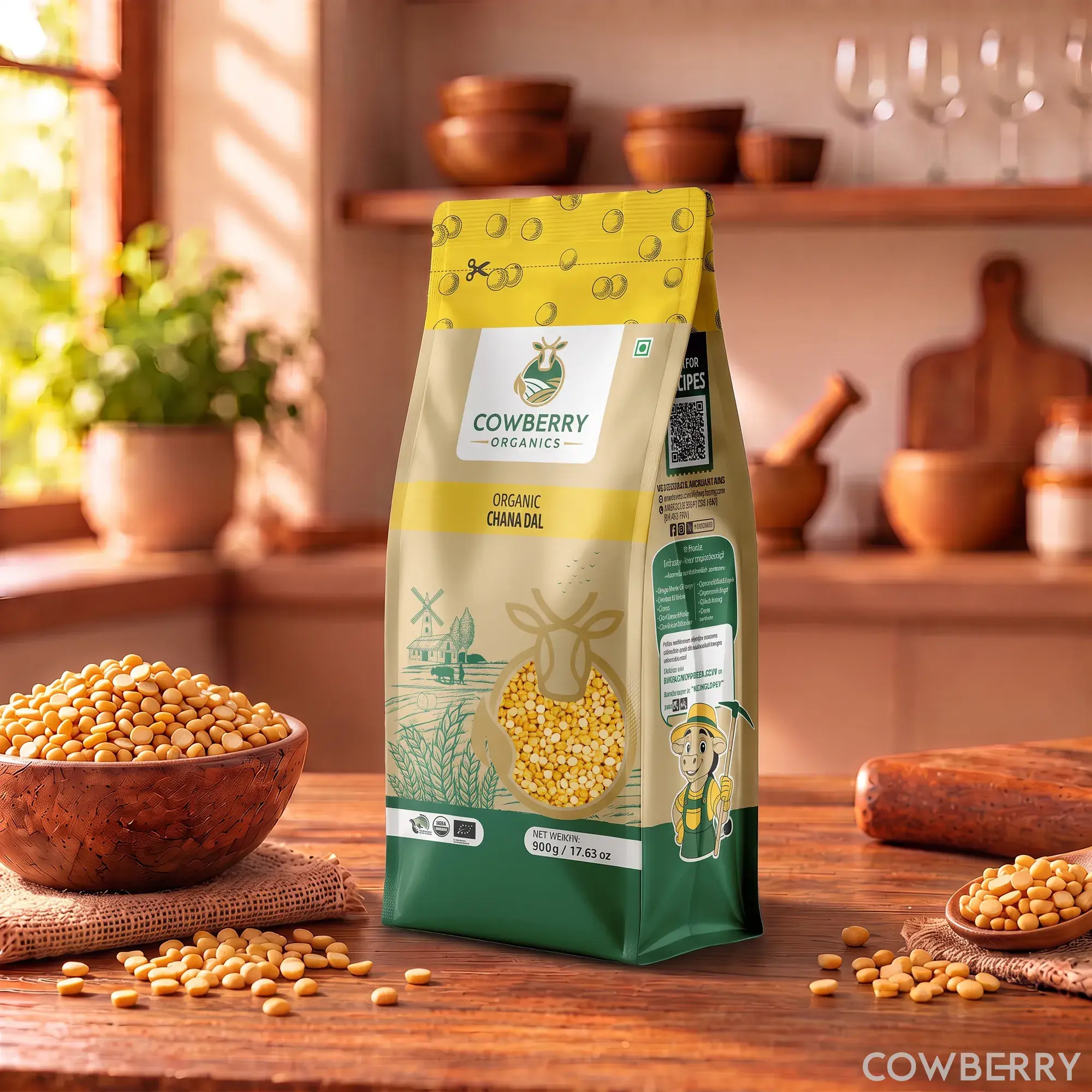
Is chana dal good for weight loss? Yes, when it replaces heavier, fried or refined options on the plate: a katori of the cooked dal, made from 30 g of dry dal, has about 99 kcal with 6.5 g of protein and 4.5 g of fibre. Calories per portion, what the trials found and how to serve it follow; the chana dal guide covers it.
Short answer
The short answer is yes, with a portion. Boiled chana dal helps a weight-loss plate in three ways: it is filling, thanks to 15.15 g of fibre and 21.55 g of protein per 100 g; it has a low glycemic index, 11 in the University of Sydney database; and a katori of the boiled dal, from 30 g of dry dal, stops at about 99 kcal. Trials of pulse diets put a number on the effect: a meta-analysis of 21 trials found diets with pulses led to about 0.34 kg more weight lost over a median of six weeks, even when calories were not restricted. Chana dal is not a magic food; it is one part of a measured plate.
Calories and what is in them
The numbers behind a portion of boiled chana dal: a katori, from 30 g of dry dal, carries about 99 kcal, 14 g of carbohydrate, 6.5 g of protein, 1.6 g of fat and 4.5 g of fibre. A full serving from 50 g of dry dal brings about 165 kcal, 23.4 g of carbohydrate, 10.8 g of protein, 2.7 g of fat and 7.6 g of fibre. Per 100 g the dry dal is 329 kcal, which looks high until you remember that a katori uses only 30 g of it, and that the dal cooks into a much bigger, water-heavy bowl. For comparison, the ICMR-NIN adult plate includes 85 g of pulses a day within a 2000-calorie model, and a katori and a half of dal uses about half of that allowance.
Why it keeps you full
Fullness is the mechanism, and the ICMR-NIN dietary guidelines state it plainly: eating enough micronutrients and fibre-rich foods such as pulses improves fullness and helps to keep levels of blood glucose, insulin, cholesterol and triglycerides steadier. Fibre slows and delays the absorption of carbohydrate and fat and raises the satiety value, the same guidelines explain. Protein at 21.55 g per 100 g adds to it: a katori gives 6.5 g of protein, enough to make a rice meal feel complete. The guidelines also note that beans and lentils in the recommended cereal pulse ratio of 3 to 1 or 5 to 1 give lasting energy and a feeling of fullness, cutting the urge for extra calories, which is exactly the job a dal needs to do on a weight-loss plate. A pulses review puts the same two facts together: high fibre and a low glycemic index.
What the trials found
A 2016 meta-analysis pooled 21 randomised trials with 940 participants and compared diets containing pulses, eaten at a median 132 g a day, with similar diets without them. Over a median of six weeks, the pulse diets showed a modest overall weight reduction of 0.34 kg (95% CI: 0.63 to 0.04 kg below the comparison diets), and the effect appeared whether or not the diets were meant to be calorie restricted. Six of the trials also suggested a lower body fat percentage. Chickpeas are among the pulses the review covers, though chana dal was not tested on its own, and the authors call for longer studies to see whether the effect lasts.
How much and how to eat it
For a weight-loss plate, one katori of boiled chana dal, from 30 g of dry dal, with a smaller portion of rice or a roti and a big serve of vegetables, is the pattern. Keep the cereal near the ratio the guidelines give, about 3 to 1 cereal to pulse, so the dal crowds out some of the rice rather than sitting on top of a full plate. Simple preparations carry the fewest extra calories: a plain dal with a light tadka, dal-khichdi or dal with vegetables, rather than the fried and sweet members of the family like dal pakwan or chana dal laddu, which belong to feast days. The ICMR-NIN guidelines list roasted or boiled chickpeas as a nutritious snack option, so a small handful of roasted chana can replace a packaged snack; the chana dal recipes roundup keeps to the everyday side, and the dal itself is the meal; the chana dal hub has the dal's nutrition and cooking notes.
What to watch
Three things undo the calorie maths. Frying: the dal itself is 99 kcal a katori, the oil a fry adds is not in that number, so keep the tadka light. Sugar: chana dal laddu and other besan sweets turn a low-calorie gram into dessert, and dessert is dessert. Second helpings of rice: the dal fills, the rice adds, so measure the cereal. Gas is the other practical point: pulses contain galacto-oligosaccharides that gut bacteria turn into gas, though whether these sugars are the main cause has been questioned, and the flatulence most people notice at first eases within a few weeks of steady intake, so begin with half a katori and grow the portion slowly. None of this is a diet; it is a plate pattern you can keep.
Talk to your doctor or dietitian
Weight loss is personal, and the calorie maths on this page is general. If you have a health condition, are on medication, or have been told to follow a particular eating plan, talk to your doctor or dietitian to ask how many calories a day is right for you, whether daily dal fits your plan, and how to portion the cereal alongside it. Then keep it boring and repeatable: one katori of dal, measured rice, vegetables, most days.
FAQs
Is chana dal good for weight loss?
Yes, when it replaces heavier foods: a katori of boiled dal from 30 g of dry chana dal has about 99 kcal, 6.5 g of protein and 4.5 g of fibre, which is a lot of fullness per calorie. Diets with pulses lost about 0.34 kg more over six weeks on average in trials. It works as part of a measured plate, not on its own.
How many calories are in one katori of chana dal?
About 99 kcal in a katori of cooked dal from 30 g of dry chana dal, with 14 g of carbohydrate, 6.5 g of protein, 1.6 g of fat and 4.5 g of fibre. A fuller serving from 50 g of dry dal has about 165 kcal. The cooked dal is mostly water by weight, so the bowl looks big for its calories.
Does chana dal have protein?
Yes: 21.55 g of protein per 100 g of dry dal, per IFCT 2017. A katori from 30 g of dry dal gives about 6.5 g of protein, and a 50 g serving about 10.8 g, which makes the dal a strong protein partner to rice or roti; the ICMR-NIN guidelines recommend the cereal-pulse pair for good quality protein.
Can chana dal cause gas?
Yes, in some people: the dal carries galacto-oligosaccharides that the gut ferments, releasing gas. Most people who notice flatulence at first adjust within a few weeks once the intake is regular. Start with half a katori and build from there.
Can I eat chana dal every day for weight loss?
Yes, in the pattern the guidelines describe: pulses are part of the everyday adult plate, 85 g a day in the ICMR-NIN model, with cereals in roughly a 3 to 1 balance. Daily dal works when the rest of the plate is measured, the oil stays light and the portions stay at one katori or so. If you have a condition or take medication, confirm the plan with your doctor or dietitian.
What is bengal gram?
Bengal gram is another name for the chickpea: chana dal is the brown desi chickpea split and husked, kala chana is the same seed whole, and besan is its flour. Both the dal and the whole gram test in the low-GI band.
References
- Indian Food Composition Tables (IFCT) 2017, ICMR-National Institute of Nutrition
- Dietary Guidelines for Indians, ICMR-National Institute of Nutrition
- University of Sydney glycemic index database (GI search)
- Mudryj AN, Yu N, Aukema HM. Nutritional and health benefits of pulses. Appl Physiol Nutr Metab, 2014
- Thompson HJ. Improving human dietary choices through understanding of the tolerance and toxicity of pulse crop constituents. Curr Opin Food Sci, 2019
- Kim SJ, de Souza RJ, Choo VL, et al. Effects of dietary pulse consumption on body weight: a systematic review and meta-analysis of randomized controlled trials. Am J Clin Nutr, 2016
Shop this article
Keep reading
Green gram plant: crop, varieties and how it grows in India
Rajma vs lobia: difference, nutrition and which to choose
Rajma plant: how rajma is grown in India (it is not a tree)