by COWBERRY

6 minute read
Tej patta in English: bay leaf names in Hindi and Indian languages

Tej patta in English is bay leaf. The Hindi name for the leaf used in Indian cooking is tej patta, the botanical name of the European bay leaf is Laurus nobilis, and the leaf sold in India grows on a second tree, Cinnamomum tamala. Every name with its source is below; the bay leaf hub covers the leaf itself.
Quick answer: tej patta in English and the names table
Tej patta in English is bay leaf, and on the spice shelf the two names stand for the same dried leaf, the one that scents a pot of dal or pulao and is lifted out before the food is served. In short: Hindi tej patta, also written tejpat; English bay leaf, with the botanical name Laurus nobilis.
The English and scientific names below come from the USDA FoodData Central record for 'Spices, bay leaf'; the Hindi name comes from the Wikipedia article on Cinnamomum tamala, the Indian tree. IFCT 2017, the Indian food tables, carries no entry for bay leaf, and the USDA record lists no Indian-language names, so the table marks with a dash every language with no recorded name. This page invents nothing for the gaps.
| Language | Name (romanised) |
|---|---|
| English | Spices, bay leaf |
| Hindi | Tej patta |
| Marathi | — |
| Gujarati | — |
| Punjabi | — |
| Bengali | — |
| Odia | — |
| Assamese | — |
| Kannada | — |
| Telugu | — |
| Tamil | — |
| Malayalam | — |
| Urdu | — |
| Sanskrit | — |
| Botanical name | Laurus nobilis |
Source: USDA FoodData Central record 170917 (English and scientific name only; no Indian-language names in source). — means no name recorded in the source.
Hindi ‘Tej patta’: Wikipedia: Cinnamomum tamala.
Bay leaf in English and the scientific name
The English name is bay leaf; the USDA FoodData Central record writes it 'Spices, bay leaf', and the botanical name it records is Laurus nobilis. A 2022 review in the journal Plants describes Laurus nobilis as an aromatic plant widely cultivated in many world regions, valued for its essential oil; the same review notes that the oil's composition changes with environmental conditions, location, season and drying method.
The Indian picture carries a second name to keep straight. In India the leaf is tej patta, and botanists place the Indian leaf on a different tree, Cinnamomum tamala, not on Laurus nobilis. IFCT 2017 and USDA FoodData Central print no composition record for Cinnamomum tamala; what they print belongs to Laurus nobilis, the European bay leaf. In the kitchen the two names do the same job, and that is how this page uses them; the botanical difference is set out fully on the difference between tej patta and bay leaf page.
Bay leaf names by region
North India: tej patta in Hindi
In Hindi the leaf is tej patta, the name behind this page's title, and the Wikipedia article on the Indian tree also records the spelling tejpat. When a Hindi recipe says tej patta, an English recipe writes bay leaf, and the two are interchangeable in the pot.
East, South and West India
IFCT 2017 and the USDA record print no Bengali, Kannada, Tamil, Telugu, Marathi or Gujarati name for bay leaf, and this page will not invent one.
Often confused with: tej patta, curry patta and bay leaf
Three names sit close together and get swapped in searches.
- Curry patta: the small green curry leaves, fried in the tempering and eaten with the meal. Tej patta is the big dried leaf that only scents the pot and is taken out before serving. The two are compared on the difference between kadi patta and tej patta page.
- Tej patta and bay leaf: one leaf in the kitchen, two botanical names (above). The side-by-side comparison is tej patta vs bay leaf.
- Indian cassia: a third name for the Indian tree Cinnamomum tamala that the Wikipedia article records; it is not cinnamon bark itself.
Why tej patta is used, and where COWBERRY's comes from
Tej patta earns its place the way whole spices do: one or two leaves cooked with the oil or water give the dish a background herbal note and are lifted out before serving, since the leaf stays tough. The leaf belongs to India's traditional spice shelf; a 2008 review in the Asia Pacific Journal of Clinical Nutrition opens by noting that India has been recognised all over the world for spices and medicinal plants.
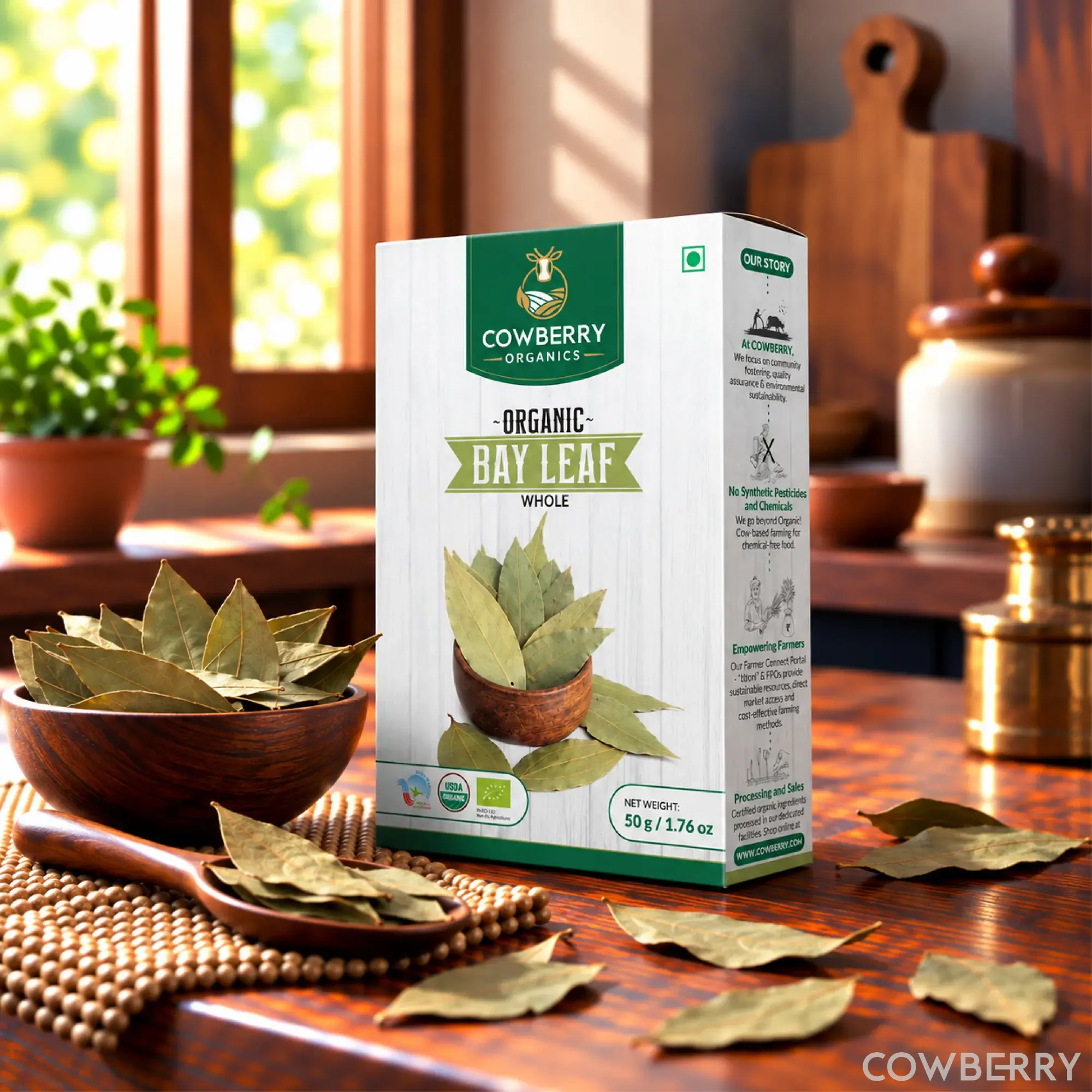
COWBERRY's bay leaf is grown in West Bengal, harvested, naturally dried and packed as whole leaves. How to get the leaf into the pot is on how to use bay leaf, the leaf's numbers sit under bay leaf nutrition facts 100g, and the bay leaf hub rounds up the rest of the cluster.
FAQs
What is tej patta called in english?
Bay leaf. Tej patta is the Hindi name for the dried leaf used in Indian cooking, and the English name for it is bay leaf. The English and scientific names recorded for it are 'Spices, bay leaf' and Laurus nobilis; the Indian leaf itself grows on a different tree, Cinnamomum tamala.
What is bay leaf in hindi?
Tej patta. That is the Hindi name for bay leaf, written as two words, and the spelling tejpat is also recorded for the same leaf. When a recipe in Hindi calls for tej patta, use the same whole dried leaf an English recipe calls bay leaf.
Is tej patta and bay leaf same?
In the kitchen they are one leaf: tej patta is the Hindi word, bay leaf the English one, and a pot of dal cannot tell which name the cook used. On paper they split, because the Indian leaf belongs to Cinnamomum tamala and the European one to Laurus nobilis. Both season the same dishes the same way.
What is tej patta?
Tej patta is the Hindi name for the dried leaf that scents dal, pulao, biryani and curries and is lifted out before serving. The leaf Indian kitchens buy under that name grows on Cinnamomum tamala, while the bay leaf the food tables record is Laurus nobilis, the European tree.
What is the difference between tej patta and curry patta?
Two different leaves, two different plants. The small green curry patta gets fried in the tempering and is eaten along with the food; the big dried tej patta only lends its scent and is lifted out again before anyone is served. A page of its own puts them side by side: difference between kadi patta and tej patta.
Why tej patta is used?
For the background aroma it gives a slow-cooked dish. One or two whole leaves cooked with the oil or the simmering liquid season the whole pot, and the leaf is lifted out before serving because it stays tough. It works the same way in dal, rice and meat dishes.
References
- USDA FoodData Central
- Indian Food Composition Tables (IFCT) 2017, ICMR-National Institute of Nutrition
- Paparella A, Nawade B, Shaltiel-Harpaz L et al. A Review of the Botany, Volatile Composition, Biochemical and Molecular Aspects, and Traditional Uses of Laurus nobilis. Plants (Basel), 2022
- Krishnaswamy K. Traditional Indian spices and their health significance. Asia Pac J Clin Nutr, 2008
Shop this article
Keep reading
Coriander water benefits: what dhania water actually does
Peanuts in Hindi (moongfali): groundnut names in Indian languages
Coriander vs cilantro: are they the same herb?