by COWBERRY

7 minute read
How to use bay leaf in cooking: when to add and remove it

Bay leaf how to use in Indian cooking: add one or two whole dried leaves to the pot, let them cook with the dish, and lift them out before serving. The leaf flavours the oil, water or gravy but stays tough, so it is not eaten. The bay leaf hub covers the leaf itself, its names and its nutrition.
The one rule: whole leaf in, whole leaf out
The rule is short. Add the whole dried leaf at the start, when the oil is hot or the liquid begins to simmer, and take it out before the food reaches the table. The leaf gives its flavour slowly into the oil and water around it; a few minutes at the end does not do the same work. The leaf itself stays tough even after a long cooking, so it is lifted out rather than eaten.
One or two leaves season a family pot of dal, rice or curry; a third does not add a third of the flavour. Rinse the leaves quickly under running water if they look dusty, and add them whole. The bay leaf hub covers what the leaf is and what one leaf adds; this page is the pot-side method.
When to add and remove it, dish by dish
Dal
Add one leaf when the dal first comes to the boil, or drop it into the hot ghee or oil at the start of the tempering. It cooks with the dal through the last whistle or the final simmer, and comes out before serving.
Pulao and plain rice
For pulao, put one or two leaves into the hot ghee or oil with the cumin, cardamom and the other whole spices, before the rice goes in; the leaf flavours the oil that will coat every grain. For plain rice, one leaf in the water with the salt is enough. Lift it out with the whole spices before serving.
Biryani
One or two leaves go in with the whole spices while the meat or vegetables fry, or into the pot before the par-cooked rice is layered on. They stay in the pot through the dum, the covered slow steam, and are removed before the biryani is served.
Soups and stews
A leaf goes in when the liquid starts to simmer and stays for the whole simmering time; twenty minutes of gentle bubbling spreads its note through the pot. Remove it before serving.
Curries and gravies
Add the leaf to the hot oil with the first whole spices, before the onions, and let it cook through the whole gravy. Even in a quick-fried dish, a leaf added at the start and removed at the end leaves a clear background note.
Common mistakes
- Eating the leaf. Dried bay leaf does not soften in the pot; take the leaves out before serving, and if one slips onto a plate, set it aside rather than chewing it.
- Adding it at the end. A leaf thrown in for the last two minutes has almost nothing to give; its flavour needs the simmering time.
- Using too many. One or two leaves season a whole pot. A handful makes the dish taste of leaf and little else.
- Burning it in the tempering. A leaf fried too long in very hot oil turns dark and the oil picks up a scorched taste; add the leaf with the other whole spices and keep the flame moderate.
- Forgetting to remove it. The leaf sinks to the bottom of the pot or folds into the rice; count the leaves in and count them out, as cooks do with cardamom.
- Cooking with faded leaves. Old leaves that have lost their colour and smell add little. Store the pack properly, and buy whole leaves, uniform in colour, size and shape, as the Dietary Guidelines for Indians advise, since powdered spices are the ones more easily adulterated.
Choosing and storing bay leaves
Whole leaves are the right buy. The Dietary Guidelines for Indians make the point directly: powdered spices are more likely to be adulterated, so whole spices, uniform in colour, size and shape, should be preferred. Bay leaf is normally sold whole, so the check is visual: even-coloured, unbroken leaves, in a pack that smells leafy when opened.
Store the pack in an airtight container in a cool, dry place away from direct sunlight and moisture; that is how the leaf keeps its aroma. A 2022 review of Laurus nobilis in the journal Plants notes that the essential-oil composition of the leaf depends on environmental conditions, location, season and drying method, so leaves from different harvests can carry different aromas; a tight, dry jar keeps whatever aroma the drying preserved.
Time and quantity table
What the cook controls is how many leaves go in and how long they stay in the pot. The numbers below are kitchen timings, not a recipe.
| Dish | Leaves | When to add | When to remove |
|---|---|---|---|
| Dal | 1 | At the first boil, or in the hot ghee at the start of the tempering | Before serving |
| Pulao | 1 to 2 | In the hot ghee or oil with the other whole spices, before the rice | Before serving |
| Plain rice | 1 | In the water with the salt | Before serving |
| Biryani | 1 to 2 | With the whole spices while the meat or vegetables fry, or before the rice is layered | Before serving |
| Soup or stew | 1 | When the liquid starts to simmer | Before serving |
| Curry or gravy | 1 | In the hot oil with the first whole spices, before the onions | Before serving |
The leaf for a cup is a different method; see how to make bay leaf tea for the simmering and overnight versions.
FAQs
Can bay leaf be eaten?
It can be swallowed, but it is not meant to be eaten. The leaf stays tough even after long cooking, so it is lifted out before serving; if one is left in the dal or rice, set it aside. The flavour is in the oil and liquid, not in eating the leaf. The same rule applies to tej patta, the name for the leaf in India.
Why bay leaf in cooking?
For its background aroma. A leaf cooked with the oil or water releases a herbal note that rounds out the other spices without standing in front of them. It does its work over the whole cooking time, so it goes in early and comes out before serving, like a cinnamon stick or a whole cardamom.
Can we eat tej patta?
Not usually. Tej patta is the Hindi name for bay leaf, and the leaf stays tough even after cooking, so it is added whole for flavour and removed before serving. Indian kitchens use it the way they use a cinnamon stick: in for the aroma, out before the plate.
Does tej patta expire?
Dried bay leaves do not spoil like fresh food, but they fade. Leaves kept in an airtight container in a cool, dry place away from direct sunlight keep their colour and aroma longest; once the leaves look faded and smell of nothing when crushed, they add little to a dish. A small pack used up quickly beats a big old one.
Which bay leaf is good for cooking?
Whole, unbroken leaves with an even colour. In India the leaf is known as tej patta, and the difference between tej patta and the European bay leaf, and which to use when, is on the difference between tej patta and bay leaf page; either does the same job in the pot.
Is bay leaf and tej patta same?
In the kitchen, yes: tej patta is the Hindi name for bay leaf, and the two words point to the same leaf in the spice box. Botanically there is a split, because the leaf sold in India as tej patta comes from a different tree than the European bay leaf. The full comparison is on the tej patta vs bay leaf page.
References
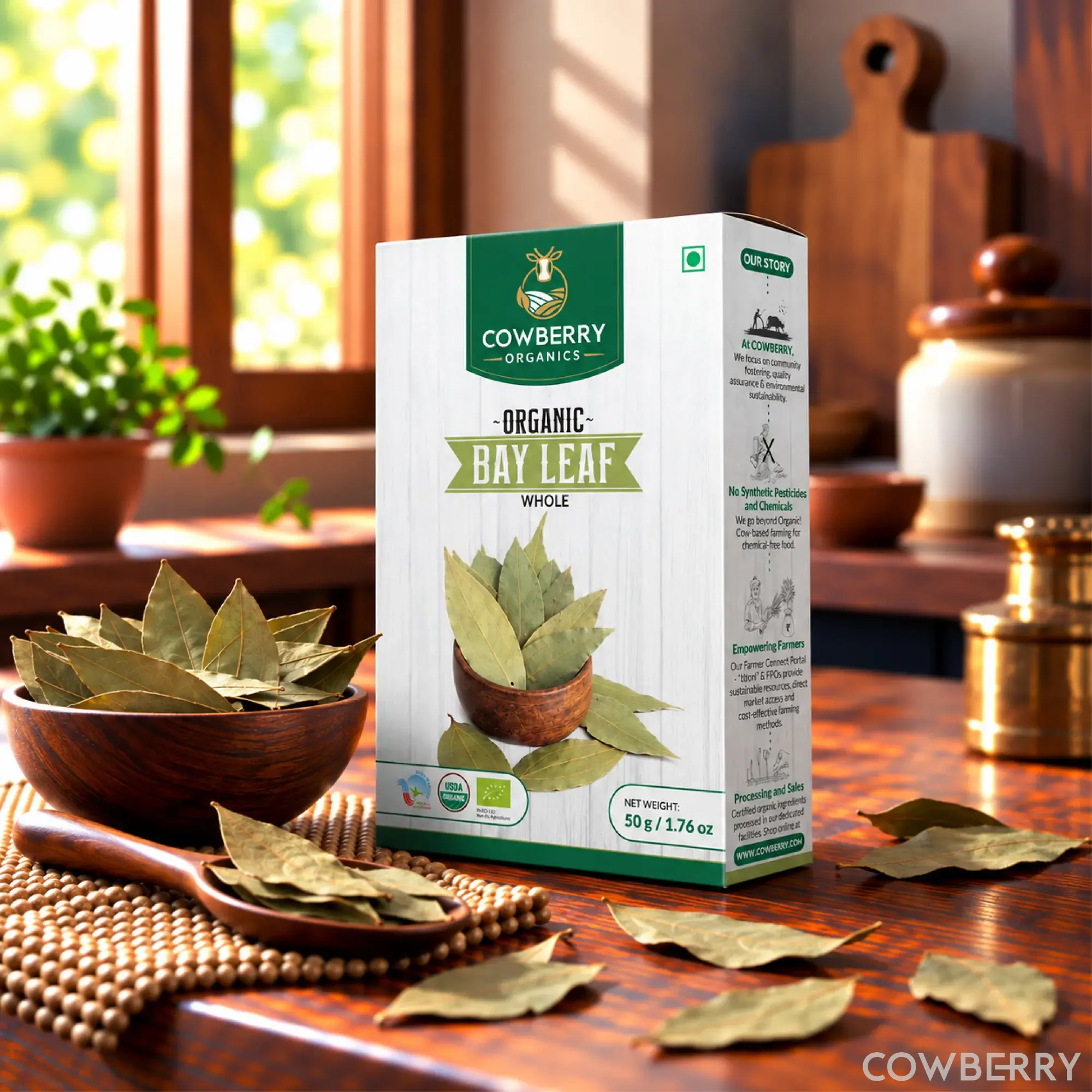
Shop this article
Keep reading
Coriander water benefits: what dhania water actually does
Peanuts in Hindi (moongfali): groundnut names in Indian languages
Coriander vs cilantro: are they the same herb?