by COWBERRY

8 minute read
Toor dal in pregnancy: benefits, safety and how to eat it

Toor dal in pregnancy is a sound staple: one katori of cooked dal carries 6.5 g of protein, 32 mcg of folate and 1.2 mg of iron, three nutrients a pregnancy diet leans on. The page below lays out what the WHO and the ICMR-NIN guidelines print, the portion, and the habits that matter, with the dal itself covered on the toor dal page.
Short answer: is toor dal safe and useful in pregnancy?
Yes, cooked properly: a 2019 review of pulse constituents found no evidence that pulses, when cooked properly, keep harmful lectins or trypsin inhibitors, and toor is one of the pulses the guidelines print in the pregnancy plan. WHO's antenatal guidance describes a healthy pregnancy diet as one that draws adequate energy, protein, vitamins and minerals from varied foods, with beans in the list; toor fits that variety. When nausea or vomiting turns up, the guidelines suggest small, frequent meals, four to six a day; a small bowl of soft-cooked dal can be one of them.
Two cautions follow. First, the dal is food, and the supplements stay on the table: WHO recommends a daily oral iron and folic acid supplement for pregnant women, 30 to 60 mg of elemental iron and 400 mcg of folic acid, and no katori of dal stands in for it. Second, cooking decides safety: the same 2019 review ties the destruction of those factors to proper cooking, so the dal must be cooked fully soft, never half-done. For Hindi speakers, arhar dal in pregnancy is the same food under its Hindi name.
What toor dal gives a pregnancy: protein, iron and folate
Raw toor dal per 100 g, per IFCT 2017: 21.7 g of protein, 3.9 mg of iron, 108 mcg of folate and 9.1 g of fibre. A bowl of cooked toor from 30 g of dry dal holds about 6.5 g of protein, 1.2 mg of iron and 32 mcg of folate, at about 99 kcal. The toor dal benefits in pregnancy worth knowing come down to those three nutrients. The table below shows the per-100 g numbers.
Why they matter is printed in the guidelines. Both mother and fetus need extra iron and folic acid for the heavy work of red blood cell formation, and the guidelines count pulses among the plant foods that contain iron, while noting that iron bioavailability from plant foods is poor. The printed fix: fruits rich in vitamin C, guava and orange among them, should join the meal to improve the absorption of iron from plant foods, and lemon, from the same citrus list, helps too. Tea works against it: beverages like tea bind dietary iron and leave it unavailable, so the guidelines ask that tea be kept away from meals, before, during or soon after. In plate terms: a squeeze of lemon on the dal, a guava or an orange with the meal, and tea a while later.
The dal's folate is a food contribution, not a medicine. Folic acid, taken in the pre-pregnancy period and the first 28 days of pregnancy, lowers the risk of anemia, and WHO asks that folic acid begin as early as possible, ideally ahead of conception, for its printed role in shielding against neural tube defects. The dal supports the diet; the supplement is what the doctor prescribes.
| Nutrient | Toor dal (split), raw |
|---|---|
| Energy (kcal) | 331 |
| Protein (g) | 22 |
| Fat (g) | 1.6 |
| Carbohydrates (g) | 55 |
| Dietary fibre (g) | 9.1 |
| Iron (mg) | 3.9 |
| Calcium (mg) | 72 |
| Magnesium (mg) | 119 |
| Potassium (mg) | 1395 |
| Sodium (mg) | 18 |
| Zinc (mg) | 2.6 |
| Folate (mcg) | 108 |
| Glycemic index (GI) | 20 |
Per 100 g raw, edible portion. Composition: IFCT 2017 (ICMR-NIN). GI: University of Sydney GI database. — means not reported. These are average values for the food; the label on a pack gives the values for that product.
How much toor dal in pregnancy, and how to eat it
The printed amounts come in two forms. Figure 2.2 of the guidelines sets the daily pulses share for a normal pregnancy at 80 g, and the Figure 2.3 diet chart, drawn for a sedentary woman of 55 kg, spreads pulses over the day: 20 g at breakfast, 30 g at lunch, and red gram or chana at dinner, 25 g. That dinner entry can be toor: red gram is the name IFCT 2017 uses for toor dal, and one katori, made from 30 g of dry dal, sits exactly at the lunch share. Two katoris sit below the chart's total even so, and the guidelines allow fish, chicken, meat or egg to be swapped in for part of the pulse allowance.
The second number is energy and protein. The daily diet of a pregnant woman should contain an additional 350 calories of energy from the second to the third trimester, with an extra 8 g of protein from the second trimester, rising to 18 g from the third. For the toor dal in pregnancy third trimester question, the answer sits in that number: the third trimester asks for the larger protein share, and the dal covers a slice of it. It covers that share best when it rides on cereal: in the guidelines' arithmetic, cereals and pulses together at a 3:1 raw-weight ratio can meet the requirements of all the essential amino acids, while khichdi cooks that pair in a single pot. Our toor dal khichdi recipe is that dish, and plain toor dal cooking lives on the toor dal page. Eat the dal freshly cooked, and rotate it with other dals and beans through the week; the guidelines' advice for pregnancy is variety, not repetition.
Cooking it well: wash, cook soft, skip the sprouts
The usual complaint about pulses is gas, and a 2019 review explains the chemistry: pulses carry sugars known as galacto-oligosaccharides, with raffinose, stachyose and verbascose named as members. The small intestine cannot break these down, so they ferment in the colon, and gas is the by-product. The same review adds that this explanation has lately been disputed, and that most people who get flatulence find it passes over a few weeks of continued intake. In pregnancy that means eat the dal fully cooked, in modest portions, and let your own body set the pace.
Two more kitchen habits help. Give the dal one good wash before cooking, not repeat washes, per the guidelines; phytic acid in legumes falls a great deal with boiling or pressure cooking, and its fall frees minerals such as iron, calcium, magnesium and zinc for absorption. Boiling in just enough water, none drained away, keeps the most folate in legumes, which matters here. Sprouts are the exception: the US FDA's produce-safety guidance puts pregnant women among the people more vulnerable to foodborne illness, and asks them to avoid raw or lightly cooked sprouts of any kind, since Salmonella, Listeria and E. coli multiply in exactly those warm, humid sprouting conditions. Through pregnancy, keep toor cooked, not sprouted.
Better and worse choices in pregnancy
Better:
- Dal cooked completely soft, in just enough water with none drained.
- Lemon squeezed over the dal, or a guava or orange beside the meal, to help the body absorb plant iron.
- The dal rotated with other dals and beans through the week.
- Freshly cooked dal, eaten soon after it is made.
Worse:
- Dal pulled off the flame while still hard; the review's reassurance on lectins and trypsin inhibitors covers properly cooked pulses.
- Sprouts, raw or lightly cooked, of any kind, per the US FDA.
- Tea or coffee taken along with a meal or just after; tea binds dietary iron.
- Using the dal as a stand-in for the doctor's iron and folic acid supplements.
Talk to your doctor or dietitian
Every pregnancy has its own numbers, and the iron and folate a woman needs are written in her blood work, not on a website. Take your dal questions to the one who sets your supplements: the pulse share that fits your diet, whether your iron or folate numbers change the advice, and how digestion in late pregnancy sits with fibre-heavy meals. For the portions and the plan that fit your pregnancy, talk to your doctor or dietitian.
FAQs
Does toor dal have protein?
Yes. Raw toor dal holds 21.7 g of protein per 100 g, and a katori cooked from 30 g of dry dal brings about 6.5 g. In pregnancy that protein matters twice: the guidelines set an additional 8 g a day from the second trimester and 18 g from the third, and a dal-khichdi bowl contributes a share while adding the amino acids the cereal runs short of.
Can toor dal cause gas?
It can, like other pulses. The sugars responsible are galacto-oligosaccharides the small intestine cannot digest; the colon ferments them, and fermentation makes the gas. A 2019 review of pulse tolerance finds that flatulence fades for most people after a few weeks on the same intake. In pregnancy, keep the dal soft-cooked and the portions modest, and let your own system respond.
Can toor dal be soaked overnight?
It can, though nothing requires it. The guidelines place soaking among the household methods that ease the digestion of legumes, but they print no soak time for toor. Soaked or unsoaked, what matters most is boiling or pressure cooking until fully soft, the step the guidelines single out as the best for the nutritional quality of pulses.
What is toor dal?
Toor dal is the pigeon pea, Cajanus cajan, split and dehusked, the yellow dal behind sambar and dal tadka; Hindi speakers call it arhar, and IFCT 2017 files it under red gram. Each 100 g carries 21.7 g of protein and 108 mcg of folate.
Is toor dal safe during pregnancy?
Yes, when it is properly cooked. The 2019 review of pulse constituents found no evidence that pulses, once properly cooked, retain harmful lectins or trypsin inhibitors, and in the WHO's antenatal guidance beans belong to the varied foods a healthy pregnancy diet draws on. Serve the dal soft-cooked, leave raw sprouts alone, and let your doctor set the portions.
References
- Indian Food Composition Tables (IFCT) 2017, ICMR-National Institute of Nutrition
- Dietary Guidelines for Indians, ICMR-National Institute of Nutrition
- WHO recommendations on antenatal care for a positive pregnancy experience (2016)
- US FDA: Selecting and Serving Produce Safely
- Thompson HJ. Improving human dietary choices through understanding of the tolerance and toxicity of pulse crop constituents. Curr Opin Food Sci, 2019
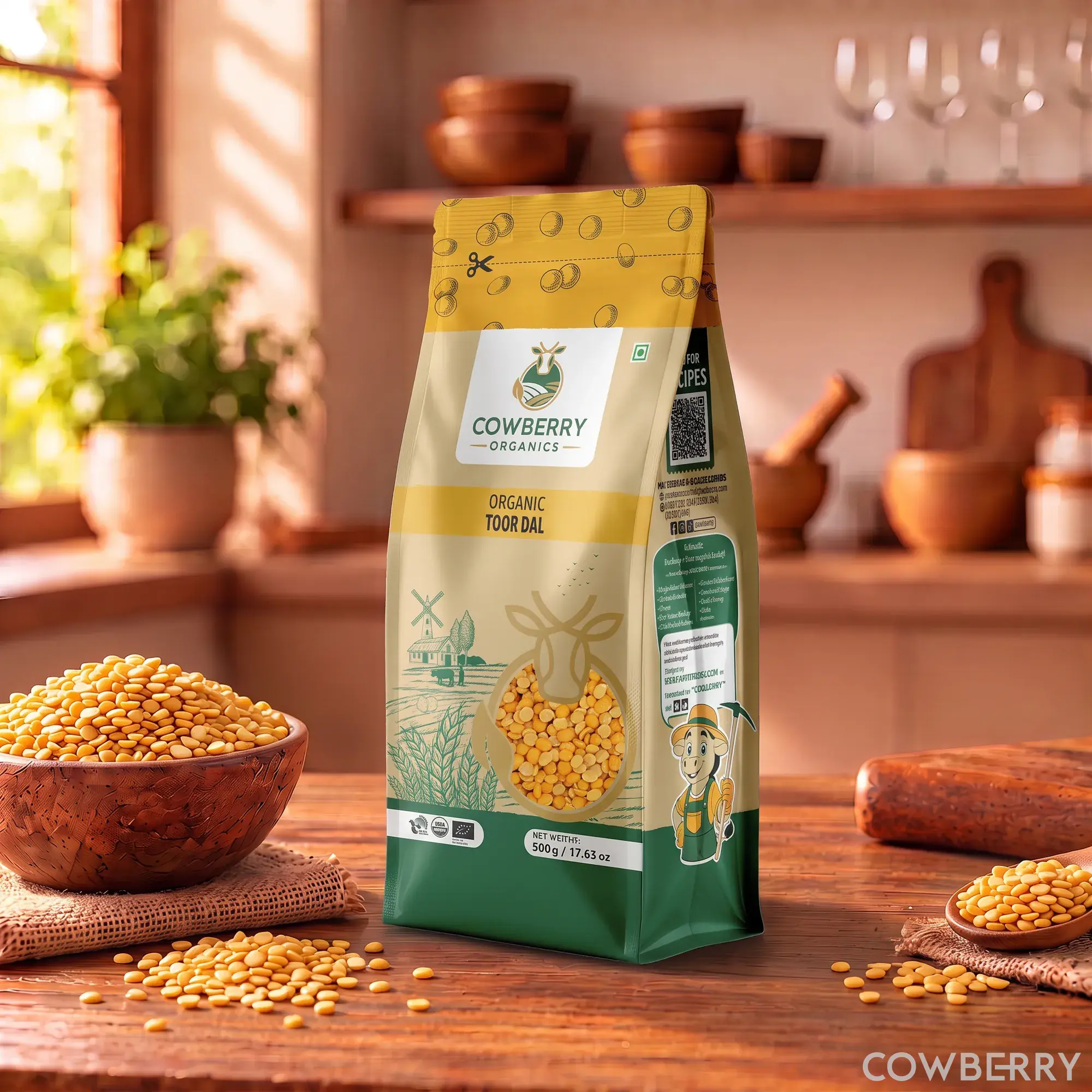
Shop this article
Keep reading
Green gram plant: crop, varieties and how it grows in India
Rajma vs lobia: difference, nutrition and which to choose
Rajma plant: how rajma is grown in India (it is not a tree)