by COWBERRY

5 minute read
Til in english: sesame seeds names in hindi and Indian languages

Til in english is sesame seeds, the small oilseed of the plant Sesamum indicum. Til meaning in Hindi, Marathi, Punjabi, Bengali, Urdu and Sanskrit is one and the same word, til; Gujarati says safed tal, Tamil and Malayalam say ellu, and Telugu says nuvvulu. Every name below carries its source. The seed itself, its nutrition and its recipes are on the sesame seeds hub page.
Til meaning: the English name and the scientific name
Til meaning, in English, is sesame seeds. The name IFCT 2017 prints for the seed is 'Gingelly seeds, white', so gingelly and sesame are one oilseed, not two, and the scientific name is Sesamum indicum. A 2022 review in Nutrients calls sesame one of the earliest oil crops in human use, and the dietary guidelines for Indians count sesame seeds among the nuts and seeds that add protein to the diet, beside a list of calcium sources that puts them with milk, curd, ragi and amaranth.
The oil pressed from the same seeds is til oil; cooking with it is covered in our guide to cooking with sesame oil.
Sesame seeds in Hindi and Indian languages: quick answer
One line first: in Hindi, Marathi, Punjabi, Bengali, Urdu and Sanskrit the seed is til; in Gujarati it is safed tal; in Odia rasi; in Assamese boga til; in Kannada acchellu; in Telugu nuvvulu; and in Tamil and Malayalam, ellu. IFCT 2017's local-names list is the source for every row of the table below, and the languages run in the order used on every COWBERRY page.
| Language | Name (romanised) |
|---|---|
| English | Gingelly seeds, white |
| Hindi | Til |
| Marathi | Til |
| Gujarati | Safed tal |
| Punjabi | Til |
| Bengali | Til |
| Odia | Rasi |
| Assamese | Boga til |
| Kannada | Acchellu |
| Telugu | Nuvvulu |
| Tamil | Ellu |
| Malayalam | Ellu |
| Urdu | Til |
| Sanskrit | Til |
| Botanical name | Sesamum indicum |
Source: IFCT 2017 (ICMR-NIN) local-names list. — means no name recorded in the source.
Sesame names by region
North: til in Hindi, Punjabi and Urdu
IFCT 2017 prints til for Hindi, Punjabi and Urdu, and records the same word as the Sanskrit name. Til meaning stays the same across all three languages.
West: safed tal in Gujarati, til in Marathi
Marathi shares til with Hindi, while Gujarati has its own word, safed tal.
East: til in Bengali, rasi in Odia, boga til in Assamese
Bengali shares til with the north. Odia prints rasi and Assamese prints boga til.
South: acchellu, nuvvulu and ellu
Kannada prints acchellu and Telugu prints nuvvulu, while Tamil and Malayalam share the word ellu. These are the names to look for in southern recipes.
Often confused with: till, chia seeds and til oil
Three words come up next to til in searches, and only one of them is a different seed.
- Till. The spelling till points to the same seed: IFCT 2017 prints the Hindi name as til, and the seed's English name is 'Gingelly seeds, white'. There is no separate seed called till.
- Chia seeds. Chia is a different seed. The dietary guidelines for Indians list chia among the seeds that supply n-3 fats, alongside walnuts, flax seeds, soyabean, fenugreek seeds, mustard and leafy greens; sesame sits in the same guidelines among the seeds pressed for oil and among the calcium-rich foods.
- Til oil. Not a seed at all: it is the oil pressed from til. Our guide to eating sesame seeds covers the seed's own kitchen.
Where sesame grows in India
The dietary guidelines name sesame among the oilseeds whose seeds are pressed for oil, and a 2022 review in Nutrients describes it as widely grown. In India, the white sesame COWBERRY packs comes from the black-soil plains of Madhya Pradesh and Gujarat, where it is grown organically and without synthetic pesticides.
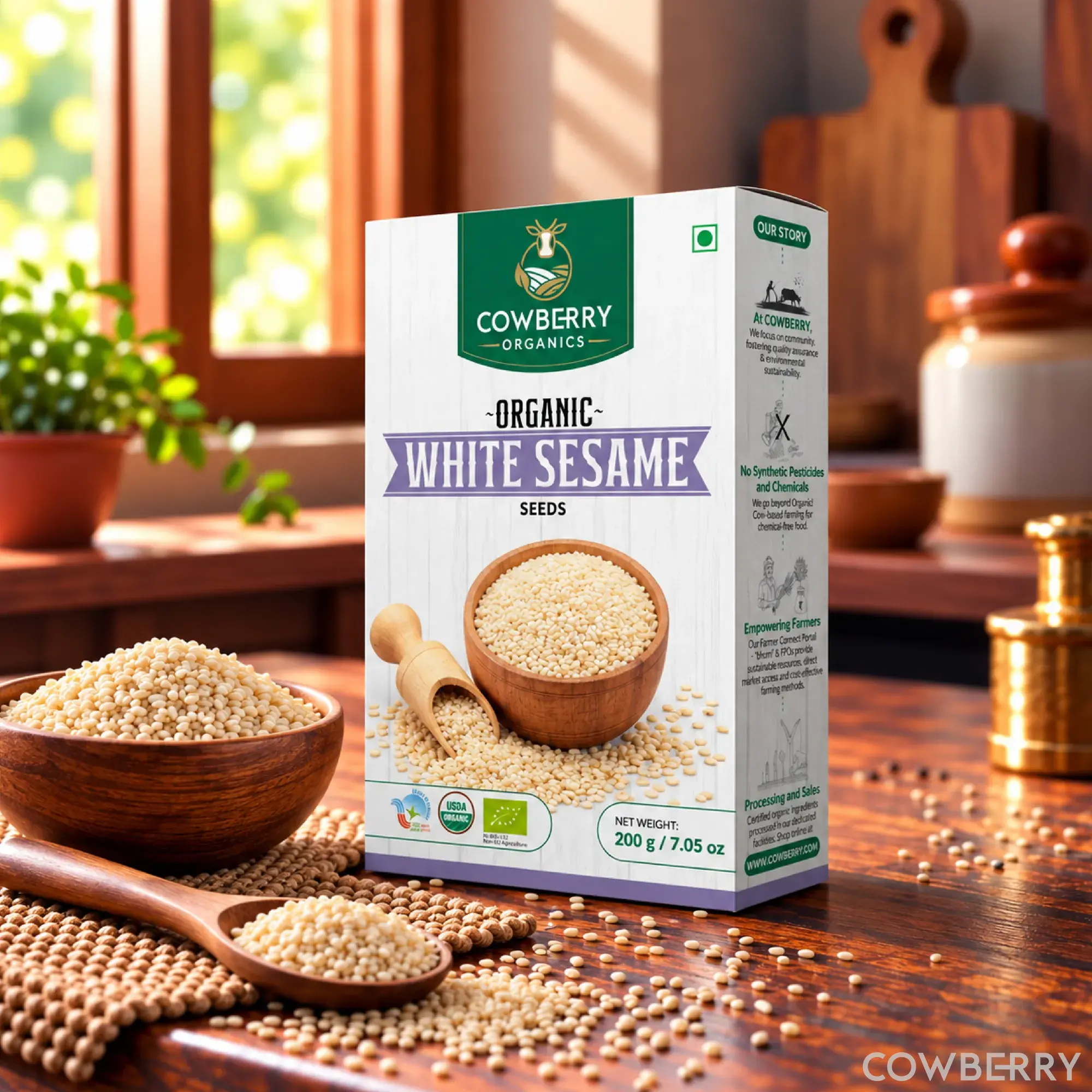
At home the seed becomes til ke laddu, the Makar Sankranti sweet of roasted white sesame bound with jaggery syrup. COWBERRY sells the seed whole and cleaned as Organic White Sesame Seeds; for the seed's nutrients and uses, start with the sesame seeds hub.
FAQs
What is til called in english?
Sesame seeds. IFCT 2017 prints the English name as 'Gingelly seeds, white', so gingelly and sesame are one seed, and til is simply its Hindi name. The scientific name is Sesamum indicum, and the same seed yields til oil.
What is sesame seeds in hindi?
Til. IFCT 2017 records til as the Hindi name for 'Gingelly seeds, white', and the same word appears in its Marathi, Punjabi, Bengali, Urdu and Sanskrit rows. In Gujarati the seed is safed tal; the full list is in the table above.
Difference between sesame seeds and till?
None. Till is another spelling of til, and til is the Hindi name IFCT 2017 records for sesame seeds, whose English name is 'Gingelly seeds, white'. Whatever the pack says, it is one seed, Sesamum indicum.
Difference between sesame seeds and chia seeds?
They are different seeds. The dietary guidelines for Indians list chia among the seeds that supply n-3 fats, along with walnuts, flax seeds, soyabean, fenugreek seeds, mustard and leafy greens. Sesame, in the same guidelines, appears among the oilseeds pressed for oil and among the calcium-rich foods.
Does sesame seeds have calcium?
Yes. White sesame seeds give 1283 mg of calcium per 100 g (IFCT 2017), and the dietary guidelines list sesame among calcium-rich foods. The full nutrient list is on the sesame seeds nutrition page.
References
- Indian Food Composition Tables (IFCT) 2017, ICMR-National Institute of Nutrition
- Dietary Guidelines for Indians, ICMR-National Institute of Nutrition
- Wei P, Zhao F, Wang Z et al. Sesame (Sesamum indicum L.): a comprehensive review of nutritional value, phytochemical composition, health benefits, development of food, and industrial applications. Nutrients, 2022
Shop this article
Keep reading
Coriander water benefits: what dhania water actually does
Peanuts in Hindi (moongfali): groundnut names in Indian languages
Coriander vs cilantro: are they the same herb?