by COWBERRY

6 minute read
Sesame seeds nutrition per 100g: calories, protein and calcium

Sesame seeds nutrition per 100 g of raw seed, from the IFCT 2017 tables: 520 kcal, 21.7 g of protein, 43 g of fat and 1283 mg of calcium. Til is an oilseed, so the numbers run to fat and minerals rather than carbohydrate, and even a small serving carries real amounts. The seed's names, benefits and recipes live on the sesame seeds hub.
Sesame seeds nutrition facts 100g: the full table
Every number in the table below is a per-100 g value from IFCT 2017, for the raw seed, not the roasted one. The energy line tells the story of what til is: at 520 kcal it sits level with groundnut's 521 kcal and mustard seeds' 510 kcal, because all three are oilseeds whose weight runs mostly to fat. Where sesame moves ahead of its two companions is calcium, iron, magnesium and zinc (potassium is higher in both groundnut and mustard seeds), and the sections after this one take those numbers one by one. Sesame seeds nutritional value per 100 g, in short, is a low-carbohydrate profile with a lot of fat, calcium and iron.
| Nutrient | White sesame seeds | Groundnut | Mustard seeds (black) |
|---|---|---|---|
| Energy (kcal) | 520 | 521 | 510 |
| Protein (g) | 22 | 24 | 20 |
| Fat (g) | 43 | 40 | 40 |
| Carbohydrates (g) | 11 | 17 | 17 |
| Dietary fibre (g) | 17 | 10 | 14 |
| Iron (mg) | 15 | 3.4 | 13 |
| Calcium (mg) | 1283 | 54 | 402 |
| Magnesium (mg) | 372 | 197 | 266 |
| Potassium (mg) | 460 | 679 | 694 |
| Sodium (mg) | 15 | 12 | 4 |
| Zinc (mg) | 7.8 | 3.2 | 4 |
| Folate (mcg) | 131 | 91 | 95 |
| Glycemic index (GI) | — | 11 | — |
Per 100 g raw, edible portion. Composition: IFCT 2017 (ICMR-NIN). GI: University of Sydney GI database. — means not reported. These are average values for the food; the label on a pack gives the values for that product.
Sesame seeds calories in a 20 g portion
Composition tables work per 100 g, but nobody eats sesame by the hundred grams. The dietary guidelines count all nuts and seeds together at 35 g on a vegetarian day of about two thousand kilocalories, and a 20 g portion would use a part of that shared amount. Here is what 20 g of raw sesame carries, worked out straight from the table above:
| 20 g of raw sesame | Amount |
|---|---|
| Energy | 104 kcal |
| Protein | 4.3 g |
| Fat | 8.6 g |
| Carbohydrate | 2.2 g |
| Fibre | 3.4 g |
| Calcium | 257 mg |
| Iron | 3 mg |
| Magnesium | 74 mg |
| Zinc | 1.6 mg |
| Folate | 26 mcg |
A 20 g sprinkle therefore adds 4.3 g of protein and 257 mg of calcium to a meal, and the guidelines list sesame among their calcium-rich foods.
Sesame seeds protein and fibre, next to groundnut and mustard seeds
Protein
Per 100 g: groundnut 23.65 g, sesame 21.7 g, mustard seeds 19.51 g. Sesame is the middle of the three, but 21.7 g of protein per 100 g is still a substantial share, and the dietary guidelines count sesame among the nuts and seeds that contain a substantial quantity of protein.
Fibre
Sesame leads this column: 16.99 g of fibre per 100 g against groundnut's 10.38 g, about 1.6 times as much, and against mustard seeds' 14.10 g. A 20 g portion gives 3.4 g, and the guidelines add that dietary fibre is important for proper bowel function.
Iron and calcium
The gaps widen in the minerals. Sesame carries 15.04 mg of iron per 100 g to groundnut's 3.44 mg, over four times as much, and sits a little above mustard seeds' 13.49 mg. In calcium the spread is bigger still: 1283 mg against 54 mg for groundnut, close to 24 times as much, and 402 mg for mustard seeds, about three times as much.
Sesame seeds glycemic index: what the database prints
The glycemic index database has no entry for plain sesame seeds, so there is no GI to quote for them. The table above shows carbohydrate at 10.83 g per 100 g, and a 20 g portion carries 2.2 g of carbohydrate, so the seed's energy comes mostly from fat and protein. No GI claim about til can be read from that table.
The nearest listed neighbour is groundnut, whose glycemic index is 11 in the same database, the mean of five entries for plain peanuts, raw or boiled, across all countries, with a range of 5 to 23. That is groundnut's number, not sesame's, and it is quoted only to show what a low-carbohydrate oilseed's entry looks like.
Sesame seeds calcium, iron and the smaller minerals
Calcium is the headline: 1283 mg per 100 g, and a 20 g portion gives 257 mg. The dietary guidelines put sesame on their list of good calcium sources beside milk, curd, ragi and amaranth leaves, and the guidelines name milk and sesame on the same list without ranking one above the other.
Iron
15.04 mg of iron per 100 g, with 3 mg in a 20 g portion. The guidelines add the pairing that matters: vitamin C from guava, citrus fruits or a coriander and green chilli chutney helps the body take in iron from plant foods, while tea is best kept about an hour away from the meal.
The smaller minerals
The same IFCT 2017 entry lists 372 mg of magnesium, 460 mg of potassium, 7.77 mg of zinc and 15.4 mg of sodium per 100 g, plus 131 mcg of folate. Vitamin C has no value in that entry, IFCT 2017's way of marking a value below the detectable limit. That is the honest reading: sesame's mineral story is calcium and iron, with the rest as support.
The evidence behind what these nutrients do is on the sesame seeds benefits page; the ways to eat the seed are covered in our guide to eating sesame seeds. Names, recipes and storage start at the sesame seeds hub.
White, brown and black sesame: the white entry behind these numbers
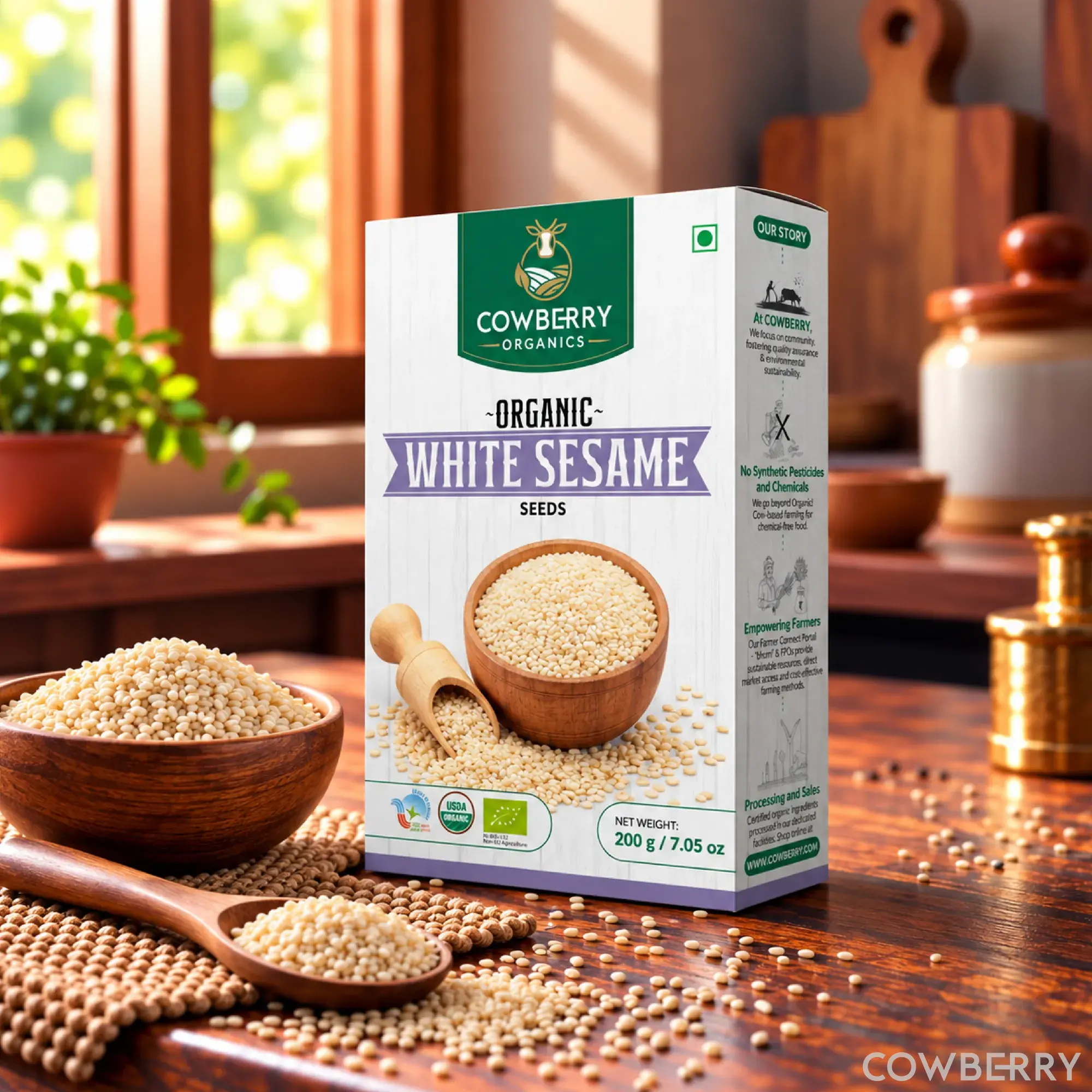
Every number on this page comes from IFCT 2017's white sesame entry, 'Gingelly seeds, white', because that is the sesame COWBERRY sells: Organic White Sesame Seeds, organically grown in Madhya Pradesh and Gujarat and sold in 200 g and 500 g packs. Roasting, soaking or rolling the same seed into til ke laddu changes its kitchen, not these numbers, which are for the raw seed.
FAQs
Does sesame seeds have calcium?
Yes: 1283 mg of calcium per 100 g of raw seed (IFCT 2017), and the dietary guidelines list sesame among their good calcium sources. A 20 g portion carries 257 mg. The full per-100 g table is in the first section of this page.
Does sesame seeds have iron?
Yes: 15.04 mg of iron per 100 g, and a 20 g portion carries about 3 mg. Plant iron is taken up better when the meal includes a little vitamin C from guava, citrus fruit or a coriander and green chilli chutney, per the dietary guidelines, which also suggest keeping tea an hour away from the meal.
Does sesame seeds have protein?
Yes: 21.7 g of protein per 100 g, a little below groundnut's 23.65 g and above mustard seeds' 19.51 g. A 20 g portion adds 4.3 g of protein to a meal, and the dietary guidelines place sesame in the group of nuts and seeds that carry a substantial share of protein.
Does sesame seeds have b12?
IFCT 2017 prints no B12 value for sesame. The vitamin its entry does print is folate, at 131 mcg per 100 g. The dietary guidelines point to curd, eggs and flesh foods for B12, and note that the amount in milk is small.
Is sesame seeds rich in calcium?
Yes. At 1283 mg per 100 g, sesame's calcium is close to 24 times groundnut's 54 mg and about three times mustard seeds' 402 mg, the two oilseeds compared on this page, and the dietary guidelines list the seed among their good calcium sources.
Which sesame seeds are good white or black?
The colours are not compared here: every number is from IFCT 2017's white sesame entry, the colour COWBERRY packs, grown in Madhya Pradesh and Gujarat. The same entry supplies the 20 g portion figures.
References
Shop this article
Keep reading
Coriander water benefits: what dhania water actually does
Peanuts in Hindi (moongfali): groundnut names in Indian languages
Coriander vs cilantro: are they the same herb?