by COWBERRY

6 minute read
Sesame seeds how to eat: raw, soaked or roasted and how much daily

Sesame seeds how to eat: raw by the spoonful over salads and curd, soaked overnight and ground into a paste, dry-roasted until they pop, or bound with jaggery as til ke laddu. Each way is simple, and the dietary guidelines set no sesame-only amount. One method for each is below, with timings; the seed's names and nutrients live on the sesame seeds hub.
Short answer
Raw seeds need no preparation: a 10 g spoonful goes over curd, salads, smoothies or baking, and into stir-fries. Soaking overnight in plain water softens the seeds for a chutney paste. Dry-roasting in a heavy kadai takes about 5 minutes and changes everything: the seeds pop, swell and smell nutty, and they keep for weeks in a jar. The fourth way is the festival sweet, til ke laddu, which needs jaggery and about half an hour.
Seed values here are for the raw seed, which gives 520 kcal, 21.7 g of protein and 1283 mg of calcium per 100 g (IFCT 2017).
Til how to eat: four ways, step by step
Eat them raw
Sesame seeds can be eaten as they come. Sprinkle them over salads or add them to smoothies; they also go into baking and stir-fries. A 10 g spoonful is a good starting point.
Soak them overnight
Cover the seeds with water, about twice their depth, and leave them overnight. In the morning, drain and rinse, then blend them into a chutney or grind them into a paste for curries. If you do not use them at once, keep the drained seeds in the fridge, use them soon and throw them out if they smell sour.
Dry-roast them
Use a heavy kadai and a low flame, keep the spoon moving without a stop, and pull the pan off the heat in about 5 minutes, when the seeds have popped and turned a shade darker and the kitchen smells nutty; stop while they are still pale, not brown. Roasted seeds go over sabzis, dals and fruit, and into chutneys.
Make til ke laddu
The til ke laddu recipe roasts the seeds dry, stirs them into jaggery syrup taken to the soft-ball stage and rolls the mix while it is still warm; a batch of 12 takes roughly half an hour, plus 10 minutes to firm up. Each small laddu works out to roughly 114 kcal, by the recipe's own sums.
Sesame seeds how to eat daily: how much
The dietary guidelines do not set a sesame-only amount. Their 'My Plate for the Day' for a vegetarian day of about two thousand kilocalories puts all nuts and seeds together at 35 g, so a spoonful of til sits inside that combined amount rather than on top of it. For the seed itself, a 20 g portion gives 104 kcal, 4.3 g of protein, 257 mg of calcium and 3 mg of iron.
That is the measure to think in: a sprinkle over a meal, not a bowl. The same guidelines name sesame seeds among the good sources of calcium and count the seed among the nuts and seeds with a substantial quantity of protein. For every nutrient per 100 g, see the sesame seeds nutrition page.
Common mistakes
- A high flame at the roast. Watch the pan closely: once the seeds have popped and turned a shade darker they are done, and only a few more seconds on the flame turns the batch bitter. Keep the flame gentle and never stop stirring.
- An old batch. A stale pack gives itself away by smell: fresh seeds are cream-coloured with a nutty aroma, while old sesame smells of stale oil and goes bitter in the pan. Buy a small pack and use it up.
- Syrup that misses the soft-ball stage. In the laddu recipe, a syrup thread that dissolves in cold water gives laddus that crumble, and a thread that balls up hard gives laddus that set like stone.
- Using them like a full snack. They carry 520 kcal per 100 g, so think of a spoonful within the day's nuts and seeds, not a handful at tea.
Time and quantity table
The four methods, side by side. Times are for a home kitchen; the roast and laddu timings come from the til ke laddu recipe.
| Method | Time or quantity |
|---|---|
| Raw | No preparation; start with 10 g over salads, curd or smoothies |
| Soak | Overnight in twice the depth of water; drain and rinse |
| Dry-roast | About 5 minutes on a low flame, stirring without pause |
| Til ke laddu | Roughly half an hour of work, then 10 minutes to set; yields 12 |
| Daily share | No sesame-only amount; 35 g of all nuts and seeds together on the guidelines' vegetarian plate for the day |
| Raw seeds, stored | Airtight container, cool dry place, for many months |
| Roasted seeds, stored | A closed jar, a few weeks |
| Laddus, stored | Airtight jar at room temperature, up to two weeks |
Soaked seeds are the exception: keep them in the fridge after draining and use them soon.
Storing sesame seeds so they stay fresh
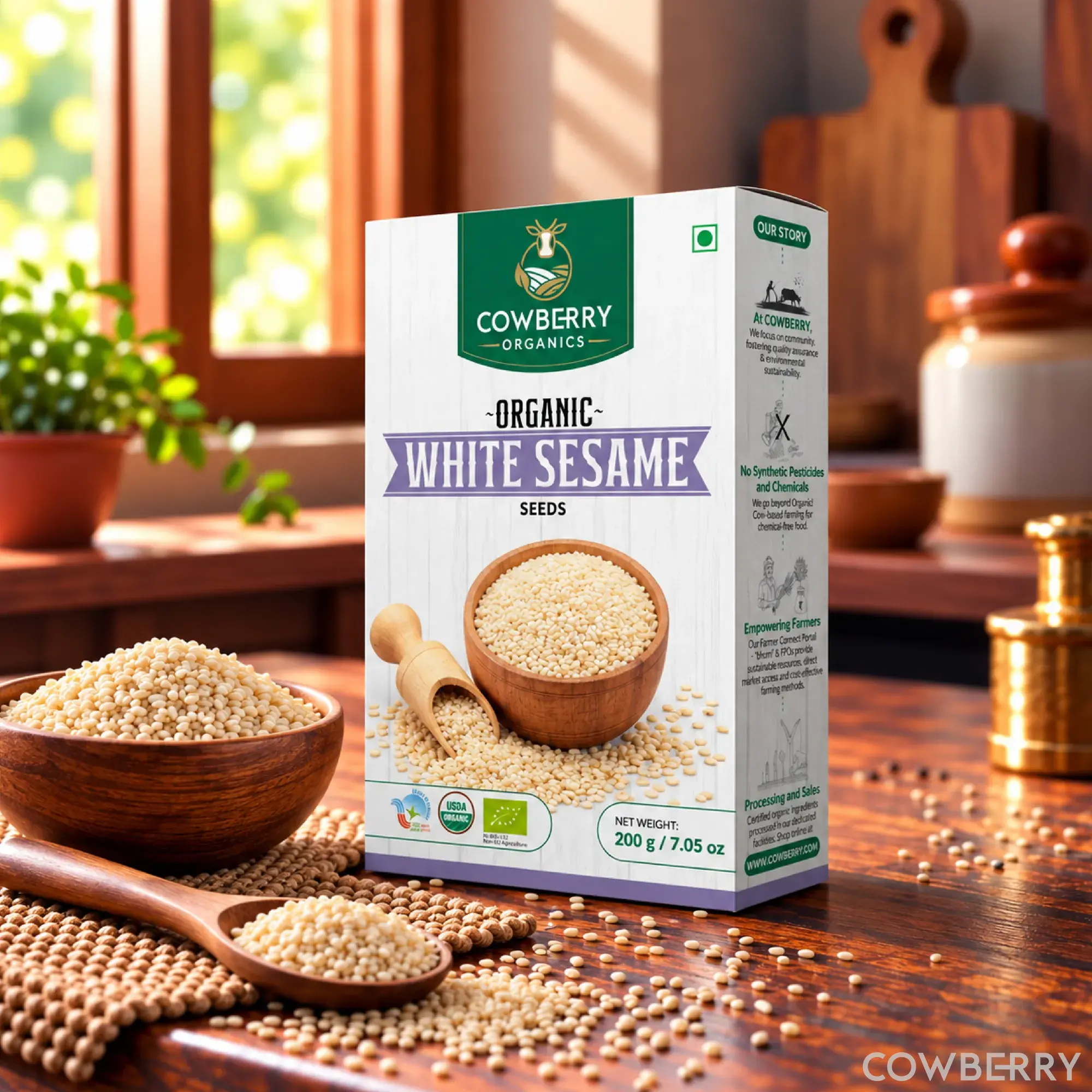
Raw sesame keeps for many months in an airtight tin, stood in a cool, dry corner; COWBERRY gives the same advice for keeping its freshness and flavour. Roasted seeds are best used within a few weeks, kept in a closed jar, and laddus keep up to two weeks at room temperature in an airtight jar.
Soaked seeds belong in the fridge, drained, and should be used soon; throw them out if they turn sour or slimy. The oil pressed from the same seeds has its own rules, in our guide to cooking with sesame oil, and the whole set of sesame pages starts at the sesame seeds hub.
FAQs
Can sesame seeds be eaten raw?
Yes. Sesame seeds go over salads and into smoothies straight from the pack, and COWBERRY also lists baking and stir-fries among their uses. The values IFCT 2017 prints are for the raw seed, and roasting or soaking changes the texture and taste.
Can sesame seeds be soaked overnight?
Yes. Cover the seeds with about twice their depth of water and leave them overnight; in the morning they are soft enough to blend into chutney or a curry paste. Drain and rinse first, and if you are not using them at once, refrigerate them and use them soon. A sour smell means the batch has turned.
How sesame seeds can be eaten?
Four simple ways: raw over salads and curd, soaked overnight and blended into chutney, dry-roasted until they pop, or bound with jaggery as til ke laddu. The roast takes about 5 minutes on a low flame; the laddu version makes 12 and keeps up to two weeks.
Why sesame seeds are bitter?
Two kitchen causes: over-roasting and old seed. Once the seeds have popped and taken on a darker shade they are done, and only a few more seconds turns the batch bitter. Old seed smells of stale oil and goes bitter in the pan as well, so keep the flame gentle and the pack fresh.
Does sesame seeds have protein?
Yes: 21.7 g of protein per 100 g of raw seed (IFCT 2017). A 20 g portion gives 4.3 g, so a spoonful over a meal adds a little protein to the plate. The dietary guidelines put sesame on their list of nuts and seeds with a substantial share of protein.
References
Shop this article
Keep reading
Coriander water benefits: what dhania water actually does
Peanuts in Hindi (moongfali): groundnut names in Indian languages
Coriander vs cilantro: are they the same herb?