by COWBERRY

7 minute read
Rock salt benefits and side effects (sendha namak, pink salt)

Rock salt benefits are a short, honest list: sodium's role in the body's water and electrolyte balance (ICMR-NIN), the vrat-kitchen use, and trace minerals that are real but too small to count. Side effects, the daily limit and how to eat it follow; the pink salt hub has the wider story.
Rock salt benefits: the three the sources support
Three claims survive the records, and the rest is shelf talk. Here are the three, each with the nutrient or fact behind it.
Sodium, the body role on record
The one nutrient the public record prints for rock salt is sodium, 38800 mg per 100 g (the USDA table-salt value standing in), and sodium does have a body job. ICMR-NIN writes that sodium, along with potassium, is essential for water and fluid balance and electrolyte equilibrium, and for the electrophysiological functions of all cells. That is the health role the guidelines tie to the salt on your shelf — and it is a job every salt does, since the sodium across the varieties is almost similar.
Sendha namak benefits for the vrat kitchen
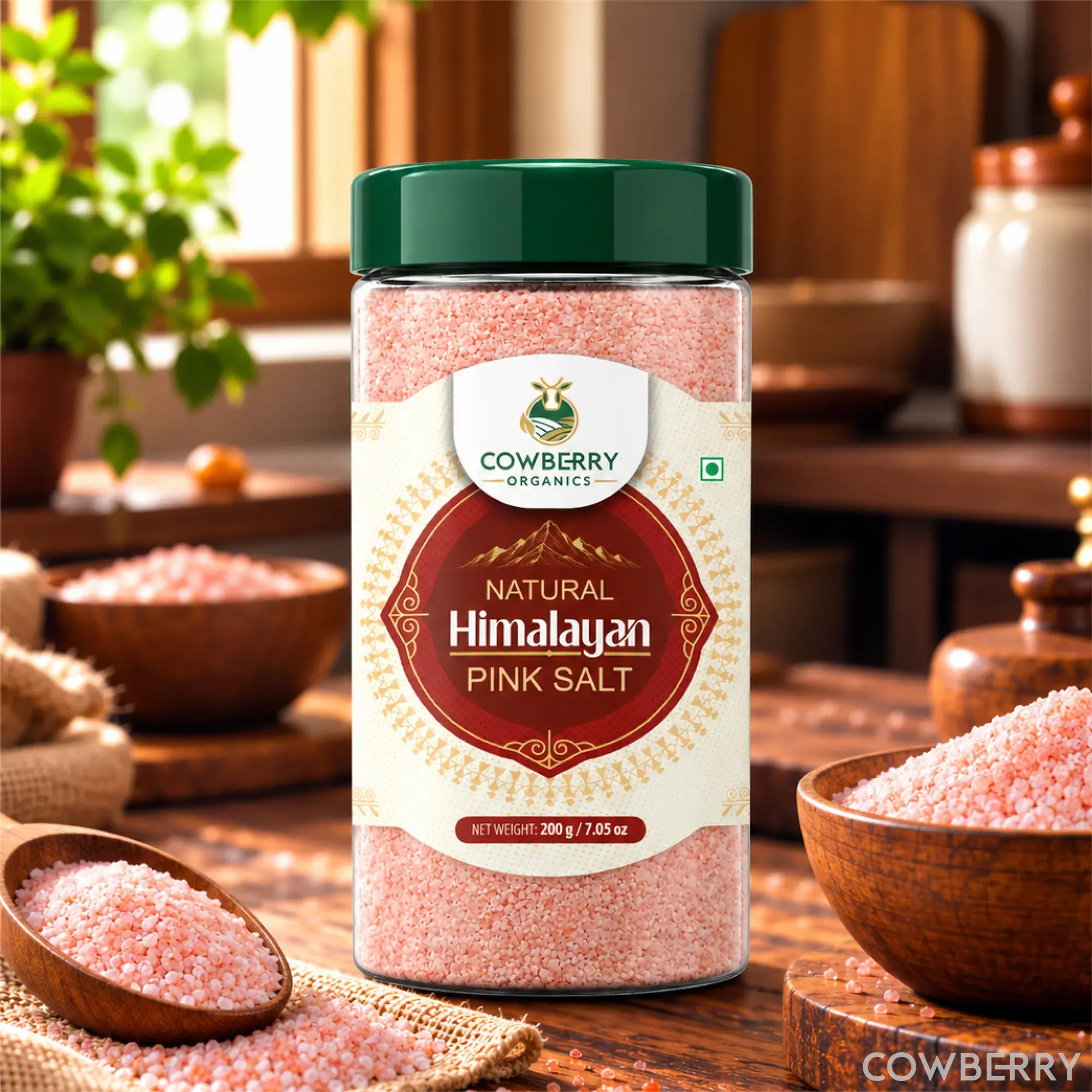
The second benefit on record is culinary, not medical: the guidelines list rock salt for specific recipes or occasions, and the vrat is one such occasion for sendha namak. The same guidelines call pink salt (sendha namak) one of the purest forms of salt. A fast-day plate — kuttu roti, sabudana khichdi, a vrat curry — is where the pink jar earns its keep, and the custom is covered in full on why sendha namak is used in fast.
Trace minerals, real but below the meaningful line
ICMR-NIN notes that salt often contains some essential trace minerals such as magnesium, calcium and iron. A 2020 study scanned 31 pink salts bought in Australia for 25 nutrients and non-nutritive minerals, and it set the honest line: over 30 g of pink salt a day, roughly six teaspoons, before the minerals could add anything meaningful to nutrient intake — far past the 5 g a day cap. The minerals are real; as a benefit they do not count.
Rock salt benefits and side effects: the claims no source supports
The pink jar is sold with a halo, and the halo has no public source. Digestion fixes, cleansing, immunity, weight loss, easier blood sugar — no public record prints any of these, so none is claimed here. Nor is there a blood-pressure benefit: ICMR-NIN links high salt intake to high blood pressure, and nothing about pink salt changes that arithmetic. The honest rock salt benefits list is the one above — sodium's body role, the vrat use, and minerals that stay below the meaningful line. Everything else should be read as shelf talk until a public record says otherwise.
Rock salt side effects and who should limit it
Side effects are where the record is fullest, and they all run through sodium:
- Blood pressure and the heart. High salt intake is associated with high blood pressure and related vascular and heart diseases (ICMR-NIN), and sendha namak sits in the same boat — the sodium across the varieties is almost similar.
- Stomach. High intake of salt may also increase the risk of stomach cancer (ICMR-NIN). The same guidelines add that excessive salt may affect the stomach mucosa and increase the risk of gastritis and atrophy.
- Bones. More sodium means more calcium in the urine: a higher sodium intake leads to greater calcium excretion, which may result in a reduction in bone density (ICMR-NIN).
- Quality. One sample in the 2020 Australian scan of 31 pink salts carried lead above 2 mg per kg — past the national limit Food Standards Australia New Zealand sets — a quality-control caution, not a daily-dose claim.
- Iodine. No iodine figure is printed for rock salt. The WHO's salt-iodization guideline covers fortifying food-grade table salt with iodine, and separately the guidelines say use iodized salt.
Who should limit it: everyone, since the 5 g cap is universal — and if medicines for blood pressure, the heart or the kidneys are in the picture, ask your doctor before changing salts.
How much rock salt per day
One level teaspoon, 5 g, is the whole day's salt — the cap ICMR-NIN prints for every variety, pink included. In sodium that is 1940 mg, from the 38800 mg per 100 g figure, and it sits close to the Indian and WHO sodium recommendation of 2300 mg a day, which the guidelines translate to around 5 g, one teaspoon of common salt. India's measured reality sits above the cap: a 2017 survey of 1395 people put daily salt at 8.59 g in Delhi and Haryana, and 9.46 g in Andhra Pradesh — each above the WHO's 5 g maximum. The day's limit, then, is the same for the pink jar and the white one, and the full per-100g numbers are on rock salt nutritional value per 100g. One helping hand the guidelines name: vegetables and fruits bring potassium, which helps in the excretion of sodium and helps maintain blood pressure.
How to eat rock salt
The vrat plate is its home ground: sendha namak in the kuttu roti dough, in sabudana khichdi, on roasted makhana. Two recipes to start with: Kuttu roti and Kuttu khichdi, both vrat staples that take the pink salt naturally. The crystals usually come coarse, so crush them fresh — a mortar or a quick grind — and shake less than you think: the day's cap is one teaspoon total, and namkeen and papads count toward it, since ICMR-NIN lists salted snacks among the foods that push salt intake up. On ordinary days the same salt works in any dish, with the same cap.
Sendha namak vs table salt: the benefits ledger
The benefits ledger flattens to one line: both salts do the same body job, and neither one is a health upgrade. The pink jar is the vrat jar, and ICMR-NIN calls pink salt one of the purest forms of salt; the white jar is the everyday jar, the one that carries iodine where the salt is iodized. Sodium: almost similar. The side-by-side verdicts are on rock salt against normal salt and rock salt against black salt; the pink salt hub gathers the whole cluster.
FAQs
Is sendha namak good for health?
It is a salt like any other, fine within the 5 g a day cap (ICMR-NIN). The health role on record is sodium's: water and fluid balance, electrolyte equilibrium and the electrophysiological functions of all cells. Beyond that, no public record prints health benefits for it, so none is claimed.
Does sendha namak increase blood pressure?
Only as much as any salt, because the sodium is almost similar across varieties (ICMR-NIN), and high salt intake is associated with high blood pressure and related vascular and heart diseases. The 5 g a day cap is the protection, and it covers the pink jar exactly as it covers the white one.
Is rock salt good for diabetes?
No public record prints a rock salt and diabetes link in either direction, and no calorie or carbohydrate figure is printed for it. The guideline that stands for everyone is the 5 g a day salt cap (ICMR-NIN); anyone managing diabetes should take salt questions to their doctor.
Does rock salt contain iodine?
No iodine figure is printed for rock salt. The WHO's salt-iodization guideline covers fortifying food-grade table salt with iodine, and the guidelines say use iodized salt; check the pack to see whether a salt is iodized.
Can we eat sendha namak daily?
Yes, within the day's 5 g cap, one level teaspoon (ICMR-NIN), whether the day is a vrat day or an ordinary one. It is not a low-sodium salt — the sodium across varieties is almost similar — so daily use means the same cap, not a bigger one.
Why sendha namak is good for health?
The record gives sendha namak an everyday role: sodium's job in water and fluid balance and electrolyte equilibrium (ICMR-NIN), plus its place as the vrat salt, one of the purest forms of salt. The wider claims that follow the pink jar around have no public source behind them.
References
- Dietary Guidelines for Indians, ICMR-National Institute of Nutrition
- USDA FoodData Central
- Johnson C, Mohan S, Rogers K et al. Mean Dietary Salt Intake in Urban and Rural Areas in India: A Population Survey of 1395 Persons. J Am Heart Assoc, 2017
- Fayet-Moore F, Wibisono C, Carr P et al. An Analysis of the Mineral Composition of Pink Salt Available in Australia. Foods, 2020
- WHO guideline: fortification of food-grade salt with iodine for the prevention and control of iodine deficiency disorders (2014)
Shop this article
Keep reading
Coriander water benefits: what dhania water actually does
Peanuts in Hindi (moongfali): groundnut names in Indian languages
Coriander vs cilantro: are they the same herb?