by COWBERRY

10 minute read
Makki (maize): names, nutrition, benefits and how to cook it

Maize is the dried golden grain Indian kitchens call makki: IFCT 2017 records 334 kcal, 8.8 g of protein and 12.24 g of fibre per 100 g, and no gluten. Whole kernels are boiled into katori bowls or milled into makki atta for roti, upma and porridge, and the pages linked here cover each of those uses.
What is makki? Maize, corn and the dry grain
Makki is the everyday Hindi name for maize, the cereal botanists call Zea mays. IFCT 2017 records the grain under the English name 'Maize, dry' with food code A006, and the same row prints the Hindi name makka. Corn is not a different crop: it is the other English word for the same grain, a point the maize vs corn page settles in full.
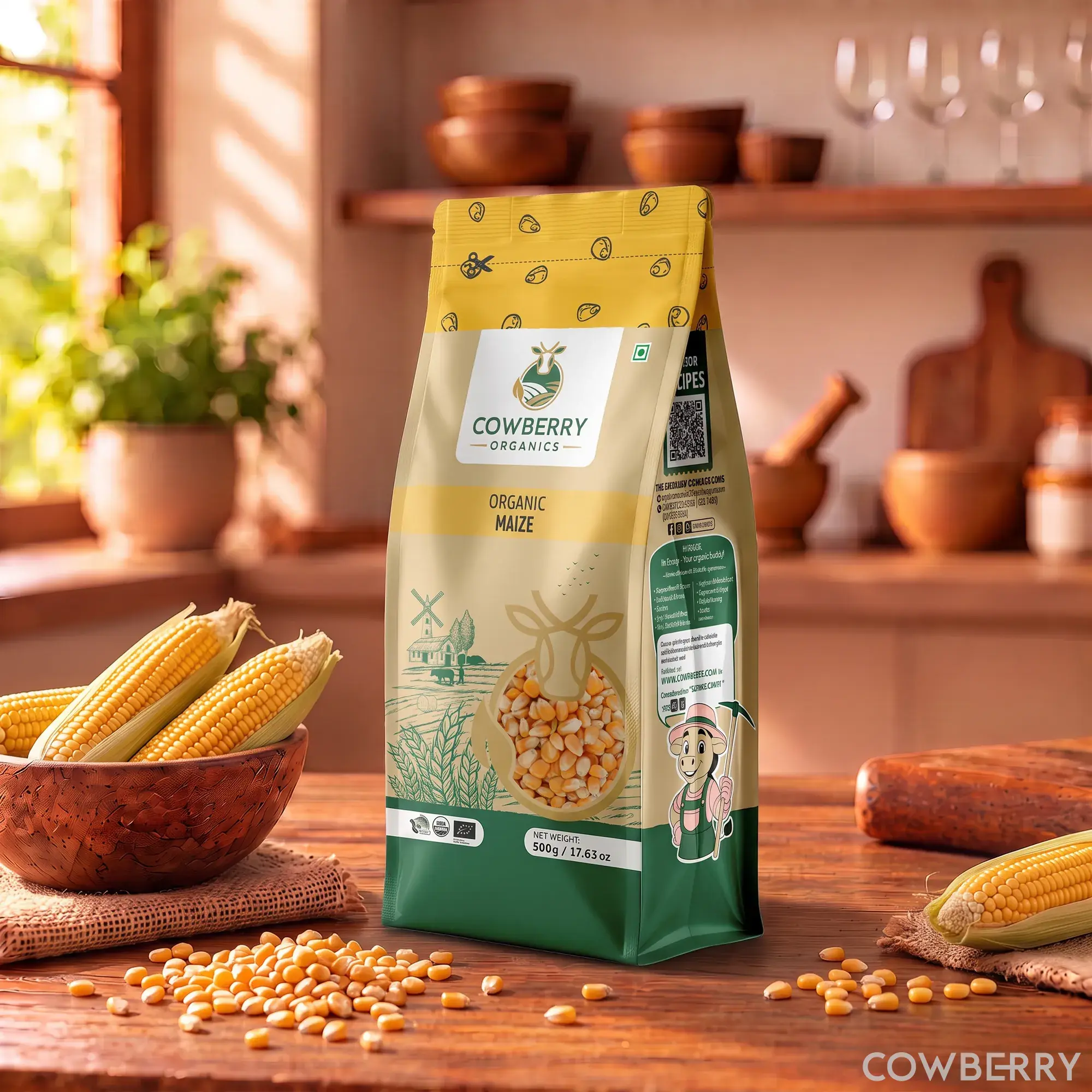
Indian kitchens keep makki in two forms. Whole dry kernels are boiled into katori bowls, and the same grain milled becomes makki atta, the flour behind roti, upma and porridge. The katori, a small bowl, is the standard cooked portion across these pages: made from 40 g of dry grain, it carries 133.6 kcal, 25.9 g of carbohydrate and 4.9 g of fibre. One shopping note: COWBERRY's maize is a cooking grain, and its product page states it is not suitable for making popcorn.
Across the country the grain answers to many names, and the complete list is on the maize in hindi page.
Makki names in Indian languages
The IFCT 2017 names row prints 13 Indian-language names for maize besides the English one. Hindi says makka, shortened to makki in everyday speech; Punjabi says chhali, Bengali bhutta, Marathi maka and Gujarati makai. In the south the names turn completely different: makka cholam in Tamil, mokkajonna in Telugu, mekke jola in Kannada, while Malayalam keeps the English word maize.
The full table sits below, with Odia maka, Assamese makoi, the Urdu name makai and the Sanskrit name yaavanaala completing the list. Wheat, bajra and jowar are different cereals with their own names and their own pages, so the packet test matters: maize, corn or makki on the ingredient line means this grain. Spellings here follow IFCT 2017; the maize in hindi page walks through every language.
| Language | Name (romanised) |
|---|---|
| English | Maize, dry |
| Hindi | Makka |
| Marathi | Maka |
| Gujarati | Makai |
| Punjabi | Chhali |
| Bengali | Bhutta |
| Odia | Maka |
| Assamese | Makoi |
| Kannada | Mekke jola |
| Telugu | Mokkajonna |
| Tamil | Makka Cholam |
| Malayalam | Maize |
| Urdu | makai |
| Sanskrit | Yaavanaala |
| Botanical name | Zea mays |
Source: IFCT 2017 (ICMR-NIN) local-names list. — means no name recorded in the source.
Maize nutrition per 100 g
Per 100 g of dry grain, IFCT 2017 reports 334 kcal, 8.8 g of protein, 3.8 g of fat, 64.8 g of carbohydrate and 12.2 g of fibre for maize. The mineral line reads 2.5 mg iron, 8.9 mg calcium, 145 mg magnesium, 291 mg potassium, 2.3 mg zinc and 25.8 ug folate. Sodium sits low at 4.4 mg per 100 g, and vitamin C is not reported for maize in IFCT 2017, so that vitamin belongs to the plate rather than the grain. Set against whole wheat, maize runs nearly level on energy and carbohydrate, carries more fibre and magnesium, and trails on protein, iron and calcium; the table below shows both rows, and the makki vs wheat page works through the contrast.
On the glycemic index maize scores 73: a single test of grain steamed for 40 minutes in South Korea, with the database's other maize entries being porridges. The Sydney scale calls 70 or above high and 55 or below low, so 73 sits in the high band and portions count.
Cooked, one katori of boiled maize made from 40 g of dry grain, or one roti made from 40 g of makki atta, gives 133.6 kcal, 25.9 g of carbohydrates, 4.9 g of fibre, 3.5 g of protein and 1.5 g of fat. The full nutrient list lives on the makki nutritional value per 100g page, and the per-roti maths on the makki roti calories page.
| Nutrient | Maize (makki) | Whole wheat |
|---|---|---|
| Energy (kcal) | 334 | 322 |
| Protein (g) | 8.8 | 11 |
| Fat (g) | 3.8 | 1.5 |
| Carbohydrates (g) | 65 | 65 |
| Dietary fibre (g) | 12 | 11 |
| Iron (mg) | 2.5 | 4 |
| Calcium (mg) | 8.9 | 39 |
| Magnesium (mg) | 145 | 125 |
| Potassium (mg) | 291 | 366 |
| Sodium (mg) | 4.4 | 2.5 |
| Zinc (mg) | 2.3 | 2.9 |
| Folate (mcg) | 26 | 30 |
| Glycemic index (GI) | 73 | 47 |
Per 100 g raw, edible portion. Composition: IFCT 2017 (ICMR-NIN). GI: University of Sydney GI database. — means not reported. These are average values for the food; the label on a pack gives the values for that product.
Benefits of makki (maize)
Each point below traces back to a number in the nutrition table; the evidence behind each point is on the maize benefits page.
Fibre for a filling, regular meal
Maize carries 12.2 g of fibre per 100 g, and the NIN Dietary Guidelines for Indians note that fibre slows how the body takes up carbohydrate and fat and makes a meal more filling; whole grains also sit in NIN's list of fibre-rich foods that improve satiety. One katori or roti contributes 4.9 g of that fibre.
Naturally gluten-free
Maize holds no gluten, so makki atta is a gluten-free roti flour; wheat, barley and rye are the gluten cereals, and maize sits outside that list. Anyone cooking gluten-free on medical grounds should still check every pack.
Magnesium, potassium and more
On the mineral side, 100 g of maize supplies 145 mg of magnesium and 291 mg of potassium, with iron, zinc and folate in smaller amounts; the full column is in the table above.
Colour brings compounds
A 2024 review of pigmented corn notes carotenoids in the yellow breeds and phenolic compounds with anthocyanins across the coloured ones, with health properties the review traces mainly to the reduction of pro-oxidant molecules. The review describes pigmented corn in general, not a single serving of makki.
The same material in Hindi is on the makki khane ke fayde page.
Side effects: who should limit makki
In ordinary portions makki is an everyday grain. A few situations deserve care.
- Blood sugar: maize holds 64.8 g of carbohydrate per 100 g and its GI of 73 is in the high band, so with diabetes the portion and the company on the plate decide; the is makki good for diabetes page works through pairings and readings.
- Weight: at 334 kcal per 100 g, maize is not a light grain; the katori and roti maths is on the is makki good for weight loss page.
- Gas and bloating: some people notice gas after a makki roti. Begin with small helpings and see how you feel, and see a doctor or dietitian if the discomfort lasts.
- Babies and pregnancy: babies meet maize from six months as a plain porridge, per the maize for babies page; in pregnancy, cooked maize fits a balanced diet while raw sprouts stay off the plate, per the makki in pregnancy page.
If a health condition already sets your portions, keep them as your doctor or dietitian set them.
How to cook and use makki: grain, atta and maize flour
Boiled whole grain. Rinse dry maize and boil it like a whole grain until the kernels turn tender; a katori of boiled maize takes lemon, salt and a light masala and works as a snack or a side.
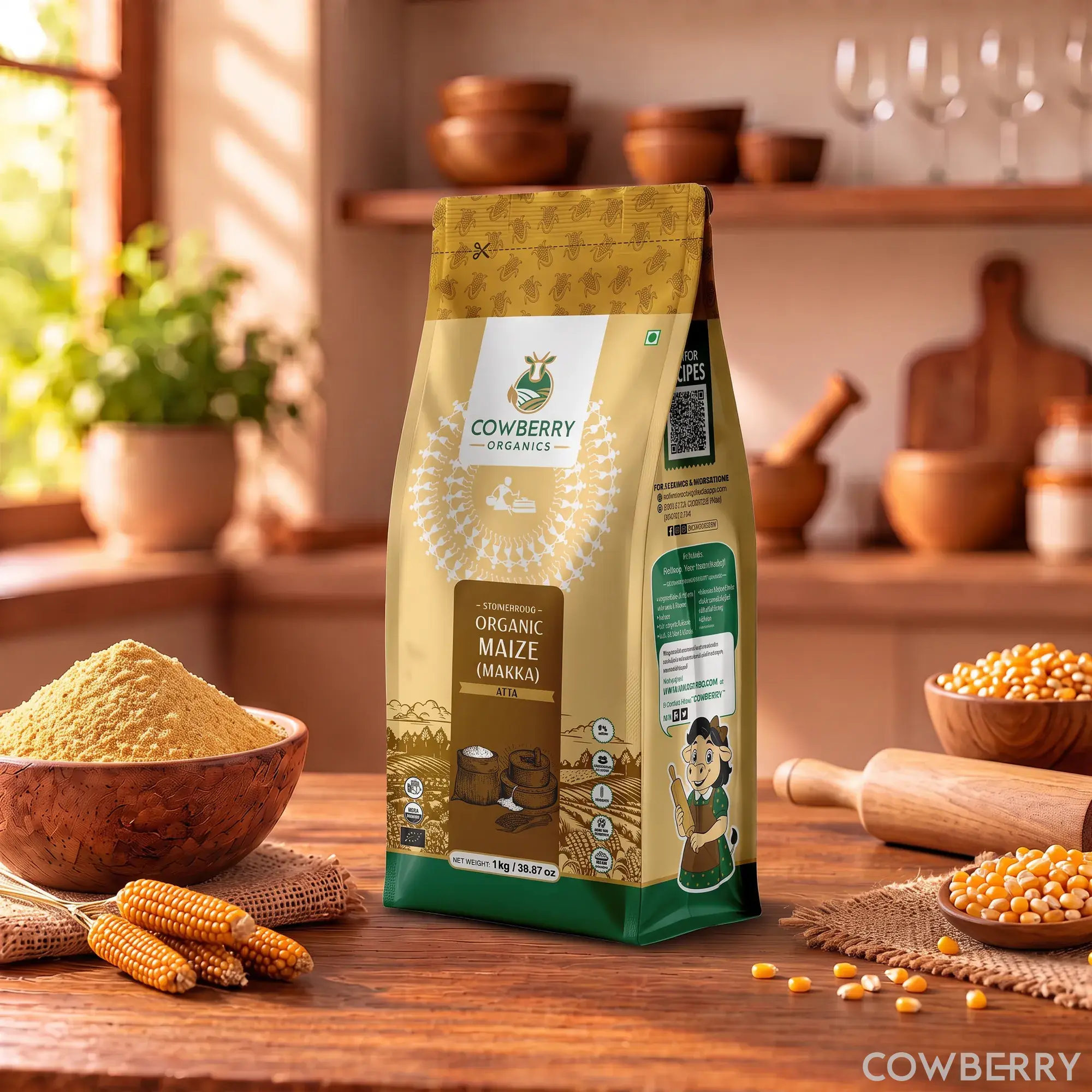
Makki atta. The flour has no gluten, so roti dough is kneaded with warm water and each roti is patted flat by hand instead of rolled; the step-by-step method is the makki ki roti recipe. The same flour, roasted in a tempering and steamed with hot water, becomes the maize upma breakfast. Whisked into a little cold water and poured into boiling water, it cooks into porridge in minutes: sweet with jaggery and ghee, or savoury with salt and buttermilk.
Maize flour's listed uses also cover flatbreads, tortillas, cakes and muffins, and the is makki atta corn flour page marks where cornstarch ends and maize flour begins. COWBERRY's flour is stone-ground, with the smooth texture and earthy aroma its product page lists. Every dish in one place is on the maize recipes roundup.
How to store makki and makki atta
Whole dry maize keeps for many months in a closed steel or glass jar, somewhere cool and dry. Keep makki atta shut airtight in a cool, dry place, as COWBERRY's product page advises, and in warm climates the same page suggests the fridge to hold freshness. Flour that smells musty or bitter has turned; throw it out. Buy flour in a pack size you will finish quickly, and keep the jar shut between uses. Cooked makki dishes, rotis and upma included, keep up to two days in the fridge.
Makki recipes: where to start
Two dishes cover most of makki. Makki ki roti is the hand-patted flatbread of maize flour, served the classic way with sarson ka saag and white butter; the recipe rests the warm-water dough so the rotis hold together instead of cracking. Makki upma turns the same flour into a roasted, steamed breakfast with carrot and peas, three bowls in 25 minutes. The maize recipes roundup adds khichdi and porridge to the list, and plain boiled maize needs no recipe at all.
How to buy makki: grain or flour
Grain or flour? Buy whole kernels if you boil them into katori bowls or mill your own flour fresh; buy makki atta for rotis, upma and porridge straight away.
Where it comes from: COWBERRY's whole maize is grown in Madhya Pradesh and Maharashtra, and its stone-ground maize flour from Punjab, both with cow-based farming. Good whole maize is golden with an earthy aroma, which is how COWBERRY's product page describes its kernels; the flour's smooth texture and earthy aroma are listed on its product page, and both keep the whole grain's fibre.
Certification: for organic maize, a certification mark on the pack is the thing to look for. Both COWBERRY's grain and its flour are India Organic, USDA & EU certified.
Pack size: match it to how fast you cook: flour is best in a size you will finish quickly, while whole grain can sit in a bigger jar.
FAQs
What is makki?
Makki is the everyday Hindi name for maize, the cereal whose botanical name is Zea mays. IFCT 2017 prints the Hindi name as makka and the English name as 'Maize, dry', and shops sell the grain whole or milled into makki atta. Boiled kernels, roti, upma and porridge all come from this one grain.
What is maize?
Maize is the dried grain Zea mays, called makki in Hindi and corn in everyday English. IFCT 2017 gives the dry grain 334 kcal, 8.8 g of protein and 12.2 g of fibre per 100 g, with no gluten. Indian kitchens boil it whole or grind it into makki atta for rotis and porridge.
Does makki atta have gluten?
No. Wheat, barley and rye carry gluten, and maize is a different cereal entirely, so makki atta is gluten-free; COWBERRY's product page states the same. For anyone avoiding gluten medically, still check every pack before buying.
Does maize contain fibre?
Yes: 12.2 g of fibre per 100 g of dry maize (IFCT 2017), a little above whole wheat's 11.2 g. A katori of boiled maize or one roti, made from 40 g, carries about 4.9 g of it. NIN's guidelines list whole grains among the fibre-rich foods that improve satiety.
Which maize is used for popcorn?
The type sold for popping. COWBERRY's maize is a kitchen grain: its product page states it is not suitable for making popcorn. The nutrition figures on this page describe the dry culinary grain, so popcorn carries its own, separate numbers.
Is makki good for weight loss?
It can fit a calorie-controlled plate. Maize has 334 kcal and 12.2 g of fibre per 100 g, and NIN notes that fibre adds to satiety, so a measured katori or roti can sit inside a deficit while free-poured portions will not. The portion maths is on the makki for weight loss page.
Can maize increase blood sugar?
Yes, as any carbohydrate food can. Maize holds 64.8 g of carbohydrate per 100 g and its GI of 73, for steamed grain, sits in the high band. The practical answer is a measured portion with dal or vegetables, worked out on the makki for diabetes page and with your doctor or dietitian.
References
- Indian Food Composition Tables (IFCT) 2017, ICMR-National Institute of Nutrition
- Dietary Guidelines for Indians, ICMR-National Institute of Nutrition
- University of Sydney glycemic index database (GI search)
- University of Sydney: about the glycemic index
- NHS: coeliac disease
- Sanchez-Nuno YA, Zermeno-Ruiz M, Vazquez-Paulino OD, et al. Bioactive Compounds from Pigmented Corn (Zea mays L.) and Their Effect on Health. Biomolecules, 2024
- UK Food Standards Agency: How to chill, freeze and defrost food safely
Shop this article
Keep reading
Foxtail millet vs quinoa: nutrition, taste and which to choose
Foxtail millet in Kannada, Hindi, Tamil and other Indian names
10 benefits of kangni (foxtail millet) and its side effects