by COWBERRY

6 minute read
Maize for babies: when to start, porridge and how to serve it

Maize for babies works best as a soft porridge: start once solids begin at six months, keep the first bowls thin but not watery, and serve plain maize for a few days before mixing it with other foods. The portions below come from ICMR-NIN's own diet charts, and the makki (maize) hub page covers the grain itself.
Maize for babies: the short answer
Solid foods begin at six months: the WHO advises complementary feeding from that age, because breast milk alone no longer meets a growing baby's needs, and NIN's Dietary Guidelines for Indians spell out what a first porridge should look like, thin but not watery, made at home, with one new food at a time.
Maize fits that pattern. The dry grain is a cereal, naturally gluten-free, and IFCT 2017 prints per 100 g: 334 kcal, 8.8 g protein, 12.24 g fibre, 2.49 mg iron and 8.91 mg calcium. Cooked into a plain, soft porridge, it is one of the grains in NIN's infant charts; every nutrient is listed on the makki nutritional value per 100g page.
Maize porridge for babies: the portions in NIN's diet charts
NIN's sample menus for infants list maize (makki) once a week. In the charts for both 6 to 8 and 9 to 12 months, the Thursday evening meal gives maize 10 g (two teaspoons), beside kidney beans 5 g or half an egg (20 g), a little ivy gourd and a teaspoon (5 g) of oil or ghee.
The one-year chart lifts maize to 40 g of raw grain, which NIN puts at 4 tablespoons or a quarter of a small 150 ml katori, again with kidney beans or egg, and the 1 to 3 year suggested diet keeps the same 40 g. For any new food, NIN's advice is to begin with two or three teaspoons, offer it for 4-5 consecutive days to spot any intolerance, and breastfeed after the solid feed. If the baby spits food out, that is swallowing practice, not dislike. Your paediatrician can say when these amounts suit your baby.
Makki atta for babies: how to cook a thin porridge
Makki atta is maize flour, milled from dried maize kernels, and it cooks into a plain baby porridge. Stir a little flour into water, cook until it loses its raw taste and runs slowly off the spoon, then cool it and serve. Keep it plain: NIN says a baby's first foods need no added sugar or salt; the sugar and honey rules are below.
Cooked porridge should be used within one to two hours of making it, and made and served with clean hands and clean utensils. If the porridge turns too thick and bulky, NIN suggests amylase-rich flour: soak whole cereal grains for 8 hours, germinate them in the dark for a day or two, sun-dry, roast gently and grind, then add a teaspoon (5 g) to each feed; it thins the gruel and reduces its bulk. Porridge and roti ideas are on the maize recipes roundup.
Makki ki roti for babies: from which age?
Roti comes later than porridge. On the WHO's timeline, finger foods come in by about 8 months and the family's own foods by about 12 months; NIN puts the move to the family diet at about one year. A makki roti is a family food, so soft, warm pieces torn from a freshly made makki ki roti fit that stage; ask your paediatrician if you are unsure your baby is ready.
Make the baby's piece plain: no chilli, no pickled sides and no added sugar. NIN asks for salt at the bare minimum, and the NHS advice is no salt at all in a baby's food. Tear it into small soft pieces rather than serving a full round, and sit with the child while they eat; WHO guidance is to keep away foods whose shape can cause choking.
What to avoid and what to watch
Four rules matter here. First, sugar: NIN rules out added sugar entirely before age two, and its list of added sugars includes honey and jaggery. Second, honey: the NHS warns that honey occasionally contains bacteria that can cause infant botulism, and says not to give honey before age one. Third, choking: no whole nuts before age five, says the NHS, and the WHO names whole grapes and raw carrots as the kind of food shape to avoid. Fourth, sprouts: the US FDA counts children among those at higher risk from foodborne illness and tells them to steer clear of sprouts that are raw or only lightly cooked.
The 4-5 consecutive-day rule above is NIN's way to spot any intolerance or allergy early; if an intolerance persists, NIN says to seek medical advice.
Talk to your doctor
NIN's charts pair maize with pulses or egg and a vegetable, alongside breastfeeding, so the meal is more than the grain alone. Check in with your doctor or paediatrician if the baby shows a lasting rash, diarrhoea or vomiting after maize, if weight gain is slow, or if there is a strong family history of food allergy. The makki (maize) hub has the adult-side story, from names to benefits.
Serve maize small, plain and soft, watch how your baby responds, and talk to your doctor or dietitian if you plan to serve it every day.
FAQs
Is maize flour good for babies?
It can be, as a cooked porridge from six months. NIN's own sample menus give infants maize 10 g (two teaspoons) in an evening meal with pulses or egg, so maize is part of NIN's weaning menus. Keep the porridge thin but not watery, serve it plain, and offer each new food alone for 4-5 consecutive days before mixing. Check with your paediatrician before you start.
Does makki atta have gluten?
No. Maize is naturally gluten-free, so makki atta made from it is a gluten-free flour; COWBERRY's maize product page says so too. That makes maize porridge and plain makki roti workable in a gluten-free kitchen. Keep the baby's porridge separate from wheat-based foods and utensils if gluten is a concern in the family.
Can makki roti cause gas?
It may, as with any new food; makki carries 12.24 g of fibre per 100 g. NIN's way to spot a food that does not suit a baby is to offer it, one new food at a time, for 4-5 consecutive days. Serve small soft pieces, and if gas, discomfort or loose stools persist, NIN's advice is to have it checked, so see your paediatrician.
Does maize have protein?
Yes: dry maize gives 8.8 g of protein per 100 g. NIN's infant menus serve maize beside kidney beans or half an egg, and NIN explains that cereals and pulses fill each other's gaps, giving better-quality protein together. Copy that pairing at home, in the amounts your paediatrician suggests.
What is makki ka atta?
Maize flour. Makki ka atta is ground from dried maize (corn) kernels; makki ki roti and maize porridge are both made from it. COWBERRY's maize flour is stone-ground to retain its natural fibre, from maize grown with cow-based natural farming in Punjab.
References
Shop this article
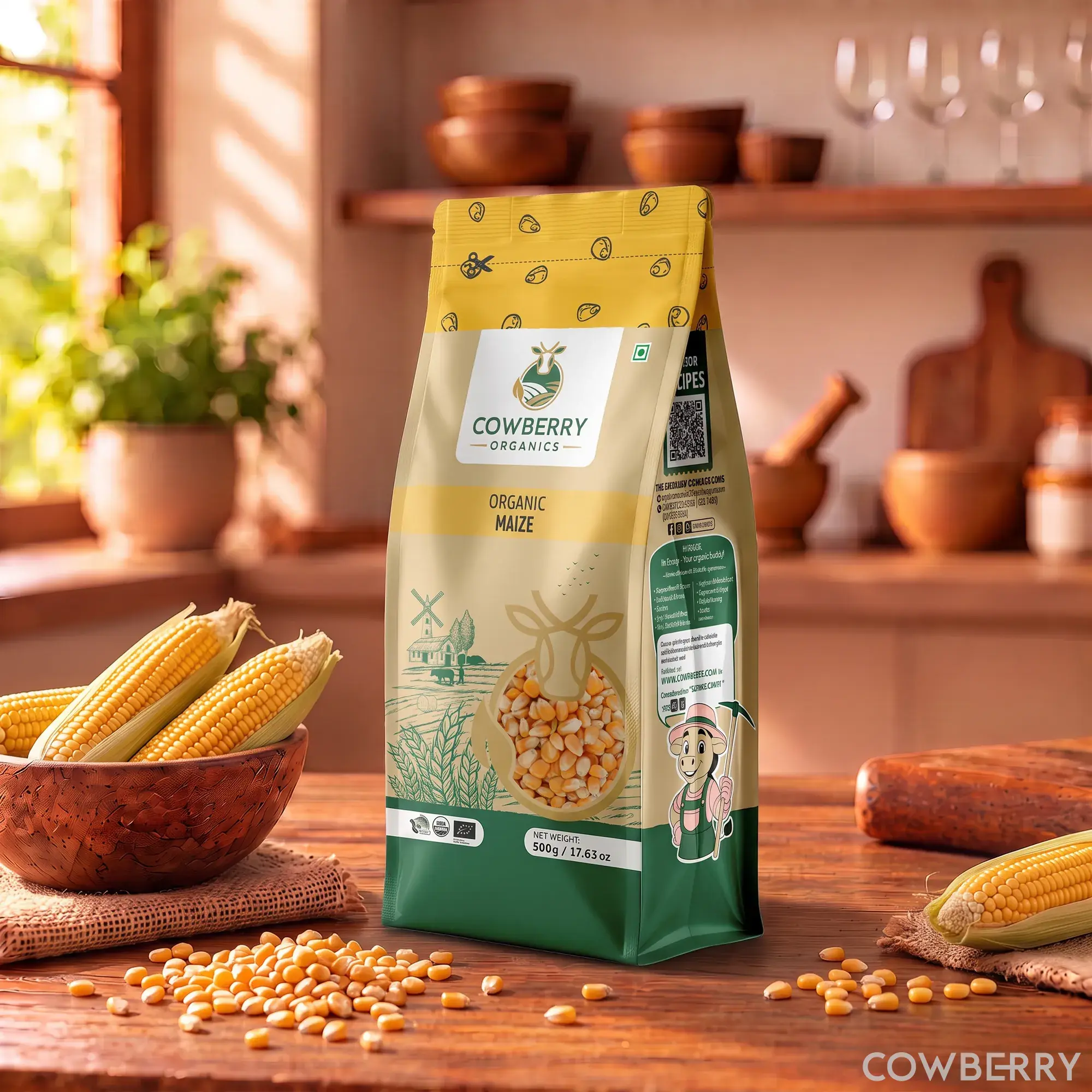
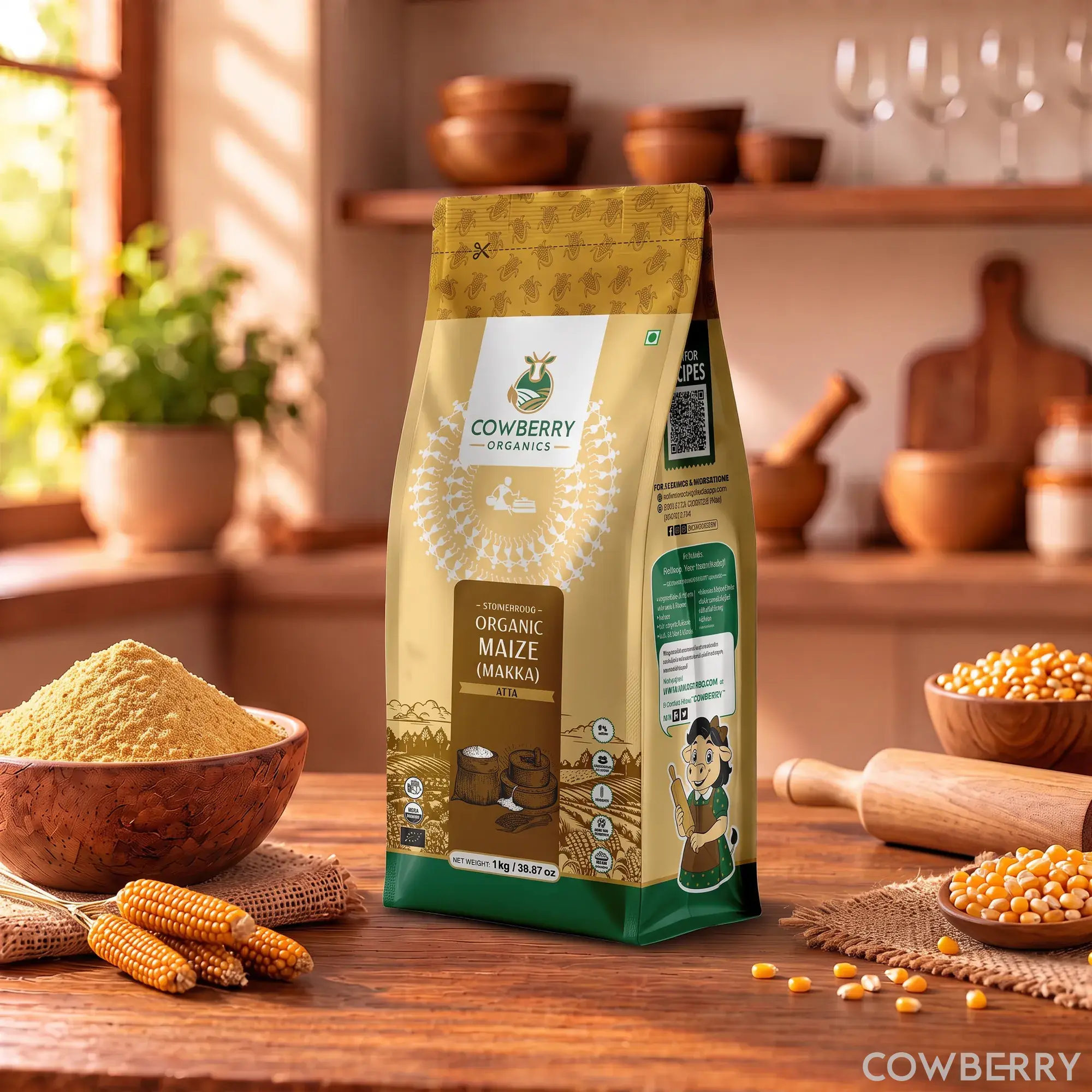
Keep reading
Foxtail millet vs quinoa: nutrition, taste and which to choose
Foxtail millet in Kannada, Hindi, Tamil and other Indian names
10 benefits of kangni (foxtail millet) and its side effects