by COWBERRY

7 minute read
Asafoetida how to use: cooking, storing and eating hing

Asafoetida how to use, in one line: a pinch into hot oil or ghee at the start of the tadka, where the strong raw smell cooks away into a smooth, fried-onion-like flavour. Use it in very small amounts in dals, curries, vegetables and pickles, and keep the jar airtight in a cool, dry place. The hing powder hub is the wider guide to the spice.
Short answer: a pinch, in hot fat, at the start
Three rules carry every use. First, the amount: hing is used in very small amounts, which is how COWBERRY's product page puts the cooking guidance for its powder. Second, the fat: hing cooks in oil or ghee, and that cooking is what turns its strong, pungent raw aroma into the smooth flavour the same page compares to fried onions. Third, the moment: it goes into the tempering, the tadka poured over dals, curries and vegetable dishes at the end.
The numbers show why the amount stays small. IFCT 2017 lists asafoetida at 332 kcal per 100 g, but a dish gets a pinch, not a hundred grams; a single gram carries about 3.3 kcal, so the spice adds flavour, not meaningful energy. As a 2014 review in the International Journal of Molecular Sciences notes, herbs and spices are normally eaten in small quantities and combined with other foods, which is exactly how hing is used.
Asafoetida powder how to use: the steps
- Measure a pinch. Take a small pinch between your fingers, the amount that fits on a fingertip. The product page's own guidance is very small amounts, and one pinch seasons a home dal or sabzi.
- Heat the fat. Warm the oil or ghee in the pan first. Hing goes into hot fat, because heating in oil or ghee is what changes its raw, pungent smell into a smooth, fried-onion-like flavour.
- Add the hing first. Tip the pinch into the hot oil or ghee before the seeds and other aromatics, so the fat picks up the flavour and carries it through the dish.
- Finish the tadka. Follow with cumin, mustard seeds, dry red chillies or curry leaves as you usually do, let them crackle, then pour the tempering over the cooked dal or vegetable and stir.
- Taste before adding more. Stop at one pinch and taste the finished dish first; the amount is meant to stay small.
That order, hing first in the hot fat, is kitchen practice rather than a printed rule, and it matters because the flavour develops in the fat. The same powder goes into pickles, where hing is commonly used to enhance flavour.
How to use solid hing
Solid hing is the resin before grinding. FSSAI's household test instructions start from that form: they begin by powdering a gram of asafoetida before the test, a reminder that the spice is also handled solid. To cook with a solid piece, grate or crush a tiny amount as fine as you can and add it to the hot oil or ghee at the start of the tadka, exactly where the powder goes; the heat does the rest.
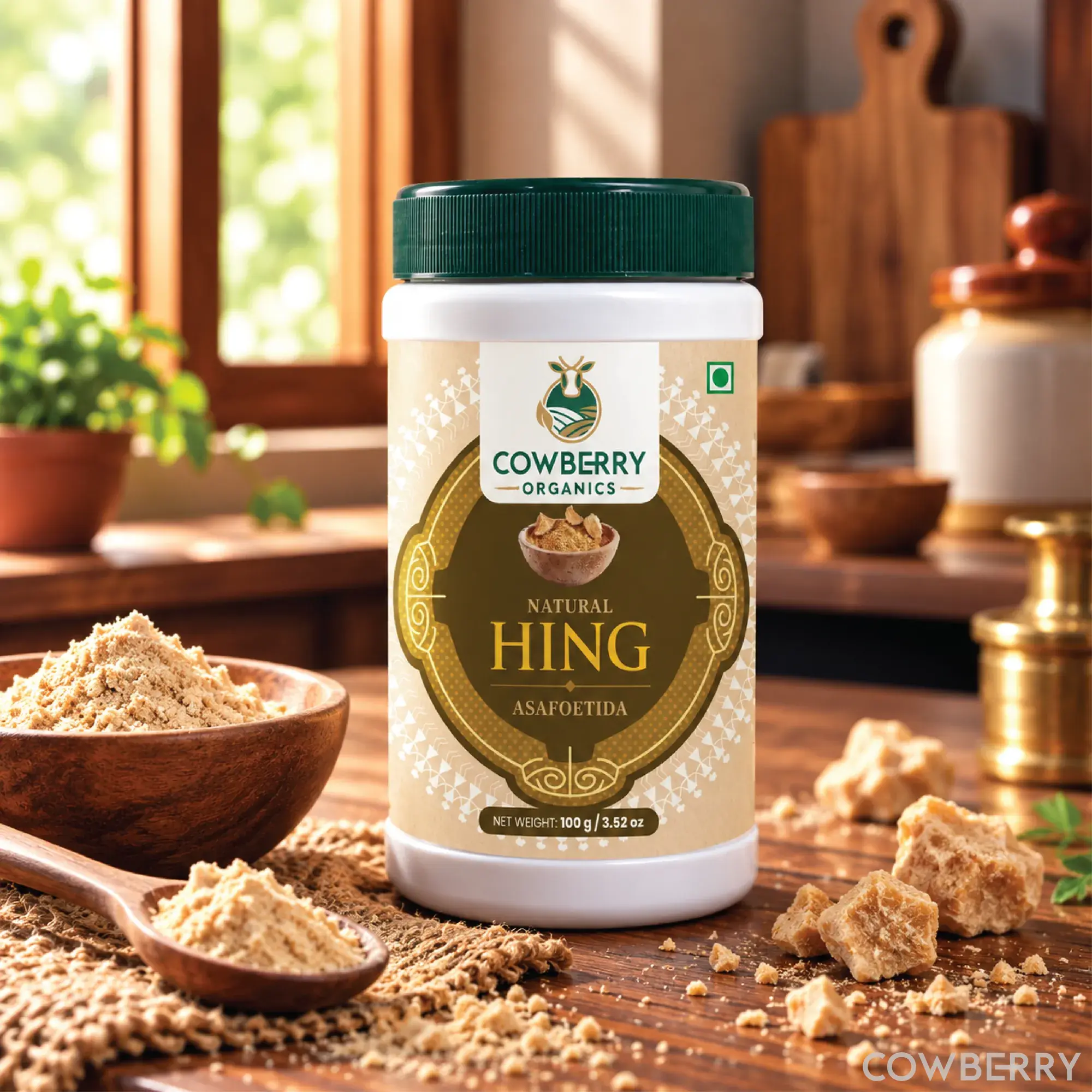
COWBERRY packs the powder: hing sourced and processed in Madhya Pradesh, milled with no artificial fillers, synthetic additives, preservatives or artificial colour, in 100 g packs. How the resin becomes that powder is on how asafoetida is made.
Asafoetida how to eat: dal, sambar, vegetables and pickles
The product page names the dishes itself: its hing powder is for tadka, dal and sambar, and its cooking guidance adds curries and vegetable dishes to the list, all of them tempered with hing in very small amounts. Pickles are the other classic home: hing is commonly used in pickles to enhance flavour, added to the tempering oil that seasons the pickle.
Beyond those, the pinch travels anywhere a tempering does: rasam, kadhi, upma, poha and stuffed vegetables all take a tadka, and a tadka takes hing. Each dish uses the same three rules from the short answer above: very small amounts, hot oil or ghee, added at the start. For the spice's names, its nutrition and its traditional uses, the wider guide is the hing powder hub.
Common mistakes (and the fix)
- A spoonful instead of a pinch. The guidance is very small amounts. If a pinch seems too little, cook the dish, taste it, and only then decide; a second pinch is always easier to add than a first pinch is to undo.
- Adding it raw at the table. Raw hing smells strong and pungent; the smooth, fried-onion-like flavour comes from cooking it in oil or ghee. It belongs in the hot fat of the tadka, not sprinkled on a finished plate.
- A wet spoon in the jar. The storage advice is a sealed jar in a cool, dry place, so keep moisture out: a dry spoon, and the lid straight back on.
- Leaving the jar open. The airtight lid is what holds the aroma and flavour; a jar left open goes mild and the kitchen takes on the smell instead.
How to store asafoetida powder
A sealed jar, a cool dry place, nothing else. That is the storage printed for hing powder on the product page, given there to preserve its strong aroma and flavour. The Dietary Guidelines for Indians add what the label carries: a pack shows the date of manufacture and the use-by or expiry date along with storage instructions, so read those and follow the maker's line.
The 100 g jar from COWBERRY lasts a household a long time at a pinch per dish, which makes the airtight lid the whole storage story: dry, sealed, and kept away from the stove's heat. No fridge or freezer guidance is printed for hing in these texts, so none is given.
Time and quantity table
The whole method on one table.
| Form | How much | Where it goes |
|---|---|---|
| Hing powder | A pinch, per the very small amounts guidance | Into hot oil or ghee at the start of the tadka for dal, sambar, curries, vegetables and pickles |
| Solid hing | A tiny piece, grated or crushed fine | Into the hot fat at the same moment, in place of the powder |
| Storing both | Airtight container, cool dry place; dry spoon, lid on | Dates and storage instructions on the pack label |
For the difference between natural hing and the compounded packs in shops, see hing vs compounded hing; for testing what is in the jar, the asafoetida adulteration test guide.
FAQs
Why asafoetida is used in cooking?
Because a very small amount adds depth of flavour to a dish, in the words of COWBERRY's product page, and because cooking changes it for the better: raw, hing smells strong and pungent, while in hot oil or ghee it settles into the smooth flavour of fried onions. A pinch in the tadka carries that flavour through a whole dal or sabzi.
How to use solid asafoetida?
Use it like unmilled powder. Grate or crush a tiny piece as fine as you can, then add it to the hot oil or ghee at the start of the tadka, exactly where you would add powdered hing; the heat releases the flavour. FSSAI's test instructions start from the same solid form, powdering a gram of asafoetida before use.
Can asafoetida be eaten raw?
No, it is cooked, not eaten raw: the pinch goes into the hot fat of the tadka. The raw form carries the strong, pungent smell that gives hing its reputation, and the smooth, fried-onion-like flavour the product page describes comes from cooking it in oil or ghee. In Indian cooking it is eaten in very small amounts, as part of a tempering poured over cooked food.
Does asafoetida expire?
Yes, and the label tells you when. The Dietary Guidelines for Indians list the date of manufacture and the use-by or expiry date among what a pack must show, so read those on the jar. Kept in a sealed jar in a cool, dry place, hing holds its strong aroma and flavour; a jar left open or damp goes mild faster.
Difference between asafoetida and compounded asafoetida?
Asafoetida is the resin on its own, one ingredient; the compounded form has other materials mixed in with the hing and declared on the label, ordered by quantity, most used first. FSSAI's claim rules give the word pure to single-ingredient food alone, so compounded hing may not be labelled pure. The two sit side by side on the hing vs compounded hing page.
Does asafoetida have gluten?
Asafoetida is a plant resin, not a cereal, and COWBERRY's product page states that its hing powder is naturally gluten-free and suitable for people with gluten sensitivity. Every pack carries an allergen declaration, and the Guidelines count proteins in wheat among the common allergy-causing ingredients, so read the label on any pack you buy.
References
- Indian Food Composition Tables (IFCT) 2017, ICMR-National Institute of Nutrition
- Dietary Guidelines for Indians, ICMR-National Institute of Nutrition
- FSSAI Food Safety and Standards (Advertising and Claims) Regulations 2018, compendium (PDF)
- Opara EI, Chohan M. Culinary herbs and spices: their bioactive properties, the contribution of polyphenols and the challenges in deducing their true health benefits. Int J Mol Sci, 2014
- FSSAI Eat Right India: DART (Detect Adulteration with Rapid Test), salt, spices and condiments tests
Shop this article
Keep reading
Coriander water benefits: what dhania water actually does
Peanuts in Hindi (moongfali): groundnut names in Indian languages
Coriander vs cilantro: are they the same herb?